
Introduction
The aerospace industry demands the highest standards in précision, fiabilité, et performances. Every component—from structural parts to internal engine elements—must meet strict technical and quality requirements.
À Rapidefficient, we specialize in precision CNC machining for aerospace applications, supporting customers with advanced manufacturing capabilities, material expertise, et des systèmes de contrôle de qualité stricts.
This guide outlines the key aspects of aerospace CNC machining, including manufacturing technologies, sélection des matériaux, inspection standards, et contrôle qualité.
Aerospace Manufacturing Technologies
Selecting the right manufacturing method depends on part complexity, quantity, and lead time.
1. Additive Manufacturing (3D Impression)
Additive manufacturing builds parts layer by layer from a 3D model.
Avantages
- Ideal for low-volume production
- Enables complex geometries and lattice structures
- Reduces weight while maintaining strength
- Supports rapid prototyping
Applications
- Lightweight structural components
- Complex internal geometries
- Prototype and custom aerospace parts
2. Usinage CNC (Fabrication de précision)
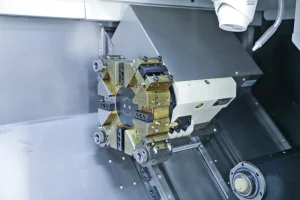
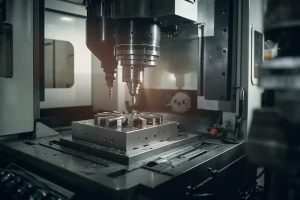
CNC machining is essential for producing high-precision aerospace components with tight tolerances.
Avantages
- Haute précision dimensionnelle
- Excellent surface finish
- Stable and repeatable production
- Suitable for critical components
Applications
- Engine components
- Structural parts
- Precision housings and brackets
Aerospace Materials Selection
Material choice is critical due to requirements for léger, force, and environmental resistance.
1. Aluminum Alloys
- Rapport résistance/poids élevé
- Excellente usinabilité
- Rentable
👉 Common grade: 7075 aluminium
Applications typiques
- Aircraft structures
- Brackets and housings
2. Titanium Alloys
- Exceptional strength and corrosion resistance
- High temperature tolerance
- Léger
👉 Common grade: Ti-6Al-4V
Applications
- Airframes
- Engine components
- Fasteners
3. Acier inoxydable (17-4 PH)
- Forte résistance
- Bonne résistance à la corrosion
- Stable at elevated temperatures
Applications
- Structural components
- Pièces mécaniques
4. Inconel (Superalloy)
- Extreme heat resistance
- Maintains strength under high temperatures
Applications
- Jet engines
- Rocket components
5. Composite Materials
- Léger
- High fatigue resistance
- Excellent strength
Applications
- Aircraft wings
- Structural panels
Aerospace Inspection & Contrôle de qualité
In aerospace manufacturing, quality control is non-negotiable. Every part must meet strict standards.
Key Inspection Methods
- Dimensional inspection (Cmm)
- Surface quality inspection
- Material certification verification
- Functional testing
Quality Standards
The most critical aerospace certification:
👉 AS9100D
- Based on ISO 9001
- Specific to aerospace industry
- Ensures traceability, cohérence, et fiabilité
Key Challenges in Aerospace CNC Machining
- Tight tolerances and complex geometries
- Difficult-to-machine materials (titane, Inconel)
- Strict quality requirements
- High cost of failure
Rapidefficient Aerospace Capabilities
At Rapidefficient, we support aerospace projects with:
- Precision CNC machining (tight tolerance capability)
- Experience with aluminum, titane, and superalloys
- Surface finishing and post-processing integration
- Strict inspection and quality control workflow
- Livraison mondiale fiable (typical lead time: 3–7 days for prototypes)
Conclusion
Aerospace CNC machining requires a combination of:
- Advanced manufacturing technologies
- Proper material selection
- Strict inspection standards
- Comprehensive quality control
Choosing the right manufacturing partner ensures not only precision but also long-term reliability and performance.