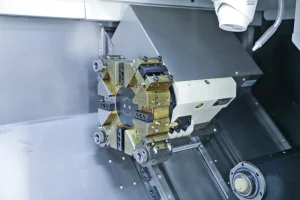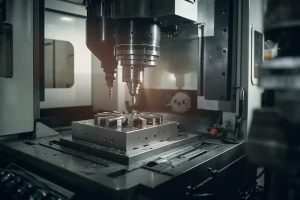

L'usinage CNC est une technologie grand public dans l'industrie manufacturière. En raison de sa grande efficacité et de sa précision, many factories and companies use CNC machining to produce parts and products. Cependant, calculating CNC machining costs can be challenging. Here’s a detailed look at how to calculate CNC machining costs and the factors that influence them:
1. Main Factors Determining CNC Machining Costs
1.1 Material Cost
The materials used in CNC machining are a significant component of the cost. Consider the type, qualité, and quantity of material. Metals are generally more expensive and harder to machine than plastics, leading to higher machining costs.
1.2 Machine Time
Machine run time is a major cost factor. CNC machining requires setting correct angles, speeds, and depths, which consumes time and labor. Longer machine operation increases costs.
1.3 Labor Costs
Labor costs include salaries, insurance, and benefits for CNC operators and support staff. Complex projects requiring multiple workers will raise machining costs.
1.4 Design and Programming Costs
Avant usinage, products must be designed and programmed. These steps require specialized skills, so designer and programmer fees are included. Complexity of design and programming also affects cost.
2. Additional Factors Affecting CNC Machining Costs
2.1 Part Size and Shape
Larger parts require more machine time, et complex shapes increase design and programming costs.
2.2 Machine and Tool Condition
Poor machine or tool condition may reduce product quality or require more maintenance, increasing overall cost.
2.3 Volume Production
Producing multiple identical items can be more economical. Once setup is complete, cost per item decreases.
2.4 Tolérance, Précision, and Surface Finish
Tighter tolérances dimensionnelles (par ex., ±0.01mm) or smoother surface finishes (par ex., Ra 0.8μm) require more precise equipment and additional quality control, raising costs.
2.5 Post-Processing and Finishing
Processes such as Anodisation, électroplaste, polissage, or coating add to total costs.
2.6 Geographic Location
Labor, electricity, and maintenance costs vary by region. CNC machining in Europe or North America is generally more expensive than in East Asia.
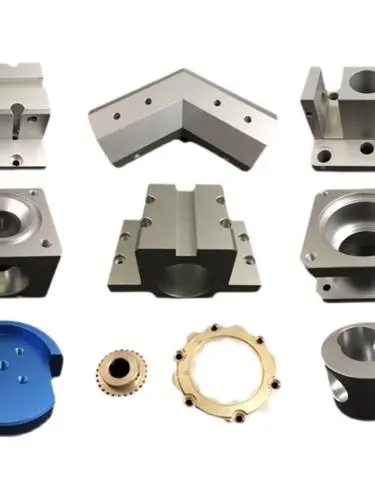
3. Résumé
CNC machining costs are influenced by multiple factors, y compris:
- Material costs
- Machine time
- Labor costs
- Conception et programmation
- Part size and shape
- Machine and tool condition
- Volume production
- Tolerance and surface finish
- Post-processing and finishing
- Geographic location
Carefully evaluating these factors ensures the most efficient and economical production costs.
4. About RapidEfficient
RapidEfficient specializes in high-precision CNC machining with 18 années d'expérience. Its products cover:
- Équipement médical
- Communications devices
- Optical components
- Drones
- Intelligent robots
- Pièces automobiles
- Office automation parts
The company’s CNC machining centers include four-axis, à cinq axes, et les machines-outils de liaison, and are equipped with:
- Precision projectors
- Three-coordinate measuring machines
- Spectrometers
- Other precision testing equipment
Précision d'usinage: 0.01MM
Exactitude des tests: 0.001MM