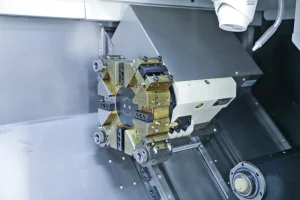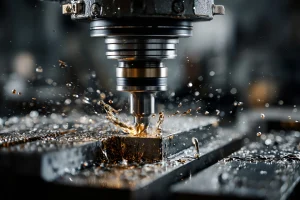

Le traitement des pièces en acier inoxydable fait référence au processus de transformation des matières premières (comme les plaques en acier inoxydable, barres, tuyaux, and profiles) into parts with specific shapes, dimensions, précision, and performance requirements through a series of machining, thermal processing, or specialized processing techniques, using stainless steel as the base material. The following is an introduction:
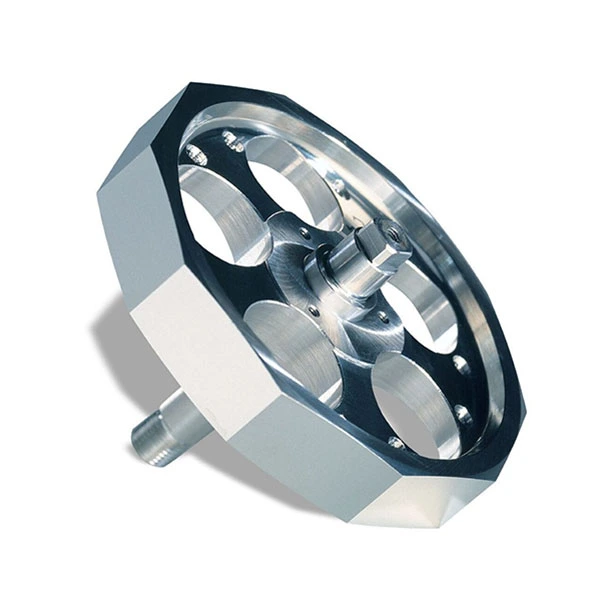
Traitement des pièces en acier inoxydable
1. Dimensional Accuracy Control — Stainless steel machining precision
Thermal Deformation Compensation
- The linear expansion coefficient of austenitic stainless steel (17.3×10⁻⁶/°C) is approximately twice that of carbon steel.
- During fine grinding, grinding heat must be controlled (par ex., by grinding in stages, with pauses for cooling after each cut), or refrigerated processing (using -30°C coolant) must be employed.
Tool Wear Compensation
- During turning, tool wear is measured after every 50 parts are machined (a tool change is required if VB ≤ 0.3mm).
- Tool radius compensation is set on the CNC system (par ex., using the G41/G42 commands on FANUC systems).
2. Surface Quality Control — Stainless steel surface finishing
Roughness Requirements
- Medical device parts: Ra ≤ 0.8μm (requires superfinishing or polishing);
- Chemical equipment: Ra ≤ 1.6μm (to prevent residual corrosion from the medium).
Polishing Process
- Mechanical polishing: Use a cloth wheel and chromium oxide polishing paste (suitable for flat surfaces), speed 2000-3000r/min;
- Electrolytic polishing: Use a phosphoric acid-sulfuric acid mixture (temperature 50-70°C, voltage 15-25V) to remove the work-hardened layer and achieve a surface Ra ≤ 0.2μm.
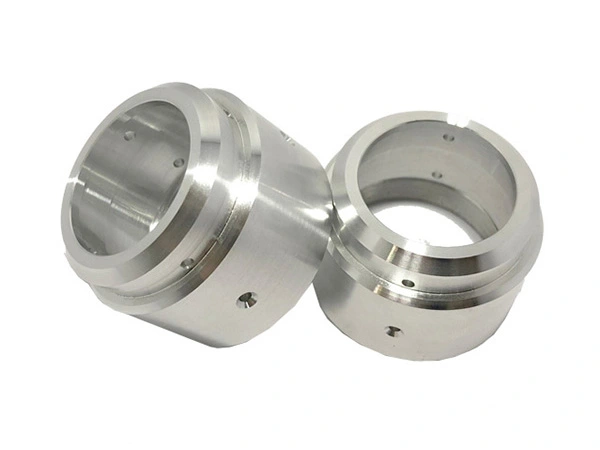
3. Heat Treatment Considerations — Stainless steel heat treatment process
- Solution treatment of austenitic stainless steel: Heat at 1050-1100°C for 1 heure, then water cool to eliminate work-hardening (hardness reduced from HB 200 to HB 150) and improve subsequent machinability.
- Martensitic stainless steel quenching and tempering: 850-950℃ quenching + 200-300℃ tempering, hardness controlled at HRC 40-45 (to prevent quenching cracking, graded quenching can be used).