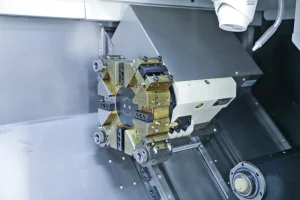

עיבוד שבבי, כפי שאנו מתייחסים אליו בדרך כלל, involves using a cutting tool to remove excess material from a blank or workpiece, ultimately achieving the desired geometry, מידות, ואיכות פני השטח. באופן כללי, stainless steel is more difficult to machine than other conventional materials, such as copper and aluminum alloys. This is due to several key factors.
1. Why is stainless steel difficult to machine? The main factors are as follows:
1). Severe Work-Hardened Layer
Work-hardening is most pronounced in austenitic and austenitic + ferritic stainless steels. לנירוסטה יש פלסטיות גבוהה, and during plastic deformation, elements distort, resulting in a high strengthening coefficient. יֶתֶר עַל כֵּן, האוסטניט אינו יציב, ותחת השפעת מתח חיתוך, חלק מהאוסטניט הופך למרטנזיט. יֶתֶר עַל כֵּן, chemical impurities are easily decomposed and distributed under the influence of cutting heat, resulting in the formation of a hardened layer during cutting. This hardened layer, created by the previous feed or transferred from the previous process, can seriously affect the smooth progress of the next process.
2). Cutting Tools Susceptible to Wear
During the stainless steel cutting process, due to affinity, the chips adhere to each other, causing adhesion and diffusion wear on the tool. This can lead to craters on the front face of the tool and damage to the cutting edge. Small flaking and chipping can also occur. יֶתֶר עַל כֵּן, the carbide particles in stainless steel are extremely hard, causing direct contact and friction with the tool during cutting, which can cause scratches. יֶתֶר עַל כֵּן, work hardening can exacerbate tool wear.
3). High Cutting Forces on Lathes
Lathes use high cutting forces when machining stainless steel. Stainless steel becomes more plastic during cutting, and the severe work hardening of stainless steel further increases cutting resistance, making it more difficult to curl or break the material.
4). Cutting is difficult and prone to sticking
Because the material is both highly plastic and tough, continuous cutting during lathe machining not only affects smooth operation but can also cause chip formation. It can also damage the machined surface. Under high temperature and high pressure, לנירוסטה יש זיקה חזקה למתכות אחרות, easily causing adhesion and the formation of built-up edge. This further exacerbates tool wear and tear, leading to surface deterioration. This problem can be particularly pronounced in certain stainless steels with high toughness.
5). High Linear Expansion Coefficient
Stainless steel has a linear expansion coefficient that is 1.5 פי כמה מפלדת פחמן. The workpiece undergoes thermal deformation at the cutting temperature, making it difficult to control dimensional accuracy.
6). High Cutting Temperatures
When cutting stainless steel, plastic deformation and tool friction are significant. Excessive cutting heat, coupled with the low thermal conductivity of stainless steel, concentrates a significant amount of heat at the interface between the cutting zone and the tool chip, מה שגורם לפיזור חום גרוע.
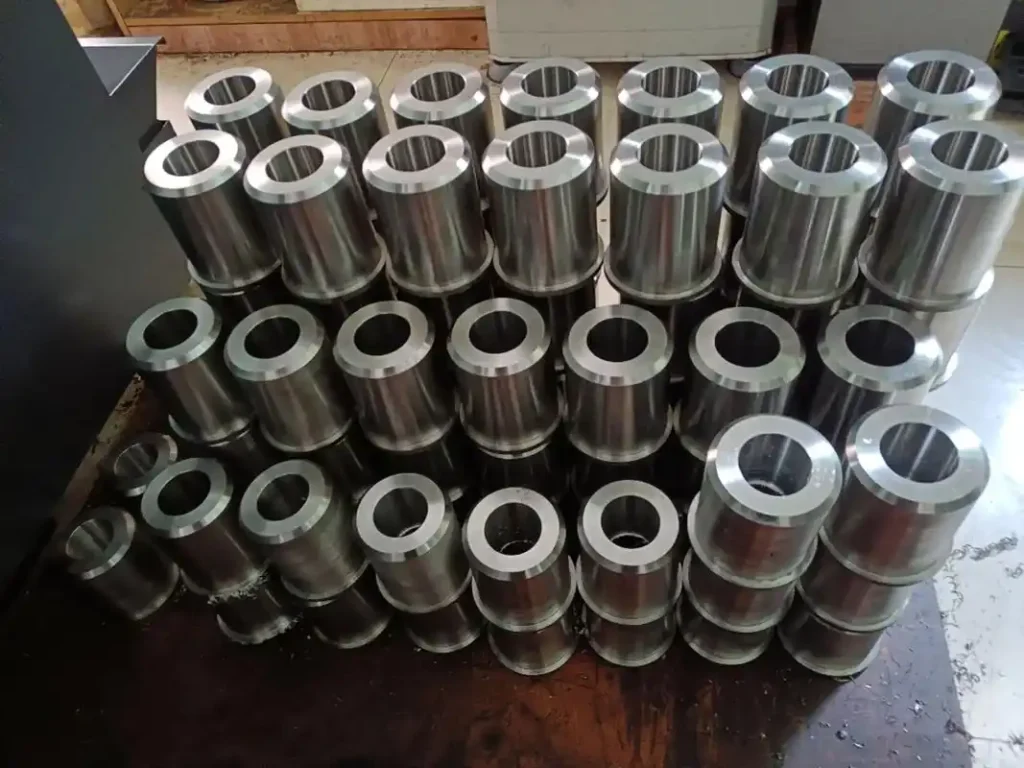
2. פִּתָרוֹן
Based on the above analysis of various factors, Hongweisheng Precision Technology will now provide you with a stainless steel machining solution tailored to each factor.
1). Tool Geometry
Tool geometry plays a crucial role in cutting performance. To ensure smooth and easy cutting, carbide tools should utilize a larger rake angle to extend tool life. This helps strengthen the blade and maximize the compressive strength of ceramic tools. The clearance angle directly affects tool wear and blade strength. Changes in the lead angle affect the radial and axial cutting forces, as well as the cutting width and thickness.
2). Tool Material Selection
Because the cutting forces and temperatures during stainless steel machining are relatively high, we recommend using high-performance coated carbide inserts as the primary choice. In certain applications, ceramic or CBN tools can also be considered. Carbide with advanced coatings offers excellent hardness, עמידות בטמפרטורה גבוהה, and chemical stability, making them ideal for machining precision stainless steel parts.
3). The tool edge should be kept sharp
The tool edge should be kept sharp to minimize work hardening. Feed rates and back-cut depth should be minimized to prevent the tool from cutting through the hardened layer, which can affect tool life and efficiency.
4). The roughness of the rake face should be minimized
To prevent tool sticking, the rake and flank faces of the tool should be carefully sharpened to minimize roughness, thereby reducing chip flow resistance and preventing chip sticking.
5). Pay attention to the grinding of the chip breaker groove
Due to the exceptional toughness of stainless steel, the chip breaker groove on the tool rake face should be carefully ground to facilitate chip breaking, chip collection, and chip removal during cutting.
6). Cutting oil – Select the right cutting oil
Since stainless steel is prone to sticking and has poor heat dissipation, it’s crucial to choose a cutting oil with good anti-sticking and heat dissipation properties. לְדוּגמָה, choose a stainless steel-specific cutting oil with excellent cooling, clear, rust-proof, and anti-slip properties.
דרך הניתוח לעיל, we understand the reasons for the difficulty in stainless steel machining. The solution should primarily focus on tools and cutting oils. This will overcome the machining difficulties, improve precision and efficiency, increase tool life, להפחית שינויים בכלים, and reduce labor intensity.
RapidEfficient מתמחה בעיבוד CNC דיוק גבוה עם 18 שנים של ניסיון. מוצריה מכסים רפואיים, תקשורת, אוֹפְּטִיקָה, מל"טים, רובוטים חכמים, רכב, וחלקי אוטומציה משרדית. מרכזי עיבוד CNC של החברה כוללים ארבעה צירים, חמישה צירים, ומכונות הצמדה ומצוידים במקרנים מדויקים, מכונות מדידה של שלוש קואורדינטות, ספקטרומטרים, וציוד בדיקה מדויק אחר. Machining accuracy can reach 0.01mm, and testing accuracy can reach 0.001mm.