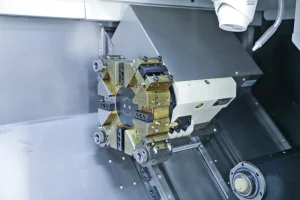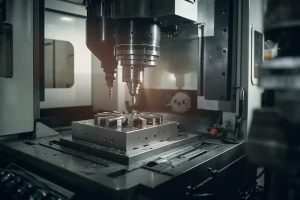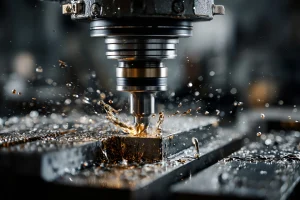

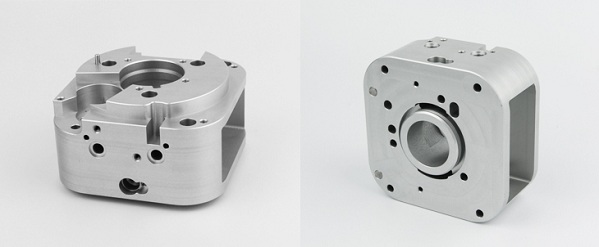
Le parti di precisione in acciaio inossidabile comuni sono generalmente prodotte utilizzando gradi standard come 303, 304, 316, E 420. Stainless steel parts are ubiquitous in both heavy and light industry, as well as in our daily lives, due to their excellent formability, compatibilità, resistenza alla corrosione, and strong rigidity.
Tipicamente, alloys with a chromium content greater than 12% or a nickel content greater than 8% are referred to as stainless steel. These materials offer excellent corrosion resistance in atmospheric and corrosive environments and maintain exceptional rigidity at extremely high temperatures (typically >450° C.). Steels with a chromium content of 16% A 18% are called acid-resistant steel or acid-resistant stainless steel. Tuttavia, since we don’t specialize in steel refining, we generally refer to them all as stainless steel.
Tuttavia, as a precision stainless steel parts manufacturer, we must understand stainless steel grades, their corresponding properties, and the applications they serve. Per esempio, applications in aerospace, petrochemicals, costruzione, trasporto, and household kitchenware all have different material requirements.
Many manufacturers are confused when it comes to precision machining stainless steel. Different grades of stainless steel have varying hardness and slightly different properties. Are there any challenges in CNC machining stainless steel? Rapido, con 18 years of experience specializing in precision stainless steel parts machining, has compiled a list of the challenges of stainless steel machining. Let’s take a look at what they are.
1. High Cutting Forces
Stainless steel undergoes significant plastic deformation during cutting, increasing cutting forces. Stainless steel’s severe work hardening and high thermal strength further increase cutting resistance, making chip curling and breaking more difficult.
2. Severe Work Hardening
L'acciaio inossidabile ha un'elevata plasticità, resulting in distorted grains during plastic deformation and a high strengthening coefficient. Inoltre, l'austenite è instabile, e sotto l'influenza dello stress da taglio, parte dell'austenite si trasforma in martensite. Inoltre, compound impurities are easily decomposed and dispersed by the cutting heat, resulting in a hardened layer during cutting. Work hardening from a previous feed or process can severely impact the smooth progress of subsequent processes.
3. Chips are difficult to break and easily stick together
Stainless steel has high plasticity and toughness. Durante la lavorazione CNC, continuous chips form, not only hindering smooth operation but also damaging the machined surface. Under high temperature and pressure, l'acciaio inossidabile ha una forte affinità con altri metalli, easily causing adhesion and built-up edge formation. This not only increases tool wear but also causes tearing, deteriorating the machined surface.
4. High cutting temperature
During cutting, plastic deformation and friction with the tool are both significant, generating significant cutting heat. A large amount of cutting heat is concentrated in the cutting zone and the tool-chip interface, con conseguente scarsa dissipazione del calore.
5. High linear expansion coefficient
The linear expansion coefficient of stainless steel is approximately 1.5 volte quello dell’acciaio al carbonio. Under the influence of cutting temperatures, workpieces are prone to thermal deformation, making dimensional accuracy difficult to control.
6. Usura degli strumenti
The affinity effect during stainless steel cutting causes adhesion and diffusion between the tool and the chip, resulting in adhesive and diffusion wear on the tool. This leads to craters on the tool rake face and tiny flaking and chipping on the cutting edge. Inoltre, the carbide particles (such as TiC) in stainless steel are very hard, which directly contact and rub against the tool during cutting, causing scratches and work hardening, all of which exacerbate tool wear.
Attraverso l'analisi di cui sopra, we know that the difficulties in cutting stainless steel precision parts primarily manifest in cutting force, work hardening, high viscosity, high temperature, large linear expansion coefficient, and easy tool wear.
Understanding these characteristics of stainless steel machining allows us to select the right machine tool, attrezzo, tool path, parametri di taglio, cutting fluid, and other measures to ensure product quality.
Rapido è specializzata nella lavorazione CNC ad alta precisione con 18 anni di esperienza. I suoi prodotti coprono il settore medico, comunicazioni, ottica, droni, robot intelligenti, automotive and office automation parts. I centri di lavoro CNC dell'azienda includono quattro assi, five-axis and linkage machine tools, e sono dotati di proiettori di precisione, macchine di misura a tre coordinate, spectrometers and other precision testing equipment. The machining accuracy can achieve 0.01mm and the testing accuracy can achieve 0.001mm.