
The Challenge of Machining 7075-T6 Thin-Walled Components
Per aerospaziale and high-performance automotive applications, 7075-Alluminio T6 is preferred for its strength-to-weight ratio. Tuttavia, when wall thicknesses drop below 1.0 mm, two critical failures often occur: uncontrollable warping due to residual stress and surface mottling dopo l'anodizzazione.
A Rapido, we have developed a specialized workflow to maintain dimensional stability and aesthetic perfection for the most complex 7075 geometries.
Process Comparison: Standard contro. Rapidefficient Expertise
| Technical Metric | Standard CNC Shop | Rapidefficient Precision Process |
| Stress Management | Direct high-speed milling | Sub-zero stabilization & Interstage stress relief |
| Wall Thickness Limit | ~1.5 mm (with risk) | Reliable at 0.5 mm – 0.8 mm |
| Dimensional Stability | High risk of “spring-back” | Guaranteed flatness within $\pm 0.02$ mm |
| Anodizing Quality | Potential color variations | Grain-matched machining for color consistency |
| Fixture Technology | Standard mechanical vises | Custom vacuum and cryogenic fixtures |
Overcoming Deformation: IL “Stress-Neutral” Approach
1. Controlling Residual Internal Stress
The T6 temper of 7075 aluminum contains significant internal stress. Standard machining releases this stress unevenly, causing the part to “potato chip” or warp.
- La nostra soluzione: We implement a symmetric material removal strategy. By machining both sides of the thin-walled part in alternating stages, we balance the internal forces, ensuring the final geometry remains true to the CAD model.
2. Thermal Management During Cutting
Heat is the enemy of thin walls. Excessive temperature leads to localized expansion and permanent distortion.
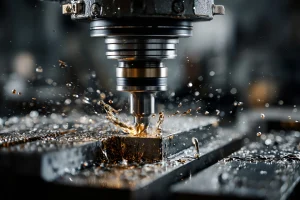
- La nostra soluzione: We utilize high-pressure through-spindle cooling and specialized diamond-coated cutters to minimize friction heat, keeping the part at a stable ambient temperature throughout the finish pass.
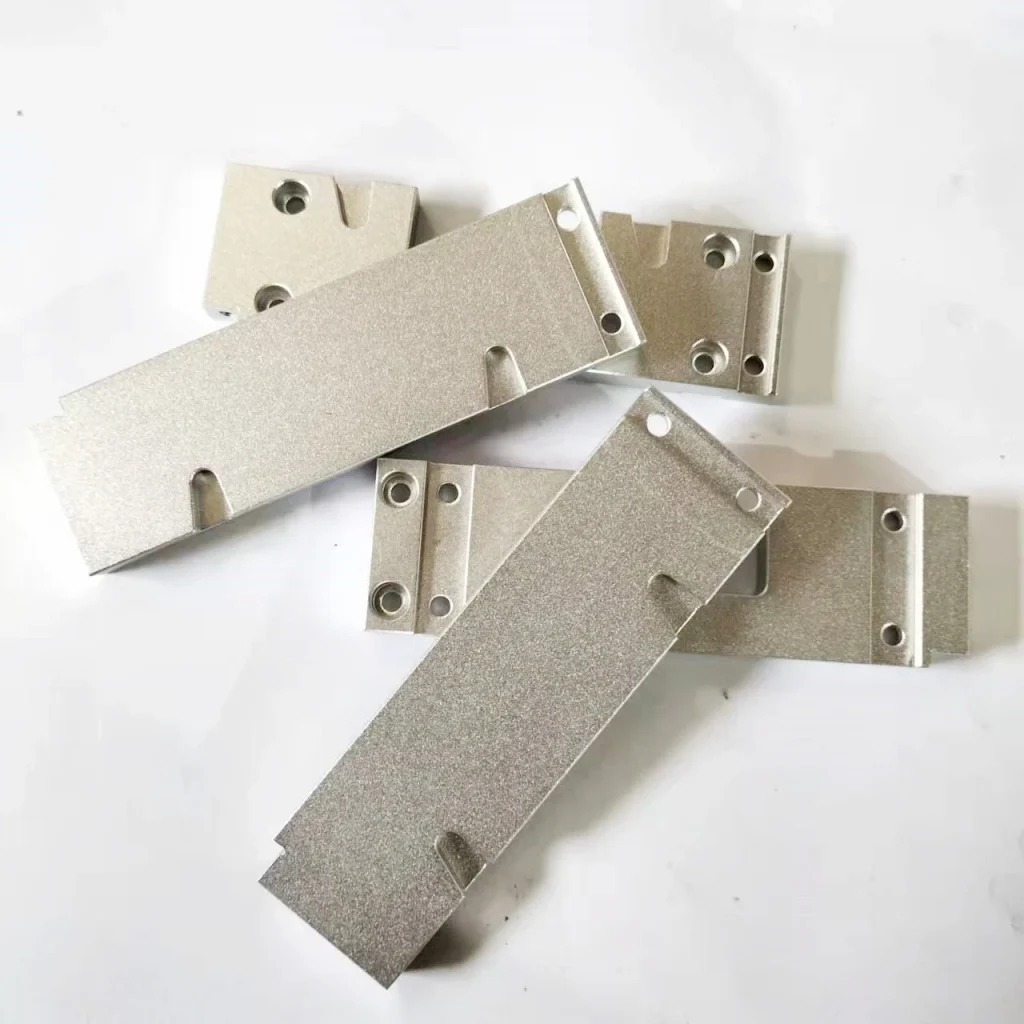
Solving Anodizing Defects (Surface Integrity)
7075 aluminum is notoriously difficult to anodize consistently. “Tiger stripes” or dull spots are common defects.
- Grain Direction Alignment: We carefully align the part’s orientation with the material’s rolling grain to ensure the electrolyte reacts uniformly during the anodizing bath.
- Surface Pre-Treatment: We use a proprietary bead-blasting process ($Zirblast$) before anodizing to create a uniform surface energy, resulting in a deep, consistent color across the entire batch.
Why Choose Rapidefficient for 7075 Parts?
We don’t just provide machining; we provide engineering reliability for mission-critical parts.
- DFM Feedback: We analyze your thin-walled designs to suggest ribbing or radius adjustments that improve rigidity without adding weight.
- Fast Prototyping: 3-5 day lead times for complex 7075 prototypes.
- Certified Quality: Every shipment includes a full inspection report and material COA.
Need a solution for your 7075 parti?
[Contact Our Engineering Team for a Technical Review] or explore our [Servizi di lavorazione CNC]for more precision solutions.