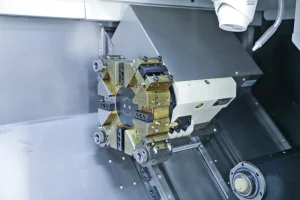
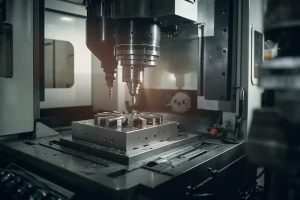
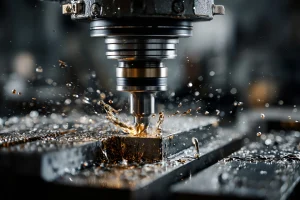
Industries such as aerospace, dispositivi medici, and automotive manufacturing place high demands on precision CNC machining. Products in these industries often feature complex designs and strict tolerances. Per esempio, the following are examples:
Macchinatura CNC di precisione
Industria aerospaziale:
Aircraft parts have extremely stringent precision requirements; even the slightest error can pose a safety hazard. Per esempio, turbine blades in aircraft engines typically require machining accuracy of IT5, with a surface roughness of around 0.2μm Ra, depending on material and function. Five-axis precision machining is required to ensure both accuracy and strength. Inoltre, critical components such as fuselage structures, carrello di atterraggio, and spacecraft structures also require extremely high machining precision to ensure performance and safety.
Medical device industry:
Medical devices have extremely high requirements for precision and hygiene. Per esempio, surgical instruments require extremely high precision and sharpness to ensure precise surgical operations. Implants such as artificial joints require perfect ergonomics and flawless surfaces. Their machining accuracy typically reaches IT6, with a surface roughness of around 0.4μm Ra, depending on material and function, to ensure good biocompatibility and performance. Components of medical testing equipment also require high-precision machining to ensure accurate test results.
Automotive manufacturing industry:
CNC machining is widely used in the manufacture of automotive parts, from engine blocks and transmission housings to brake discs and suspension systems. With the development of new energy vehicles, the requirements for CNC machining precision are even higher. Per esempio, the manufacture of components such as battery and motor housings, as well as certain high-precision gears and shafts, all require CNC machining to ensure accuracy and performance, thereby improving the safety and reliability of the entire vehicle.
Electronics industry:
Within the electronics industry, CNC machining is widely used in the manufacture of precision electronic components. Per esempio, the casings, dissipatori di calore, and connectors of consumer electronics products like mobile phones and computers require CNC machining to achieve high-precision and complex shapes to ensure the precise installation and connection of electronic components. Inoltre, CNC technology is used for drilling and cutting printed circuit boards (PCBs), which generally require micron-level precision, but the exact tolerances depend on the board design and materials.
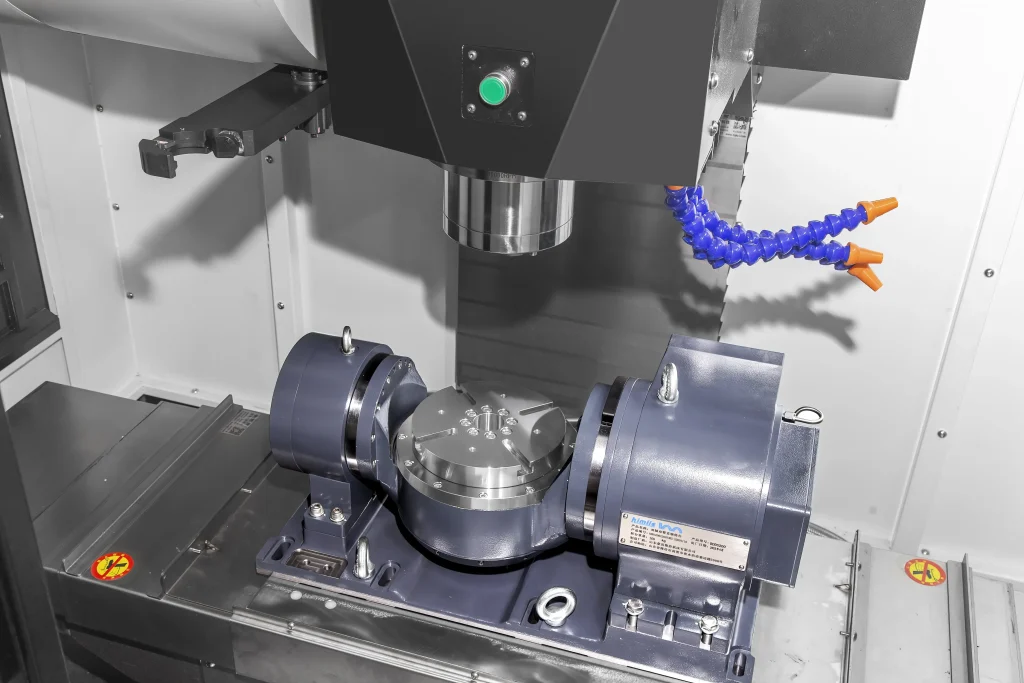
The mold manufacturing industry:
Mold precision and surface quality directly impact the quality of the final product, so mold manufacturing also places high demands on CNC machining accuracy. Per esempio, the cavities and cores of injection molds have strict requirements for dimensional accuracy and surface roughness. Tipicamente, dimensional tolerances must be controlled within ±0.01mm, and surface roughness Ra values must be below 0.4μm to ensure the molding quality and appearance of the plastic parts. The cutting edge clearance of stamping dies must also be controlled within a very small range, generally reaching ±0.001mm, to ensure minimal burrs and high dimensional accuracy on the blanked parts, but exact values depend on material and die design.
Military industry:
The military industry has extremely high requirements for the precision and reliability of weapons and equipment. Per esempio, the parts of firearms, artillery, missiles, tanks and other weapons and equipment need to be CNC machined to ensure their precision and performance, in order to ensure the shooting accuracy, reliability and service life of the weapons.
Informazioni su RapidEfficient
RapidEfficient è specializzata nella lavorazione CNC ad alta precisione con 18 anni di esperienza. I suoi prodotti coprono il settore medico, comunicazioni, ottica, droni, robot intelligenti, automobile, e parti di automazione dell'ufficio.
I centri di lavoro CNC dell'azienda includono quattro assi, cinque assi, e macchine utensili di collegamento, e sono dotati di proiettori di precisione, macchine di misura a tre coordinate, spettrometri, e altre apparecchiature di prova di precisione.
Precisione della lavorazione: fino a 0.01 mm
Precisione del test: fino a 0.001 mm