
Каждый автомобиль состоит из тысяч точных деталей., каждый выполняет уникальную функцию. With over a century of automotive history, the manufacturing techniques for these parts have steadily improved. From forming and assembly, cars emerge. RapidЭффективный presents four common processes for automotive parts processing.
1. Automotive Parts Casting
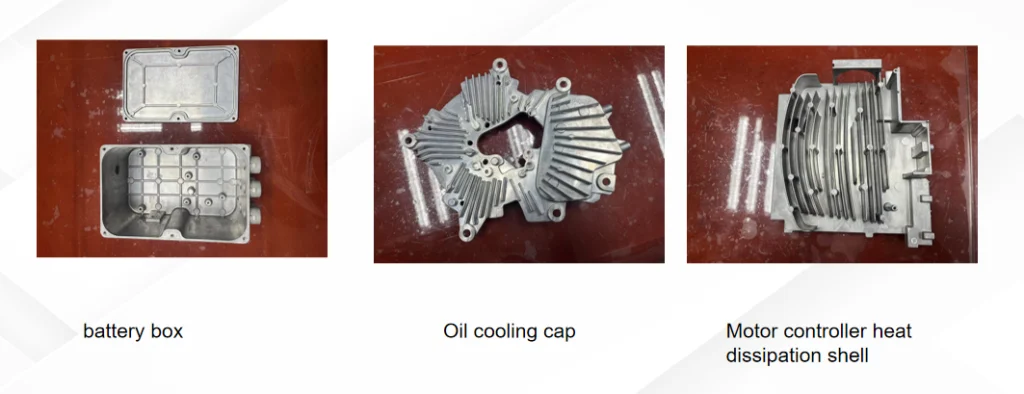
Automotive parts casting involves pouring molten metal into a special casting cavity, where it solidifies and takes the approximate shape of the product.
This process is very common in automotive parts manufacturing, with many applications including engines and connecting rods. Many parts in automotive parts manufacturing are made from cast iron. Despite the trend toward lightweighting, cast iron still accounts for about 10% of a vehicle’s weight, включая:
- Cylinder blocks
- Transmissions
- Rear axles
- Steering gears
- Various brackets
Casting iron parts are typically made using sand molds, formed from sand mixed with a binder and water. Sand mold material must have sufficient adhesive strength to maintain shape and resist collapse under molten iron impact.
To create a cavity in the sand mold, а pattern (traditionally wood, now often resin or metal) is produced. Since molten iron shrinks as it cools, the pattern is made slightly larger than the final part.
After casting, excess material is removed through CNC machining.
2. Automotive Parts Forging
Forging is another common process in automotive parts manufacturing, divided into open-die forging и closed-die forging.
This process, comparable to traditional “blacksmithing,” is still used in high-strength component production. Automotive forging involves placing a heated metal blank into a mold, then applying impact or pressure to form the desired shape.
Advantages of forging include higher strength and precision. Common forged automotive parts include:
- Engine connecting rods
- Front axles
- Crankshafts
- Steering knuckles
Closed-die forging is particularly precise, where the blank is compressed within a die to form contours similar to shaping dough in a mold.
3. Automotive Parts Cutting
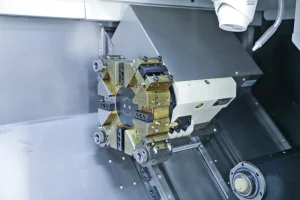
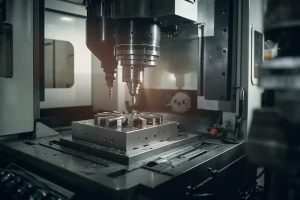
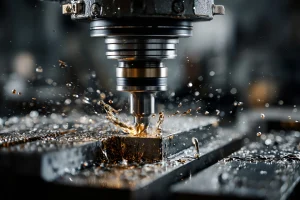
Cutting removes excess material from a blank to achieve the required shape, размеры, и качество поверхности. Automotive parts cutting methods include manual cutting (bench work) и обработка с ЧПУ.
Common machining processes:
- Поворот: Performed on CNC lathes, machining outer diameters, inner diameters, and end faces. Used for shafts and gear blanks.
- Фрезерование: Performed on CNC milling machines (now four- и пятиосный), capable of machining flat, curved, и сложные поверхности, including grooves. Essential for parts and stamping die manufacturing.
- Бурение & Скучный: Used to machine precision holes in parts.
- Шлифование: Provides superior precision and surface finish, capable of processing hardened or heat-treated materials that are difficult for standard cutting tools.
4. Automotive Parts Stamping
Stamping is used for sheet metal automotive parts, такой как:
- Engine pans
- Doors
- Hoods
- Brake system underplates
Typical stamping processes include blanking, пробивание, stretching, изгиб, формирование, and trimming.
Stamping requires a die set consisting of an upper die (providing downward force) and a lower die (providing support). The blank is placed between the two dies, and impact force forms the part.
Stamping is highly efficient, suitable for producing complex shapes with high precision. Stamping presses are categorized by tonnage—commonly 40-ton, 60-ton, and 100-ton models—depending on the part’s size and material.
RapidEfficient Expertise
RapidЭффективный specializes in high-precision CNC machining with 18 многолетний опыт.
Its products cover industries including:
- Медицинский
- Communications
- Optics
- Drones
- Intelligent robots
- Автомобильная промышленность
- Office automation
Обрабатывающие центры с ЧПУ компании включают четырехосные, пятиосный, and multi-linkage machines. Testing and inspection equipment includes:
- Precision projectors
- Координатно-измерительные машины (КИМ)
- Spectrometers
Machining accuracy: 0.01 мм
Testing accuracy: 0.001 мм