

Допуски на обработку с ЧПУ: Build a Realistic Tolerance Budget
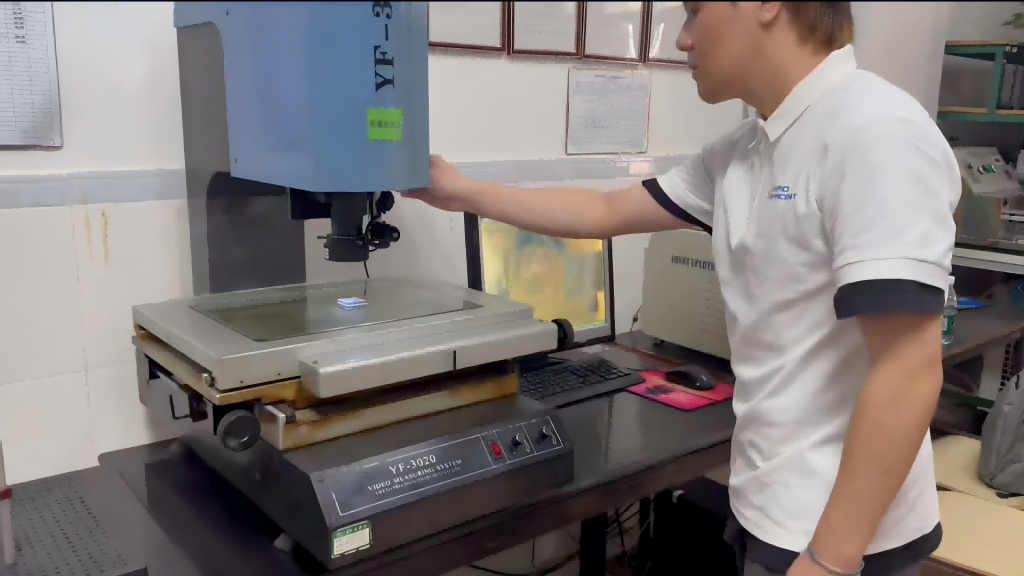
A Ø10 mm H7 hole is not simply a hole marked “10 mm” on a drawing.
Under the ISO fit system, a Ø10 H7 hole has a narrow dimensional window of 10.000–10.015 mm.
Whether the finished hole works in assembly depends on more than the nominal size. Материальное поведение, глубина отверстия, datum selection, оснастка, clamping, обработка поверхности, температура, inspection method, and production quantity may all affect the delivered result.
The same problem appears when a drawing applies ±0,005 мм to every dimension.
A precision tolerance may be achievable on a selected functional feature. That does not mean it should be copied across an entire part.
Tightening non-critical dimensions increases setup time, fixture requirements, machining stages, tool-wear control, inspection work, and quotation risk without improving the final assembly.
Rapid Efficient supports tolerance review for custom CNC machined metal and engineering-plastic parts. Перед цитатой, we review the drawing together with the material grade, геометрия, critical features, datum structure, surface-finishing route, inspection method, ожидаемое количество, and operating environment.
The goal is not to make every dimension tighter.
The goal is to protect the dimensions that control function.
A Tight Tolerance Is a Manufacturing Decision
A tolerance is not only a number printed beside a dimension.
Each tighter tolerance may affect:
- Raw-material selection
- Stock form and temper
- Roughing and finishing strategy
- Clamping force
- Fixture design
- Number of machining stages
- Выбор инструмента
- Tool-wear control
- Rest periods between machining operations
- Temperature conditions
- Surface-treatment allowance
- Сроки проверки
- Measurement equipment
- Sampling plan
- Packaging and delivery risk
A ±0.05 mm clearance dimension and a ±0.005 mm bearing location should not be quoted, machined, or inspected in the same way.
When a drawing treats them as equivalent, cost rises quickly.
Use General Tolerances as a Baseline, Not as an Escape Route
General tolerances are useful when a drawing contains non-critical dimensions that do not require individual tolerance callouts.
A drawing may reference ИСО 2768-1 for linear and angular dimensions without individual tolerance indications.
Depending on the project, general-tolerance classes may include:
- Fine
- Середина
- Coarse
- Very coarse
Однако, a general tolerance note should never replace functional engineering review.
It does not automatically define:
- Hole and shaft fits
- Расположение подшипников
- Press-fit interfaces
- Sealing surfaces
- Thread acceptance
- Flatness requirements
- True-position requirements
- Run-out limits
- Datum relationships
- Post-finish dimensions
- Inspection timing for engineering plastics
Legacy drawings may also contain references to ИСО 2768-2 for general geometrical tolerances.
ИСО 2768-2 has been withdrawn. New projects should not copy older general-tolerance notes automatically. Geometrical requirements should be reviewed against the actual function, datum scheme, applicable drawing standard, and current GPS framework.
During the DFM stage, separate the drawing into three groups:
- Non-critical dimensions that can follow an agreed general tolerance.
- Assembly-sensitive dimensions that need individual limits or fit callouts.
- Datum-related geometrical controls that need GD&T and a defined inspection plan.
For practical drawing improvements before quotation, просмотрите наш CNC machining design guide.
Tolerance Budgeting Framework
The correct tolerance is the narrowest tolerance required by the part function, not the narrowest number that can be typed into CAD.
| Feature Type | Typical Manufacturing Conflict | Tolerance-Budget Decision | Inspection Route to Review |
|---|---|---|---|
| Non-critical outer dimensions, clearance features, and general envelopes | Unnecessary tight callouts increase programming, setup, and inspection time | Apply an agreed general tolerance where appropriate | Calipers, микрометры, высотомеры, or standard dimensional checks |
| Precision holes, валы, седла подшипников, and fitted interfaces | Размер отверстия, округлость, surface condition, and tool wear may affect assembly | Define the functional fit, final size range, and whether the dimension applies before or after finishing | Калибры, plug gauges, bore gauges, микрометры, or CMM depending on the feature |
| Тонкие стены, large pockets, and heavily machined plates | Residual stress release and clamping pressure may move the part after material removal | Review stock form, толщина стены, machining sequence, finishing allowance, and inspection timing | Dimensional checks after roughing and finishing; flatness or profile review where required |
| Datum-related hole patterns and multi-face features | Repositioning between operations may introduce accumulated error | Define datum references and review whether single-setup machining, dedicated fixtures, or multi-axis machining is justified | Инспекция ШМ, fixture-based checks, or functional gauges depending on the requirement |
| Engineering-plastic components | Тепловое расширение, чувствительность к влаге, clamping deformation, and post-machining recovery may affect dimensions | Review polymer grade, операционная среда, storage condition, and inspection timing before accepting narrow tolerances | Inspection after an agreed stabilization period and under defined conditions when required |
| Anodized, plated, coated, or heat-treated features | Post-processing may alter hole size, thread fit, mating surfaces, or flatness | Define masking, machining allowance, and whether the requirement applies before or after finishing | Post-finish dimensional checks, резьбомеры, fit verification, and appearance inspection |
A realistic tolerance budget makes the drawing easier to quote and easier to manufacture.
It also reduces disputes after delivery.
H7 Holes and Shaft Fits Need a Process Plan
A fit callout is not only a drafting convention.
It changes the machining route.
Например, a Ø10 H7 hole has a final allowable range of 10.000–10.015 mm.
A standard clearance hole and an H7 fitted hole should not be treated as the same manufacturing task.
Depth matters as much as nominal diameter.
A shallow fitted hole and a deep fitted hole with the same size and tolerance do not necessarily require the same machining route.
As the depth-to-diameter ratio increases, tool reach, эвакуация стружки, run-out, отклонение, резка тепла, and inspection access require closer review.
There is no universal L/D cutoff that applies to every material, инструмент, and hole geometry.
The drawing should identify the hole depth so the feature can be reviewed against the actual assembly requirement.
Depending on the drawing, материал, глубина, количество, and relationship to other features, a precision hole may require:
- Controlled interpolation
- Precision boring
- Рассверливание
- A dedicated tool
- Tool-wear monitoring
- Trial parts
- In-process checks
- Pin-gauge or plug-gauge inspection
- Bore-gauge verification
- Post-finish reinspection
- Functional assembly checks
The correct route depends on the feature.
A reamer is not automatically the best solution for every fitted hole.
A CMM is not automatically the best tool for every fit.
A standard end mill is not automatically sufficient simply because the CAD model shows the correct diameter.
Before requesting a narrow fit, подтверждать:
- Nominal hole or shaft size
- Required fit class
- Hole depth
- Through-hole or blind-hole condition
- Surface-roughness requirement
- Material grade
- Количество
- Mating component
- Whether the mating component is customer-supplied
- Whether the fit applies before or after surface treatment
- Whether sampling or 100% gauge inspection is required
These details affect quotation more than the tolerance symbol alone.
Do Not Apply ±0.005 mm to Every Feature
A ±0.005 mm tolerance is not a decorative sign of engineering quality.
It is a selective requirement that should be reserved for features that genuinely control function.
Appropriate candidates may include:
- Bearing seats
- Precision bores
- Shaft diameters
- Critical mating interfaces
- Alignment features
- Selected sealing features
- Datum-related functional surfaces
- Precision holes used for assembly repeatability
Poor candidates may include:
- Cosmetic faces
- Non-critical external envelopes
- Large clearance holes
- Decorative pockets
- General chamfers
- Unrelated surfaces
- Features that will change during downstream finishing
- Flexible plastic walls without a defined inspection condition
Applying the same narrow tolerance everywhere may create avoidable cost while still failing to protect the most important relationship in the assembly.
A better drawing identifies the critical characteristics explicitly.
Depending on the part geometry, материал, and inspection requirements, Rapid Efficient can review selected tight-tolerance features during quotation.
Final feasibility should be confirmed feature by feature rather than assumed across the entire component.
Material Behavior Sets a Hard Limit
The same drawing tolerance does not create the same manufacturing risk in every material.
Алюминиевые сплавы
Алюминий широко используется для изготовления корпусов., скобки, вложения, heat-transfer components, robotics parts, и средства автоматизации.
For heavily pocketed plates and thin-wall housings, the main risk is often movement after material removal.
A stress-relieved temper such as 6061-T651 may help reduce distortion risk for suitable plate applications.
It does not eliminate the need for:
- Симметричное удаление материала
- Контролируемая сила зажима
- Roughing and finishing stages
- Rest periods where required
- Flatness review
- Post-machining inspection
- Surface-finishing allowance
Stainless Steel and Tool Steel
Steel and stainless-steel parts may provide higher rigidity, but the machining route still depends on:
- Оценка
- Hardness condition
- Термическая обработка
- Износ инструмента
- Geometry
- Residual stress
- Post-treatment inspection
A hardened part is not automatically easier to hold within tolerance simply because the material is rigid.
Медь и медные сплавы
Pure copper grades such as С110 may be valuable for conductivity and thermal performance.
They can also create different tolerance risks.
Soft and ductile copper may generate:
- Rolled burrs
- Smearing
- Thread damage
- Surface-handling marks
- Heat-related instability during machining
- Difficulties around small holes and contact surfaces
For conductive parts, the tolerance plan should be reviewed together with burr control, контактные поверхности, cleaning, oxidation protection, и упаковка.
Инженерные пластмассы
Engineering plastics should not automatically inherit the same tolerance assumptions used for rigid metal parts.
The risk depends on the exact polymer.
ПОМ / Ацеталь: Generally suitable for precision plastic parts, but edge quality, плоскостность, and inspection timing still require review.
ПЭК: Offers relatively good dimensional stability for demanding applications, but geometry, grade, складская форма, расходы, and inspection conditions still matter.
Нейлон / Пенсильвания: Moisture absorption may affect dimensions during storage and use.
ПТФЭ: Мягкое поведение, thermal movement, clamping deformation, and dimensional recovery require careful review.
PP and other flexible plastics: Part flexibility and fixturing stability may limit realistic tolerances.
For a deeper material-risk comparison, просмотрите наш CNC machining materials guide.
Define the Reference Condition
Dimensional verification also needs a reference condition.
ИСО 1 establishes 20°C (68°F) as the standard reference temperature for geometrical and dimensional properties.
For selected micron-level requirements, the RFQ and inspection plan should define:
- Reference temperature
- Stabilization condition
- Сроки проверки
- Условия хранения
- Операционная среда
This is especially important for aluminum and engineering-plastic components.
A dimension verified under an agreed reference condition may shift in a warmer warehouse or operating environment because thermal expansion remains a material and design variable.
The correct question is not:
Can this material be machined?
The correct question is:
Can this specific feature remain stable through machining, инспекция, хранилище, обработка поверхности, and final assembly?
ГД&T Is Useful Only When It Protects Function
Geometric dimensioning and tolerancing should clarify the assembly requirement.
It should not be added as decoration.
A linear dimension controls size or distance.
A geometrical tolerance may control the relationship between features.
Depending on the design, important controls may include:
- Плоскостность
- Параллелизм
- Перпендикулярность
- Позиция
- Circular run-out
- Total run-out
- Profile
- Datum relationships
These controls may affect:
- Fixture strategy
- Datum preparation
- Number of setups
- Whether features should be machined in one setup
- Whether multi-axis machining is justified
- Probe strategy
- CMM programming
- Functional-gauge design
- Inspection time
Например, a hole pattern controlled only by basic coordinate dimensions may look simple on paper.
If its position relative to a mounting datum is critical, the manufacturing route must protect that datum relationship through machining and inspection.
В некоторых случаях, a clear true-position requirement can reduce cost by replacing unnecessarily tight coordinate tolerances.
In other cases, a poorly defined datum scheme creates more problems than it solves.
Перед цитатой, подтверждать:
- Which surface is the primary datum?
- Which features control assembly?
- Which relationships must be maintained after repositioning?
- Which dimensions are functional rather than cosmetic?
- Is a custom fixture required?
- Can critical features be machined in one setup?
- Is CMM inspection required?
- Would a functional gauge provide a better acceptance method?
The best GD&T callout is the one that protects assembly without creating unnecessary manufacturing complexity.
Surface Finishing Can Consume the Tolerance Budget
A part can pass dimensional inspection before finishing and fail during assembly after finishing.
Анодирование, жесткое анодирование, покрытие, порошковое покрытие, рисование, and heat treatment may affect final dimensions or feature behavior.
This is especially important for:
- H7 holes
- Internal threads
- External threads
- Расположение подшипников
- Press-fit features
- Sliding surfaces
- Mating faces
- Grounding points
- Sealing surfaces
- Тонкие стены
- Heat-treated steel parts
Anodizing is a conversion process.
The aluminum oxide layer changes the final dimensions. The dimensional effect depends on the alloy, anodizing route, process conditions, coating requirement, геометрия, and masking plan.
Do not apply one universal compensation rule to every anodized component.
For critical features, the drawing should clarify whether the requirement applies:
- Before finishing
- After finishing
- On a masked surface
- After post-finish inspection
- After thread verification
- After fit verification
Hard anodizing requires particular attention because a thicker functional coating may interfere with holes, нити, and precision assembly features when machining allowance and masking are not reviewed in advance.
For finishing-specific risks, просмотрите наш CNC surface finishes guide.
Inspection Is Part of the Tolerance Specification
A narrow tolerance is incomplete until the acceptance method is understood.
Different features require different inspection tools.
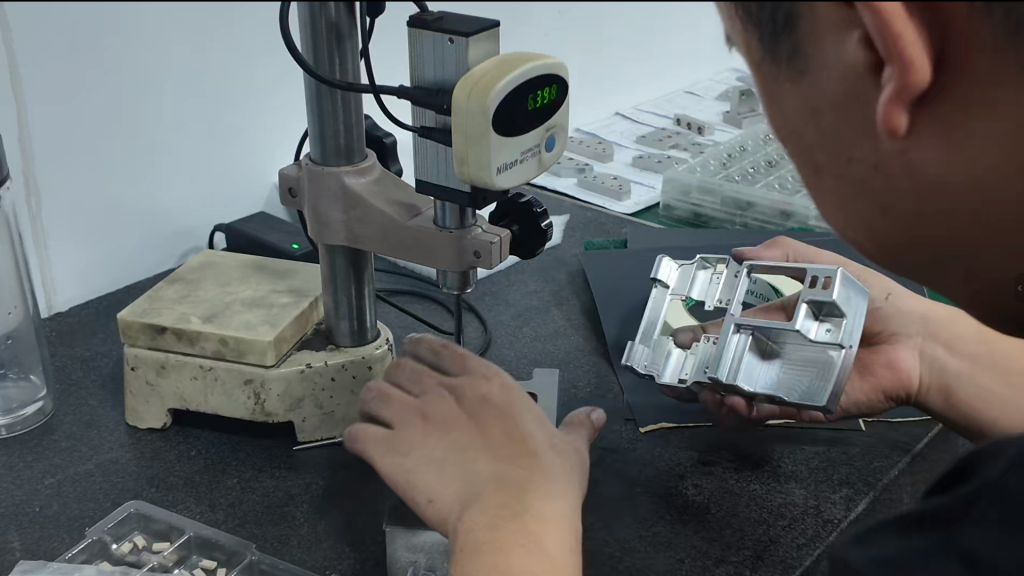
Depending on the drawing and project requirements, inspection planning may include:
- Calipers
- Micrometers
- Height gauges
- Калибры
- Plug gauges
- Манометры резьбы
- Bore gauges
- Surface-roughness checks
- Flatness checks
- Functional gauges
- Инспекция ШМ
- Visual inspection after finishing
- Проверка упаковки
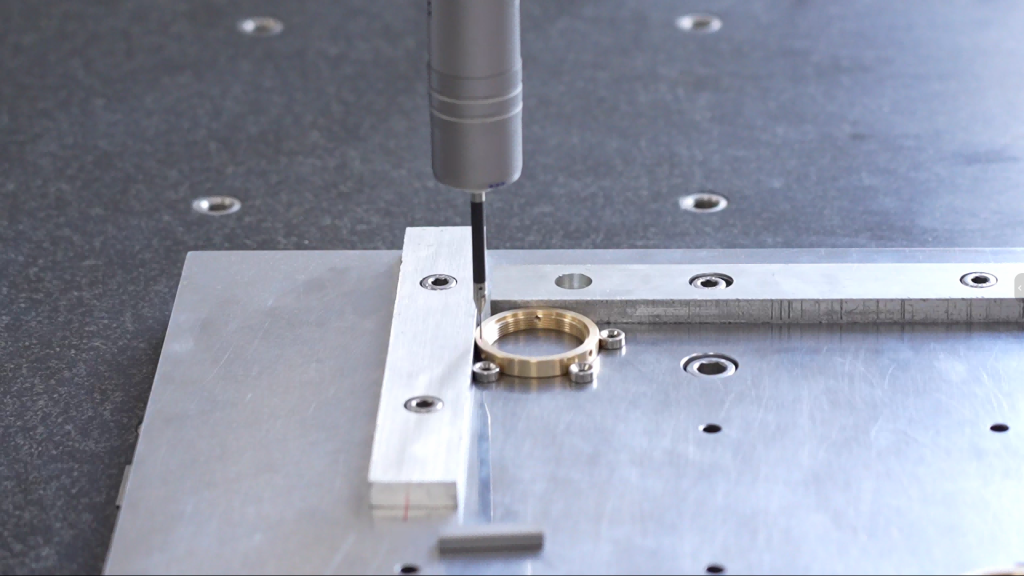
CMM inspection is valuable for datum-related geometrical controls, hole patterns, profiles, and complex multi-face relationships.
It is not a substitute for every gauge.
For a fitted hole, a pin gauge or plug gauge may provide a direct pass-or-fail check.
For a threaded feature, a thread gauge may be more relevant.
For an engineering-plastic part, inspection timing and environmental conditions may matter as much as the instrument.
Measurement Uncertainty and Decision Rules
Measurement uncertainty should also be considered when measured values fall close to a tolerance limit.
Where a conformity statement is required for a critical feature, the acceptance rule should be agreed before production.
ИСО 14253-1 addresses decision rules for cases in which measurement uncertainty affects a clear conformity or nonconformity conclusion near a specification limit.
For narrow tolerances, the RFQ or inspection plan should clarify whether an agreed guard band, a customer-specific acceptance rule, or another defined decision rule applies.
This prevents a borderline measurement from becoming a dispute after delivery.
Перед цитатой, define:
- Critical dimensions
- ГД&T requirements
- Требования к отчету об инспекции
- Sampling or 100% inspection expectations
- Mating-part requirements
- Gauge requirements
- Post-finish checks
- Inspection timing for plastics
- Packaging checks
- Сертификаты на материалы при необходимости
Узнайте больше о нашем процесс обеспечения качества.
Tolerance Information to Include in Your RFQ
Перед цитатой, подготовить:
- 2D рисунок
- 3D CAD-файл
- Material grade
- Состояние закалки или твердости
- Expected quantity
- General-tolerance note
- Individually controlled critical dimensions
- Hole and shaft fit requirements
- Hole depths
- Datum structure
- ГД&T callouts
- Thin-wall areas
- Глубокие дыры
- Threads
- Расположение подшипников
- Сопрягаемые поверхности
- Sealing surfaces
- Surface-finish requirements
- Masking areas
- Heat-treatment requirements
- Требования к отчету об инспекции
- Sampling or 100% inspection expectations
- Mating components when available
- Reference temperature for selected micron-level requirements
- Humidity or storage requirements for engineering plastics
- Требования к упаковке
When the tolerance plan has not yet been finalized, identify the assembly function and the failure mode that must be avoided.
We can review the material behavior, маршрут обработки, fixture risk, finishing allowance, inspection method, and delivery conditions together before quotation.
Upload Your Drawing for Tolerance Review
Send your 2D drawing, 3D CAD-файл, material grade, примечания о допусках, ГД&T requirements, surface-finishing requirements, inspection needs, и ожидаемое количество.
Our team will review the critical features, machining risks, tolerance budget, finishing allowance, inspection route, и условия доставки до предложения.
CTA Button: Загрузите свой рисунок
About Rapid Efficient
Rapid Efficient supports custom CNC machining projects for prototypes, low-volume parts, и производственные требования.
С 18 years of high-precision CNC machining experience, our team reviews material behavior, стратегия обработки, tolerance risks, post-processing requirements, inspection methods, packaging conditions, and delivery schedules before quotation.
Our available capabilities include 4-axis, 5-ось, and multi-axis CNC machining, together with inspection equipment such as CMM, проекторы, и спектрометры.
Depending on the actual part and project requirements, machining accuracy down to 0.01 мм and inspection accuracy down to 0.001 мм доступны.
Rapid Efficient has obtained ИСО 9001 и ИСО 14001 сертификация.
We support projects across medical devices, communications equipment, optical components, дроны, интеллектуальная робототехника, automotive applications, office automation, and other custom manufacturing requirements.