
結論を先に
選ぶ アルミニウム 力が必要なとき, 厳しい公差, 耐熱性, ねじ付きフィーチャー, EMIシールド, またはプレミアムな製品感.
選ぶ プラスチック 低コストが必要な場合, 電気絶縁, 軽量ハウジング, または大量の成形された消費者向け部品.
多くの製品について, 最良の決定はパフォーマンス要件によって異なります, 環境, 外観, 量, 市場投入までのスピード.
不明な場合は, RapidEfficient は設計をレビューし、最も実用的な材料の選択を推奨します。.
この比較が重要な理由
多くのバイヤーはアルミニウムとプラスチックのどちらが優れているかを尋ねます.
本当の質問は:
- 部品には構造強度が必要ですか?
- 熱や屋外での使用に耐えられますか?
- ネジやインサートが必要ですか?
- 見た目の美しさは重要ですか?
- 目標数量と予算はどれくらいですか?
- どれくらいの速さで生産部品が必要になりますか?
間違った材料を選択するとコストが増加する可能性があります, 故障率, または再設計の時間.
クイックデシジョンテーブル
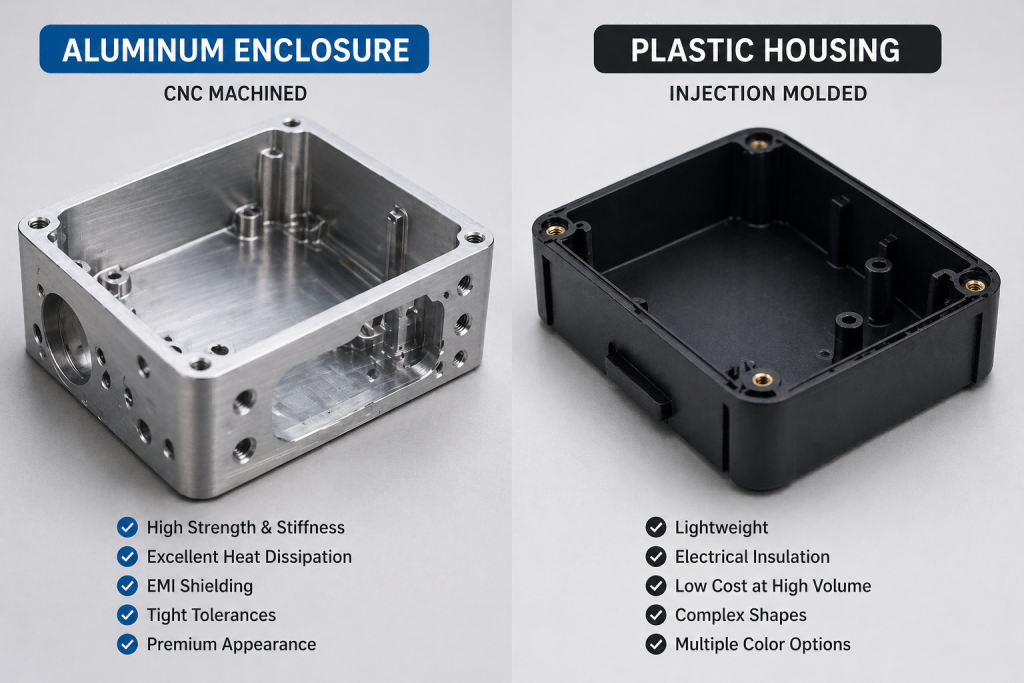
| 必要 | より良い選択 | 技術的な理由 |
|---|---|---|
| 厳しい公差 | アルミニウム | 寸法安定性の向上 |
| EMIシールド | アルミニウム | 自然導電性ハウジング |
| 放熱 | アルミニウム | 高い熱伝導率 |
| 低コストで大量生産 | プラスチック | 成形品の生産効率 |
| 電気絶縁 | プラスチック | 非導電性材料 |
| 軽量ハンドヘルド製品 | プラスチック | 密度が低い |
| 強力な糸 | アルミニウム | 糸の耐久性が向上 |
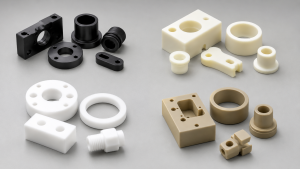
| 耐薬品性 | プラスチック | PEEK や POM などの材料は優れた性能を発揮します |
強度と精度
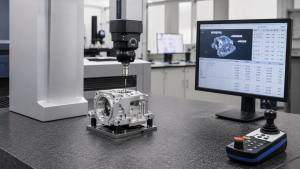
アルミニウムは、ほとんどのプラスチックよりも高い剛性と寸法安定性を備えています。.
これにより、次のような用途に最適です。:
- 機械加工されたハウジング
- 括弧
- 取り付けプレート
- ロボット部品
- 精密治具
多くのプラスチックは長期的な劣化に見舞われる可能性があります。 クリープ または一定負荷下のコールドフロー, 一方、アルミニウムは長年にわたり寸法の完全性を維持します。.
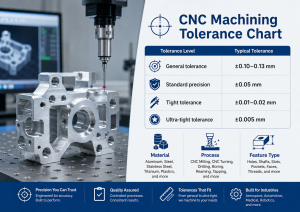
部品に厳しい公差が必要な場合, 私たちのを参照してください [完全なアルミニウム加工ガイド]
耐熱性, エレクトロニクス, とEMI
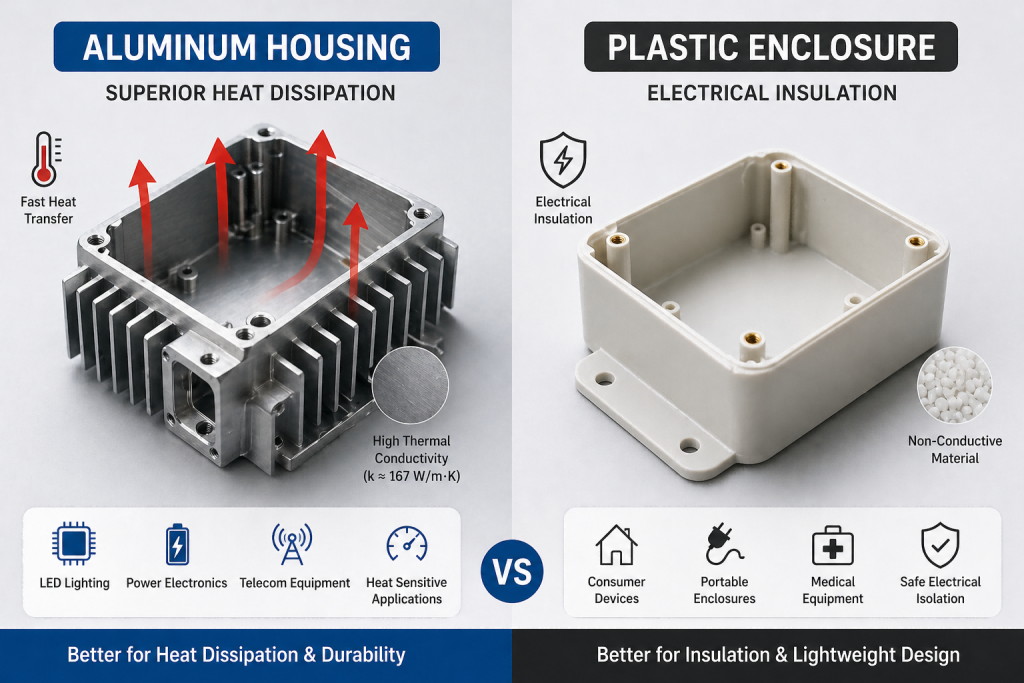
アルミニウムは熱を効率的に伝達し、高温下でも優れた性能を発揮します。.
広く使用されています:
- ヒートシンクハウジング
- LEDエンクロージャ
- パワーエレクトロニクス
- バッテリーケース
- 通信ハウジング
導電性コーティングが必要なプラスチック製ハウジングとは異なります。, アルミニウムは自然に提供します EMIシールド 敏感な電子機器用.
多くの場合、プラスチックの方が優れています:
- 絶縁カバー
- ハンドヘルド消費者向けデバイス
- 低圧シェル
表面品質が重要な場合, 私たちのを読んでください [CNC削り出しアルミニウムの表面仕上げガイド]
ネジとアセンブリ
部品を繰り返し組み立てる必要がある場合は、通常、アルミニウムがより良い選択肢となります。, 小ねじ, またはタップ穴.
真鍮インサートまたはスチールインサートを使用しない限り、プラスチックのネジ山は時間の経過とともに摩耗する可能性があります.
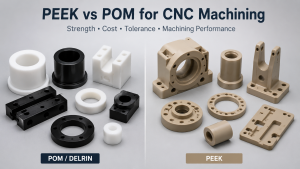
などの高機能プラスチック ピーク, POM (デルリン), そして パソコン いくつかの設計上の課題を解決できる, しかし、ネジの強度や熱伝達の点ではアルミニウムにはまだ及びません。.
より強力なねじ穴用, 私たちのを読んでください [アルミねじ加工ガイド]
コストと生産量
少量から中量の場合, CNC 加工アルミニウムは工具への投資が少ないため、多くの場合実用的です。.
非常に大量の場合, 金型コストが吸収されれば、プラスチック成型品は安くなる可能性がある.
市場投入までのスピード
射出成形には一般的に次のことが必要です 4–8週間 ツールと検証用.
CNC 加工されたアルミニウムのプロトタイプは、多くの場合、 3–5日.
スタートアップ向け, パイロット制作, そして急速な発展, 多くの場合、速度は部品ごとの成形コストの低下を上回ります。.
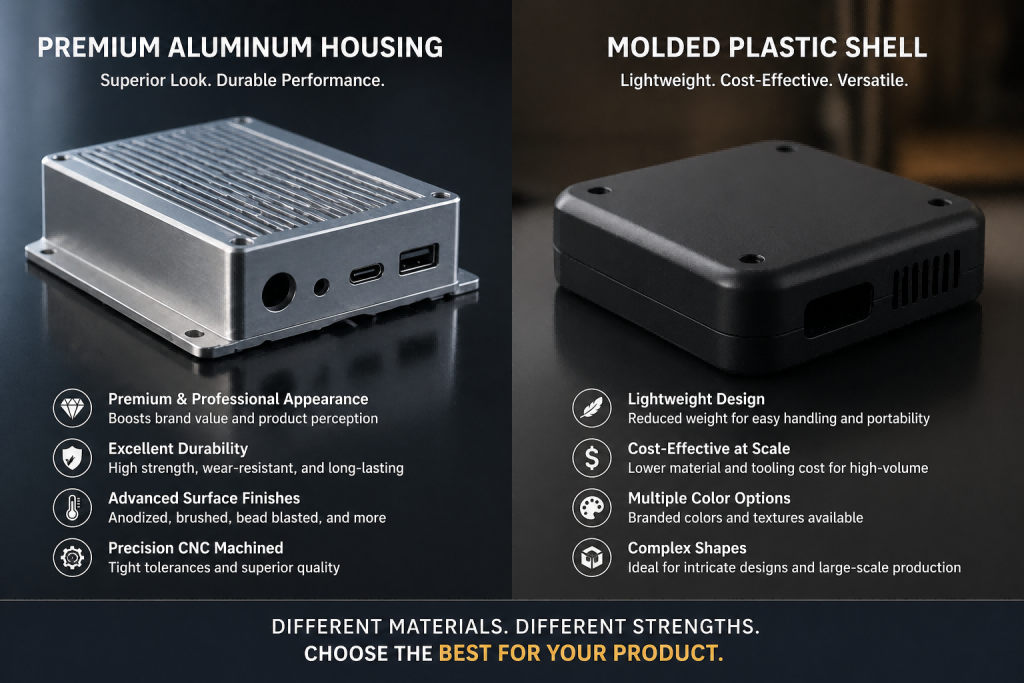
外観とブランド認識
通常、アルミニウムはより高級感を生み出します.
人気の仕上げとしては、:
- ビードブラストアルマイト処理
- つや消しメタル
- ブラックアルマイトマット
- クリアアルマイトシルバー
カラーマッチングにはプラスチックが最適です, 透明パーツ, またはソフトタッチのテクスチャが必要です.
どの業界がどの業界を選択するか?
医療機器
- フレームおよび精密モジュール用アルミニウム
- 使い捨てカバー用プラスチック
エレクトロニクス
- 熱制御とEMIシールドのためのアルミニウム
- 絶縁用プラスチック
ロボット工学
- 剛性とねじ構造のためのアルミニウム
消費者向け製品
- 大衆市場向けシェル用プラスチック
- 高級製品用のアルミニウム
エンジニアのメモ
多くの購入者は原材料価格のみを比較します.
ただし、プロジェクトの総コストは加工時間によって異なります, ツーリングのリードタイム, 組立寿命, 保証リスク, そしてブランド認知.
安価な材料でも再設計すると高価になる可能性がある.
よくある質問
アルミニウムはプラスチックより強いですか?
はい. アルミニウムは、ほとんどのエンジニアリング プラスチックよりもはるかに強く、硬いです。.
プラスチックはアルミニウムより安いですか?
通常、大音量では「はい」. 常に試作品の数量ではない.
どちらがよりプレミアムに感じますか?
通常、アルミニウムはより高級感と耐久性を提供します。.
プラスチックはアルミニウムに取って代わることができますか?
時々はい, 負荷に応じて, 熱, EMI, および公差要件.
素材の選択に助けが必要?
RapidEfficient は、顧客がアルミニウムを比較するのに役立ちます, プラスチック, 機能に基づいたその他の生産材料, 料金, と製造性.
CAD ファイルをアップロードすると、無料の DFM レビューが可能になります。 24 時間.