
CNC 加工されたモーターハウジングが選ばれる理由?
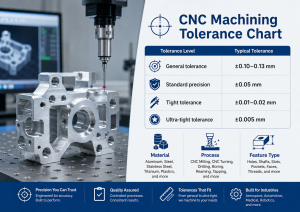
- ±0.01 mm precision for high-speed motor stability.
- 15% better thermal efficiency compared to casting.
- Zero porosity 100% solid structure for maximum reliability.
- Proven performance in EV, 航空宇宙, and high-load industrial systems.
CNC加工モーターハウジングとは?
CNC machining motor housings is a high-precision manufacturing process used to produce electric motor enclosures for EV, industrial automation, and aerospace applications. These housings are engineered for superior thermal management, structural rigidity, and high-speed rotor alignment, ensuring efficient heat dissipation and long-term operational stability under high dynamic loads. Unlike standard casting, CNC-machined motor housings offer 100% material density and micron-level precision for critical bearing fits.
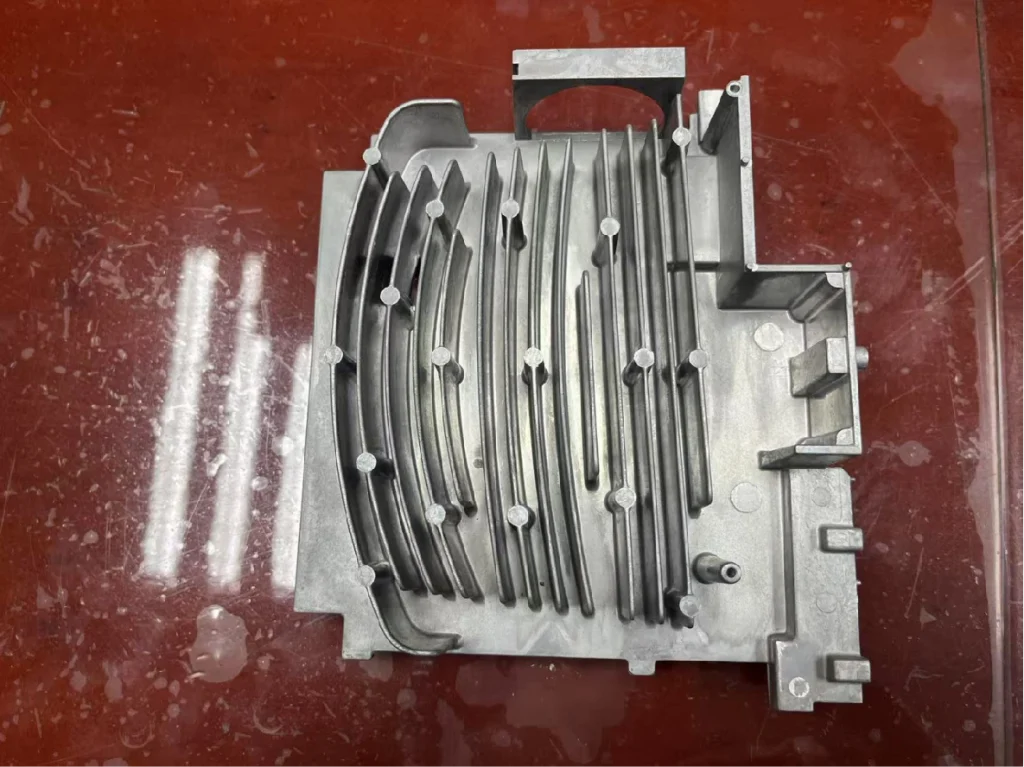
CNC 加工 vs. Die Casting for Motor Housings
For high-performance electric motor enclosures, CNC machining provides the structural and thermal integrity that die casting often fails to deliver.
| 特徴 | Die Casting | 高速効率的な CNC 加工 |
| Dimensional Accuracy | $\午後 0.1 \シム 0.2$ mm | $\午後 0.01$ mm (ミクロンレベル) |
| 材料密度 | Potential internal porosity | 100% 固体 (Zero leak paths) |
| Thermal Conductivity | より低い (due to micro-voids) | Maximum (Aluminum CNC Machining) |
| Thin-Wall Strength | Limited by mold flow | Superior (Thin-walled CNC Parts) |
Material Selection for CNC Machined Motor Housings
Choosing the right substrate is critical for maximizing the power-to-weight ratio in high-efficiency motors.
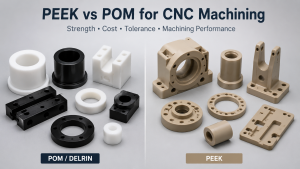
- AL6061/7075 Aluminum: The primary choice for heat sink machining そして thermal management motor casings.
- チタン Ti-6Al-4V: Utilized for tactical aerospace CNC machining components requiring extreme resilience.
- Certified 316L Stainless Steel: Essential for semiconductor-grade CNC machining environments.
CNC Machining for EV Motor Housings and High-Speed Applications
In EV and high-speed industrial motors, motor housings must handle extreme rotational speeds and intense thermal loads. CNC machining enables:
Lightweight Structural Optimization: Removing excess material without sacrificing rigidity.
Micron-Level Rotor Stability: Achieving concentricity within $\pm 0.005$ mm to prevent vibration in high-RPM applications.
Integrated Cooling Channels: 5-axis milling of deep internal fins increases heat exchange surface area by 40%.
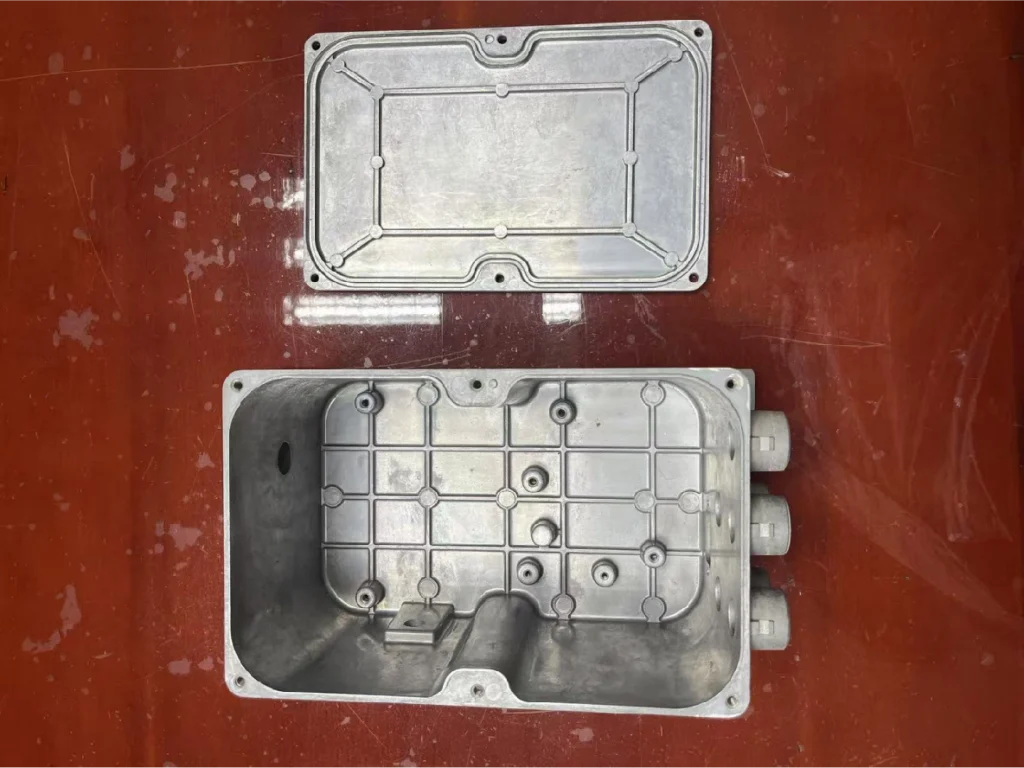
🚀 ケーススタディ: 15% Thermal Efficiency Increase for a 100kW EV Motor
挑戦:
An EV client’s traction motor was overheating. The original cast housing had internal porosity that hindered heat transfer and led to bearing misalignment.
当社のエンジニアリングソリューション:
We redesigned the housing for 5-axis CNC machining using AL7075-T6. By maintaining bearing seat tolerances of $+0.008 \ / \ -0.00$ mm and achieving a mirror finish on the internal cooling bays (adapted from our precision wafer carrier machining protocols), we ensured maximum thermal contact.
結果:
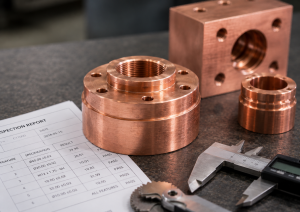
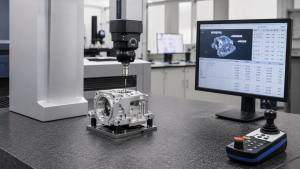
The motor achieved a 15% increase in continuous power output. Our facility is ISO 9001 certified, and every project includes a full CMM inspection report to ensure every micron meets your requirements.
Custom CNC Machining for Electric Motor Enclosures
Need a high-precision partner for your motor housing project?
👉 Get a quote within 24 hours for your custom motor housing project.
よくある質問: CNC Machining for Electric Motor Enclosures
1. What materials are best for high-torque EV motor housings?
Aluminum 7075-T6 is the industry standard, offering the best yield strength-to-weight ratio and superior thermal conductivity.
2. How do you ensure waterproof sealing in motor housings?
We focus on surface flatness (内で $0.02$ mm) and precise O-ring groove machining. Every part is verified via CMM to ensure IP68/IP69K integrity.
3. How to choose a CNC machining supplier for motor housings?
Look for suppliers with ISO 9001 certification, advanced 5-axis machining capability, and proven experience in EV motor housing projects. Precision control, thermal optimization, and full CMM inspection reports are critical factors.