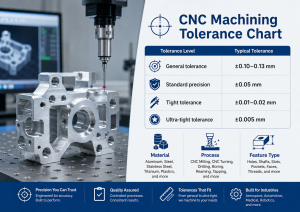

高精度CNC製造では, ポジショニングだけではありません “部品を持っている”—it’s about eliminating 6 degrees of freedom to ensure every micron counts. Whether you are aiming for 公差±0.005mm or high-volume repeatability, choosing the right positioning method is the bridge between a perfect component and expensive scrap.
1.What is Machining Positioning Method?
Machining positioning method refers to the techniques and approaches used to precisely determine the position of a workpiece or a cutting tool during the machining process. It’s like giving clear directions to both the part being worked on and the tool that’s doing the work, ensuring everything is in the right place for accurate and efficient machining operations.
In simple terms, imagine you’re building a model and you need to put the pieces together exactly where they should be. Machining positioning method does the same thing in the manufacturing world. 例えば, in milling operations, it helps to set the position of the workpiece on the table so that the milling cutter can remove the right amount of material from the exact locations needed to create the desired shape.
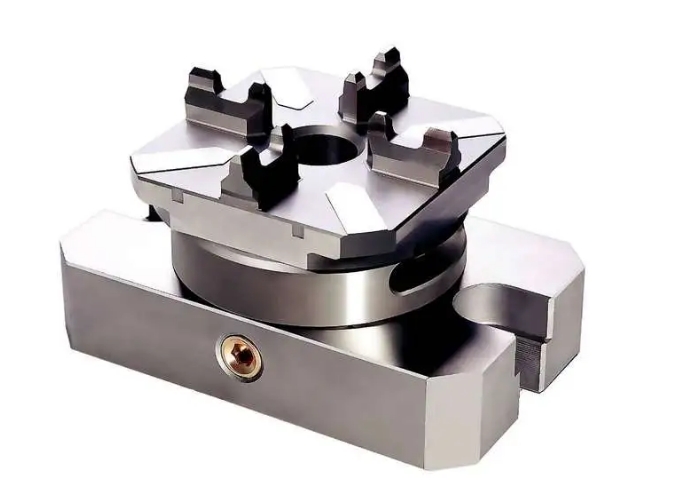
There are various types of positioning methods. One common way is using mechanical stops or fixtures. These are like fixed points that the workpiece can rest against or be clamped to, guaranteeing it stays in a specific position. Another approach could involve using sensors and measurement systems. They can detect the position of the workpiece or tool and send signals to adjust if there’s any deviation from the intended position.
Accurate machining positioning is crucial as it directly impacts the quality of the final product. If the positioning is off even by a small margin, it can lead to parts that don’t fit together properly, have incorrect dimensions, or don’t meet the required tolerances. And in today’s highly competitive manufacturing market where products need to be of high quality and consistent, having reliable machining positioning methods is more important than ever.
さらに, with the development of advanced manufacturing technologies like CNC (コンピューター数値制御) 機械加工, the role of precise positioning methods has become even more significant. CNC machines rely on accurate positioning instructions programmed into them to carry out complex machining tasks with high repeatability and precision. This is where rapidefficient comes into play in the 数控加工 market. Rapidefficient positioning methods can greatly reduce the setup time and improve the overall productivity of CNC machining processes. It allows manufacturers to produce more parts in less time while maintaining excellent quality standards, which is a huge advantage in attracting customers and staying ahead in the market.
2. The Basics of Machining Positioning
Different Types of Positioning Techniques
In the world of machining, several positioning techniques are commonly used, each with its own unique characteristics. Let’s take a look at some of them.
One of the basic positioning techniques is mechanical positioning. This involves using fixtures, jigs, and stops. 例えば, a simple vise on a milling machine table can act as a fixture to hold a workpiece firmly in place. The workpiece is clamped against the fixed jaws of the vise, ensuring it doesn’t move during the machining process. Jigs, 一方で, are often designed with specific holes or slots that help guide the cutting tool to the exact positions needed on the workpiece. Stops can be set to limit the movement of the workpiece along certain axes, providing a precise reference point for machining. This type of positioning is reliable and relatively straightforward, but it may require some time to set up properly depending on the complexity of the workpiece.
Another technique is optical positioning. With the help of lasers or optical sensors, the position of the workpiece or the cutting tool can be detected with high precision. Lasers can project a beam onto the workpiece surface, and by measuring the reflection or interference patterns, the exact location can be determined. Optical sensors can also detect edges or specific markings on the workpiece. This technique is particularly useful when dealing with very fine or delicate machining tasks where accuracy in the micrometer range is required. 例えば, in the production of precision optical components like lenses, optical positioning ensures that the curvature and thickness are machined to exact specifications.
Then there’s electrical positioning. This often involves using encoders or other electrical sensing devices. Encoders are attached to the moving parts of the machine, such as the spindle or the linear axes. They convert the mechanical movement into electrical signals that can be read by the machine’s control system. The control system then uses this information to adjust the position of the cutting tool or workpiece as needed. This allows for real-time monitoring and correction of any positioning errors, making it ideal for high-speed machining operations where quick adjustments are essential.
Lastly, we have magnetic positioning. In some specialized machining setups, magnetic fields are used to hold and position the workpiece. Magnets can provide a stable and non-contact way of keeping the workpiece in place. This is especially handy when working with materials that are difficult to clamp using traditional mechanical methods or when minimizing any potential damage to the workpiece surface is crucial. 例えば, in the machining of thin and brittle magnetic materials, magnetic positioning can offer a gentle yet precise way to hold the workpiece during the cutting process.
Each of these positioning techniques has its advantages and is chosen based on factors like the type of workpiece, the required machining accuracy, and the overall production efficiency goals.
| Positioning Technique | Precision Level | 最適な用途 | 主な利点 |
| Mechanical | 0.01mm – 0.05mm | General industrial parts | 低コスト, 高い耐久性 |
| Optical (Laser) | Micron level | Delicate or complex shapes | Non-contact, extreme precision |
| Electrical (Encoder) | Micron level | High-speed CNC operations | Real-time feedback & adjustment |
| Magnetic | 高い | Brittle or magnetic materials | Gentle holding, zero surface damage |
Importance of Accurate Positioning in Machining
Accurate positioning in machining is of utmost importance and directly impacts the final quality and precision of the products being manufactured.
When it comes to dimensional accuracy, precise positioning ensures that every cut, hole, or surface finish is exactly where it should be. 例えば, 自動車業界で, engine components need to be machined with extremely tight tolerances. If the positioning of the crankshaft or cylinder bore machining is off even by a fraction of a millimeter, it can lead to poor engine performance, increased fuel consumption, and even premature wear and failure of the engine. In the production of aircraft parts as well, accurate positioning is critical. Wings, fuselage sections, and other structural components must fit together precisely to maintain the integrity and safety of the aircraft during flight. A misaligned hole for a rivet or a slightly off-positioned surface can compromise the structural strength of the entire plane.
Surface finish quality also depends on accurate positioning. When a cutting tool is positioned correctly relative to the workpiece, it can create smooth and consistent surfaces. 対照的に, incorrect positioning might result in tool chatter, which leaves visible marks and an uneven finish on the workpiece. This is particularly significant in industries like medical device manufacturing, where implants or surgical instruments need to have a high-quality surface finish to ensure biocompatibility and proper functioning inside the human body.
さらに, accurate positioning plays a key role in repeatability. In mass production environments, manufacturers need to produce thousands or even millions of identical parts. With precise positioning methods, each part can be machined with the same level of accuracy as the previous one. This is where rapidefficient comes into the picture in the CNC machining market. Rapidefficient positioning techniques can significantly reduce the setup time between different machining operations. 例えば, it can quickly and accurately position the workpiece for the next cutting pass or tool change, allowing the CNC machine to operate continuously with minimal downtime. This not only improves the overall productivity but also ensures that the quality of the parts remains consistent throughout the production run. It enables manufacturers to meet tight delivery schedules while maintaining excellent quality standards, which is a major factor in attracting customers and staying competitive in today’s global manufacturing landscape.
結論は, accurate positioning in machining is the foundation for producing high-quality, 正確な, and reliable products, and rapidefficient positioning methods are essential for maximizing the efficiency and competitiveness of machining processes.
Poor positioning does not only affect one dimension. Across multiple setups, it can create hidden tolerance stack-up between holes, faces, bores, and assembly features.
💡 Shop Floor Insight: The “Hidden” Error
“Many machinists overlook the ‘Repeatability’ factor. Even with a perfect 3-2-1 設定, if your clamping force isn’t consistent, your ±0.005mm tolerance will drift. In our precision shop, we always use torque-controlled clamps for thin-walled aerospace components to prevent elastic deformation. Precision begins with the geometry of the setup, not just the code in the controller.”
3. Role of rapidefficient in CNC Machining Market
rapidefficient’s Features and Advantages
In the CNC machining market, rapidefficient stands out with its remarkable features and advantages.
まず最初に, rapidefficient boasts high precision. It utilizes advanced sensor technologies that can detect even the slightest deviations in the position of workpieces or cutting tools. 例えば, in the production of intricate components for electronic devices like microchips, where the tolerance is extremely tight, rapidefficient can ensure that each machining operation is precisely positioned within the micrometer level, enabling the creation of products that meet the strictest quality standards.
第二に, it offers excellent flexibility. Whether it’s dealing with different shapes and sizes of workpieces or adapting to various machining processes such as milling, 旋回, or drilling, rapidefficient can be easily adjusted and configured. Say a manufacturer needs to switch from machining small cylindrical parts to larger and more complex-shaped ones. Rapidefficient can quickly be set up to handle the new workpiece requirements without significant downtime or additional complex recalibration.
Another significant advantage is its speed. It has optimized algorithms and fast response systems that can rapidly position the workpiece and start the machining process. In a high-volume production environment where time is of the essence, like in the manufacturing of automotive parts where thousands of components need to be produced daily, rapidefficient can reduce the setup time between each machining cycle, allowing for more parts to be completed in a shorter period, thus enhancing overall productivity.
さらに, rapidefficient is user-friendly. Its interface is designed in a simple and intuitive way, making it accessible even for operators with relatively less experience. The clear display and easy-to-understand operation prompts enable workers to quickly learn how to use it effectively, minimizing the learning curve and potential errors caused by misoperation.
加えて, it has a high level of durability. Built with quality materials and robust engineering, it can withstand the rigors of continuous operation in a factory setting. It requires minimal maintenance, which not only saves costs for manufacturers but also ensures that it can be relied on for long-term production runs without frequent disruptions.
All these features and advantages combined make rapidefficient a top choice in the CNC machining market, helping manufacturers gain a competitive edge in terms of product quality and production efficiency.
How rapidefficient Improves Machining Efficiency
Rapidefficient plays a crucial role in improving the efficiency of the machining process in multiple ways, and here are some illustrative examples.
例えば, consider a scenario where a company is manufacturing precision gears for industrial machinery. Without rapidefficient, the traditional positioning methods might take a significant amount of time to set up the workpiece accurately on the CNC machine. Workers would have to carefully measure and adjust the position using manual fixtures and gauges, which could be time-consuming and prone to human errors. しかし, with rapidefficient, it can quickly analyze the workpiece’s dimensions and automatically position it to the exact required coordinates within seconds. This immediate positioning allows the cutting tool to start working right away, reducing the idle time of the machine and increasing the overall throughput of gear production.
In another example, in the production of custom-made metal parts for the aerospace industry, where each part has unique specifications and tight tolerances. Rapidefficient’s ability to precisely position the workpiece in real-time during the machining process is invaluable. As the cutting tool moves along different paths to create complex shapes, rapidefficient continuously monitors and adjusts the position to ensure that every cut is exactly where it should be. This not only saves the time that would otherwise be spent on rechecking and readjusting the position manually but also minimizes the waste of raw materials due to incorrect cuts. The result is that more high-quality aerospace parts can be produced in a shorter time frame, meeting the demanding delivery schedules of the industry.
さらに, in a mass production line for consumer electronics components like smartphone casings, rapidefficient enables seamless transitions between different machining operations. When one part finishes a specific cutting or drilling process and needs to move on to the next step, rapidefficient can swiftly reposition it for the subsequent operation. This continuous and efficient workflow allows the entire production line to operate at a faster pace, maximizing the output of finished casings per hour. 全体, rapidefficient’s impact on improving machining efficiency is evident in various manufacturing sectors, helping companies save time, resources, and ultimately increase their competitiveness in the market.
4. Machining Positioning in Practice
Case Studies of Effective Positioning
In the following, we’ll explore some real-world case studies that vividly demonstrate how proper machining positioning methods have led to outstanding results in different projects.
ケーススタディ 1: Precision Components for Medical Devices
A company specialized in manufacturing high-precision parts for medical devices, such as surgical implants. The parts required extremely tight tolerances, with dimensions accurate to within a few micrometers. 最初は, they were using traditional mechanical positioning methods with basic fixtures. しかし, they faced issues with inconsistent positioning, which led to a higher rejection rate of the finished products.
After switching to a combination of optical and electrical positioning techniques, the situation improved significantly. Optical sensors were used to precisely detect the edges and initial positions of the workpieces, while electrical encoders on the moving axes of the CNC machine provided real-time feedback on the position. 例えば, when machining a complex-shaped bone implant, the optical sensor first located the key reference points on the raw material. それから, during the cutting process, the electrical positioning system continuously adjusted the position of the cutting tool relative to the workpiece based on the encoder signals. 結果として, the rejection rate dropped from around 10% to less than 1%, and the production efficiency increased by nearly 30% due to reduced rework and setup times. This not only saved costs but also enhanced the company’s reputation in the highly demanding medical device market.
ケーススタディ 2: Aerospace Engine Parts Manufacturing
An aerospace manufacturing firm was tasked with producing engine components for a new generation of aircraft. These parts had to meet stringent quality and safety requirements, with perfect alignment and positioning for optimal performance during flight. The traditional positioning approach they had been using was taking a long time for setup and was unable to guarantee the necessary accuracy for the intricate geometries of the engine parts.
They decided to implement a magnetic positioning system along with advanced computer-aided positioning algorithms. The magnetic positioning allowed for stable and precise holding of the workpieces, especially those made from special alloys that were difficult to clamp using mechanical means. The computer algorithms calculated the optimal positioning based on the 3D model of the part and the machining path. 例えば, when machining the turbine blades, the magnetic field held the blade in place without any distortion, and the positioning algorithm ensured that the cutting tool precisely followed the complex curvature of the blade. This led to a significant reduction in the production cycle time by about 25% and improved the quality of the parts to meet all the aerospace industry’s strict standards, enabling the company to secure more contracts for future projects.
ケーススタディ 3: Automotive Transmission Parts Production
In an automotive manufacturing plant producing transmission parts, there was a need to increase productivity while maintaining high quality. The existing positioning methods were causing delays in the production line as the workpieces had to be manually adjusted and positioned for different machining operations like drilling, ミリング, and turning.
The plant adopted a rapidefficient positioning system. This system could quickly analyze the workpiece’s shape and size as it entered the machining station and automatically position it to the correct coordinates for each operation. 例えば, when machining the gears for the transmission, the rapidefficient system reduced the time between different cutting passes and tool changes. It could position the gear blank accurately for the next drilling or milling operation in just a few seconds. 結果として, the overall production output of transmission parts increased by 40%, and the quality remained consistent, helping the company to meet the growing demand for its automotive products in the market.
These case studies clearly show the power of choosing the right machining positioning methods and how they can have a profound impact on the success of different manufacturing projects.
Tips for Implementing Good Positioning
Here are some practical tips and tricks that can assist readers in implementing effective machining positioning in their own work or projects:
Understand Your Workpiece and Requirements Thoroughly
Before choosing a positioning method, carefully analyze the workpiece’s geometry, material properties, and the required machining accuracy. 例えば, if you’re working on a thin and delicate workpiece made of a brittle material like glass-ceramics, magnetic or optical positioning might be more suitable as they can provide gentle yet precise positioning without causing damage. 一方で, for a sturdy metal workpiece with simple shapes and less strict tolerance requirements, mechanical positioning with fixtures could be a cost-effective option.
Regularly Calibrate Your Positioning Equipment
Whether it’s mechanical stops, optical sensors, or electrical encoders, all positioning equipment needs regular calibration to maintain accuracy. Set a schedule for calibration checks and make sure to follow it. 例えば, in a CNC machining environment using optical positioning, the lasers and sensors should be calibrated at least once a month to account for any potential drift in their performance. This simple step can prevent errors in positioning that could lead to defective products.
Invest in Training for Operators
Even the most advanced positioning systems are only as good as the people operating them. Provide comprehensive training to your machine operators on how to use the positioning equipment correctly. Teach them how to interpret the signals from sensors, adjust the fixtures properly, and troubleshoot any common issues. 例えば, if using a rapidefficient system, operators should be trained on its user-friendly interface to quickly set up the workpiece positioning and respond to any prompts or alerts during the machining process.
Keep Up with Technological Advancements
The field of machining positioning is constantly evolving, with new technologies emerging regularly. Stay updated on the latest developments, such as improved sensor technologies or more intelligent positioning algorithms. Attend industry seminars, read relevant technical papers, and subscribe to manufacturing magazines. You might discover a new positioning technique that could significantly enhance your production efficiency and product quality. 例えば, if you learn about a new type of electrical positioning encoder with higher precision and faster response time, consider upgrading your existing equipment to take advantage of these improvements.
Document and Analyze Your Positioning Processes
Keep detailed records of the positioning methods used for each project, along with the results achieved. Analyze this data to identify any patterns of errors or areas for improvement. 例えば, if you notice that a particular type of workpiece consistently has positioning issues during a specific machining operation, you can then investigate further and potentially modify your positioning approach or equipment setup to address the problem.
By following these tips, you can optimize your machining positioning processes and achieve better results in your manufacturing endeavors.
5. Your Partner for High-Precision CNC Machining – 急速な
When it comes to high-precision CNC machining services, Rapidefficient is the industry leader. Our expertise goes far beyond simple milling; we specialize in achieving 公差±0.005mm on complex geometries and challenging materials, 含む ステンレス鋼, チタン, and Engineering Plastics.
By utilizing our advanced rapidefficient positioning methods, we eliminate setup errors and ensure 100% repeatability for every batch. Whether you are developing intricate medical implants or critical aerospace components, our team of highly skilled engineers works closely with you from DFM analysis to final production. 急速に効率よく, we don’t just machine parts—we provide the technical excellence and reliability your high-stakes projects demand.
Why Choose Rapidefficient for Your Precision Projects?
まず最初に, our commitment to quality is unwavering. By utilizing advanced Rapidefficient positioning methods, we guarantee high precision for every component, regardless of material. This accuracy ensures that dimensions are exact, surface finishes are flawless, and overall quality remains consistent—critical for high-stakes applications in the medical, 自動車, and aerospace sectors.
第二に, our reliability is a major competitive advantage. We have a proven track record of delivering complex orders on time. Our streamlined workflow reduces setup times and optimizes machining cycles, allowing us to handle everything from rapid prototypes to high-volume production without sacrificing punctuality. 急速に効率よく, we maximize efficiency to reduce waste and lower production costs, providing you with high-quality results at a competitive price.
❓ FAQ: Mastering Machining Positioning
Q: What is the most common cause of positioning errors? あ: Residual chips or burrs on the locating surfaces. Even a 0.01mm chip can throw off the entire coordinate system. We emphasize surgical-level cleaning of datums before every setup.
Q: How does the 3-2-1 rule apply to cylindrical parts? あ: For cylinders, の “3 points” are often achieved using V-blocks or self-centering chucks, but the core logic of eliminating degrees of freedom remains identical to prismatic parts.
Q: Can advanced positioning methods reduce CNC machining costs? あ: Absolutely. By using Rapidefficient fixtures, we can cut setup time from 30 minutes to under 5 分. This efficiency directly reduces the labor cost and hourly machine rate for your project.
6. 結論
Recap of Key Points
この記事で, we’ve delved into the positioning method of machining. We started by explaining what machining positioning method is, which involves precisely determining the position of workpieces or cutting tools during machining. Different types of positioning techniques like mechanical, optical, electrical, and magnetic were explored, each with its own characteristics and applications.
Accurate positioning is crucial as it impacts the quality and precision of final products, influencing dimensional accuracy, 表面仕上げ, と再現性. Rapidefficient plays a significant role in the CNC machining market with its features such as high precision, 柔軟性, スピード, user-friendliness, そして耐久性. It improves machining efficiency by reducing setup time and enabling seamless operations in various manufacturing sectors.
We also covered the latest SEO techniques for machining articles, emphasizing keyword usage, content structure, related keywords, and adapting to Google’s algorithm. 実際に, case studies showed how effective positioning methods can lead to improved results in different industries like medical devices, 航空宇宙, and automotive. Tips for implementing good positioning were provided to help readers optimize their processes.
Lastly, we introduced Rapidefficient’s high-precision CNC machining services, highlighting our expertise, quality commitment, 信頼性, excellent customer service, and cost-effective solutions.
Future Outlook for Machining Positioning
将来を見据えて, the field of machining positioning is expected to witness continuous advancements. With the rapid development of technology, we can anticipate even more precise and efficient positioning methods emerging. 例えば, sensors are likely to become more sensitive and accurate, enabling sub-micron level positioning for extremely intricate machining tasks.
The integration of artificial intelligence and machine learning could revolutionize machining positioning. These technologies might be able to predict and correct positioning errors in real-time, optimize the positioning process based on different workpiece characteristics and machining requirements, and further enhance productivity and quality.
In the CNC machining market, rapidefficient is likely to evolve and expand its capabilities. It may offer more customized solutions to meet the diverse needs of different industries, from microelectronics manufacturing that demands ultra-high precision to large-scale automotive and aerospace production that requires high efficiency and reliability.
さらに, as the demand for sustainable manufacturing grows, machining positioning methods will also need to adapt. There could be a focus on reducing energy consumption during the positioning process while maintaining or improving performance. 全体, the future of machining positioning holds great potential to transform the manufacturing landscape and drive innovation in various sectors.