
Быстрый ответ: Процесс зеркальной полировки придает поверхности деталей зеркальный блеск., светоотражающая отделка, улучшение эстетики и функциональности. Key steps include proper surface preparation, abrasive polishing, buffing, и отделка, using the right tools and compounds for metals, пластмассы, or glass.
Введение
The процесс полировки зеркала для деталей является важной техникой в различных отраслях промышленности, особенно для компонентов, требующих высококачественной обработки поверхности. Mirror polishing provides both aesthetic appeal and functional surface properties. В этой статье, we explore detailed steps, инструменты, материалы, and key considerations involved in mirror polishing parts, along with the benefits it offers in performance and durability.
1. Что такое зеркальная полировка?
Зеркальная полировка – это процесс придания зеркального блеска., отражающая обработка поверхности детали путем постепенного удаления дефектов и улучшения поверхности.. В отличие от базовой полировки, mirror polishing gives the part a mirror-like sheen with minimal distortion. This process is widely used in automotive, аэрокосмический, электроника, and medical industries where both aesthetics and functionality are essential.
2. Материалы, подходящие для зеркальной полировки
Not all materials are suitable for mirror polishing. The most common materials include:
| Тип материала | Пример | Polishing Notes |
|---|---|---|
| Металлы | Нержавеющая сталь, Алюминий, Медь, Латунь | Suitable for mirror finish due to malleability and durability |
| Пластмассы | Акрил, Поликарбонат | Use appropriate abrasives for high-gloss finish |
| Стекло | Glass sheets | Can achieve smooth reflective finish, less common |
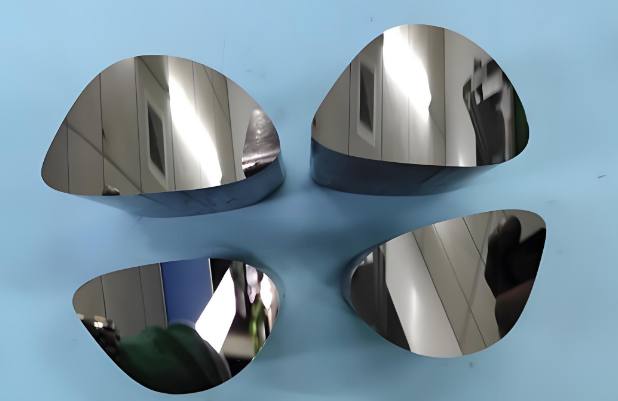
3. Процесс зеркальной полировки: Шаг за шагом
3.1 Подготовка поверхности
Before polishing, the part must be cleaned and prepared. Steps include:
- Degreasing to remove oils and contaminants.
- Sanding to eliminate large surface imperfections with abrasive belts or grinding wheels.
3.2 Абразивная полировка
Use a series of abrasive materials to smooth the surface. Progressively finer abrasives are applied to achieve a near-perfect finish.
3.3 Тонкая полировка
Finer abrasives, such as diamond paste or high-quality polishing compounds, are used to remove remaining imperfections.
3.4 Полировка и отделка
Buffing wheels and polishing compounds complete the surface finish. Protective coatings can be applied to maintain the finish longer.
Internal link: polishing compounds → https://rapidefficient.com/avoiding-contamination-and-damage-in-cnc-machining/
4. Основные инструменты и оборудование, используемые при полировке зеркал
Several tools are crucial in achieving a mirror-like finish:
- Полировальные машины: Automated machines control speed and pressure.
- Полировальные колеса: Soft materials like cotton or felt.
- Шлифовальные круги: Coarse and fine stages.
- Абразивные подушечки и составы: Varying degrees of coarseness.
5. Факторы, влияющие на качество зеркальной полировки
- Состав материала: Harder materials need more time.
- Время полировки: Excessive time can damage the surface.
- Полировальный состав: Quality impacts the final gloss.
- Температура и влажность: Extreme conditions can interfere with polishing consistency.
6. Применение зеркальной полировки в различных отраслях промышленности
Mirror polishing is used in:
- Автомобильная промышленность: Enhances visual appeal for trims, бамперы, и колеса.
- Аэрокосмическая промышленность: Turbine blades and engine components.
- Медицинское оборудование: Surgical instruments and implants.
- Электроника: Heat sinks, разъемы, and cases.
7. Проблемы и решения в процессе зеркальной полировки
- Изменчивость твердости материала: Harder materials require correct abrasives.
- Дефекты поверхности: Proper preparation minimizes scratches or dents.
- Износ инструмента: Regular maintenance ensures consistent performance.
8. Преимущества зеркальной полировки деталей
- Улучшенная эстетика: Improves visual appeal.
- Улучшенная долговечность: Smooth surfaces resist corrosion and wear.
- Лучшая производительность: Reduces friction and improves functionality.
Internal link: mirror polishing process → https://rapidefficient.com/comprehensive-guide-to-the-mirror-polishing-process-for-parts/
Internal link: CNC machining → https://rapidefficient.com/analysis-of-causes-of-oil-leakage-in-cnc-machining-centers/
9. Заключение
The mirror polishing process requires precision, экспертиза, and proper equipment. By understanding the process and addressing challenges, manufacturers can achieve high standards in surface finish, enhancing both performance and component lifespan.
Часто задаваемые вопросы
Q1: What is the mirror polishing process?
A1: It is a technique to achieve a high-gloss, mirror-like surface on parts by progressively smoothing and polishing, suitable for metals, пластмассы, и стекло.
Q2: What materials are best for mirror polishing?
A2: Metals like stainless steel, алюминий, и латунь; plastics like acrylic and polycarbonate; and glass sheets are suitable with appropriate abrasives.
Q3: What are the critical steps in achieving a mirror finish?
A3: Surface preparation, abrasive polishing, fine polishing, and buffing/finishing are key. Proper tools, полировальные составы, and operator skill are essential.
Q4: Why is mirror polishing important for CNC machined parts?
A4: It enhances aesthetics, improves durability by reducing wear, and can improve functional performance, such as reducing friction.