
🧠 Почему “Простой” Definitions Fail in the Shop
In theory, данные — это просто точка отсчета. In a high-precision CNC shop, однако, a datum is the only thing standing between a perfect component and a bin full of expensive scrap.
When we talk about Допуски ±0,005 мм, “simple” definitions are dangerous. If you select a datum on a drafted cast surface or a thin-walled section that deflects under clamping pressure, your entire coordinate system is “built on sand.” Precision begins with the geometry of the setup, not just the code in the controller.
Экспертное мнение:
“Don’t just pick the largest surface; pick the cleanest one. А Primary Datum with a large surface area but poor flatness will introduce ‘rocking’ errors that destroy your concentricity.”
The 3-2-1 Principle: Eliminating 6 Degrees of Freedom
To lock a part in 3D space, you must eliminate its ability to move or rotate. The 3-2-1 rule is the industry standard for ensuring repeatability across multiple setups:
Однако, even a correct 3-2-1 setup can create problems if datum errors accumulate across multiple features. To understand how small setup errors become assembly failures, see our guide on CNC machining tolerance stack-up.
Primary Datum (3 очки):
- Defines the orientation of the part by establishing the main plane.
Secondary Datum (2 очки):
- Establishes an ось (usually a line) to prevent rotation around the primary plane.
Tertiary Datum (1 точка):
- Locks the final position, securing the part in its Х, Да, или З расположение.
Precision Comparison: Design Datum vs. Machining Datum
The biggest cause of confusion between engineers and machinists is the “Datum Gap.” Understanding this difference is critical for ±0,005 мм повторяемость:
| Datum Type | Who Defines It? | Role in the Workflow | Precision Risk |
|---|---|---|---|
| Design Datum | Engineer/Designer | Defines functional fit (ГД&Т) | Often exists “in space” (centerlines) |
| Machining Datum | CNC Machinist | А physical edge or hole for probing | Surface finish impacts probe accuracy |
| WCS (Work Offset) | CNC Controller | The G54/G55 zero point | Errors in “touch-off” stack here |
3 Pro-Tips for “Fail-Safe” Datum Selection
- Functional Priority (The Golden Rule):
- If a face mates with another component in the final assembly, that should be your Primary Datum. Machining from the functional face ensures that any minor deviation doesn’t impact the final fit.
- Probe Accessibility:
- Ensure your probe (or indicator) can reach the same datum in every setup. If you lose your primary datum when flipping the part, you lose your “Absolute Zero,” and your tolerance stack-up will skyrocket.
- RFS (Regardless of Feature Size):
- For high-precision Алюминий 6061-T6 компоненты, we prioritize centerlines of holes over edges. Edges can be burred; a bored hole is a stable, geometric constant.
Часто задаваемые вопросы: Solving Complex Datum Conflicts
вопрос: What if the drawing has conflicting datums?
А: This is a classic ДФМ (Проектирование для производства) issue. We resolve this by identifying the most critical “Master Feature” (like a bearing bore) and deriving all other datums from that single point to minimize tolerance drift.
вопрос: Can I use a cast or forged surface as a Primary Datum?
А: Only if you are doing a “cleanup” pass. Для Точность ±0,005 мм, you should always mill a “Qualification Surface” first and use that as your datum for the subsequent high-precision operations.
вопрос: How does datum selection affect 5-axis machining?
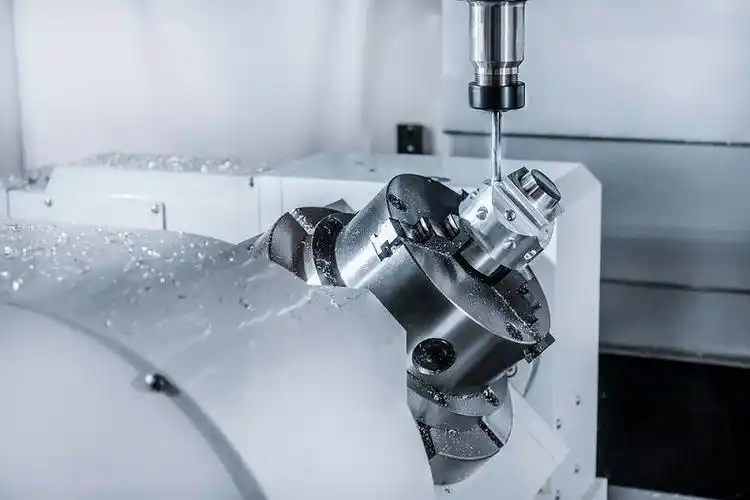
А: In 5-axis, your datum is often the center of the rotation (Pivot Point). If your physical datum is far from the center of rotation, any angular error is magnified. See our 5-Пример использования алюминиевого корпуса Axis for a real-world example.
🏁 Заключение
This revised version introduces industry-specific insights и practical tips that go beyond the basic definitions. By including the 3-2-1 principle, precision comparison, and real-world machining tips, the article becomes a valuable resource for CNC professionals seeking высокоточный совет. The added focus on Functional Priority, Probe Accessibility, и RFS ensures that it resonates with engineers who require ±0,005 мм точность.