
When selecting plastic materials for CNC machining or prototype production, understanding how different plastics behave under heat and flame can be helpful, especially during material comparison or early design stages. Below is a general overview of four commonly used plastics: PC, PVC, ABS, and PP.
Polycarbonate (PC)
PC is relatively difficult to ignite compared with many other thermoplastics. In most cases, it will stop burning once the flame source is removed.
When exposed to flame, PC typically produces a yellow flame accompanied by black smoke. After burning, the material tends to soften rather than drip. A mild but noticeable odor may also be present.
In terms of material characteristics, polycarbonate parts are usually pale yellow and can be either transparent or opaque. PC is well known for its high impact resistance and is often used in applications where strength and toughness are important.
Polyvinyl Chloride (PVC)
PVC is considered a flame-resistant plastic and is generally difficult to burn. Once the flame is removed, the material usually self-extinguishes.
During combustion, PVC shows a yellow flame with a greenish color near the base. The material softens under heat and releases a strong chlorine-like odor.
PVC products can be either rigid or flexible, depending on the formulation. The hardness can be adjusted, and finished parts may appear transparent or opaque. PVC is commonly used in piping, insulation, and electrical applications.
Acrylonitrile Butadiene Styrene (ABS)
ABS ignites easily and, unlike PC or PVC, will typically continue burning even after the flame source is removed.
When burning, ABS produces a yellow flame with black smoke and tends to melt and drip. The odor released during combustion is strong and slightly pungent.
ABS parts are usually opaque and have a slightly waxy surface feel. Because of its good machinability and balanced mechanical properties, ABS is widely used for functional prototypes and general-purpose plastic components.
Polypropylene (PP)
PP is also easy to ignite and burns quickly once exposed to flame. It does not self-extinguish under normal conditions.
The flame is usually yellow with a blue base, and the material burns rapidly and completely. A distinctive odor, often described as similar to diesel, can be noticed during combustion.
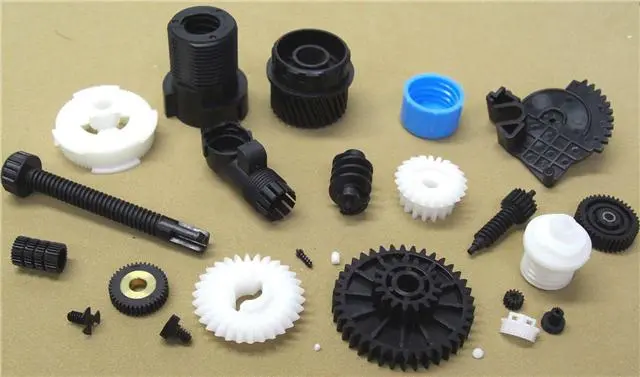
Polypropylene parts are typically milky white and may be transparent or opaque. PP offers good surface gloss, low density, and strong chemical resistance, making it suitable for lightweight and chemically resistant applications.
General Comparison
Each of these plastics shows different behavior when exposed to flame and heat:
- PC focuses more on impact strength with moderate flame resistance
- PVC provides inherent flame retardancy and flexible material options
- ABS is easy to machine but has higher flammability
- PP is lightweight and chemically resistant, though it burns easily
In practice, material selection should be based on mechanical requirements, safety considerations, and the intended manufacturing process rather than combustion behavior alone.
About RapidEfficient
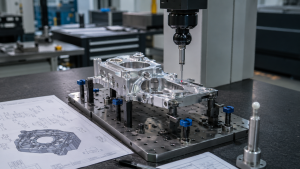
RapidEfficient specializes in high-precision CNC machining with 18 years of experience.
Its products serve industries including medical, communications, optics, drones, intelligent robotics, automotive, and office automation parts.
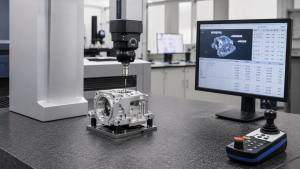
The company’s CNC machining centers feature four-axis, five-axis, and multi-linkage machine tools, and are equipped with precision projectors, coordinate measuring machines (CMM), spectrometers, and other advanced inspection equipment.
Machining accuracy can reach 0.01 mm, and testing accuracy can reach 0.001 mm.