

Quality Assurance for CNC Machined Parts
From drawing review to final inspection, Rapid Efficient checks material, dimensions, surface finish, threads, packaging, and shipment requirements before delivery.
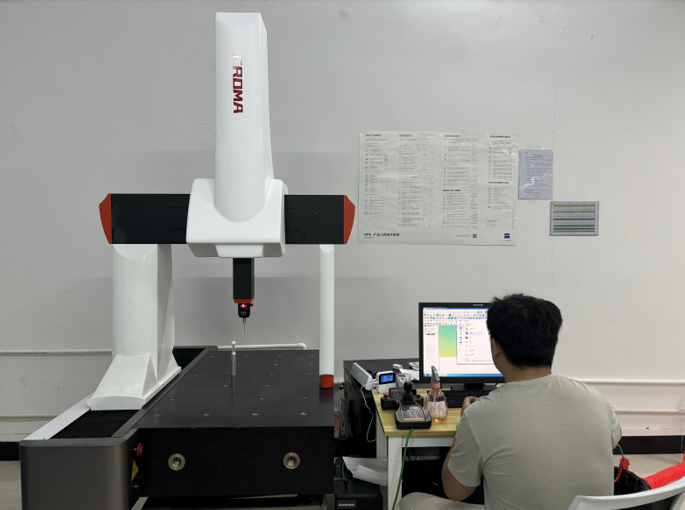
Quality Control from Drawing to Shipment
Quality assurance is not only final inspection. For CNC machined parts, quality must be controlled from drawing review, material confirmation, machining setup, in-process checks, surface finishing, final inspection, and packaging.
Rapid Efficient supports precision CNC projects with dimensional inspection, surface checks, thread verification, material review, and shipment-ready packaging checks before delivery.
Our CNC Quality Control Workflow
- Drawing & Requirement Review
Review tolerances, material grade, surface finish, threads, GD&T, and inspection requirements before quotation. - Material Confirmation
Confirm material grade, certificate requirements, supplier information, and traceability needs when required. - First Article Inspection
Check key dimensions before batch production to reduce repeated machining errors. - In-Process Inspection
Monitor critical features during machining, especially holes, threads, flatness, pocket depth, and mating surfaces. - Final Inspection
Verify dimensions, surface finish, burrs, threads, appearance, and customer-specific requirements. - Packaging & Shipment Check
Protect finished parts from scratches, oxidation, moisture, impact, and shipping damage.
What We Inspect Before Shipment
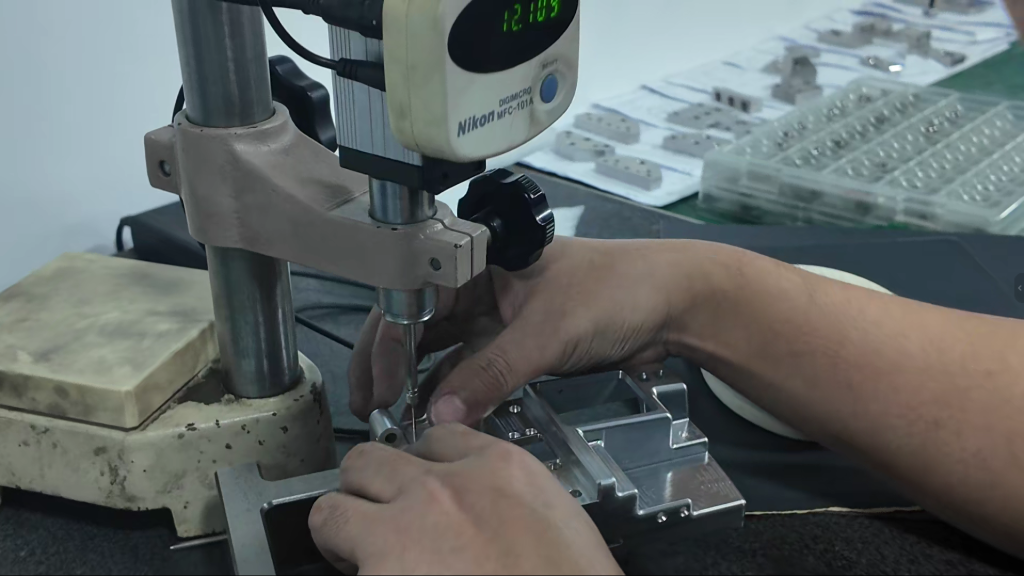
| Inspection Area | What We Check |
|---|---|
| Dimensions | Length, width, height, hole diameter, bore size, thickness |
| Tolerances | Tight-tolerance features, mating surfaces, tolerance stack-up risks |
| Threads | Internal/external threads, thread depth, go/no-go gauge checks when required |
| Surface Finish | Ra requirements, machining marks, scratches, polishing, anodizing, passivation |
| Burrs & Edges | Deburring quality, sharp edge control, rolled burrs, cross-hole burrs |
| Appearance | Stains, oxidation, discoloration, handling marks |
| Packaging | Anti-scratch protection, anti-oxidation protection, moisture control, labeling |
Inspection Tools and Methods
Inspection methods are selected according to drawing requirements, part complexity, tolerance level, and customer inspection needs.
Common inspection tools and methods include:
- CMM inspection
- Calipers
- Micrometers
- Height gauges
- Thread gauges
- Pin gauges
- Surface roughness checks
- Visual inspection
- Inspection reports when required
- Material certificates when required
Not every part requires CMM inspection. The inspection method depends on feature complexity, tolerance requirements, material, and customer specifications.
Inspection Reports Available Upon Request
For precision CNC machined parts, inspection records can be provided according to drawing requirements and project needs. Reports may include key dimensions, tolerances, actual measurements, inspection tools, and PASS/FAIL results. Customer names, drawing numbers, and sensitive project information are kept confidential.
| Report Item | What Can Be Included |
|---|---|
| Key Dimensions | Length, width, hole diameter, bore size, thickness |
| Tolerance Checks | Critical tolerance features and mating dimensions |
| Thread Verification | Go/no-go gauge checks when required |
| Surface Checks | Burrs, scratches, oxidation, finishing condition |
| Final Result | PASS/FAIL or customer-specific acceptance notes |
Quality Checks After Surface Finishing
Surface treatment can change how a part should be inspected. We review post-processing quality according to the material, finish, and drawing requirements.
Examples:
- Anodizing may affect holes, threads, and tight-fit features.
- Passivation requires clean rinsing, drying, and surface condition review.
- Copper parts may require oxidation protection and clean handling.
- Plated parts may require coating appearance and adhesion review.
- Bead blasted parts should be checked for consistent texture and handling marks.
Packaging for International Shipment
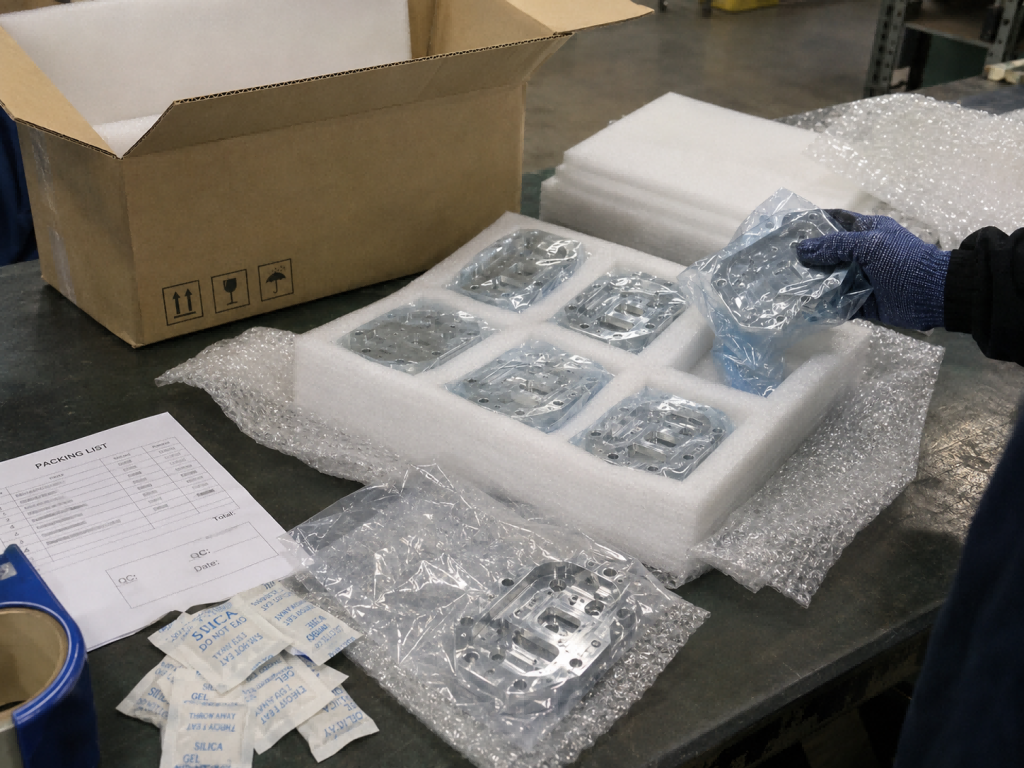
Precision parts can be damaged after machining if packaging is not controlled. Before shipment, we check surface protection, part separation, moisture protection, labels, and export packaging requirements.
Packaging may include:
- Individual wrapping
- Foam protection
- Anti-scratch bags
- Anti-oxidation protection for copper or sensitive metals
- Desiccant when needed
- Export cartons
- Clear part labels
For overseas shipments, packaging is part of quality control. A part that passes inspection can still fail customer expectations if it arrives scratched, oxidized, or damaged.
FAQ
Can you provide inspection reports for CNC machined parts?
Yes. Inspection reports can be provided according to drawing requirements, tolerance level, and customer needs.
Do all parts receive CMM inspection?
Not every part requires CMM inspection. We select inspection methods based on part geometry, tolerance level, critical features, and customer requirements.
Can you check threads and small holes?
Yes. Thread gauges, pin gauges, calipers, and other inspection tools can be used depending on the feature and drawing requirement.
Can you inspect surface finish after machining?
Yes. Surface finish, burrs, scratches, oxidation, and post-processing quality can be checked before shipment.
Can you protect parts during international shipping?
Yes. Packaging can include individual wrapping, foam protection, anti-scratch bags, anti-oxidation protection, moisture control, and export cartons depending on the material and surface requirement.
Upload Your Drawing for Quality Review
Send your 2D drawings, 3D CAD files, material requirements, tolerances, surface finish notes, and inspection requirements. Our team will review manufacturability and quality control points before quotation.