

Manufacturing FAQ for Custom CNC Parts
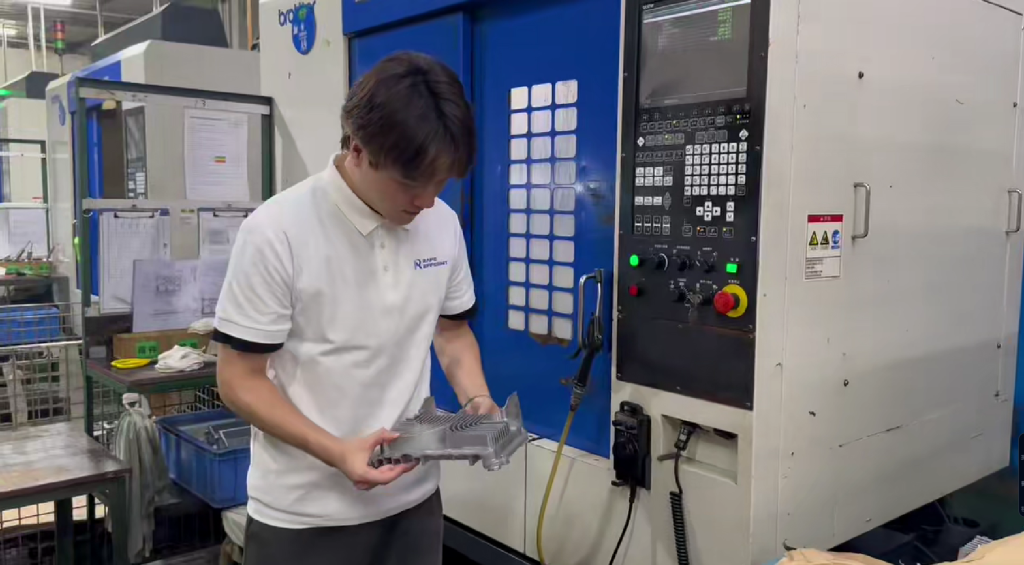
A fast quotation starts with a complete RFQ.
When a drawing clearly identifies the material, quantity, critical tolerances, surface-finishing requirements, inspection expectations, and assembly function, the machining route can be reviewed more accurately before production.
When this information is missing, the risk does not disappear. It moves downstream into pricing, manufacturing, inspection, assembly, and delivery.
Rapid Efficient supports custom CNC machining projects for prototypes, low-volume parts, and production requirements. The questions below explain what to prepare before quotation, which technical details require early review, and how to reduce avoidable delays.
RFQ Files and Quotation
What information should I include in a CNC machining RFQ?
Please send as much of the following information as possible:
- 2D drawing
- 3D CAD file
- Material grade
- Temper, hardness, or heat-treatment condition when relevant
- Required quantity
- Critical tolerances
- General-tolerance note
- GD&T callouts
- Threads, holes, bearing locations, and mating surfaces
- Surface-finishing requirements
- Masking areas
- Cosmetic surfaces
- Inspection-report requirements
- Packaging requirements
- Target delivery schedule
- Application or assembly function when available
A complete RFQ helps us review the machining route, material risks, fixture requirements, post-processing steps, inspection plan, and delivery conditions before quotation.
Which 2D and 3D file formats can I send?
Commonly accepted formats include:
- STEP / STP / X_T (Parasolid): Preferred for geometry review, feature evaluation, and CAM programming.
- IGES / IGS: Accepted for geometry exchange when a solid-model format is not available.
- DWG / DXF / PDF: Recommended for dimensioned 2D drawings, tolerance limits, thread specifications, GD&T callouts, surface-finish notes, masking areas, and inspection requirements.
- STL: Accepted for reference, but less suitable than a solid CAD model for precision feature evaluation.
For custom CNC machining projects, a 3D solid model together with a dimensioned 2D drawing is usually the most useful combination.
The 3D model helps us review the geometry and machining route. The 2D drawing should identify critical dimensions, tolerances, threads, datum references, GD&T, surface finishes, inspection requirements, and any notes that cannot be communicated reliably through the model alone.
Can you quote a project if my drawing is not complete?
Yes. We can review an early-stage drawing, a 3D model, or an incomplete technical package.
For incomplete technical packages, the first step is a preliminary DFM and manufacturing-feasibility review. This review can identify the points that still need confirmation, but it is not a substitute for final product design or an approved production drawing.
Before formal production begins, the customer should provide or approve a dimensioned 2D drawing that defines the material, critical dimensions, tolerances, surface-finishing requirements, and final acceptance criteria.
When the drawing is still under development, explain the intended function of the part and identify the failure mode that must be avoided. For example:
- Bearing fit
- Sealing performance
- Heat transfer
- Electrical contact
- Alignment
- Flatness
- Cosmetic appearance
- Corrosion resistance
- Weight reduction
- Assembly repeatability
This makes the preliminary DFM review more useful.
How quickly can I receive a quotation?
For projects with complete drawings and clearly defined requirements, we normally aim to respond with a quotation within 24 hours.
Complex projects may require additional review when they involve:
- Multi-part assemblies
- Tight tolerances
- Complex GD&T
- Deep holes
- Thin walls
- Special materials
- Heat treatment
- Multiple surface-finishing steps
- Detailed inspection documentation
- Custom packaging requirements
A fast quotation should still be based on a realistic machining and inspection plan.
Do you provide DFM feedback before production?
Yes.
Before production, we can review drawing details that may affect manufacturability, cost, stability, inspection, or assembly.
Typical DFM review points include:
- Unnecessarily tight tolerances
- Deep pockets
- Small internal corner radii
- Thin walls
- Tool-access limitations
- Difficult-to-inspect features
- Thread depth
- Hole depth
- Datum selection
- Surface-finish allowance
- Masking requirements
- Material-related deformation risk
A practical DFM review can also reduce unnecessary cost by simplifying the machining route. Depending on the drawing, this may include reducing repeated setups, avoiding unnecessarily long tool reach, replacing non-functional tight tolerances with realistic limits, improving standard-tool access, and separating essential complexity from features that do not improve the final assembly.
For a deeper review of machining risks, visit our CNC machining design guide.

Materials and Surface Finishes
Which metals and engineering plastics can you review?
Rapid Efficient can review commonly used CNC machining materials, including:
- Aluminum alloys
- Stainless steels
- Carbon steels
- Tool steels
- Copper
- Brass
- Titanium alloys
- POM / Acetal
- PEEK
- Nylon
- PTFE
- PP
- Other engineering plastics depending on project requirements
Material feasibility should be reviewed together with the geometry, tolerance level, operating environment, surface treatment, and expected quantity.
The same tolerance does not create the same risk in every material.
Can you help select a suitable material for my application?
Yes.
When the material has not yet been finalized, provide the functional requirements of the component, such as:
- Strength
- Rigidity
- Weight
- Corrosion resistance
- Heat resistance
- Electrical conductivity
- Thermal conductivity
- Wear resistance
- Dimensional stability
- Surface appearance
- Cost target
- Operating environment
For example, a thin-wall aluminum housing, a conductive copper component, a stainless-steel fluid-handling part, and a PEEK component require different machining and inspection strategies.
For a practical comparison of material behavior and manufacturing risks, review our CNC machining materials guide.
Which surface finishes are available for CNC machined parts?
Depending on the material and application, supported surface-finishing and post-processing routes may include:
- As-machined finish
- Bead blasting
- Sandblasting
- Anodizing
- Hard anodizing
- Passivation
- Polishing
- Plating
- Powder coating
- Painting
- Laser engraving
- Heat treatment
- Cleaning
- Application-specific post-processing
Some finishing routes may be coordinated with qualified supply-chain partners depending on project requirements.
Surface finishing is not only a cosmetic choice. It may affect corrosion resistance, wear behavior, electrical contact, thread fit, bearing locations, mating surfaces, sealing surfaces, inspection, packaging, and final assembly.
For a detailed review, visit our CNC surface finishes guide.
How should I specify masking areas, cosmetic surfaces, and post-finish dimensions?
The drawing should clearly identify:
- Surfaces that must remain uncoated
- Threads that require masking
- Bearing locations
- Tight-fit holes
- Mating faces
- Sealing surfaces
- Grounding points
- Electrical-contact areas
- Visible cosmetic surfaces
- Laser-engraving areas
- Final dimensions that apply after finishing
For critical features, confirm whether the tolerance applies:
- Before finishing
- After finishing
- On a masked surface
- After post-finish inspection
- After thread or fit verification
This is particularly important for anodized, hard-anodized, plated, painted, and powder-coated parts.
Tolerances and Inspection
What CNC machining tolerances can you support?
Tolerance feasibility depends on the feature, material, geometry, part size, stock condition, clamping strategy, surface-finishing route, inspection method, and quantity.
Rapid Efficient supports machining projects requiring accuracy down to 0.01 mm and inspection accuracy down to 0.001 mm, depending on the actual part and project requirements.
This does not mean every dimension should automatically be marked with the tightest possible tolerance.
A realistic drawing separates:
- Non-critical dimensions
- Assembly-sensitive dimensions
- Precision fits
- Datum-related geometrical controls
- Surface-finish-sensitive features
- Features that require post-finish verification
For a detailed tolerance-planning framework, review our CNC machining tolerances guide.
Should every dimension be marked with a tight tolerance?
No.
A tight tolerance should protect a functional requirement. It should not be used as decoration.
Applying ±0.005 mm to every feature may increase:
- Programming time
- Fixture complexity
- Setup time
- Finishing stages
- Tool-wear control
- In-process inspection
- Final inspection
- Quotation risk
- Delivery risk
without improving the final assembly.
Critical tolerances are usually more appropriate for features such as:
- Bearing seats
- Precision bores
- Shaft diameters
- Mating interfaces
- Alignment features
- Selected sealing surfaces
- Datum-related functional surfaces
- Precision holes
The correct tolerance is the narrowest tolerance required by the function, not the narrowest value that can be typed into CAD.
Can you review H7 holes, GD&T, true position, and run-out requirements?
Yes.
Precision fits and geometrical controls should be reviewed before production because they may affect:
- Machining strategy
- Tool selection
- Hole depth
- Tool reach
- Fixture design
- Number of setups
- Single-setup machining requirements
- Multi-axis machining requirements
- Probe strategy
- Gauge selection
- CMM programming
- Inspection time
For example, a shallow Ø10 H7 hole and a deep Ø10 H7 hole are not automatically the same manufacturing task, even though the nominal diameter and tolerance class are identical.
The drawing should identify the datum scheme, critical relationships, hole depth, mating component, inspection expectations, and whether the tolerance applies before or after surface treatment.
Which inspection reports are available?
Inspection documentation can be provided depending on customer requirements.
Available options may include:
- Dimensional inspection reports
- Full-dimensional inspection reports
- CMM reports
- Material certificates
- Thread-gauge verification
- Fit verification
- Visual inspection records
- Packaging inspection records
- Other project-specific inspection documents
Please identify the required documentation during the RFQ stage so the inspection route can be included in the quotation.
Can material certificates and CMM reports be provided?
Yes.
Material certificates, dimensional inspection reports, and CMM reports can be provided according to customer requirements.
Not every part requires the same inspection method.
For example:
- Pin gauges or plug gauges may be suitable for fitted holes.
- Thread gauges may be more relevant for threaded features.
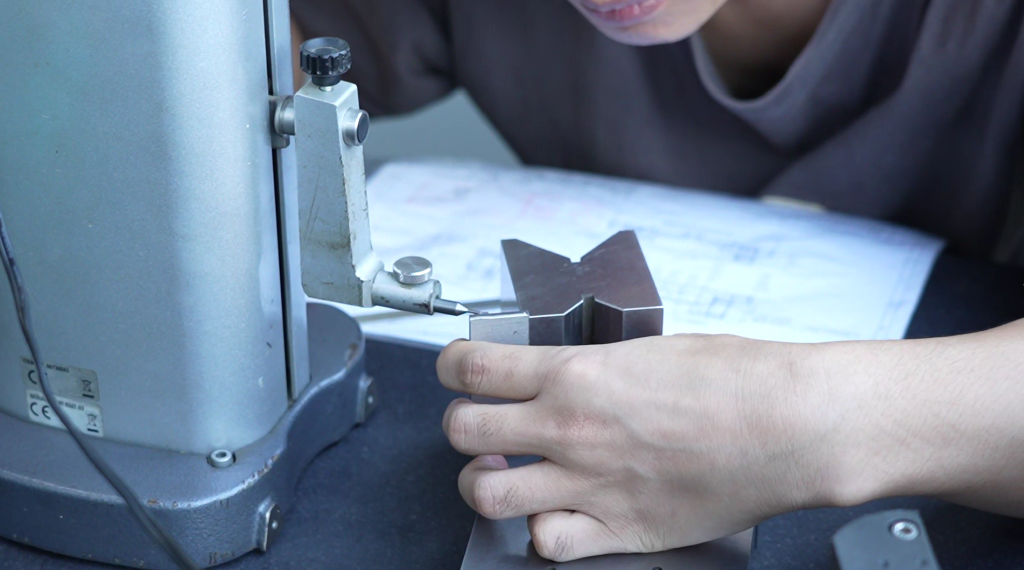
- Micrometers may be appropriate for selected shaft diameters.
- CMM inspection may be useful for hole patterns, profiles, datum relationships, true position, and complex multi-face features.
The inspection method should match the functional requirement.
For more information, review our quality assurance process.
Are ISO 9001 and ISO 14001 certifications available?
Yes.
Rapid Efficient has obtained ISO 9001 and ISO 14001 certification.
These certifications support a structured approach to quality management and environmental management.
When project-specific documentation is required, please identify the expected records during the RFQ stage.
Prototypes, Low-Volume Parts, and Production
Do you support single prototypes and low-volume production?
Yes.
Rapid Efficient supports:
- Single prototypes
- Engineering samples
- Functional prototypes
- Small batches
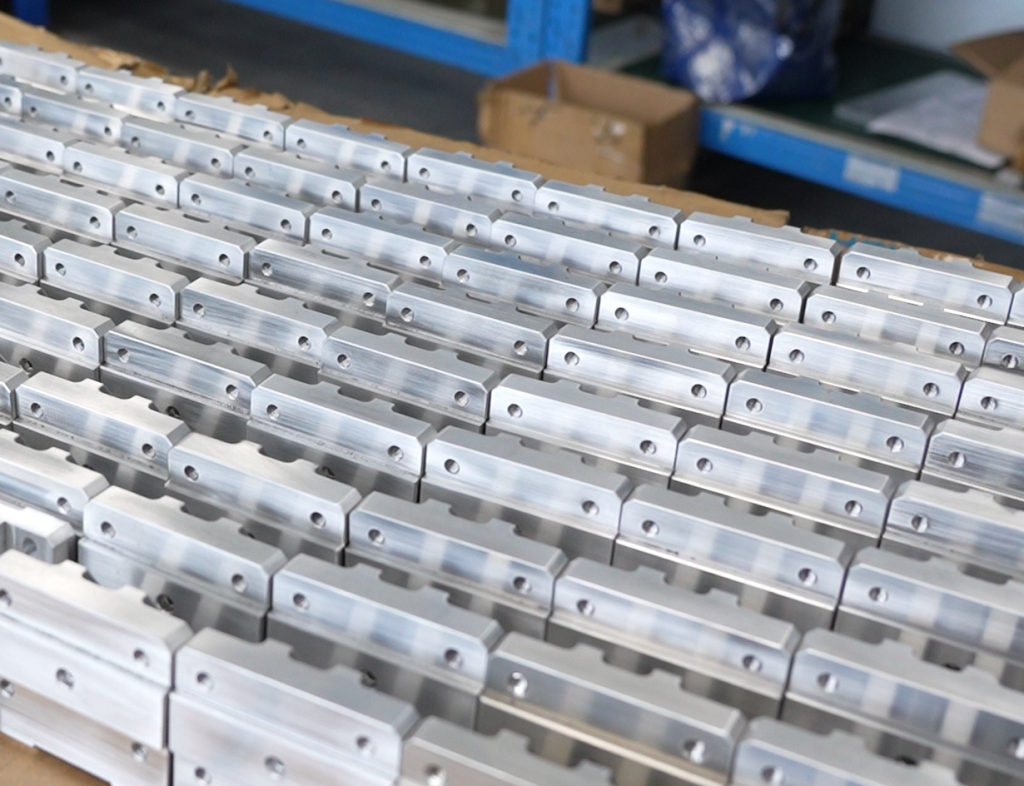
- Low-volume production
- Repeat orders
- Production requirements depending on project needs
Prototype machining is useful for checking:
- Assembly
- Fit
- Geometry
- Material selection
- Surface appearance
- Functional performance
- Inspection requirements
- Design revisions before production
A single prototype can be reviewed without a minimum quantity requirement.
Is there a minimum order quantity?
No fixed minimum order quantity is required.
Single-part prototypes and small-batch orders can be reviewed.
For production quantities, the most suitable machining route, fixture strategy, inspection plan, packaging method, and delivery schedule should be reviewed together.
How long does CNC machining production take?
Lead time depends on:
- Part complexity
- Material availability
- Quantity
- Tight tolerances
- Number of setups
- Surface-finishing requirements
- Heat treatment
- Inspection documentation
- Packaging requirements
- Shipping method
For selected projects, the fastest practical lead time may be 3–7 days after technical requirements are confirmed.
Complex parts, larger quantities, special materials, multiple finishing routes, or detailed inspection requirements may require additional time.
The confirmed schedule should be based on the actual drawing and production route.
Can urgent projects be reviewed before quotation?
Yes.
Please identify the target delivery date when submitting the RFQ.
For urgent projects, we can review:
- Drawing completeness
- Material availability
- Machining complexity
- Fixture requirements
- Surface-finishing lead time
- Inspection requirements
- Packaging method
- Shipping route
A realistic urgent schedule should protect the quality requirements rather than create hidden production risk.
Packaging and International Shipping
How are finished parts protected during shipment?
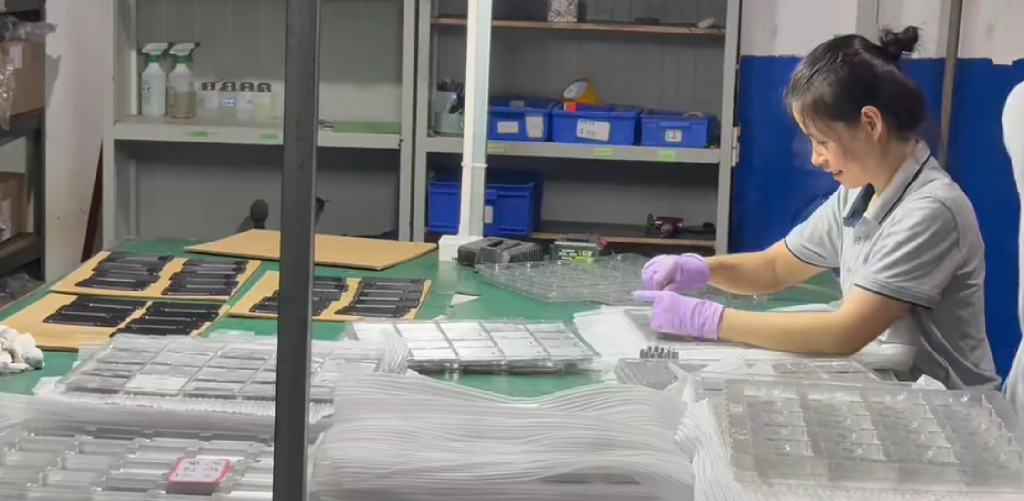
Packaging should match the material, geometry, surface finish, quantity, and transport conditions.
Depending on project requirements, packaging may include:
- Individual wrapping
- Protective bags
- Anti-scratch protection
- Foam separation
- Protective film
- Moisture protection
- Anti-oxidation protection
- Desiccant when required
- Export cartons
- Clear labeling
- Batch separation
Packaging is particularly important for visible anodized parts, polished surfaces, plated components, copper parts, precision fits, and components with delicate edges.
A part can pass final inspection and still arrive damaged if packaging is treated as an afterthought.
Can packaging be adjusted for anodized, polished, plated, or copper parts?
Yes.
Different materials and finishes require different protection strategies.
For example:
- Anodized housings may require scratch protection.
- Polished surfaces may require individual wrapping.
- Plated components may need protection from part-to-part contact.
- Copper parts may require oxidation protection.
- Precision components may require foam separation.
- Cosmetic parts may require protective film and controlled handling.
Please identify visible surfaces, sensitive features, and overseas shipping conditions during quotation.
Which international shipping methods are available?
Shipping routes can be arranged according to customer requirements.
Common options include:
- DHL
- FedEx
- UPS
- Air freight
- Sea freight
- Other international logistics arrangements depending on the destination and project requirements
The suitable route depends on the delivery target, package size, weight, quantity, destination, and budget.
Communication and Project Protection
Can you sign an NDA before reviewing my drawing?
Yes.
An NDA can be signed before technical review when confidentiality is required.
Please provide the NDA together with the project information, or ask our team to coordinate the next step before submitting sensitive files.
Do you support heat treatment, laser engraving, and simple assembly?
Yes.
Depending on project requirements, Rapid Efficient can support coordinated routes for:
- Heat treatment
- Laser engraving
- Simple assembly
- Cleaning
- Surface finishing
- Inspection
- Packaging
- International shipping
When multiple post-processing steps are involved, please identify the final functional requirements, cosmetic expectations, inspection needs, and packaging conditions during quotation.
How do I start a CNC machining quotation?
Send your:
- 2D drawing
- 3D CAD file
- Material grade
- Quantity
- Critical tolerances
- Surface-finishing requirements
- Inspection-report requirements
- Target delivery schedule
- Packaging requirements
- Application notes when available
Our team will review the machining route, material risks, tolerance requirements, finishing conditions, inspection plan, and delivery schedule before quotation.
For complete RFQs, we normally aim to respond within 24 hours.
Upload Your Drawing for Manufacturing Review
Send your 2D drawing, 3D CAD file, material grade, expected quantity, tolerance notes, surface-finishing requirements, inspection needs, and delivery target.
Our team will review the machining route, manufacturing risks, post-processing requirements, inspection plan, packaging conditions, and delivery schedule before quotation.
CTA Button: Upload Your Drawing
About Rapid Efficient
Rapid Efficient supports custom CNC machining projects for prototypes, low-volume parts, and production requirements.
With 18 years of high-precision CNC machining experience, our team reviews material behavior, machining strategy, tolerance risks, post-processing requirements, inspection methods, packaging conditions, and delivery schedules before quotation.
Our available capabilities include 4-axis, 5-axis, and multi-axis CNC machining, together with inspection equipment such as CMM, projectors, and spectrometers. Depending on the actual part and project requirements, machining accuracy down to 0.01 mm and inspection accuracy down to 0.001 mm are available.
Rapid Efficient has obtained ISO 9001 and ISO 14001 certification.
We support projects across medical devices, communications equipment, optical components, drones, intelligent robotics, automotive applications, office automation, and other custom manufacturing requirements.