Introduction
Surface finishing plays a critical role in determining the appearance, durability, and performance of precision CNC machined parts.
At Rapidefficient, we provide a wide range of surface finishing solutions for aluminum and metal components, supporting both prototyping and production. Choosing the right finishing method can significantly improve product quality while meeting functional and aesthetic requirements.
This guide introduces the most commonly used surface finishing processes and helps you select the right option for your project.
1. Sandblasting (Matte Texture Preparation)
Sandblasting removes machining marks and creates a uniform matte surface using fine abrasive media such as glass beads.
Benefits
- Hides CNC tool marks
- Improves surface consistency
- Ideal pre-treatment for anodizing
Applications
- Aluminum enclosures
- Panels and housings
2. Anodizing (Protective & Decorative Finish)
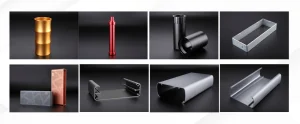
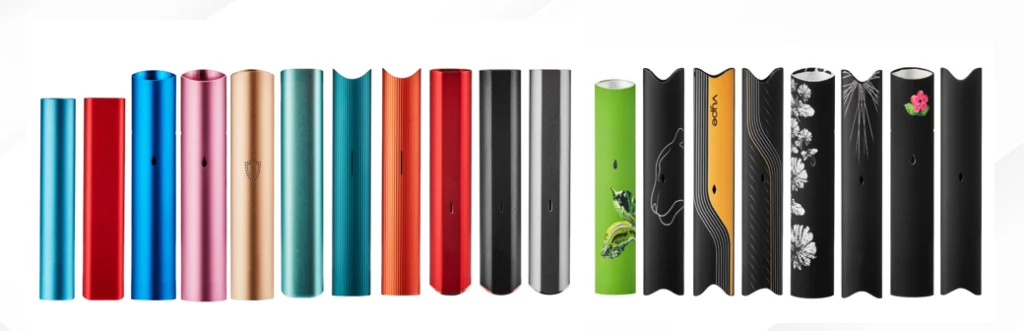
Anodizing is one of the most widely used finishing processes for aluminum parts, forming a durable oxide layer on the surface.
Benefits
- Enhanced corrosion resistance
- Increased surface hardness
- Wide color selection
- Long-lasting finish
Applications
- Automotive parts
- Consumer electronics
- Drone components
3. Electroplating (Metal Coating for Protection)
Electroplating deposits a metal layer (such as nickel, chrome, or zinc) onto the part surface to improve corrosion resistance and appearance.
Benefits
- Strong anti-corrosion performance
- Improved conductivity (for some metals)
- Decorative metallic finish
Applications
- Mechanical components
- Automotive and industrial parts
4. Polishing (Smooth & Mirror Finish)
Polishing reduces surface roughness through mechanical or chemical processes, creating a smooth or mirror-like finish.
Benefits
- High surface smoothness
- Premium appearance
- Reduced friction
Applications
- Decorative parts
- High-end products
5. Brushing (Wire Drawing Finish)
Brushing creates linear textures on the surface, giving parts a modern and stylish appearance.
Benefits
- Unique texture
- Hides minor scratches
- Consistent visual effect
Applications
- Consumer electronics
- Aluminum panels
6. Spray Painting (Flexible Color Coating)
Spray painting applies a liquid coating to achieve a wide range of colors and finishes.
Benefits
- Flexible color matching (Pantone support)
- Suitable for metals and plastics
- Smooth surface finish
Applications
- Electronic devices
- Equipment housings
7. Industrial Painting (Heavy-Duty Protection)
Industrial painting is used for large components requiring corrosion protection and durability.
Benefits
- Strong anti-rust performance
- Suitable for large structures
- Cost-effective for bulk parts
Applications
- Equipment frames
- Sheet metal parts
8. QPQ (Quench-Polish-Quench)
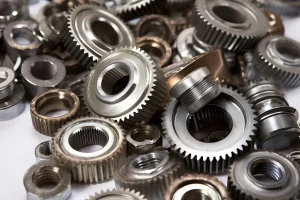
QPQ is an advanced surface treatment process that improves hardness, wear resistance, and corrosion resistance.
Benefits
- Excellent wear resistance
- Improved fatigue strength
- Environmentally friendly process
Applications
- Gears, shafts, and mechanical parts
- Automotive components
9. PVD Coating (High-End Decorative Coating)
PVD (Physical Vapor Deposition) creates a thin, hard coating with excellent wear resistance and premium appearance.
Benefits
- High hardness
- Scratch resistance
- Premium metallic colors
Applications
- Decorative hardware
- Automotive trim
- Consumer products
10. Electrophoresis (Uniform Coating Process)
Electrophoretic coating provides a smooth, uniform layer across complex geometries.
Benefits
- Even coating thickness
- Strong adhesion
- Wide material compatibility
Applications
- Metal enclosures
- Automotive parts
11. Electroless Nickel Plating (Chemical Protection Layer)
Electroless nickel plating forms a uniform protective coating without electrical current.
Benefits
- Excellent corrosion resistance
- Uniform thickness (even on complex shapes)
- Improved wear resistance
Applications
- Precision components
- Industrial machinery parts
How to Choose the Right Surface Finishing
Choosing the correct finishing depends on your priorities:
- For appearance → Polishing / Brushing / PVD
- For durability → Anodizing / QPQ / Nickel plating
- For cost efficiency → Sandblasting / Painting
- For corrosion resistance → Anodizing / Electroplating
Why Choose Rapidefficient
- Wide range of finishing options in-house
- Strong DFM support for surface treatment
- Stable quality for international projects
- Reliable delivery for global customers
Conclusion
Surface finishing is not just about appearance—it directly impacts product performance, durability, and customer perception.
Selecting the right finishing method early in the design stage helps reduce risks, control costs, and ensure consistent quality.