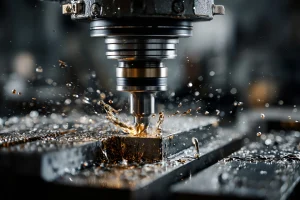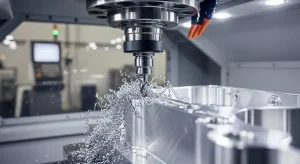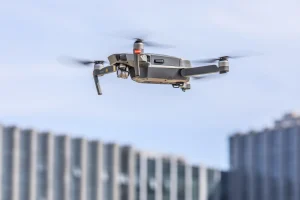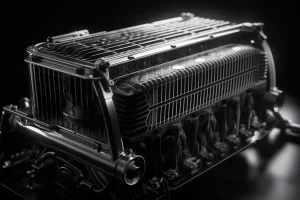

In modern drone manufacturing, the landing gear joint—though small in size—is a critical load-bearing component. It absorbs impact during takeoff and landing while connecting the fuselage to the landing system.
结束 15 years of CNC machining process experience, we have seen numerous failure cases caused by insufficient strength, as well as folding mechanism issues resulting from tolerance deviations.
Drone landing gear joints are typically machined from 7075-T6 or 6061 铝合金, requiring a balance between maximum strength and minimum weight.
在本文中, we provide an in-depth analysis of four key areas:
- 材质选择
- 5-axis machining strategies
- Deformation control of thin-walled structures
- 表面处理
材质选择: Controlling Quality from the Source
Material selection is often underestimated, yet it directly determines the final product performance.
When machining 7075-T6 aluminum, many manufacturers encounter issues such as surface mottling or black spots after anodizing. These defects are not merely cosmetic—they indicate non-uniform internal microstructure.
At 快速高效, we address this at the source:
- We collaborate directly with certified material suppliers
- High-purity aluminum stock is custom-ordered
- Trial anodizing is conducted before full production
This ensures consistent grain structure and stable anodizing performance across batches.
Such strict material control forms the foundation for landing gear joints capable of withstanding thousands of impact cycles.
Thin-Walled Structure Machining: Controlling Deformation
To reduce weight and increase flight endurance, landing gear joints often feature complex thin-walled rib structures.
The main challenge lies in stress-release deformation.
Using conventional machining methods, parts may deform by more than 0.05 毫米 after unclamping—leading to assembly failure.
Our Process Strategy
We implement a controlled process:
- 粗加工
- Natural aging or stress-relief treatment
- Finish machining
此外, our engineering team provides 直接制造 (设计可制造性) 反馈, 包括:
- Optimizing internal fillet radii
- Reducing uneven cutting forces
- Improving structural stability
This allows us to maintain tight tolerances within ±0.01 mm.
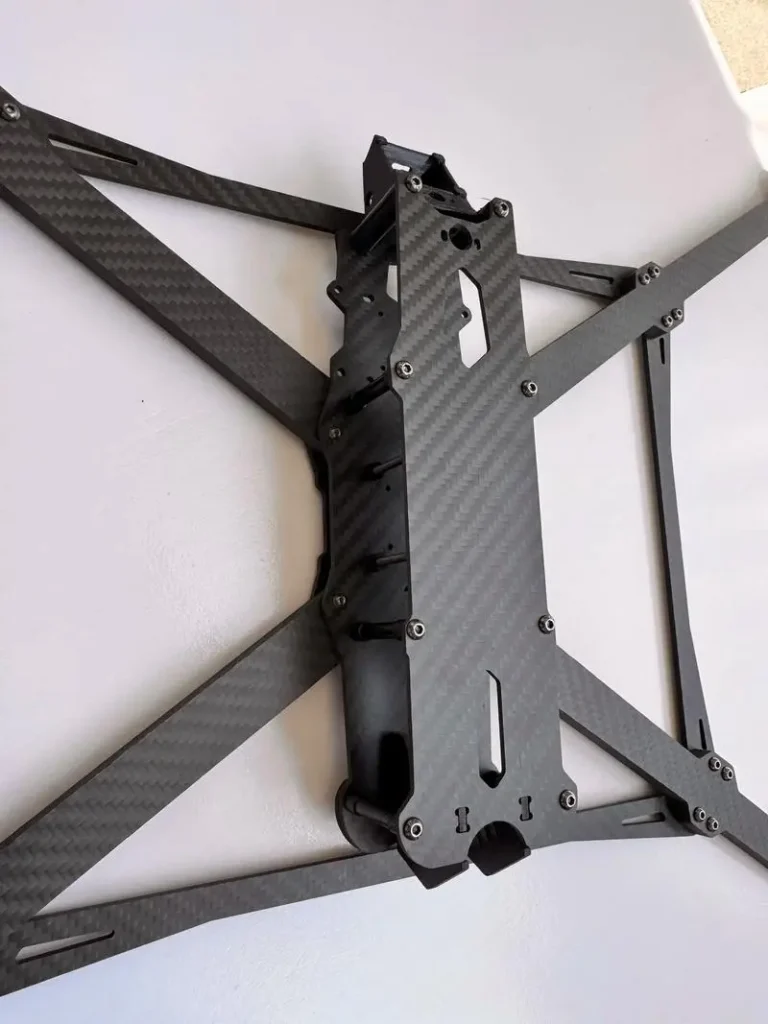
5-Axis Machining Strategy: 精度和效率
Complex geometries such as angled surfaces and irregular holes present significant challenges.
Traditional 3-axis machining requires multiple setups, with each setup introducing cumulative errors of approximately 0.02 毫米.
Advanced Machining Approach
By utilizing 3+2 positioning and full 5-axis machining, we can:
- Complete multi-surface machining in a single setup
- Improve efficiency by over 15%
- Ensure coaxiality between mounting holes and pivot holes
For customers, this translates into:
- Smoother folding mechanisms
- Improved durability
- Longer product lifecycle
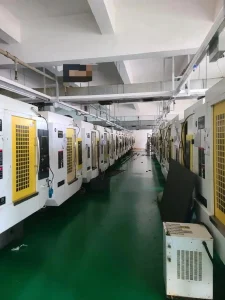
Our production capability includes:
- 20+ 数控加工中心
- 10+ turn-mill machines
This supports both prototyping and high-volume production.
Tooling Strategy: Maximizing Surface Quality
Tool selection plays a critical role in machining high-strength aluminum alloys.
We avoid standard HSS tools and instead use:
- High-hardness coated carbide tools
- Tools optimized specifically for aluminum machining
Benefits
- Excellent chip evacuation
- Reduced built-up edge formation
- Surface finish up to 拉 0.8 or better
过程优化
Our engineers continuously optimize:
- 饲料率
- Spindle speed
- Toolpath strategies
The goal is to:
- Reduce cycle time
- Improve yield rate
- Maintain consistent quality
质量控制: Process-Based Assurance
Final inspection alone is not sufficient for precision components.
At 快速高效, quality control is integrated throughout the entire process.
IPQC System
- First-piece inspection every 2 小时
- Real-time monitoring of critical dimensions
Inspection Equipment
- CMM (Coordinate Measuring Machine)
- Cylindricity testers
Material Verification
For critical or overseas projects, we use:
- Handheld XRF analyzers
This ensures:
- Accurate material composition
- Elimination of material mix-up risks
表面处理: Managing Critical Tolerances
Surface treatment is the final but crucial step.
Landing gear joints typically require hard anodizing to improve wear resistance.
Key Challenge
Hard anodizing causes dimensional growth of:
- 0.008–0.012 mm
Failure to compensate for this often results in assembly issues.
Our Solution
- Precise anodizing allowance planning
- Collaboration with specialized surface treatment partners
- Controlled finishing processes
Surface Protection
To prevent damage such as scratches or dents:
- Custom blister trays are used for transportation
- Strict handling procedures are implemented
This ensures parts remain in optimal condition upon delivery.
Flexible Production for Prototyping and Mass Production
MOQ is a common challenge for startups and R&D teams.
Our Approach
At 快速高效, we offer:
- No minimum order quantity
- Dedicated rapid prototyping team
- Fast turnaround capability
Lead Time
- Urgent samples: 之内 24 小时
- Standard prototypes: 3–7 days
This flexible model supports:
- Early-stage development
- Small-batch production
- Large-scale manufacturing
Transparent Pricing Strategy
Pricing is based on:
- Part complexity
- Material type
- Tolerance requirements
Pricing Models
- Hourly machining rate
- Per-part quotation
As a direct manufacturer, we:
- Eliminate intermediary costs
- Provide cost-efficient solutions
DFM Value
Our DFM reports help clients:
- 优化设计
- Reduce machining cost
- Improve manufacturability
结论
CNC machining is not just about production—it is about mastering:
- Material behavior
- Precision control
- 流程优化
At 快速高效, we focus on delivering reliable, high-performance components through engineering-driven solutions.
We provide:
- NDA protection
- Rapid response (之内 24 小时)
- Full responsibility for quality issues
If you are looking for a trusted CNC machining partner for drone components, we are ready to support your project—from prototype to mass production.