
In the high-performance cycling industry, component engineering directly determines a mountain bike’s strength, weight efficiency, durability, and riding precision. Reinforced structural parts in particular must withstand extreme loads, repeated impacts, and complex stress conditions without failure. As a manufacturing specialist with extensive experience in CNC machining, I have seen how advanced machining technologies enable manufacturers to produce precision-engineered custom components that meet these demanding performance standards. In this article, I will explain how CNC machining provides the accuracy, material adaptability, and production flexibility required to manufacture reinforced mountain bike parts capable of performing reliably under the most demanding riding conditions.
What are Mountain Bike Reinforced Parts?
In mountain bikes, reinforced parts refer to components that directly affect the bike’s performance and must withstand high mechanical loads and stress concentrations. These parts not only need to tolerate high-intensity impacts, vibrations, and wear but also require lightweight structures, high strength-to-weight ratios, and tight dimensional tolerances. Typical mountain bike reinforcement parts include:
- Frame: The structural backbone of the bike, bearing rider weight, terrain impact loads, and torsional forces.
- Suspension system: Directly related to handling performance on rough terrain and subjected to repeated dynamic loading.
- Braking system: Includes brake discs, calipers, and related components, requiring high strength, thermal stability, and wear resistance.
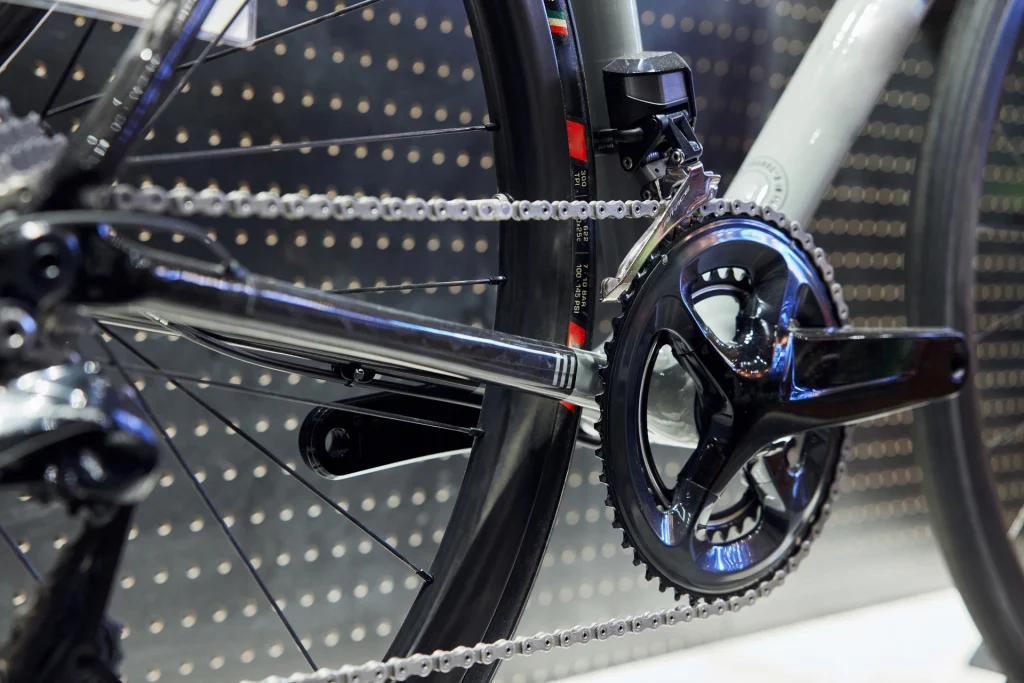
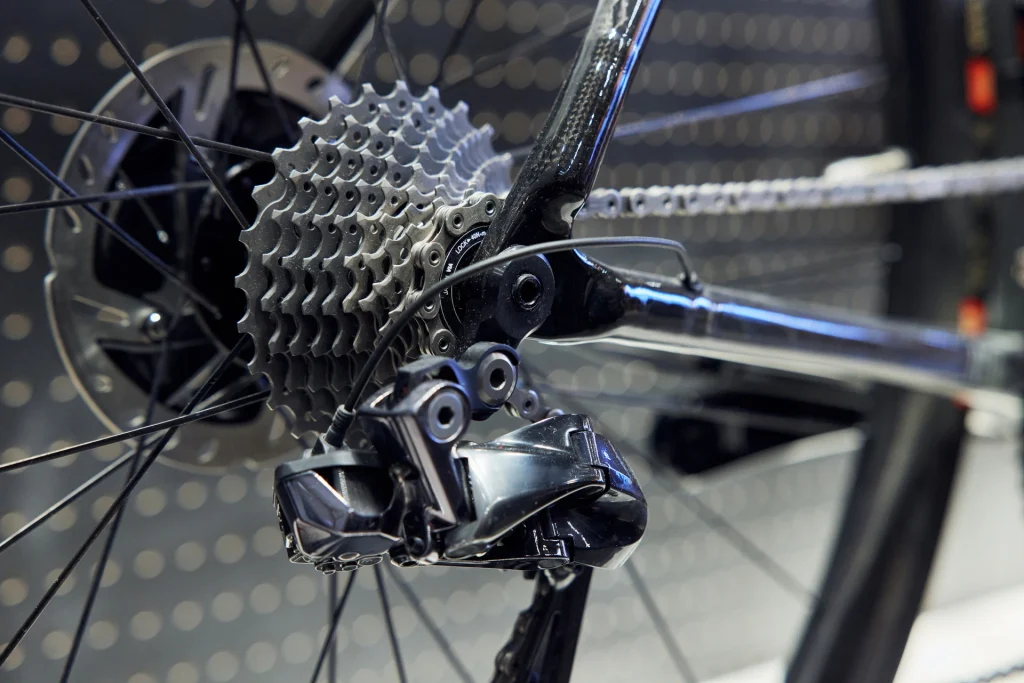
- Drivetrain gears: Must withstand high rotational speeds and torque loads while maintaining precise meshing accuracy.
Each reinforcement part requires a customized design to meet specific mechanical performance and fatigue life requirements.
Why Choose CNC Machining Technology?
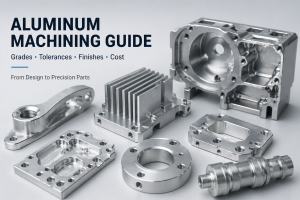
Traditional casting or stamping methods may struggle to meet the requirements of high precision and customization when manufacturing these highly specialized reinforcement parts, particularly in low-volume production. In contrast, CNC machining, with its accuracy, flexibility, and repeatability, has become one of the most effective solutions for custom mountain bike components.
Key advantages include:
High precision and consistency:
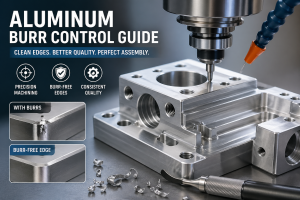
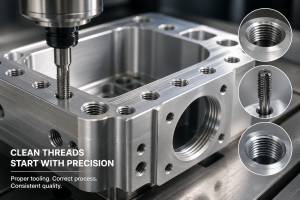
Every dimension of a mountain bike part can influence performance, especially in critical components such as braking and drivetrain systems, where even small dimensional deviations may affect safety or efficiency. CNC machining, through computer numerical control, can typically achieve tolerances ranging from ±0.02 mm to ±0.005 mm depending on machine configuration, tooling, and material characteristics. Programmed automation also ensures repeatable accuracy across batches, maintaining consistent part quality even in small-volume production. Material machinability also significantly affects achievable tolerances and surface finishes.
Precision machining of complex shapes:
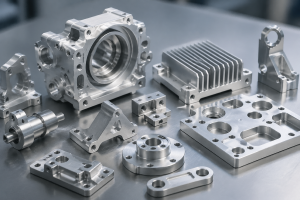
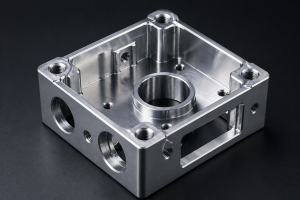
Many performance bike components feature complex geometries, especially frames and suspension parts that may require multi-axis machining and detailed contouring. Conventional machining methods may struggle with such geometries, whereas multi-axis CNC systems can accurately produce intricate curves, angled surfaces, and compound internal features within a controlled machining setup.
Flexible small-batch customization:
Custom performance parts are often produced in small quantities for specific bike models or racing requirements. Traditional manufacturing methods such as molding or die forming typically require high initial tooling costs and long preparation cycles. CNC machining eliminates the need for dedicated molds and allows new parts to be produced simply by modifying digital programs, making it highly suitable for small-batch production. Production schedules can also be adjusted quickly, improving responsiveness and reducing inventory risk.
Optimizing Material Utilization and Reducing Waste
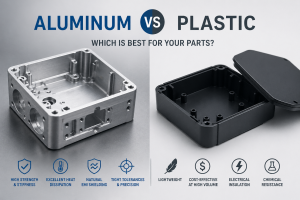
Another major advantage of CNC machining is its ability to optimize raw material usage. Reinforced mountain bike components often use high-strength aluminum alloys, titanium alloys, or engineering plastics. Since these materials can be costly, efficient machining strategies are essential. Through precise toolpath control, optimized cutting parameters, and fixture stability, CNC machining minimizes excess material removal, improves material yield, and reduces overall manufacturing cost.
CNC Machining Processes for Custom Mountain Bike Reinforced Parts
CNC machining plays a key role in manufacturing performance bike components, and different parts require different machining methods. Below are several common CNC processes used in custom mountain bike part production:
Milling
Milling is one of the most widely used CNC processes for manufacturing bike components. Using rotating cutting tools, milling can produce precise geometries and structural features. For example, frame components or linkage parts can be milled to achieve accurate dimensions, controlled wall thickness, and structural integrity under load.
Turning
Turning is commonly used for rotational or cylindrical parts such as axles, hubs, or certain drivetrain components. By rotating the workpiece while applying cutting tools, turning can achieve high accuracy in outer diameters, internal bores, and threaded features, making it suitable for parts requiring concentricity and fine surface finishes.
Drilling
Many bike components require accurately positioned holes for fastening or assembly alignment. CNC drilling ensures hole diameter, depth, and positional accuracy according to design specifications. Precise hole placement is especially critical for suspension pivots and drivetrain mounting interfaces.
Electrical Discharge Machining (EDM)
Electrical discharge machining is a precision process that removes conductive material using controlled electrical sparks. It is commonly used for machining hardened materials or producing intricate geometries that are difficult to achieve with conventional cutting tools. For example, precision gear profiles or fine internal slots can be produced with excellent dimensional accuracy and surface quality.
How CNC Machining Improves the Performance of Mountain Bike Components
CNC machining goes beyond simply ensuring dimensional accuracy. It can also enhance the overall performance of mountain bike components through process optimization and material-specific machining strategies. For example, in braking systems, CNC machining ensures disc flatness and surface consistency, which improves braking stability and heat dissipation. In frame component manufacturing, precision machining combined with structural optimization allows engineers to reduce weight while maintaining strength, resulting in improved handling, acceleration, and fatigue resistance.
Through CNC machining technology, reinforced mountain bike components can meet the strict requirements of high strength, lightweight construction, and precision manufacturing while also addressing the flexibility demands of small-batch customization. The accuracy, repeatability, and adaptability of CNC machining make it an essential manufacturing solution in modern performance bike production. If you are sourcing custom mountain bike components, choosing RapidEfficient can help ensure component quality, manufacturing reliability, and overall product performance.
About RapidEfficient
RapidEfficient specializes in high-precision CNC machining with 18 years of experience.
Its products serve industries including medical, communications, optics, drones, intelligent robotics, automotive, and office automation parts.
The company’s CNC machining centers feature four-axis, five-axis, and multi-linkage machine tools, and are equipped with precision projectors, coordinate measuring machines (CMM), spectrometers, and other advanced inspection equipment.
Machining accuracy can reach 0.01 mm, and testing accuracy can reach 0.001 mm.