
Introduction
In high-performance fishing reels—especially for lure fishing and offshore applications—the smoothness, durability, and reliability of the gear system define the overall user experience.
At Rapidefficient, we specialize in precision CNC machining of fishing reel gears, helping brands solve common issues such as gear noise, excessive resistance, and premature wear.
This guide explains how we optimize material selection, machining precision, and surface treatment to achieve high-performance gear transmission.
Common Challenges in Fishing Reel Gears
Fishing reel manufacturers often face:
- Gear noise during rotation
- Poor meshing and rough feel
- Deformation of aluminum gears
- Tooth breakage under high load
- Corrosion in saltwater environments
1. Material Selection for Strength & Longevity
Material choice directly determines gear performance.
Typical Configuration
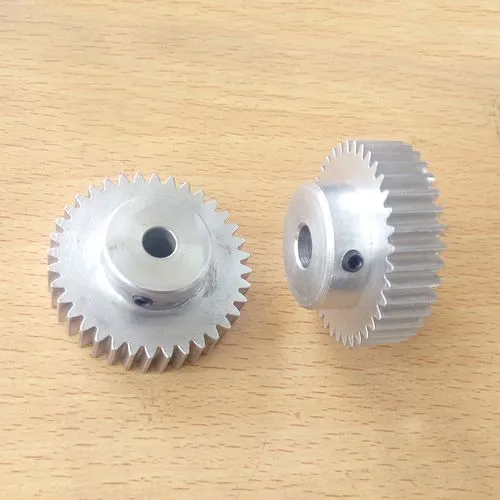
- Main gear → AL7075-T6 aluminum (lightweight, strong)
- Pinion gear → stainless steel (SUS304 / SUS316) or brass (wear resistance)
Our Optimization
- Use stress-relieved aluminum materials
- Strict supplier control
- Pre-production material verification
👉 Ensures consistent performance and avoids surface defects after anodizing
2. Deformation Control in Aluminum Gears
Large-diameter, thin-wall gears are highly prone to deformation due to residual stress.
Our Process
- Rough machining
- Natural aging (stress release)
- Finish machining
Result
- Eliminates radial runout
- Ensures stable gear meshing
3. High-Precision CNC Machining
Fishing reel gears require extremely tight tolerances.
Precision Standard
- General tolerance: ±0.01 mm
- High-precision tooth profile control
Our Technology
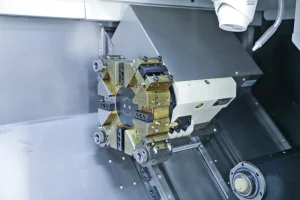
- Turn-mill combined machining
- Single-setup machining strategy
Advantages
- Eliminates re-clamping errors
- Improves concentricity
- Increases efficiency by ~15%
Advanced Capability
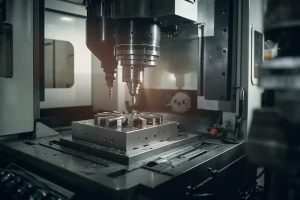
- 3+2 axis machining for complex gear profiles
- Surface roughness: Ra 0.4–0.8
👉 Directly improves the “smooth feel” of the reel
4. Surface Finishing & Corrosion Resistance
Fishing reels operate in humid and saltwater environments, making corrosion resistance critical.
Available Treatments
- Anodizing (aluminum gears)
- Hard anodizing (high wear resistance)
- Passivation (stainless steel gears)
Key Control
- Hard anodizing thickness: 0.008–0.012 mm (single side)
👉 We compensate dimensions during machining to avoid:
- Tight assembly
- Noise issues
5. Process Optimization for Yield & Consistency
Our Approach
- Optimized tool selection (coated tools)
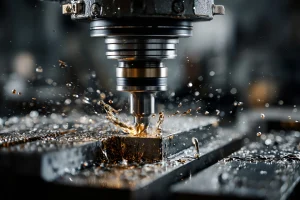
- Temperature-controlled cutting fluid
- Continuous programming improvement
👉 Achieves 5%+ higher yield rate vs industry average
6. Quality Control System
Inspection Capability
- CMM (Coordinate Measuring Machine)
- Material verification (spectrometer)
Quality System
- IATF 16949-based process control
- Full traceability

7. Flexible Production for Fishing Industry
Fishing gear products often require:
- Small batch development
- Fast iteration cycles
Our Capability
- Prototype lead time: 3–7 days
- No MOQ for custom orders
- Scalable to mass production
Why Choose Rapidefficient
- Deep experience in precision gear machining
- Strong control of deformation and tolerance
- Integrated machining + surface finishing
- Stable quality for international brands
Conclusion
CNC machining of fishing reel gears is not just about cutting—it requires a deep understanding of:
- Material behavior
- Precision machining
- Surface treatment
At Rapidefficient, we combine engineering expertise with advanced manufacturing to deliver smooth, durable, and high-performance gear components.