
Introduction: Why Test Positioning Rings Are Critical in Precision Manufacturing
In modern automated production and inspection systems, test positioning rings serve as critical reference components that ensure positional accuracy and repeatability.
Although small in size, these components directly impact:
- Measurement accuracy
- Assembly consistency
- Final product quality
At Rapidefficient, we have seen many cases where insufficient precision in positioning rings led to unstable test results and reduced yield rates.
With the growing demand for micron-level tolerances, traditional machining methods can no longer meet industry requirements. CNC machining has therefore become the standard solution for producing high-precision positioning rings.
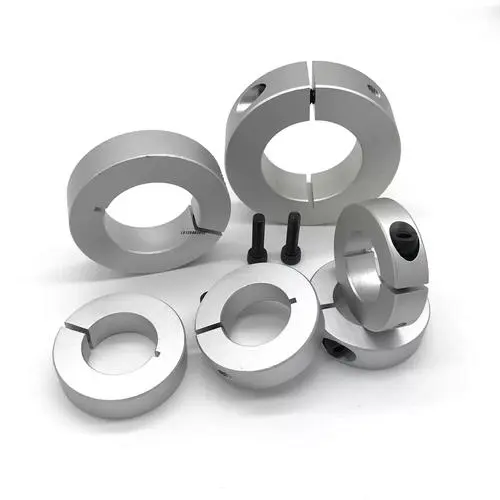
What Is a Test Positioning Ring? Functions and Applications
A test positioning ring is a high-precision component used as a reference datum in:
- Automated production lines
- Inspection systems (such as CMM equipment)
- Assembly and fixture systems
Main Types
- Assembly positioning rings → ensure alignment
- Inspection reference rings → measurement datums
- Fixture positioning rings → secure workpieces
Common Materials
- Tool steel
- Cemented carbide
- Engineering ceramics
👉 High hardness + wear resistance + dimensional stability
Why CNC Machining Is Essential for Positioning Rings
Traditional machining struggles with:
- Micron-level tolerance control
- Batch consistency
- Complex geometry
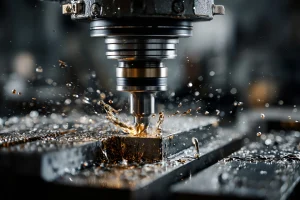
At Rapidefficient, we rely on CNC machining to achieve:
- Fully programmable precision control
- High repeatability
- Stable mass production
🔟 Top 10 Advantages of CNC Machining Test Positioning Rings
1. Ultra-High Precision Positioning
High-end CNC machines achieve:
👉 ±0.002 mm accuracy
This ensures:
- Inner/outer diameter precision
- Concentricity control
- Flatness consistency
2. Higher Production Efficiency
Automation enables:
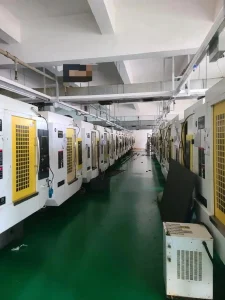
- Continuous 24/7 machining
- Multiple processes in one setup
- Reduced manual intervention
👉 Shorter production cycles and faster delivery
3. Reduced Human Error
CNC machining minimizes:
- Operator variability
- Fatigue-related errors
- Manual measurement mistakes
👉 Higher yield, lower scrap rates
4. Capability for Complex Structures
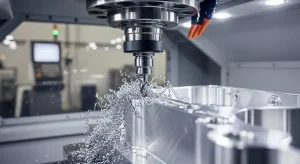
Using 5-axis CNC machining, Rapidefficient can produce:
- Complex contours
- Internal cavities
- Multi-angle features
👉 Single-setup machining reduces errors
5. Improved Surface Quality and Durability
High-precision machining achieves:
- Low surface roughness (Ra)
- Reduced friction and wear
👉 Longer service life for positioning rings
6. Consistent Batch Quality
CNC automation ensures:
- Identical parts from first to last
- Stable tolerance control
👉 Critical for high-volume production
7. Flexible Production and Fast Iteration
When designs change:
- CAD/CAM programs can be updated quickly
- No need for new molds
👉 Faster prototyping and product development
8. Lower Labor Costs Through Automation
At Rapidefficient, automation enables:
- One operator managing multiple machines
- Robotic loading/unloading
- Lights-out manufacturing
👉 Reduced cost per unit
9. Data Traceability and Process Control
Modern CNC systems record:
- Tool paths
- Cutting parameters
- Machine conditions
👉 Enables:
- Root cause analysis
- Process optimization
- Full traceability
10. Better Cost Efficiency Over Time
Although initial investment is higher, CNC machining delivers:
- Lower scrap rates
- Higher productivity
- Better product value
👉 Strong long-term ROI
⚙️ Best Practices for CNC Machining Positioning Rings
Equipment Selection
At Rapidefficient, we evaluate:
- Machine rigidity
- Spindle performance
- CNC control systems (FANUC / Siemens)
- Axis configuration (3-axis / 5-axis)
Standard CNC Workflow
- CAD modeling
- CAM programming
- Machine setup
- CNC machining
- Quality inspection
Key Parameter Optimization
Critical parameters include:
- Cutting speed (Vc)
- Feed rate (F)
- Depth of cut (Ap)
- Tool selection
👉 Balanced optimization = efficiency + quality
📈 Real Case: Yield Improvement Through CNC Optimization
A manufacturing client experienced unstable testing results due to low-precision positioning rings.
After working with Rapidefficient:
- Concentricity improved from 0.02 mm → 0.005 mm
- Product pass rate increased by 15%
- Customer complaints significantly reduced
🏭 Why Choose Rapidefficient
We go beyond machining—we provide complete solutions.
Our Strengths
- High-precision CNC machining (±0.002 mm)
- 5-axis and multi-axis capability
- Advanced inspection systems (CMM, etc.)
- Rapid prototyping + flexible production
Our Commitment
- 24-hour technical response
- Full-process quality control
- 100% responsibility for quality issues
💡 Conclusion: CNC Machining Drives Intelligent Manufacturing
CNC machining of test positioning rings represents:
👉 Precision + efficiency + scalability
By partnering with Rapidefficient, manufacturers can:
- Improve product accuracy
- Increase production efficiency
- Reduce long-term costs
❓ FAQ
Which industries use test positioning rings?
- Automotive
- Aerospace
- Consumer electronics
- Medical devices
- Precision molds
How is quality evaluated?
- CMM measurement (tolerance, concentricity)
- Surface roughness testing
- Hardness testing
What affects machining cost?
- Programming and setup
- Machine time
- Material cost
- Tool wear
- Inspection