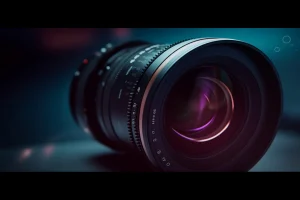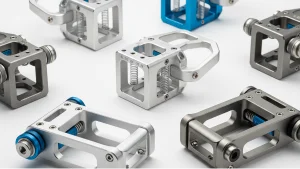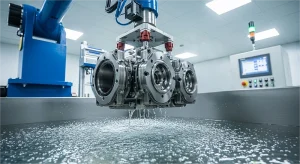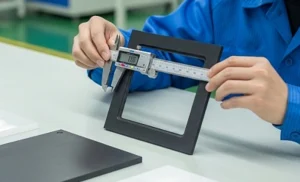

In high-end optical systems, focusing performance is critically dependent on the precision of mechanical transmission components. Issues such as abnormal motor noise, unstable focusing, or image jitter are often attributed to control systems at first—but in many cases, the root cause lies in the machining quality of the focusing gears themselves.
Even micron-level deviations in gear pitch accuracy or coaxiality can significantly affect motion smoothness and ultimately degrade optical performance. This makes CNC machining of camera focusing gears a highly demanding process that requires strict control over every stage of production.
At 快速高效, we specialize in precision CNC machining for complex, high-tolerance components used in optical and imaging systems. Based on real production experience, the following are the key challenges—and how to effectively address them.
Pitfall 1: Coaxiality Errors and Micro Gear Profile Deviation
Focusing gears used in optical systems typically feature extremely small modules (often in the range of 0.15–0.3). With such fine geometries, traditional multi-step machining processes—such as turning followed by secondary gear cutting—can introduce cumulative positioning errors.
Even slight deviations in concentricity can lead to unstable meshing, inconsistent torque, and ultimately poor focusing performance.
✅ Rapidefficient Solution
To eliminate these issues at the source, we adopt:
- Turn-mill integrated machining centers
- Swiss-type CNC lathes for micro precision parts
- Single-setup (“one-shot”) 加工过程
By completing turning, 无聊的, and gear profile machining in a single clamping, we effectively eliminate re-fixturing errors and ensure extremely high coaxiality.
This approach not only improves precision, but also enhances consistency in batch production—critical for optical applications.
Pitfall 2: Micro Burrs Causing Functional Failure
In conventional mechanical parts, minor burrs may be acceptable. 然而, in optical systems, even microscopic burrs can cause severe issues.
Detached aluminum particles can contaminate sensitive components such as lenses or CMOS sensors, leading to product failure.
✅ Rapidefficient Solution
We implement strict burr control through:
- Ultra-sharp custom carbide tooling
- High spindle speed + ultra-low feed strategies
- Controlled micro-cutting conditions
- Preventive tool life management (no “run-to-failure”)
此外:
- IPQC inspections every 2 小时
- High-magnification inspection for micro defects
This ensures burr-free surfaces and protects downstream optical assembly.
Pitfall 3: Dimensional Deviation After Anodizing
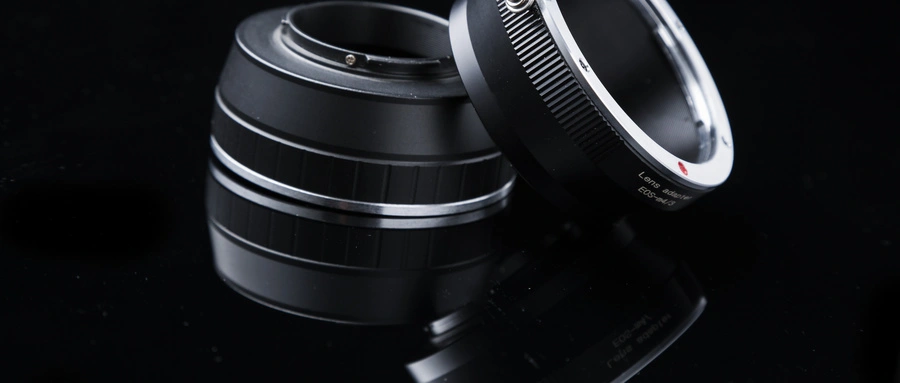
Focusing gears often require black anodizing or hard anodizing to improve wear resistance and reduce light reflection.
然而, anodizing introduces dimensional growth (typically 0.008–0.012 mm per side), which can cause interference fits or assembly failure if not properly compensated.
✅ Rapidefficient Solution
We integrate DFM analysis early in the process:
- Pre-compensation of dimensions during CNC programming
- Controlled tolerances for OD and ID features
- Trial anodizing validation before mass production
To ensure consistent surface quality:
- Verified raw material sourcing
- Spectrometer-based material inspection
- Controlled anodizing supply chain
This ensures both dimensional accuracy and cosmetic consistency.
案例研究: Ultra-Thin Wall Focusing Gear for PTZ Camera
We previously supported a client developing a high-end PTZ camera system. The focusing gear required:
- Complex internal structure
- Thin wall thickness of just 0.4 毫米
- High-strength aluminum alloy
- Extremely tight runout tolerance
Previous suppliers failed due to deformation and out-of-tolerance geometry.
🔧 Our Approach
- Stress-relieved raw material selection
- Multi-stage machining (roughing → stabilization → finishing)
- Custom soft jaws to minimize clamping distortion
- Optimized toolpaths with reduced cutting force
- 3+2 axis positioning for precision control
✅ Result
- Excellent roundness and runout control
- Stable batch production capability
- Successful integration into customer’s optical system
质量控制 & Process Stability
快速地, high precision is not only dependent on equipment, but also on process control and engineering expertise.
We operate a 12-step quality control system, 包括:
- DFM review
- First article inspection (FAI)
- In-process inspection (IPQC)
- Final CMM inspection
All critical data is recorded for full traceability.
Lead Time & Manufacturing Capability
For optical R&D projects, responsiveness is critical.
We offer:
- Standard prototyping: 3–7 days
- Urgent projects: expedited support available
- No strict MOQ for prototype orders
Our production facility includes:
- Multi-axis CNC machining centers
- Turn-mill machines
- Swiss-type lathes
This enables us to support both prototype and volume production with consistent quality.
为什么选择Rapideff
Choosing a CNC machining supplier for precision optical components is not just about price—it’s about risk control, 一致性, and engineering capability.
快速地, we focus on:
- High-precision machining for complex parts
- Stable production yield and process control
- Transparent pricing structure
- Fast response for global customers
结论
High-precision camera focusing gears represent one of the most demanding challenges in CNC machining. Success depends on a deep understanding of materials, machining strategy, and process control.
If your project involves tight tolerances, micro-structures, or complex geometries, working with an experienced manufacturing partner can significantly reduce risk and development time.
Rapidefficient is ready to support your next precision machining project.