
Einführung
Material selection is one of the most critical decisions when manufacturing drone components using CNC machining. The right material directly affects strength, Gewicht, Haltbarkeit, Bearbeitbarkeit, and overall cost. Engineers and product designers must balance performance requirements with manufacturing feasibility to achieve optimal results.
This guide explains the five most commonly used materials for CNC-machined drone parts and how to choose the best option for your project.
1. Aerospace Aluminum Alloys
Aluminum alloys are among the most popular materials for drone components due to their excellent strength-to-weight ratio and machinability.
Vorteile
- Lightweight yet strong
- Korrosionsbeständig
- Good thermal conductivity
- Heat-treatable for improved performance
Machining Tips
- Use sharp cutting tools to reduce vibration
- Apply high-speed machining for smoother finishes
- Ensure rigid fixturing for precision
Typical Applications: frames, Klammern, Gehäuse, structural components
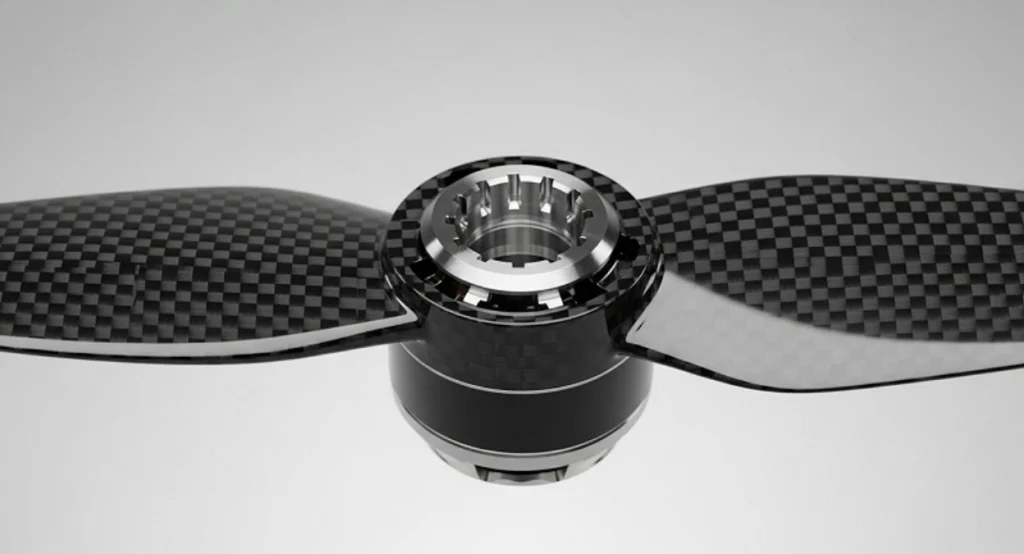
2. Carbon Fiber Composites
Carbon fiber is ideal for high-performance drones where weight reduction is critical without sacrificing strength.
Vorteile
- Extremely high stiffness-to-weight ratio
- Excellent fatigue resistance
- Starke Korrosionsbeständigkeit
Machining Tips
- Use diamond-coated or carbide tools
- Implement dust extraction systems
- Control feed rates to avoid delamination
Typical Applications: arms, shells, propeller structures, lightweight frames
3. Titanium Alloys
Titanium is used in high-stress drone components requiring maximum strength and durability.
Vorteile
- Outstanding strength and toughness
- Hohe Korrosionsbeständigkeit
- Stable performance in harsh environments
Machining Tips
- Low cutting speeds reduce heat buildup
- Use high-toughness tools
- Apply high-pressure coolant systems
Typical Applications: load-bearing connectors, motor mounts, high-stress structural parts
4. Technische Kunststoffe (SPÄHEN, ABS, usw.)
Engineering plastics are widely used for non-structural components due to their lightweight and cost efficiency.
Vorteile
- Leicht
- Electrical insulation properties
- Lower cost than metals
- Easy machinability
Machining Tips
- Control temperature to prevent deformation
- Adjust cutting speed and cooling carefully
Typical Applications: battery housings, covers, protective shells, insulation components
5. High-Strength Stainless Steel (z.B., 17-4PH)
For drone parts that must withstand heavy loads or wear, stainless steel is a reliable choice.
Vorteile
- Extrem hohe Festigkeit
- Hervorragende Verschleißfestigkeit
- Long service life
Machining Tips
- Use slower cutting speeds
- Ensure sufficient coolant
- Select wear-resistant tools
Typical Applications: Wellen, fasteners, pins, Übertragsteile
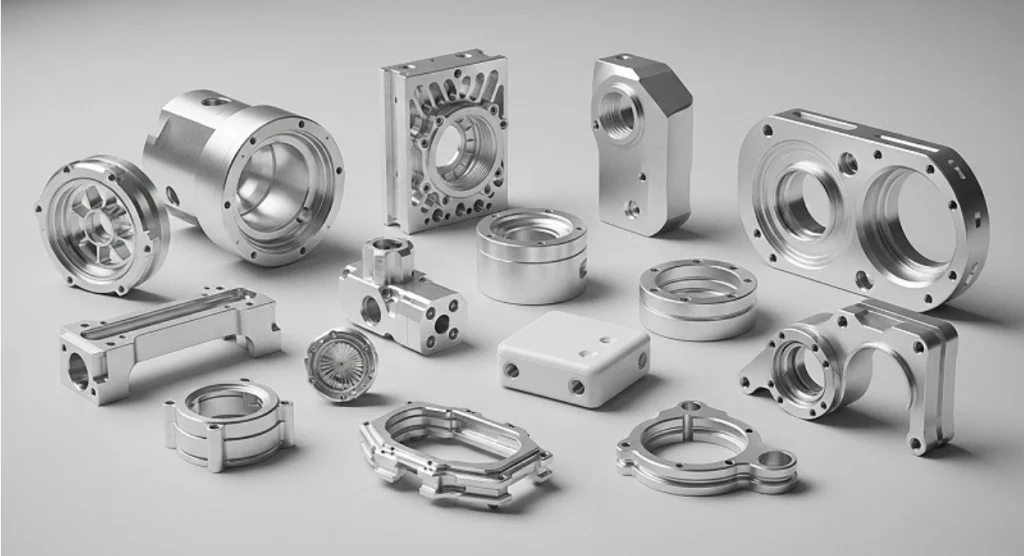
How to Choose the Right Material for CNC Drone Parts
Bei der Materialauswahl, consider these key factors:
- Mechanical strength requirements
- Weight limitations
- Environmental conditions (Hitze, Korrosion, Vibration)
- Machining complexity
- Production cost and lead time
The best material is not always the strongest or lightest—it’s the one that best balances performance, manufacturability, und Budget.
Abschluss
Choosing the right material is essential for producing high-quality CNC-machined drone components. Aluminium, carbon fiber, Titan, engineering plastics, and stainless steel each offer unique advantages. Understanding their properties and machining requirements allows manufacturers to optimize both performance and cost efficiency.
Über RapidEfficient
RapidEfficient ist auf hochpräzise CNC-Bearbeitung spezialisiert 18 jahrelange Erfahrung.
Seine Produkte kommen unter anderem in der Medizinbranche zum Einsatz, Kommunikation, Optik, Drohnen, Intelligente Robotik, Automobil, und Büroautomationsteile.
Die CNC-Bearbeitungszentren des Unternehmens verfügen über vier Achsen, fünfachsig, und mehrgelenkige Werkzeugmaschinen, und sind mit Präzisionsprojektoren ausgestattet, Koordinatenmessmaschinen (CMM), Spektrometer, und andere fortschrittliche Inspektionsgeräte.
Bearbeitungsgenauigkeit erreichen kann 0.01 mm, und Prüfgenauigkeit erreichen kann 0.001 mm.