Five-Axis CNC Machining Services

Rapid Efficient provides five-axis CNC machining services for complex custom parts with angled features, multi-surface geometry, difficult tool access, and setup-sensitive datum relationships.

From functional prototypes and low-volume batches to repeat production, we review the material, Geometrie, critical tolerances, Oberflächenbeschaffenheit, inspection needs, and delivery schedule before quotation.

Upload Your Drawing for Five-Axis Machining Review

Accepted files: SCHRITT, STP, IGs, IGES, X_t, PDF, DWG, and DXF
Your files are secure and treated as confidential.
Complex Geometry

Angled features, multi-surface parts, and difficult tool access

Fewer Setups

Reduce repositioning and protect critical feature relationships

Expedited Delivery

As little as 3 working days for suitable projects

Why Choose Rapid Efficient for Five-Axis CNC Machining?

Five-Axis Machining for Complex, Setup-Sensitive Parts

Five-axis CNC machining is ideal for parts with angled features, multi-surface geometry, deep pockets, compound contours, and difficult tool-access conditions.

By machining more features in fewer setups, five-axis processing can reduce repeated repositioning, protect datum relationships, improve feature-to-feature accuracy, and shorten the production cycle.

Rapid Efficient supports complex housings, Klammern, Vorrichtungen, Prototypen, structural components, precision mechanical parts, and custom components requiring controlled tolerances and stable surface quality.

Before quotation, we review the material, Geometrie, critical dimensions, setup strategy, tool access, Oberflächenbeschaffenheit, inspection requirements, and delivery priorities to identify a practical machining route.

Send your drawing for five-axis machining review and fast quotation.
What Is Five-Axis CNC Machining?

Five-axis CNC machining allows the cutting tool to approach a workpiece from multiple directions by combining three linear axes with two rotational axes. Abhängig von der Geometrie, the machining route may use indexed positioning, simultaneous five-axis movement, or a combination of both.

The real advantage is not simply that the machine has more axes. Five-axis machining can reduce repeated repositioning, improve tool access, protect critical datum relationships, and machine more features within fewer setups.

This makes it especially suitable for complex housings, Klammern, Vorrichtungen, structural components, deep cavities, angled holes, compound surfaces, undercut-sensitive features, and parts with tightly controlled relationships between multiple machined faces.

A practical five-axis machining plan must consider the material, Geometrie, setup strategy, tool reach, Wandstärke, internal radii, Oberflächenbeschaffenheit, critical tolerances, inspection access, Menge, and delivery priorities.

Rapid Efficient supports five-axis CNC machining from functional prototypes and low-volume batches to repeat production, with fast drawing review, stable machining quality, and expedited delivery options for suitable projects.

Explore our CNC machining design guide

Five-Axis CNC Machining Applications

Five-axis machining is suitable for complex parts where angled features, multi-surface geometry, tool access, and setup-sensitive datum relationships must be controlled carefully.

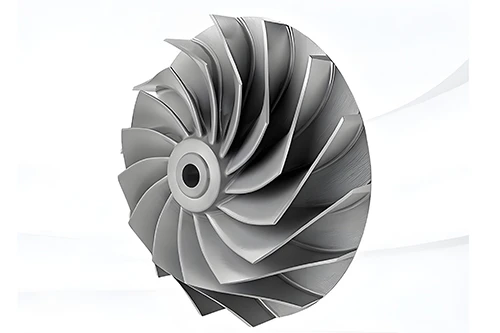
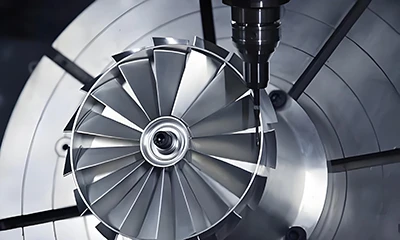
Complex Curved Components and Impellers

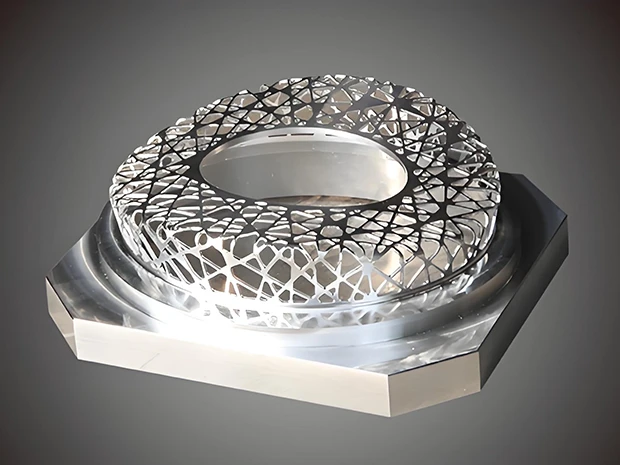
Five-axis machining supports complex curved surfaces, angled blades, contoured features, and components that require continuous tool access from multiple directions.

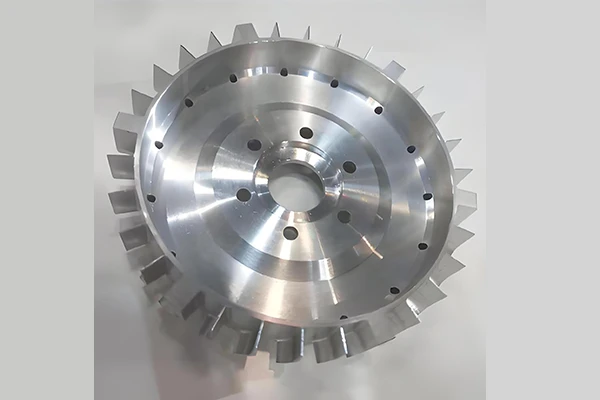
For impeller-like parts and other freeform geometries, the machining route is reviewed according to material, tool reach, Oberflächenqualität, tolerance priorities, und Inspektionsanforderungen.

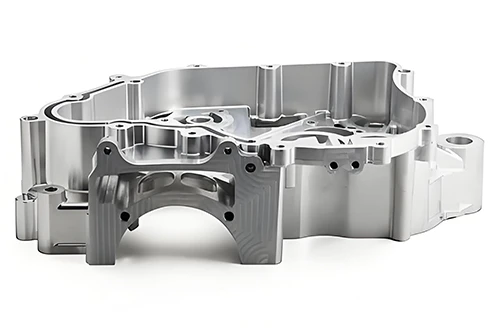
Complex Housings, Molds, and Fixtures

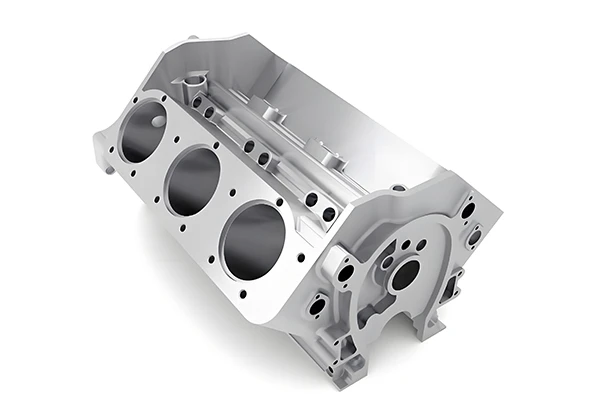
Five-axis machining is effective for housings, molds, Vorrichtungen, and structural parts with deep cavities, abgewinkelte Flächen, multiple datum faces, and difficult tool-access conditions.

Machining more features in fewer setups can reduce repositioning, protect feature relationships, and improve dimensional consistency.

Medical-Device and Instrument Components

Five-axis machining supports custom components for medical-device equipment, diagnostic instruments, laboratory systems, Vorrichtungen, Gehäuse, adapters, and other non-implant precision parts.

Projects are reviewed according to geometry, Material, Oberflächenqualität, critical tolerances, cleanliness requirements, and inspection planning.

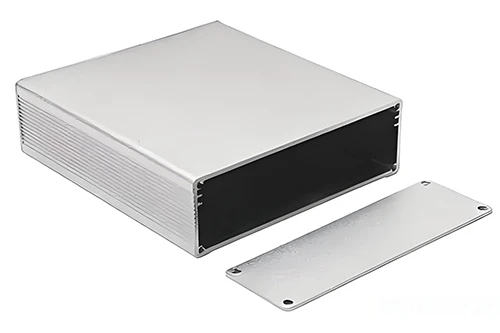
Electronic and Communication Equipment Housings

Five-axis machining is suitable for lightweight housings, Gehäuse, frames, heat-dissipation structures, communication-equipment parts, and appearance-sensitive aluminum components.

Multi-surface machining can help control hole positions, mating faces, Wandstärke, cosmetic surfaces, and assembly relationships.

Rapid Prototypes and Custom Mechanical Parts

Five-axis machining provides a practical route for prototypes and custom parts with complex geometry, angled holes, deep pockets, compound surfaces, and multiple machined faces.

Early drawing review helps identify tool-access risks, reduce unnecessary setups, and shorten the path from design validation to functional parts.

New-Energy and Motor-Related Components

Five-axis machining supports custom housings, Klammern, Vorrichtungen, thermal-management components, motor-related parts, and structural components for new-energy and industrial applications.

The machining route is reviewed according to material, Wandstärke, feature relationships, Oberflächenbeschaffenheit, inspection needs, and delivery priorities.

18+ Years
CNC machining experience
ISO
9001:2015Zertifizierung
Complex Geometry
Angled features, deep cavities, and multi-surface parts
Fewer Setups
Reduce repositioning and protect datum relationships
Custom Five-Axis CNC Machined Parts Showcase

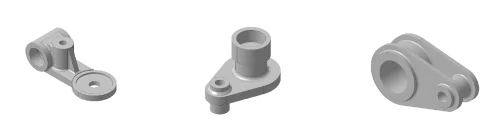
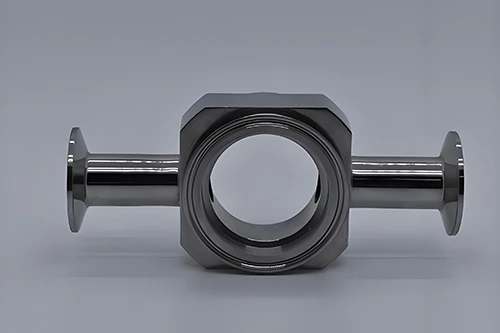
Explore a selection of custom components supported by Rapid Efficient through five-axis CNC machining, including complex housings, Klammern, Vorrichtungen, structural parts, Prototypen, freeform components, and parts with angled or multi-surface features.

Each project is reviewed according to its material, Geometrie, setup strategy, tool access, critical tolerances, surface-finish requirements, inspection needs, and production quantity. From functional prototypes to repeat orders, we focus on fast response, fewer setups, stable machining quality, and practical delivery planning.

Five-Axis CNC Machining Capabilities
Complex Geometry and Multi-Surface Machining

Five-axis CNC machining allows the cutting tool to approach a part from multiple directions through indexed positioning, simultaneous five-axis movement, or a combination of both.

This makes it suitable for complex housings, Klammern, Vorrichtungen, impeller-like components, angled holes, deep cavities, compound contours, and parts with difficult tool-access conditions.

The machining route is reviewed according to the geometry, Material, tool reach, Wandstärke, internal radii, tolerance priorities, surface-finish requirements, and inspection needs.

Fewer Setups and Better Datum Control

Traditional machining may require repeated repositioning to reach features on different faces of a part. Each additional setup can increase cycle time and introduce avoidable variation between critical surfaces.

Five-axis machining can complete more features within fewer setups, helping protect datum relationships, hole positions, abgewinkelte Flächen, mating faces, and feature-to-feature accuracy.

For suitable parts, reducing repeated clamping can improve machining consistency and shorten the path from drawing review to finished components.

Tool Access, Oberflächenqualität, and Inspection Planning

Complex parts require more than additional machine axes. A stable result depends on practical tool access, suitable tool length, controlled cutting forces, surface-finish planning, and a clear inspection strategy.

Five-axis machining can improve access to angled and multi-surface features while reducing unnecessary tool extension and repeated setups.

Before production, Rapid Efficient reviews critical dimensions, datum relationships, cosmetic surfaces, deep cavities, inspection access, and delivery priorities to identify a practical machining route.

Quick Guide to Planning a Five-Axis CNC Machining Project

Three practical steps for reviewing complex parts before five-axis CNC machining:
1: Review the Drawing Before Production

Five-axis machining is most effective when the drawing, 3D model, and functional requirements are reviewed before production.

Für komplexe Teile, we check:

1. Material grade, stock form, and quantity.
2. Critical dimensions, datum relationships, and tolerance priorities.
3. Angled holes, deep cavities, compound surfaces, internal radii, and undercut-sensitive features.
4. Thin walls, unsupported structures, and deformation risks.
5. Surface-finish requirements, cosmetic faces, mating areas, and inspection access.

Early review helps identify avoidable risks before machining begins and supports a faster, more stable quotation process.

The goal of five-axis machining is not simply to use more machine axes. The real value is to reach complex features efficiently while reducing repeated repositioning.

Abhängig von der Geometrie, the machining plan may use indexed positioning, simultaneous five-axis movement, or a combination of both.

A practical route should consider:

1. Tool access to angled and multi-surface features.
2. Datum stability and feature-to-feature relationships.
3. The number of setups and clamping operations.
4. Tool reach, Schnittkräfte, Spanabfuhr, und Oberflächenqualität.
5. Whether roughing, Halbfertigbearbeitung, and final finishing should be separated.

Fewer unnecessary setups can improve consistency, reduce cycle time, and protect critical dimensional relationships.

Complex five-axis parts require inspection planning before production, not after machining is complete.

Depending on the drawing, we review:

1. Critical dimensions, hole positions, angled features, mating faces, and datum relationships.
2. Inspection access for deep cavities and multi-surface geometry.
3. Oberflächenrauheit, cosmetic requirements, and finishing allowances.
4. Anodisierung, Passivierung, Überzug, Polieren, blasting, masking, and packaging requirements where applicable.
5. Delivery priorities for prototypes, low-volume batches, and repeat-production orders.

Inspection reports and material certificates can be coordinated upon request. For suitable projects, expedited delivery can be arranged from as little as 3 Arbeitstage.

From Drawing to Delivery

Whether you need a one-off functional prototype, a low-volume batch, or repeat production parts, Rapid Efficient can coordinate the machining route, inspection plan, Oberflächenbeschaffenheit, Verpackung, and delivery schedule around your project requirements.

Rapid CNC Prototyping

Move from drawing review to functional parts faster with CNC machining for prototypes, design verification, assembly testing, and engineering evaluation.

For suitable projects, expedited delivery can be arranged from as little as 3 Arbeitstage.

Fast DFM feedback
Functional prototype parts
Quick design iterations
Expedited delivery options
Low-Volume CNC Production

Bridge the gap between prototype approval and repeat production with flexible low-volume CNC machining.

We coordinate material selection, Bearbeitung, Maßprüfung, Oberflächenveredelung, and packaging to maintain stable quality across each batch.

Flexible production quantities
Controlled inspection planning
Surface-finishing coordination
Stable batch quality
Repeat Production Support

For repeat orders, we focus on drawing-revision control, material consistency, critical-feature inspection, surface-finish stability, and practical delivery planning.

The goal is simple: reliable parts, responsive communication, and consistent supply.

Drawing-revision control
Repeatable inspection standards
Consistent finishing requirements
Packaging and delivery coordination
Upload Your Drawing
Start Production Faster

Secure file upload. Fast quotation and machining review for your custom CNC parts.

Common Five-Axis Machining Risks and How We Control Them
1. CAM Programming and Toolpath Strategy

Five-axis machining requires careful coordination between tool orientation, rotary-axis movement, cutting direction, and feature accessibility.

For complex housings, angled holes, deep cavities, compound surfaces, and freeform features, an unsuitable toolpath can increase cycle time, create surface marks, or introduce avoidable dimensional variation.

To reduce risk:

1. Review the 3D model, drawing, and datum scheme before programming.
2. Match indexed positioning and simultaneous five-axis movement to the actual geometry.
3. Check tool orientation, collision risk, tool reach, and fixture clearance.
4. Separate roughing, Halbfertigbearbeitung, and finishing where the geometry requires it.
5. Confirm critical dimensions and inspection access before production.

Complex five-axis parts often contain deep pockets, abgewinkelte Flächen, narrow regions, and multi-directional features that are difficult to reach with standard tools.

Excessive tool extension can increase vibration, Ablenkung, surface inconsistency, and machining time.

To improve stability:

1. Select tool diameter, Länge, Geometrie, and coating according to the material and feature type.
2. Reduce unnecessary tool extension wherever possible.
3. Use practical internal radii to allow stronger and more stable cutting tools.
4. Review deep cavities, schmale Schlitze, and undercut-sensitive features early.
5. Match the cutting strategy to the required surface quality and tolerance priorities.

Five-axis machining can reduce repeated repositioning, but the remaining setup strategy still matters. Fixture design, datum selection, clamping pressure, and part rigidity all influence the final result.

For setup-sensitive parts, small errors may affect hole positions, mating faces, angled features, and feature-to-feature relationships.

To reduce risk:

1. Select stable datum surfaces before machining begins.
2. Control clamping pressure to avoid temporary distortion.
3. Add suitable support for thin walls, lightweight structures, and heavily pocketed parts.
4. Reduce repeated setups where five-axis machining can complete more features in one route.
5. Verify critical dimensions after unclamping.

Surface quality depends on more than machine capability. Tool sharpness, Spindeldrehzahl, Futterrate, depth of cut, cutting direction, Spanabfuhr, and coolant access must be matched to the material and geometry.

For appearance-sensitive surfaces and complex contours, unstable cutting conditions can create vibration marks, uneven finishes, or unnecessary polishing work.

To improve surface quality:

1. Match cutting parameters to the material grade and tool geometry.
2. Use stable finishing passes for cosmetic and functional surfaces.
3. Improve chip evacuation in deep cavities and narrow regions.
4. Reduce excessive cutting forces on thin walls and unsupported features.
5. Confirm surface-finishing requirements before machining.

Five-axis machining is not automatically the most expensive route. For the right geometry, it can reduce repeated setups, manual repositioning, fixture complexity, and avoidable machining time.

The key is to use five-axis machining where it creates real value.

To control cost and lead time:

1. Apply five-axis machining to features that genuinely benefit from improved tool access or fewer setups.
2. Avoid unnecessary tight tolerances on non-functional dimensions.
3. Use practical internal radii, cavity depths, and surface-finish requirements.
4. Confirm inspection priorities before production.
5. Coordinate secondary operations, Oberflächenveredelung, Verpackung, and delivery requirements early.

For suitable projects, expedited delivery can be arranged from as little as 3 Arbeitstage.

Anwendungsgebiete der CNC-Bearbeitung

Unsere CNC-Bearbeitungsdienstleistungen wurden von globalen Kunden aus verschiedenen Bereichen gelobt. Wir liefern CNC-Bearbeitungskomponenten für eine Vielzahl von Branchen, Behandelt Folgendes und mehr.

Automobil

CNC machining support for brackets, Gehäuse, bushings, Wellen, adapters, Vorrichtungen, sensor components, and custom mechanical parts used in automotive and mobility projects.

Robotik und Automatisierung

Precision-machined components for robotic arms, Automatisierungsgeräte, end effectors, Gelenke, motor-related parts, sensor housings, Vorrichtungen, and assembly tooling.

Medizinprodukte

Custom CNC machined parts for medical-device equipment, diagnostic instruments, laboratory systems, Gehäuse, Vorrichtungen, Ventile, adapters, and non-implant mechanical components.

Luft- und Raumfahrt

Machining support for lightweight housings, Klammern, Vorrichtungen, structural components, test parts, and complex aluminum or titanium components for aerospace-related applications.

Unterhaltungselektronik

CNC machining for enclosures, frames, heat-dissipation parts, Tasten, Klammern, Vorrichtungen, connector components, and appearance-sensitive aluminum parts.

New Energy

Custom parts for energy-storage systems, EV-related equipment, Motorgehäuse, thermal-management components, Klammern, Anschlüsse, Vorrichtungen, and mechanical assemblies.

Industrieausrüstung

CNC machined housings, Wellen, sleeves, Klammern, Vorrichtungen, machine components, mounting parts, and replacement components for industrial equipment and production systems.

Semiconductor Equipment

Precision-machined parts for semiconductor equipment, automation modules, Vorrichtungen, Teller, Klammern, Gehäuse, and components requiring controlled dimensions and clean surface finishes.

Scrollen Sie nach oben

Holen Sie sich ein Zitat

Klicken oder ziehen Sie Dateien in diesen Bereich, um hochzuladen. Sie können hochladen 10 Dateien.
Dateiformat:txt pdf docx xls xlsx pptx jpg png Zip rar dwg dxf dwt dws

3D Dateiformat: SCHRITT, STP, Sldprt, IPT, Prt, Sa, IGES, IGs, Catpart, X_t, Obj, Stl