Aluminum Die Casting Services
Rapid Efficient provides custom aluminum die casting services for housings, Klammern, structural components, and other parts that require efficient repeat production, complex geometry, and practical manufacturing planning.
From early DFM review and tooling strategy to sampling, inspection, secondary machining, surface-finishing coordination, and repeat-production readiness, each project is reviewed according to its alloy requirements, Geometrie, Wandstärke, expected quantity, surface expectations, and end-use priorities.
Upload Your Part Design for Die Casting Review
Geometry, Wandstärke, draft, gates, and tooling strategy
Bearbeitung, inspection, and surface-finishing coordination
Sampling, Einstellung, and stable batch-production support
Die Casting Support from DFM Review to Repeat Production
A reliable die casting project begins with a practical review of the part geometry, alloy requirements, Wandstärke, draft angles, ribs, bosses, critical dimensions, cosmetic surfaces, and expected production volume.
Rapid Efficient supports custom aluminum die casting projects from early DFM review and tooling planning to sampling, inspection, trimming, secondary machining, surface-finishing coordination, and repeat-production readiness.
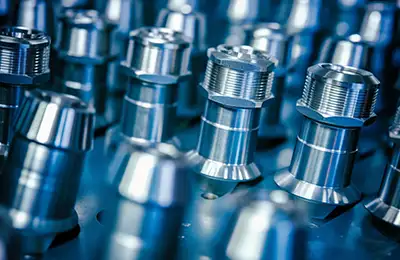
For features that require tighter tolerances, stable fits, or improved surface quality, secondary CNC machining and inspection planning can be reviewed according to the project requirements.
Aluminum die casting is a manufacturing process in which molten aluminum alloy is injected into a steel mold under controlled pressure to produce repeatable metal parts with complex geometry and efficient batch-production potential.
The process is commonly used for housings, Klammern, covers, structural components, heat-dissipation parts, and other custom metal parts that benefit from integrated features, relatively thin walls, and reduced secondary assembly.
A successful die casting project requires more than selecting a part shape. Wall thickness, draft angles, ribs, bosses, parting lines, gate locations, overflow areas, venting, shrinkage, porosity risks, trimming requirements, cosmetic surfaces, and critical machining features must be reviewed together.
Some dimensions and surfaces can be produced directly through die casting, while tighter-tolerance holes, sealing areas, Threads, assembly interfaces, and precision mating surfaces may require secondary CNC machining and inspection.
Aluminum alloys are widely used because they offer a practical balance of weight, Stärke, Korrosionsbeständigkeit, thermal performance, and manufacturing efficiency. Other suitable die casting alloys can also be reviewed according to the project requirements.

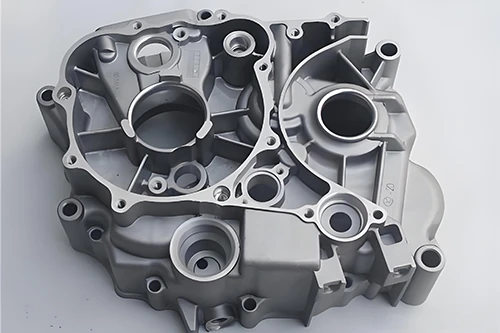
Automotive Components
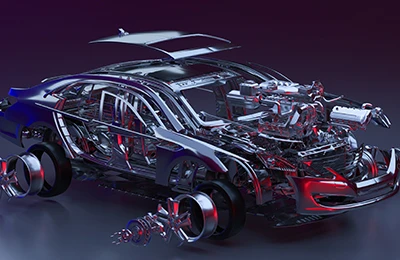
Aluminum die casting supports automotive housings, covers, Klammern, mounting components, and structural parts that require complex geometry, repeat-production efficiency, and practical secondary-machining planning.
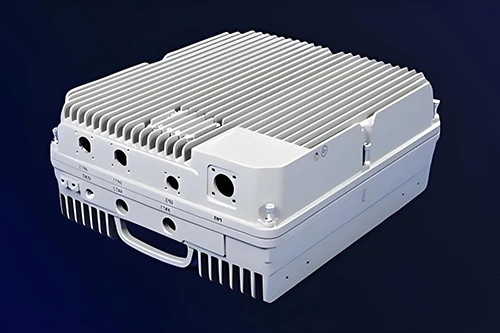
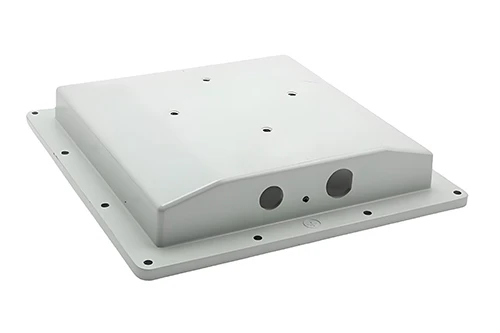
Electronics Housings
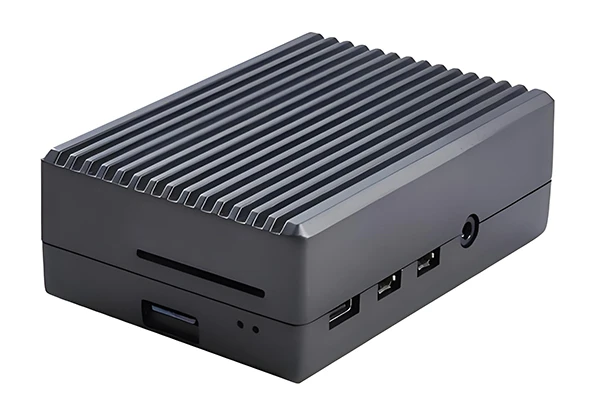
Custom aluminum die casting can be used for electronics housings, control-unit covers, heat-dissipation enclosures, and device structures that benefit from integrated features, stable assembly, and a clean external appearance.
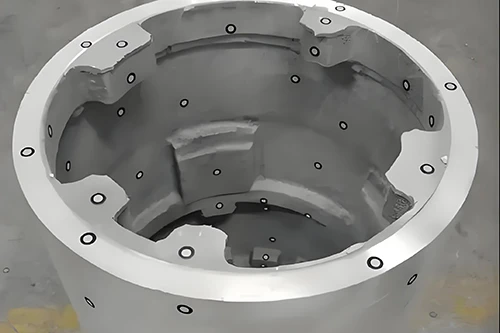
High-Performance Equipment Components
Die-cast aluminum housings, Klammern, covers, and structural components can support high-performance equipment where weight reduction, Dimensionsstabilität, assembly fit, and inspection planning are important.
Communication Equipment Housings
Aluminum die casting supports communication-equipment housings, covers, mounting structures, and heat-dissipation components that require integrated geometry, practical surface finishing, and stable repeat production.
Medical-Device Equipment Components
Die-cast aluminum parts can support non-implant medical-device equipment, diagnostic instruments, Gehäuse, Klammern, and structural components where geometry, Oberflächenqualität, assembly fit, and inspection requirements must be reviewed carefully.
Hardware and Tool Components
Aluminum die casting can be used for tool housings, handles, Klammern, covers, and hardware components that require durable structures, efficient batch production, and optional secondary finishing.
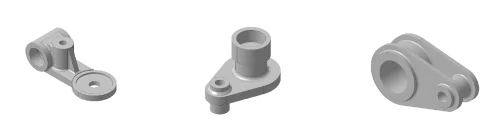
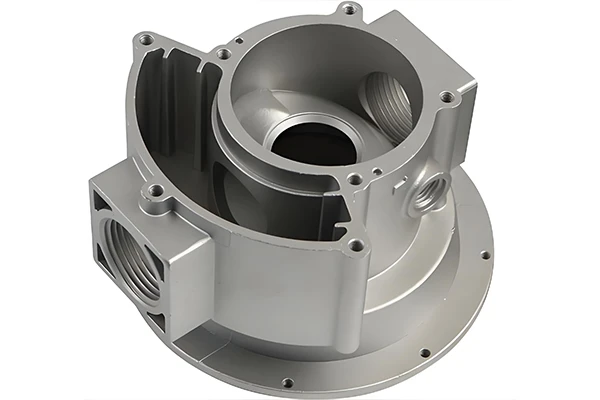
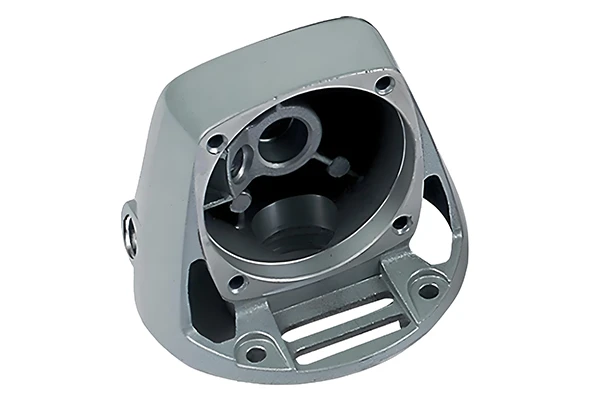
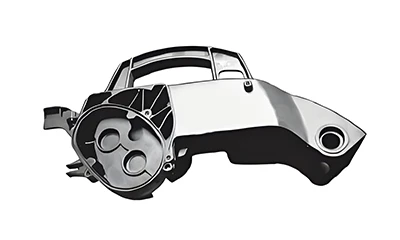
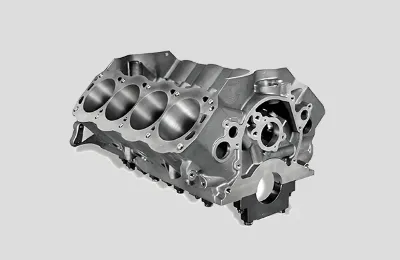
Explore selected aluminum die casting part examples for housings, covers, Klammern, and structural components. Each project is reviewed according to its alloy requirements, Geometrie, Wandstärke, draft angles, ribs, bosses, porosity risks, surface expectations, critical machining features, and expected quantity.
From DFM review and tooling planning to sampling, trimming, secondary machining, inspection, and repeat-production readiness, the goal is to establish a practical manufacturing route for stable batch production.
Aluminum die casting is suitable for repeat-production projects that require complex metal parts to be produced efficiently after tooling approval.
Once the mold and process route are validated, the same part geometry can be reproduced consistently across larger production runs, reducing reliance on extensive machining for every feature.
Die casting can integrate ribs, bosses, mounting points, thin-wall areas, covers, and heat-dissipation features into a single component.
This can reduce the number of separate parts, simplify assembly, and create a practical base for secondary CNC machining where tighter-tolerance holes, Threads, sealing areas, or mating surfaces are required.
Aluminum die casting offers a practical balance of weight, structural performance, Korrosionsbeständigkeit, and thermal conductivity for housings, Klammern, covers, and equipment components.
The final manufacturing route can also include trimming, secondary machining, inspection, and surface-finishing coordination according to the appearance and functional requirements of the project.
Project requirements and DFM review
1. Define the project requirements:
Confirm the part function, expected quantity, alloy requirements, critical dimensions, assembly interfaces, cosmetic surfaces, Betriebsumgebung, and delivery priorities.
2. Review the geometry:
Wall thickness, draft angles, ribs, bosses, Unterschneidungen, parting lines, gate areas, overflow areas, venting needs, trimming requirements, and potential porosity risks should be evaluated before tooling begins.
Alloy selection and performance requirements
1. Confirm the aluminum alloy requirements:
The alloy should be reviewed according to the required weight, Stärke, Korrosionsbeständigkeit, thermal performance, surface-finishing needs, and end-use conditions.
2. Balance performance and manufacturability:
Material selection can influence filling behavior, shrinkage, porosity risk, surface appearance, machining performance, and the overall manufacturing route.
Tooling strategy and mold development
1. Plan the tooling route:
Cavity layout, gate locations, overflow areas, venting, Kühlung, ejector positions, trimming strategy, and mold structure are reviewed according to the part geometry and expected production volume.
2. Reduce avoidable tooling adjustments:
Critical features, difficult filling areas, local thickness changes, cosmetic surfaces, and secondary-machining allowances are considered before mold manufacturing begins.
Sampling, casting, and trimming
1. Produce and review initial samples:
Trial parts are evaluated for filling quality, flash, shrinkage, porosity risks, warpage, surface appearance, trimming quality, Abmessungen, and assembly fit.
2. Adjust the manufacturing route:
Based on the sample results, the mold, gate design, venting, Prozessparameter, trimming method, or machining plan may require adjustment before repeat-production approval.
Secondary machining and surface finishing
1. Review critical machining features:
Tighter-tolerance holes, Threads, sealing areas, mating surfaces, mounting points, and assembly interfaces can be evaluated for secondary CNC machining.
2. Coordinate the finishing route:
Deburring, Polieren, shot blasting, powder coating, Eloxieren, Überzug, and other suitable finishing options can be reviewed according to the appearance and functional requirements of the project.
Inspection and production readiness
1. Inspect the approved parts:
Key dimensions, assembly interfaces, machined features, surface appearance, trimming quality, and project-specific requirements are checked according to the inspection plan.
2. Confirm readiness for repeat production:
After sample approval, the manufacturing route is reviewed for consistency, inspection planning, tooling maintenance, and stable batch-production support.
Packaging and repeat-order support
1. Protect the finished parts:
Packaging is planned according to the part geometry, surface-finish requirements, Menge, and transportation needs to reduce avoidable damage during delivery.
2. Support future production runs:
Tooling records, inspection priorities, and manufacturing requirements can be reviewed for repeat orders and long-term production planning.
Whether you need a one-off functional prototype, a low-volume batch, or repeat production parts, Rapid Efficient can coordinate the machining route, inspection plan, Oberflächenbeschaffenheit, Verpackung, and delivery schedule around your project requirements.
Move from drawing review to functional parts faster with CNC machining for prototypes, design verification, assembly testing, and engineering evaluation.
For suitable projects, expedited delivery can be arranged from as little as 3 Arbeitstage.
Bridge the gap between prototype approval and repeat production with flexible low-volume CNC machining.
We coordinate material selection, Bearbeitung, Maßprüfung, Oberflächenveredelung, and packaging to maintain stable quality across each batch.
For repeat orders, we focus on drawing-revision control, material consistency, critical-feature inspection, surface-finish stability, and practical delivery planning.
The goal is simple: reliable parts, responsive communication, and consistent supply.
Secure file upload. Fast quotation and machining review for your custom CNC parts.
Porosity and Shrinkage Risks
Risk:
Internal porosity, shrinkage cavities, or local voids may affect part strength, Dichtungsleistung, machining results, and long-term reliability.
Common causes:
Material flow, trapped gas, insufficient venting, unsuitable gate or overflow design, local thickness changes, and unstable process conditions can increase porosity and shrinkage risks.
How we address it:
Wall thickness, gate locations, overflow areas, venting, filling paths, and critical machining features are reviewed during DFM and tooling planning. Initial samples are evaluated according to the project requirements before repeat production begins.
Surface Defects and Filling Issues
Risk:
Flow marks, cold shuts, flash, surface irregularities, incomplete filling, or visible trimming areas may affect the appearance and functional performance of the finished part.
Common causes:
Gate placement, mold temperature, material flow, filling speed, venting, release conditions, Oberflächenanforderungen, and local geometry can all influence surface quality.
How we address it:
Gate areas, parting lines, overflow areas, venting, cosmetic surfaces, and trimming requirements are reviewed before tooling begins. During sampling, the part appearance and filling behavior are checked to determine whether tooling or process adjustments are required.
Dimensional Variation
Risk:
The finished part may not meet the expected dimensions, assembly fit, sealing requirements, or functional interfaces.
Common causes:
Material shrinkage, mold condition, uneven cooling, warpage, process variation, trimming quality, and local geometry can affect dimensional stability.
How we address it:
Critical dimensions, assembly interfaces, sealing areas, mounting points, and machining allowances are reviewed during project planning. Tighter-tolerance holes, Threads, mating surfaces, and precision features can be evaluated for secondary CNC machining and inspection.
Mechanical Performance Risks
Risk:
The finished part may not meet the required structural performance, Haltbarkeit, or end-use expectations.
Common causes:
Alloy selection, local wall thickness, ribs, bosses, porosity, stress concentration, Geometrie, and process stability can influence the mechanical performance of the part.
How we address it:
The alloy requirements, structural features, expected loads, critical areas, and end-use conditions are reviewed during the early project stage. Where specific mechanical requirements apply, the inspection and validation plan should be confirmed according to the actual project needs.
Rapid Efficient supports custom aluminum die casting projects across a wide range of industries. Each project is reviewed according to its alloy requirements, Geometrie, Wandstärke, tooling strategy, surface expectations, secondary-machining needs, expected quantity, and end-use priorities.
CNC machining support for brackets, Gehäuse, bushings, Wellen, adapters, Vorrichtungen, sensor components, and custom mechanical parts used in automotive and mobility projects.
Precision-machined components for robotic arms, Automatisierungsgeräte, end effectors, Gelenke, motor-related parts, sensor housings, Vorrichtungen, and assembly tooling.
Custom CNC machined parts for medical-device equipment, diagnostic instruments, laboratory systems, Gehäuse, Vorrichtungen, Ventile, adapters, and non-implant mechanical components.

Machining support for lightweight housings, Klammern, Vorrichtungen, structural components, test parts, and complex aluminum or titanium components for aerospace-related applications.
CNC machining for enclosures, frames, heat-dissipation parts, Tasten, Klammern, Vorrichtungen, connector components, and appearance-sensitive aluminum parts.
Custom parts for energy-storage systems, EV-related equipment, Motorgehäuse, thermal-management components, Klammern, Anschlüsse, Vorrichtungen, and mechanical assemblies.
CNC machined housings, Wellen, sleeves, Klammern, Vorrichtungen, machine components, mounting parts, and replacement components for industrial equipment and production systems.
Precision-machined parts for semiconductor equipment, automation modules, Vorrichtungen, Teller, Klammern, Gehäuse, and components requiring controlled dimensions and clean surface finishes.