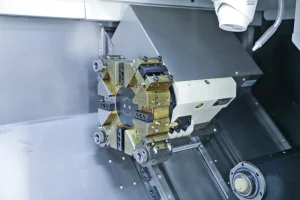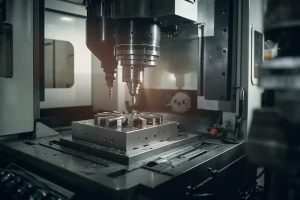

Präzisionsmechanische Teile, während des Designprozesses, müssen nicht nur ihre funktionalen Anforderungen erfüllen (d.h., über die erforderlichen Arbeitsfähigkeiten verfügen) but also fulfill production requirements during operation. Precision mechanical parts designed for ease of machining and low processing costs are considered to have good manufacturability.
Basic Requirements for the Machinability of Precision Mechanical Parts
1. Blank Selection Requirements
The selection of blanks requires the use of appropriate blank preparation methods in mechanical manufacturing. During operation, methods such as profile making, casting, Schmieden, Schweißen, and stamping are directly utilized. The choice of blank is related to specific production technology conditions, generally depending on production volume, performance characteristics, and machining feasibility.
2. Structural Design Requirements
The structure of precision mechanical parts should be designed to be very simple. Operation primarily involves simple surfaces and combinations, and to a certain extent, the number of machined surfaces and the machining area should be minimized.
3. Precision and Cost Control Requirements
The cost of machining precision mechanical parts increases with increasing precision. This increase is particularly significant at higher precision levels. daher, high precision should not be pursued without sufficient justification. Ähnlich, the surface roughness of parts should be appropriately specified based on the actual needs of the mating surfaces.
4. Manufacturability Awareness in Design
To a certain extent, precision mechanical parts machining aims to design parts with good manufacturability. During the design process, it is essential to collaborate with process engineers and learn from them. Außerdem, basic manufacturability knowledge is provided in metalworking courses and handbooks for reference.
5. Surface Roughness Considerations
The surface roughness of precision mechanical parts is a crucial technical indicator that effectively reflects the microscopic geometric errors of the part’s surface. It serves as a primary basis for inspecting the surface quality of parts during use.
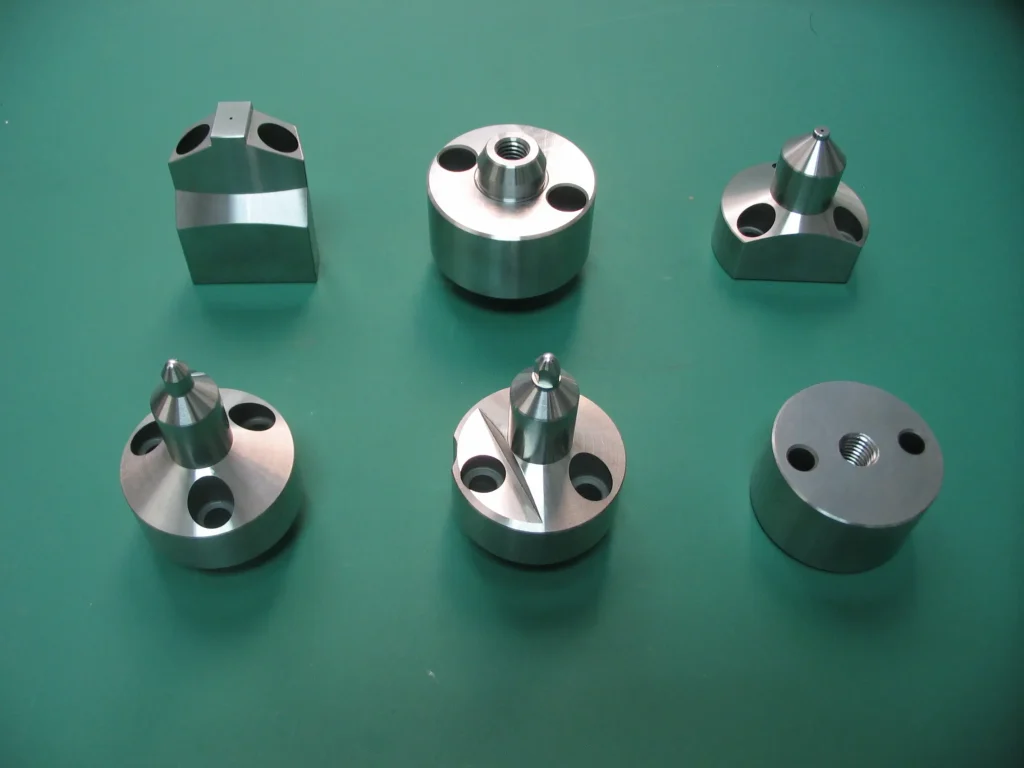
Über RapidEfficient
Schnell ist spezialisiert auf Hochpräzise CNC-Bearbeitung mit 18 jahrelange Erfahrung.
Seine Produkte dienen Branchen wie medizinisch, Kommunikation, Optik, Drohnen, Intelligente Robotik, Automobil, Und Teile für die Büroautomation.
Dazu zählen die CNC-Bearbeitungszentren des Unternehmens vierachsig, fünfachsig, und mehrgelenkige Werkzeugmaschinen, und sind ausgestattet mit Präzisionsprojektoren, Koordinatenmessmaschinen (CMM), Spektrometer, und andere fortschrittliche Inspektionsgeräte.
Bearbeitungsgenauigkeit erreichen kann 0.01 mm, und Prüfgenauigkeit erreichen kann 0.001 mm.