

Einführung
In aerospace and defense applications, aluminum CNC machined parts must meet strict requirements for leichtes Design, Korrosionsbeständigkeit, and long-term reliability.
Jedoch, aluminum components used in outdoor environments are highly susceptible to oxidation and corrosion, which can directly impact performance and lifespan.
Bei Schnell, we conducted a series of process optimization experiments to improve the salt spray resistance of custom CNC machined aluminum parts. This article shares our findings and practical solutions.
The Challenge: Failing Salt Spray Tests
During initial production, some aluminum components failed standard salt spray testing, showing:
- Surface blackening
- Local corrosion spots
- Reduced surface integrity
These issues posed risks for aerospace applications where durability is critical.
Key Factors Affecting Salt Spray Performance
1. Cutting Fluid Composition
Während der CNC -Bearbeitung, certain additives in cutting fluids can react with aluminum surfaces.
Findings
- Chemical residues caused micro-corrosion
- Formation of microscopic pinholes after anodizing
- Early failure in salt spray testing (within 24 Std.)
Lösung
- Use low-corrosion or aluminum-compatible cutting fluids
- Improve cleaning process before anodizing
2. Anodizing Oxide Film Thickness
The thickness of the anodized oxide layer directly affects corrosion resistance.
Test Results
- 5µm thickness → blackening after ~24 hours
- 7µm thickness → failure after ~36 hours
Abschluss
Thin oxide layers cannot provide sufficient protection for outdoor aerospace applications.
3. Post-Anodizing Sealing Process
Even with sufficient oxide thickness, sealing quality is critical.
Optimization
- High-temperature sealing
- Temperature: ≥ 65°C
- Duration: ≥ 25 minutes
Result
- Improved surface stability
- Reduced porosity
- Erhöhte Korrosionsbeständigkeit
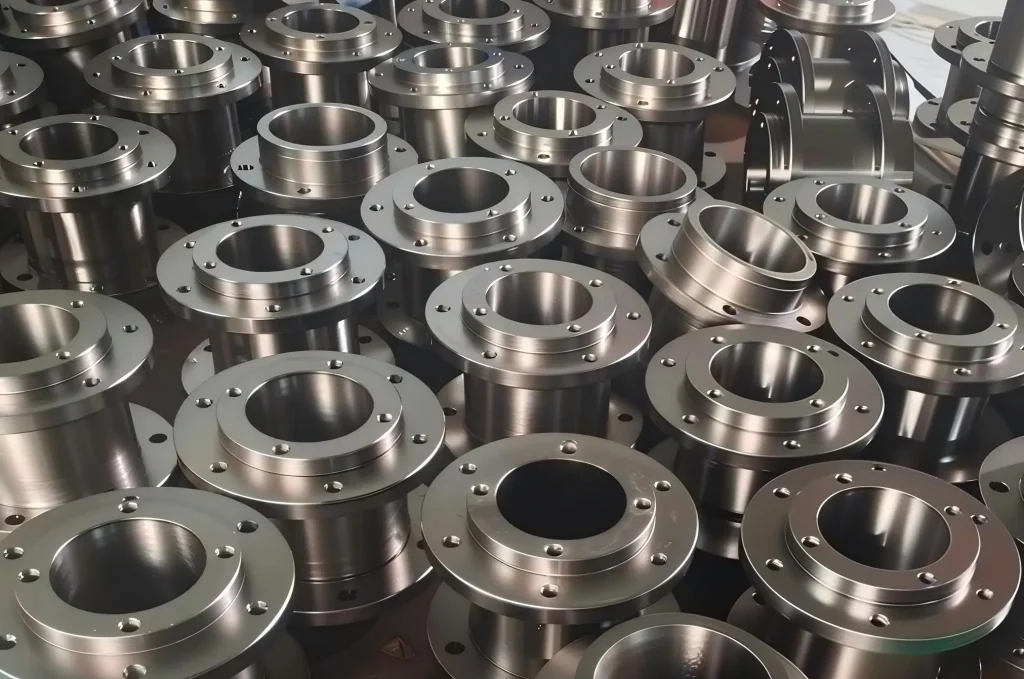
Final Result
After process optimization:
✅ Salt spray resistance improved to 96+ Std.
✅ Surface defects significantly reduced
✅ Product reliability meets aerospace requirements
Key Takeaways for CNC Aluminum Parts
To achieve high salt spray resistance:
- Select low-corrosion cutting fluids
- Ensure sufficient anodizing thickness (≥ 8µm recommended)
- Apply proper sealing treatment
- Control the entire process chain, not just anodizing
Why This Matters
For industries such as aerospace, defense, und Outdoor-Ausrüstung:
- Corrosion can lead to performance failure
- Surface defects impact product lifespan
- Poor finishing increases maintenance costs
A properly optimized process ensures long-term durability and consistent quality.
Rapidefficient Capability
Bei Rapidefficient, we provide:
- CNC -Bearbeitung + surface treatment integration
- Process optimization for corrosion resistance
- Stabile Qualität für internationale Projekte
- Engineering support for aerospace-grade components
Abschluss
Salt spray resistance is not determined by a single process—it is the result of a fully controlled manufacturing system.
By optimizing machining, Eloxieren, and sealing processes together, we successfully improved the durability of aluminum CNC parts for demanding environments.