
什么是水质传感器外壳数控加工?
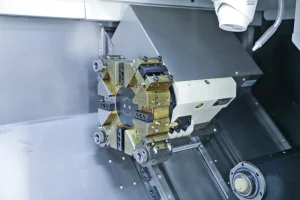
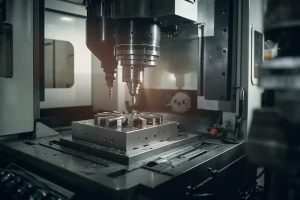
Water quality sensor housing CNC machining involves the precision manufacturing of high-performance submersible sensor enclosures used in underwater and industrial monitoring systems. These housings must withstand extreme hydrostatic pressure, chemical corrosion, and long-term submersion while maintaining absolute leak-proof integrity for sensitive electronic and optical components. Achieving an IP68 or IP69K rating requires specialized machining of sealing grooves and meticulous material selection for corrosion resistant sensor casings.
快速地, we provide high-performance CNC solutions for underwater sensor casings, ensuring aerospace-grade structural integrity for even the most demanding deep sea sensor housing 要求.
CNC加工与. Casting for Sensor Housings
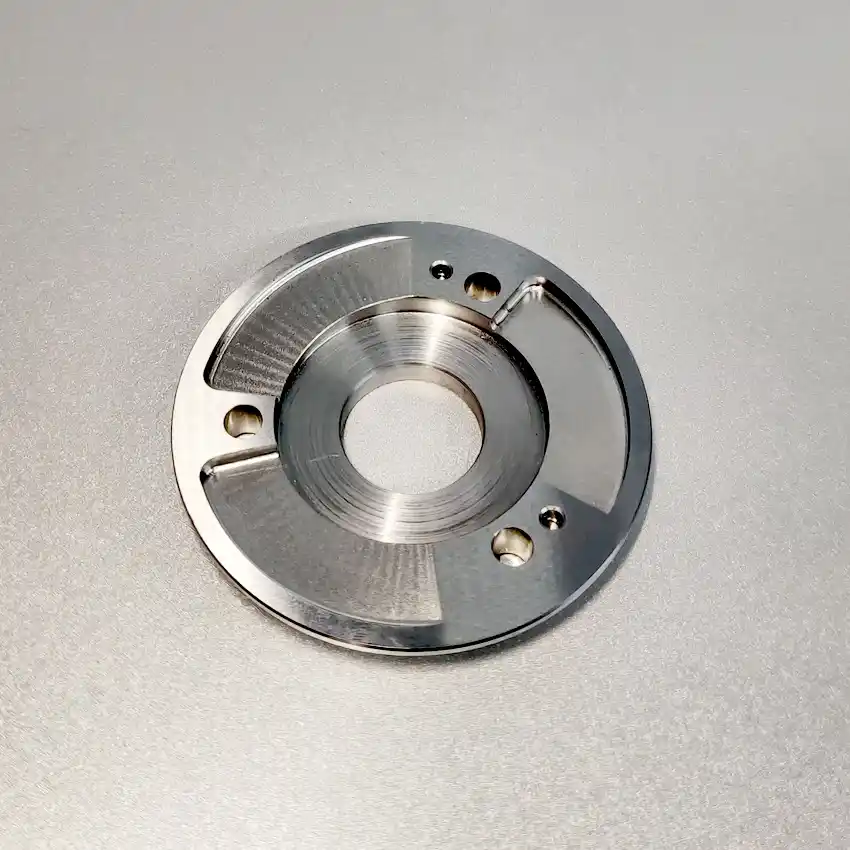
For mission-critical waterproof probe housings, CNC machining offers significant advantages over traditional casting or injection molding.
| 特征 | Casting / 成型 | 快速高效的数控加工 |
| 尺寸精度 | $\下午 0.1 \sim 0.2$ 毫米 | $\下午 0.01$ 毫米 (微米级) |
| Material Density | Potential internal porosity | 100% Solid (Zero leak paths) |
| 表面处理 ($拉$) | $拉 \ 3.2 \ \mu m$ | $拉 \ 0.4 \sim 0.8 \ \mu m$ (镜面处理) |
| Sealing Reliability | High failure risk at depth | Certified for 20-bar+ pressure |
Strategic Material Selection for Submersible Sensor Enclosures
The operating environment—whether it is seawater, industrial wastewater, or high-purity chemical tanks—dictates the substrate for any corrosion resistant sensor casing.
- 316L Stainless Steel: The gold standard for its superior pitting resistance. We manage the thermal load during the turning process to maintain the material’s molecular structure, mirroring the standards of our aerospace CNC machining components.
- Titanium Ti-6Al-4V: Used for tactical deep sea sensor housings requiring extreme resilience and lightweight strength.
- High-Purity PEEK: Ideal for chemical sensors where metallic ion contamination must be zero, similar to our protocols for semiconductor-grade CNC machining components.
Common Failure Issues in CNC Machined Sensor Housings
Most general-purpose CNC shops fail to deliver reliable submersible sensor enclosures due to three hidden technical factors:
- Groove Taper and Inconsistency: General boring bars can deflect during deep-hole operations, creating a slight taper in the O-ring groove. This causes uneven seal compression, leading to failure when pressure exceeds 10 酒吧.
- Subsurface Burr Contamination: Aggressive cutting parameters leave behind microscopic burrs in internal threads, which can tear delicate wiring insulation or prevent sensor caps from seating perfectly.
- Material Micro-Voids: Lower-grade bar stock can contain micro-voids. Under high hydrostatic pressure, these voids become “leak paths” that bypass even the most precise external seals.
Key CNC Machining Strategies for Waterproof Sensor Housings
1. $拉 \ 0.8 \ \mu m$ “Mirror” 密封面
We utilize specialized diamond-tooling to achieve an ultra-smooth finish on all sealing interfaces. A rough surface acts like sandpaper on the O-ring, leading to micro-leaks over time.
2. Precision Concentricity and Thread Integrity
We maintain concentricity within $\pm 0.005$ mm between the electronics bay and the mounting threads, a technique adapted from our experience with thin-walled CNC parts machining.
🚀 Case Study: Solving Zero-Leakage Performance for a 20-Bar Probe
The Challenge:
A client’s submersible sensor enclosure was failing at depths of 150 meters. The failure was identified as “micro-leakage” caused by inconsistent groove depths from a previous supplier.
Our Engineering Solution:
We redesigned the machining sequence using a single-setup 4-axis turning center. By holding a tolerance of $+0.01 / -0.00$ 毫米 on the groove depth and achieving a mirror finish on the sealing face, we provided a level of precision typically reserved for precision wafer carrier machining.
The Result:
The new batch achieved a 100% pass rate in hyperbaric chamber testing. 超过 500 units have been deployed for 18 months without a single reported leakage failure.
Custom CNC Machining for Water Quality Sensor Housings
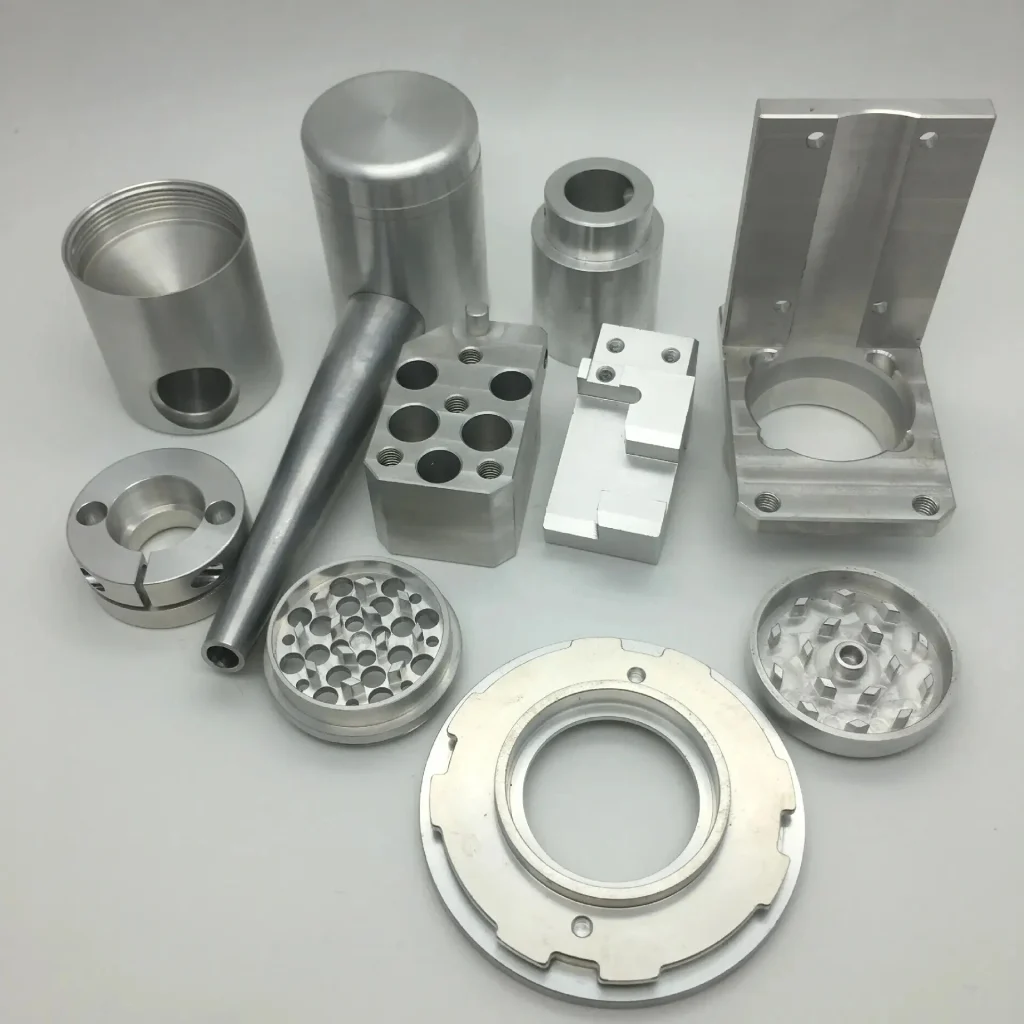
Looking for a reliable manufacturer for submersible sensor enclosures? 快速地, we specialize in high-precision CNC machining for waterproof probe housings, supporting rapid prototyping and volume production.
- 厚度: Precise up to $\pm 0.01$ 毫米
- 材料: 316l, 钛, 窥视, 还有更多
- Sealing: IP68/IP69K certified capability
- Lead Times: Fast turnaround for urgent R&D projects
Contact us today to discuss your custom sensor housing requirements.
常问问题: CNC Machining for Underwater Sensor Casings
1. What materials are best for underwater sensor housings?
For high-corrosion environments like seawater, 316L Stainless Steel 和 Titanium Grade 5 are the best choices. For lightweight monitors, Hard Anodized 6061 铝 is preferred.
2. How do you ensure waterproof sealing in CNC machining?
We focus on two metrics: Dimensional Tolerance ($\下午 0.01$ 毫米) 和 Surface Roughness ($拉 \ 0.8 \ \mu m$). We verify every sealing surface using CMM and profilometers to ensure IP68/IP69K compliance.
3. What tolerance is required for O-ring grooves?
For high-pressure submersion, we typically hold O-ring groove depths to $+0.01 / -0.00$ 毫米. This prevents both “over-compression” (which breaks the seal) 和 “under-compression” (which causes leaks).