Surface Finishes for CNC Machined Parts
A CNC machined part can pass dimensional inspection before surface treatment and still fail during assembly after finishing.
A coating may tighten an internal thread. An anodized layer may affect a fitted hole or bearing location. A polished surface may lose edge definition. A plated contact area may change electrical performance. A visible housing may meet the drawing dimensions but still be rejected because scratches, color variation, or packaging damage were not controlled.
Surface finishing is not a decorative step added at the end of production.
It should be reviewed together with the material grade, 零件几何形状, functional surfaces, 公差要求, 装配条件, 美容期望, 检查计划, 包装方式, 和预期数量.
Rapid Efficient supports coordinated surface-finishing and post-processing routes for custom metal parts and engineering-plastic components. 报价前, we review which areas require treatment, which features require masking, which dimensions apply after finishing, and which inspection points should be verified before delivery.
Start with the Functional Requirement
第一个问题不应该是:
Which finish looks best?
The more useful question is:
What must the finished part achieve after machining, treatment, 检查, 包装, 和最终组装?
Before selecting a surface-finishing route, 确认:
- Does the part require corrosion resistance?
- Is wear resistance important?
- Will the part be exposed to humidity, 化学物质, outdoor conditions, or repeated handling?
- Are there visible cosmetic surfaces?
- Are electrical-contact areas required?
- Does the component include fitted holes, 线程, 轴承位置, 配合面, or sealing surfaces?
- Is a consistent batch appearance important?
- Are masking areas required?
- Does the finished component need dimensional inspection?
- Does overseas shipment require scratch, 氧化, 水分, or impact protection?
The correct finish is not always the most expensive finish.
It is the route that protects the required function without creating unnecessary dimensional, cosmetic, 检查, or delivery risk.
Practical Surface-Finish Selection Map
| 表面处理 | 常见应用 | Main Benefit | 常见制造风险 | 报价前要确认什么 |
|---|---|---|---|---|
| 加工完成 | 功能原型, 固定装置, internal brackets, 机械零件 | Avoids unnecessary post-processing and preserves machined geometry | Tool marks, 毛刺, 划痕, exposed-metal oxidation | Surface expectations, 毛刺控制, roughness, 包装 |
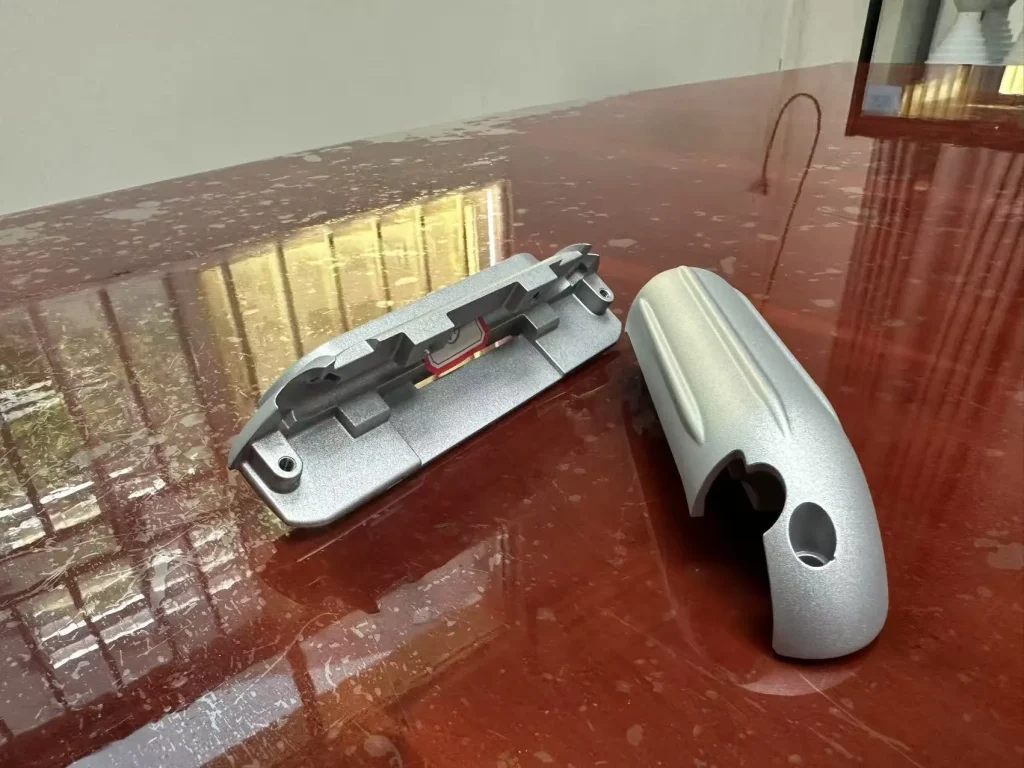
| 珠光喷砂 / 喷砂 | Aluminum housings, 外壳, visible surfaces, pre-anodizing preparation | Creates a more uniform matte appearance | Texture variation, edge rounding, deep scratches remaining visible | Media type, visible surfaces, protected areas, downstream finish |
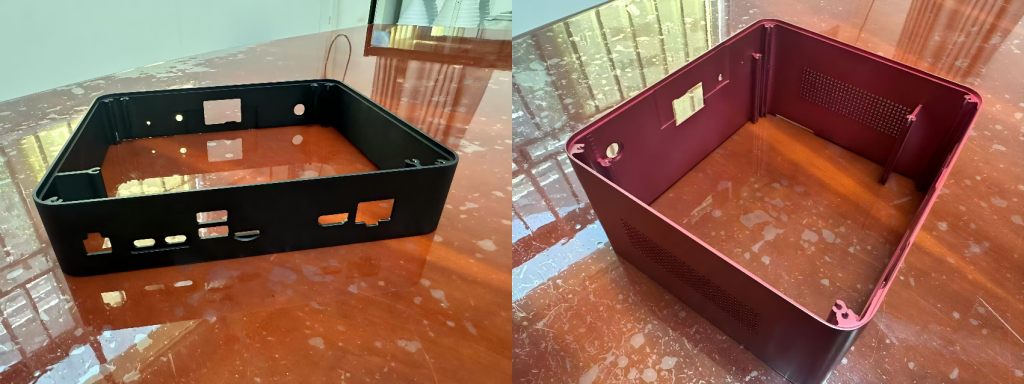
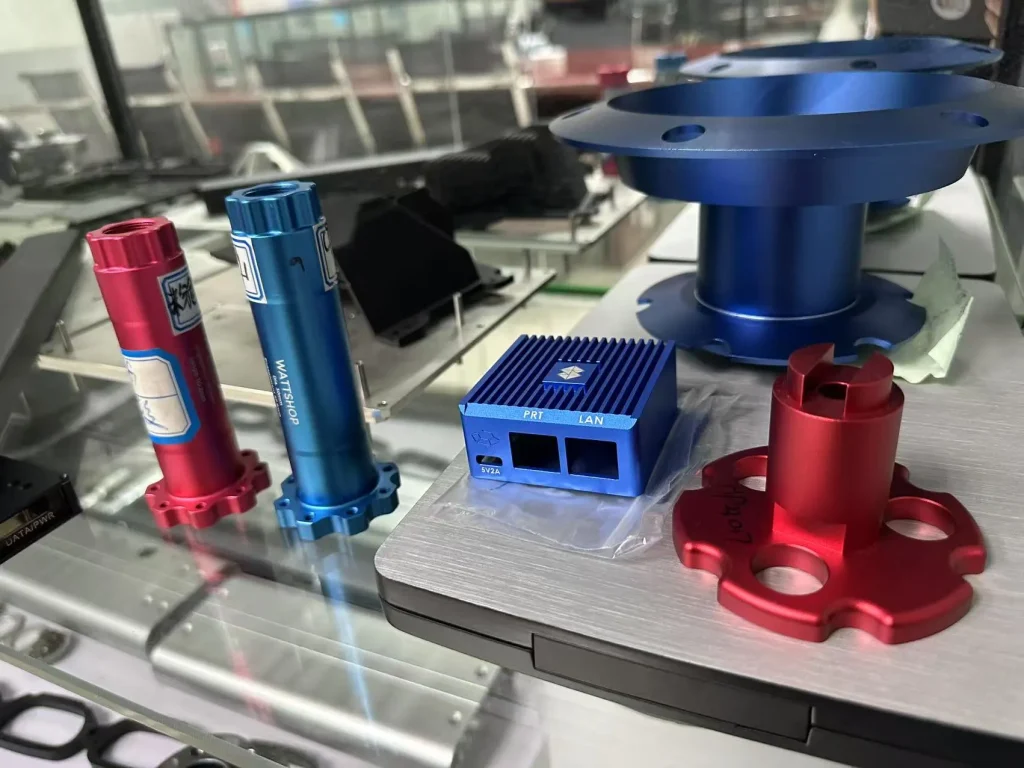
| 阳极氧化 | Aluminum housings, 括号, 外壳, 通讯设备零件, 自动化组件 | Improves corrosion resistance and appearance; functional options are available | Dimensional changes may affect holes, 线程, 适合, and appearance consistency | Alloy grade, 颜色, anodizing type, 掩蔽, final dimensions |
| 硬质阳极氧化 | Wear-sensitive aluminum parts, sliding features, selected mechanical components | Improves wear and abrasion resistance where required | Thicker functional layers may interfere with assembly features | Functional need, 掩蔽, fitted areas, post-finish inspection |
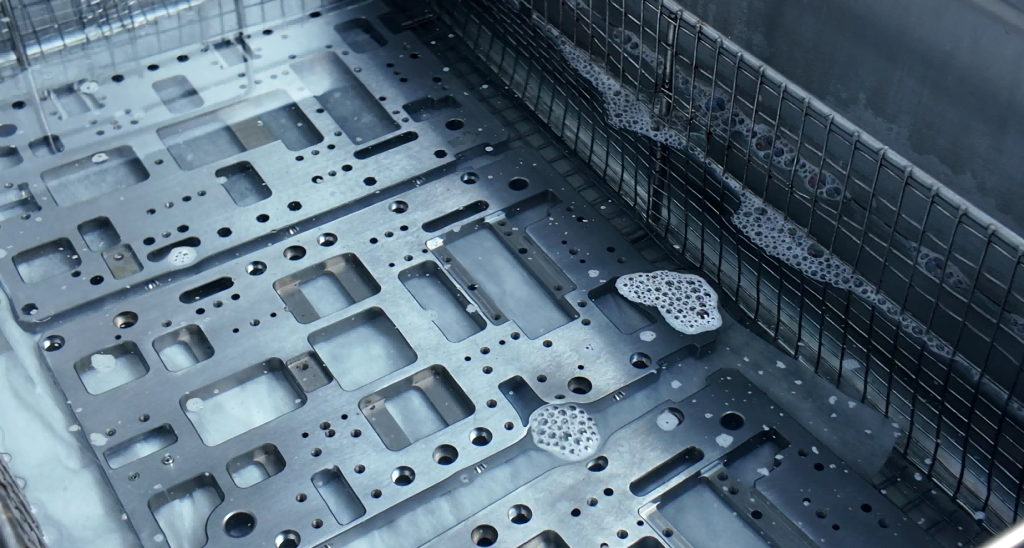
| 钝化 | Stainless-steel parts, fluid-handling components, medical-device components, humid-environment applications | Supports corrosion-resistance requirements after machining and cleaning | Residue in blind holes, 内螺纹, and difficult-to-rinse areas | Stainless-steel grade, cleaning route, internal features, 检查 |
| 抛光 | Appearance-sensitive parts, stainless-steel components, visible metal surfaces | Improves appearance and may reduce visible machining marks | Edge rounding, uneven appearance, dimensional change on critical surfaces | 化妆品面孔, edge protection, acceptable variation |
| 电镀 | 铜, 黄铜, 钢, and application-specific metal parts | Supports corrosion protection, electrical performance, 外貌, or wear requirements | Thickness variation, adhesion risk, contact-surface interference, fit changes | Base material, plating type, contact areas, 厚度, 掩蔽 |
| 粉末涂料 | 外壳, 面板, 括号, industrial components | Provides a durable protective and cosmetic coating | Film build may affect holes, 线程, edges, and assembly features | 颜色, texture, 掩蔽, 配合面, 包装 |
| 绘画 | 外壳, 封面, 面板, cosmetic components | Provides color and surface protection for selected applications | 附着力, 划痕, uneven thickness, handling damage | Paint system, 颜色, gloss level, protected areas |
| 激光雕刻 | 标志, 序列号, part numbers, traceability marks | Adds permanent identification | 位置, readability, contrast, sequence relative to finishing | Artwork, 位置, 尺寸, orientation, serial-number format |
该表是一个起点.
The final surface-finishing route should be reviewed against the drawing, 物质行为, 运行环境, 装配条件, 及检验要求.
For material-specific machining risks, 回顾我们的 CNC加工材料指南.
As-Machined Parts Still Need a Surface Requirement
An as-machined finish does not mean that surface quality can be ignored.
Some components do not require anodizing, 电镀, 抛光, 绘画, or powder coating. 功能原型, internal brackets, 固定装置, 机械零件, and selected engineering components may perform correctly with an as-machined surface.
然而, the drawing should still clarify:
- Whether visible tool marks are acceptable
- Whether burrs must be removed
- Whether sharp edges should be broken
- Whether scratches are acceptable
- Whether corrosion protection is required during shipment
- Whether a surface-roughness requirement applies
- Whether sealing surfaces require additional control
- Whether bearing locations, 滑动面, or electrical-contact areas require special treatment
- Whether visible surfaces need consistent machining marks
A part may be dimensionally correct and still fail customer expectations if it contains rolled burrs, 氧化, 划痕, 处理标记, or inconsistent visible surfaces.
Aluminum Finishing: Anodizing Must Be Planned Before Machining
Aluminum components are commonly anodized for corrosion resistance, 外貌, 磨损行为, or application-specific functional requirements.
Typical anodized parts include:
- 精密外壳
- Communication-equipment components
- Sensor enclosures
- Robotics parts
- Automation brackets
- Optical mounting components
- Consumer-product housings
- Medical-device housings
- Industrial-equipment components
Anodizing should not be treated as an automatic upgrade for every aluminum component.
The correct route depends on:
- Aluminum grade
- 零件几何形状
- 化妆品的期望
- Color requirement
- Wear environment
- 螺纹和孔
- 轴承位置
- Mating features
- 密封面
- 遮蔽区域
- 检查方法
- 包装条件
Technical Bulletins for Anodized Parts
内螺纹: Anodizing may tighten thread fit. Confirm whether masking, 加工余量, 线程验证, or another controlled route is required after finishing.
Tight-Fit Bores: A fitted hole, bearing location, or sealing bore should not be treated like a standard clearance hole. Define whether the final tolerance applies before or after anodizing, and identify any masking requirements on the drawing.
Dimensional Growth: Anodizing is a conversion process rather than a simple paint layer. Part of the oxide forms within the aluminum surface and part extends outward. The final dimensional effect depends on the alloy, 工艺路线, 涂层要求, 几何学, and sealing condition. Do not apply one universal compensation ratio to every anodized component.
Type II Sulfuric Anodizing: The required coating thickness should be agreed before production. Depending on the specification and application, Type II coatings may cover a relatively broad thickness range.
Type III Hard Anodizing: Hard anodizing requires closer dimensional review. For selected specifications, a coating thickness around 50 μm may be used unless another requirement is defined. Tight bores, 线程, 轴承位置, sliding features, and sealing grooves may require machining allowance, 掩蔽, or post-finish verification.
Mating Surfaces: Surface treatment may alter alignment, 合身, or assembly repeatability. Mark protected faces clearly on the drawing.
Grounding and Electrical-Contact Areas: Anodized surfaces are electrically insulating. Identify contact pads, grounding points, and other areas that must remain uncoated.
Cosmetic Faces: 颜色, texture, and handling marks become more visible after finishing. Define visible surfaces, acceptable variation, and packaging protection before production.
Engraved Areas: Contrast and readability may depend on whether laser engraving is completed before or after anodizing. Confirm the sequence during quotation.
Hard anodizing is useful when wear resistance, 耐磨性, 或其他功能需求证明其合理性.
It should not be selected simply because it sounds stronger.
For holes, 线程, 财力雄厚, 薄壁, and tolerance-sensitive features, 回顾我们的 CNC加工设计指南.
Bead Blasting and Anodizing Should Be Reviewed Together
Bead blasting is often used to create a more uniform matte appearance on aluminum parts. It may also be used before anodizing when the final appearance requires a consistent textured surface.
The main review points include:
- 可见表面
- Protected areas
- Edge condition
- Surface texture
- Media consistency
- Color expectations after anodizing
- Scratch protection during handling
- Batch appearance requirements
- 包装方式
Bead blasting can improve surface consistency, but it does not automatically remove every upstream defect.
Deep scratches, 凹痕, 工具痕迹, edge damage, and poor handling may remain visible after finishing.
For visible housings and customer-facing components, the cosmetic standard should be discussed before production rather than after the batch has already been treated.
Stainless-Steel Finishing: 年级, 打扫, and Geometry Matter
Stainless steel is commonly selected for corrosion resistance, 干净的外观, and demanding operating environments.
加工后, the finishing route may include cleaning, 钝化, 抛光, or another application-specific process.
Common applications include:
- Fluid-handling components
- Valve parts
- 医疗器械组件
- Sensor parts
- Industrial-equipment components
- Food-equipment parts
- Precision connectors
- 轴
- Fasteners
Passivation should be reviewed together with:
- Stainless-steel grade
- Machining residue
- Cleaning requirements
- 盲孔
- 内螺纹
- Trapped-liquid areas
- Final rinsing
- 表面外观
- 包装
- 检验要求
Blind holes and internal threads deserve special attention.
Residue trapped in difficult-to-clean areas may create quality issues even when the external surfaces appear acceptable.
Polishing also requires careful review. A polished surface may improve appearance, but excessive polishing can round edges, alter critical surfaces, and create inconsistency between parts.
The drawing should identify which surfaces are cosmetic, which are functional, and which must remain dimensionally controlled.
Stainless-steel finishing should also be reviewed against the exact grade and internal geometry. 盲孔, 内螺纹, 截留的化学残留物, and final rinsing may create risks that are not visible on the external surface. For a deeper process review, read our guide to CNC零件不锈钢钝化.
Copper and Brass Parts Need Surface and Packaging Review
Copper and copper alloys are often selected for electrical conductivity, 热性能, 接触面, or application-specific mechanical requirements.
然而, copper surfaces can be sensitive to:
- 氧化
- Fingerprints
- 划痕
- 滚制毛刺
- Handling marks
- Contact-surface contamination
- 包装条件
- Overseas shipping environments
Depending on the application, the finishing route may include:
- 受控清洁
- Surface protection
- 电镀
- 抛光
- Contact-area masking
- Anti-oxidation packaging
- 单独包装
- 防潮保护
For conductive components, surface treatment should not interfere with electrical-contact areas unless the selected plating route is intended to support that function.
报价前, 确认:
- Copper or brass grade
- Conductivity requirement
- 接触面
- 小孔
- 螺纹要求
- Burr-control requirements
- Plating type
- 遮蔽区域
- 表面外观
- 包装条件
Plating Requires Dimensional and Functional Review
Plating may be selected for corrosion protection, electrical performance, 外貌, 戴阻力, solderability, or another application-specific requirement.
The base material and part function should be reviewed before the plating route is finalized.
Important questions include:
- Which surfaces require plating?
- Are electrical-contact areas involved?
- 是否有任何区域被遮盖?
- Does the drawing specify a coating requirement?
- Are fitted holes or threads involved?
- Will the component be assembled after plating?
- Are cosmetic expectations important?
- Does the finished part require dimensional inspection?
- Does packaging need to protect the surface from scratches or part-to-part contact?
Plating is not simply a cosmetic layer.
Thickness variation, surface preparation, adhesion, 几何学, 处理, and packaging may all affect the final result.
Powder Coating and Painting: Control Masking Edges and Assembly Features
Powder coating and painting are commonly used for housings, 封面, 面板, 括号, and industrial-equipment components.
These processes may improve corrosion resistance and appearance, but they must be reviewed around:
- 线程数
- 盲孔
- 紧配合孔
- 轴承位置
- Sliding features
- 接地点
- 配合面
- 密封面
- Assembly interfaces
- 激光雕刻区域
- 可见的装饰表面
Powder coating is an additive finish that is cured at elevated temperature. The exact curing schedule depends on the selected coating system and part requirements.
During application and curing, coating build-up may become more pronounced around edges, masking boundaries, 凹陷, 和螺纹特征. Blind-hole threads and assembly interfaces require particular attention because excess coating can interfere with fit.
根据图纸而定, the process plan may include:
- High-temperature masking plugs
- Protected mating surfaces
- Controlled masking boundaries
- Thread protection
- Post-coat thread verification
- Controlled thread recovery after coating when appropriate
- Fit verification before packaging
Do not assume that every coated thread requires the same treatment.
报价前, 定义:
- 颜色
- Texture
- Gloss level
- 化妆品表面
- Masked areas
- 关键配合
- Assembly interfaces
- 螺纹要求
- 包装方式
- Inspection expectations
Surface Roughness and Cosmetic Appearance Are Different Requirements
A surface-roughness value and a cosmetic appearance standard are not the same thing.
A machined surface may meet a specified 表面粗糙度 (拉) requirement and still show visible tool marks.
A bead-blasted surface may look consistent but may not be suitable for a sealing face.
A polished component may look attractive but lose edge definition when the polishing route is not controlled.
The drawing should separate three different types of requirements.
Functional Surface Requirements
These describe how the surface must perform during assembly or use.
- 表面粗糙度 (拉)
- Geometric flatness
- 密封性能
- 轴承配合
- Sliding behavior
- 电接触
- 耐磨性
- 耐腐蚀
Cosmetic Surface Requirements
These describe what the customer should see on visible areas.
- Visible faces
- 颜色
- Texture
- Gloss level
- Scratch limits
- Tool-mark limits
- Acceptable batch variation
- Protected areas during packaging
Identification Requirements
These describe the information that must remain readable after finishing.
- 激光雕刻
- Serial numbers
- Part numbers
- 标志
- Orientation marks
- Traceability labels
Separating functional, cosmetic, and identification requirements makes quotation, 加工, 精加工, 检查, and packaging more reliable.
Dimensional Tolerances Must Account for the Finishing Route
Surface finishing may affect final dimensions.
This is particularly important for:
- 紧配合孔
- 内螺纹
- 外螺纹
- 轴承座
- 密封面
- Sliding features
- Press-fit locations
- 电接触区域
- 配合面
- Assembly interfaces
- 薄壁零件
生产前, the drawing should clarify whether a critical tolerance applies:
- 完成前
- 完成后
- 在遮蔽表面上
- 完成后检查后
- 线程验证后
- 合身验证后
When this is not specified, quotation risk and production uncertainty increase.
The machining plan, masking plan, 表面精加工路线, and inspection method should be reviewed together.
Inspection After Surface Finishing
A finished component should not be evaluated only by appearance.
根据图纸和项目要求, post-finish checks may include:
- 尺寸检验
- Thread verification
- Go/no-go gauge checks
- Hole-size verification
- Mating-feature inspection
- 适合性验证
- Cosmetic review
- Scratch inspection
- 毛刺检查
- 涂层审查
- Color and texture review
- Laser-engraving verification
- 包装检验
并非每个零件都需要相同的检查方法.
关键特性, 耐受水平, 材料, 表面精加工路线, 数量, and customer requirements should be reviewed together.
了解更多关于我们的 质量保证流程
Packaging Is Part of Surface-Finish Quality
A CNC machined part can pass final inspection and still arrive in poor condition if packaging is not controlled.
Finished components may require protection against:
- 划痕
- 氧化
- Moisture
- 影响
- Part-to-part contact
- Fingerprints
- Surface contamination
- Transport vibration
- Labeling errors
Depending on the material and finish, 包装可能包括:
- 单独包装
- 防护袋
- 泡沫分离
- 保护膜
- 抗氧化保护
- 需要时使用干燥剂
- 出口纸箱
- 清晰的标签
- 批次分离
对于海外发货, packaging should be reviewed as part of the finishing route rather than treated as an afterthought.
Surface-Finish Information to Include in Your RFQ
报价前, 准备:
- 2D图
- 3D CAD文件
- 材质等级
- 预计数量
- Surface-finish type
- Color or appearance requirement
- Texture or gloss requirement
- 临界公差
- 螺纹和孔
- 轴承位置
- 配合面
- 密封面
- 遮蔽区域
- 化妆品表面
- 电接触区域
- Laser-engraving artwork when required
- 检查报告要求
- 包装要求
- 运行环境
When the finishing route has not yet been finalized, include the functional requirements of the part.
We can review material behavior, 加工风险, surface-finishing options, 掩蔽要求, inspection points, 报价前一起提供交货条件.
Upload Your Drawing for Surface-Finish Review
发送您的 2D 绘图, 3D CAD文件, 材料等级, 公差注释, 表面处理要求, 预期数量, 检查需要, and packaging requirements.
我们的团队将审查加工路线, surface-finishing risks, 掩蔽要求, post-processing inspection points, 包装条件, 以及报价前的交货时间表.
号召性用语按钮: 上传您的绘图
关于快速高效
Rapid Efficient 支持原型的定制 CNC 加工项目, 小批量零件, 及生产要求.
和 18 多年高精度CNC加工经验, 我们的团队审查物质行为, 加工策略, surface-finishing risks, 公差要求, 检查方法, 包装条件, 和报价前的交货时间表.
我们的可用功能包括 4 轴, 5-轴, 和多轴数控加工, 连同CMM等检测设备, 投影仪, 和光谱仪. 根据实际零件和项目要求, 加工精度低至 0.01 毫米和检查精度低至 0.001 毫米可用.
Rapid Efficient已获得ISO 9001 和ISO 14001 认证.
我们支持跨医疗设备的项目, 通讯设备, 光学元件, 无人机, 智能机器人, 汽车应用, 办公自动化, 和其他定制制造要求.