
Fazit zuerst
For most lightweight CNC machined parts, Aluminium is the better all-around choice because it offers low weight, good strength, Korrosionsbeständigkeit, and lower total cost.
Wählen Messing when you need:
- Ausgezeichnete Verwirklichung
- premium appearance
- electrical conductivity
- stable small threads
- corrosion resistance in fittings
Wählen Aluminium when you need:
- lightweight parts
- structural components
- fast machining at scale
- anodized cosmetic finishes
- better strength-to-weight ratio
For housings, Klammern, fittings, Anschlüsse, and decorative hardware, the right answer depends on function—not metal prestige.
Aluminum vs Brass Quick Comparison
| Property | Aluminium | Messing |
|---|---|---|
| Density | Niedrig | Hoch |
| Gewicht | Light | Heavy |
| Machinability | Gut | Exzellent |
| Electrical Conductivity | Gut | Very Good |
| Korrosionsbeständigkeit | Gut | Gut |
| Appearance | Modern / Industriell | Prämie / Gold Tone |
| Kosten | Untere | Medium |
| Recyclability | Exzellent | Exzellent |
Weight Matters
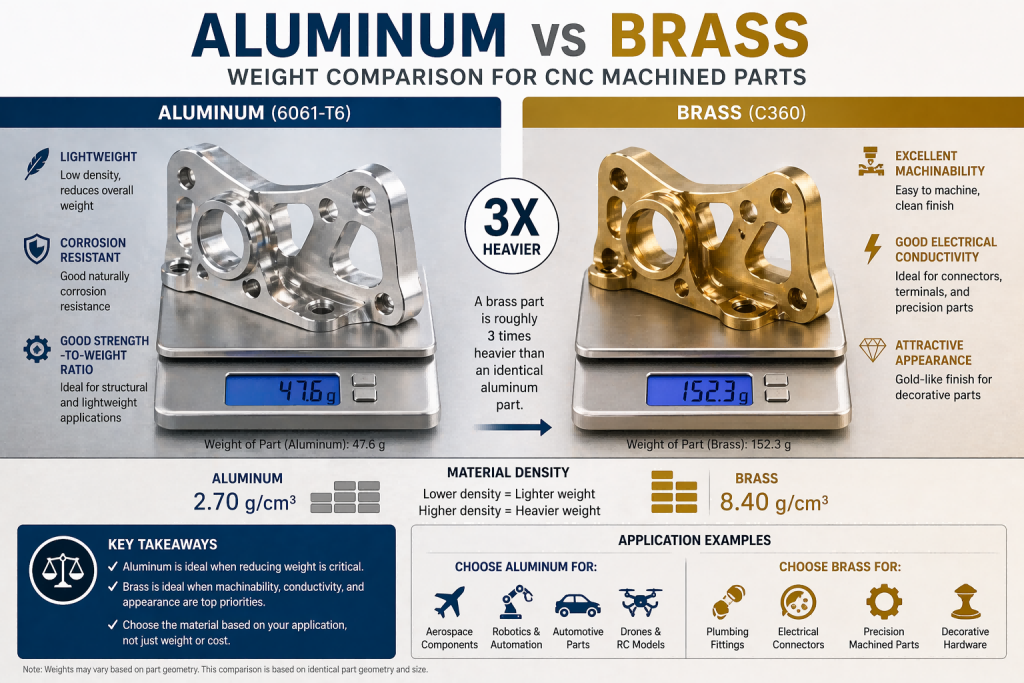
Aluminum is significantly lighter than brass.
Typical density:
- Aluminium: ~2.70 g/cm³
- Messing: ~8.40 g/cm³
A brass part can be roughly three times heavier than an identical aluminum part.
For portable devices, drone parts, Robotik, and lightweight assemblies, aluminum is usually preferred.
Machinability and Surface Finish
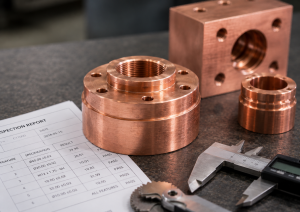
Brass is famous for excellent machinability.
Benefits include:
- smooth chip breaking
- low burr formation
- clean threads
- fine cosmetic finish
- long tool life
That is why brass is widely used for:
- fittings
- Anschlüsse
- Ventile
- threaded inserts
- decorative precision parts
Aluminum also machines well, especially in high-speed production.
Lesen Sie unsere Hochgeschwindigkeits-CNC-Aluminium-Schneidführung
Conductivity and Electronics Use
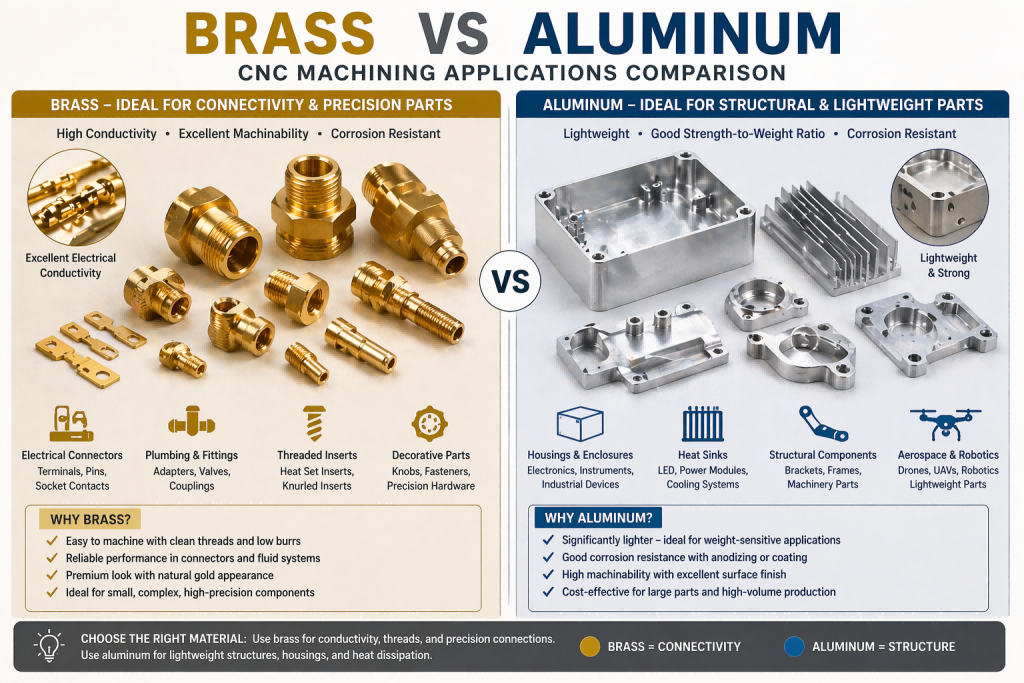
Both materials conduct electricity, but brass is commonly selected for:
- terminals
- electrical connectors
- switch hardware
- RF fittings
Aluminum is more common when weight matters more than conductivity.
Kosten und Produktionsvolumen
For larger lightweight parts, aluminum is often more economical.
For small precision turned parts, brass can be highly efficient due to easy machining and short cycle time.
Material choice should consider:
- raw material price
- machining time
- finishing cost
- shipping weight
- assembly needs
Korrosionsbeständigkeit
Brass performs very well in many plumbing and indoor environments.
Aluminum performs well outdoors when anodized or coated.
See our Aluminum Anodizing vs Powder Coating Guide
Common Applications
Choose Aluminum For:
- Gehäuse
- Klammern
- Kühlkörper
- lightweight fixtures
- drone components
Choose Brass For:
- hose fittings
- threaded adapters
- electrical terminals
- decorative knobs
- precision inserts
Anmerkung des Ingenieurs
Many buyers assume brass is better because it feels heavier and more expensive.
In reality, aluminum often delivers better performance where low mass, Massenproduktion, and modern finishing matter.
FAQ
Is brass stronger than aluminum?
Depends on alloy and design. Many brass alloys are harder, while many aluminum alloys offer better strength-to-weight performance.
Which is easier to machine?
Brass is one of the easiest metals to machine.
Which is better for electrical parts?
Brass is commonly preferred for connectors and terminals.
Which is better for lightweight products?
Aluminium.
Is brass more expensive than aluminum?
Often yes, depending on alloy and market pricing.
Which is better for small threaded parts?
Brass is often preferred for delicate or micro-sized threads because it machines cleanly with low burr formation.
Need Help Choosing the Right Material?
RapidEfficient helps customers choose the best metal for weight, kosten, conductivity, Korrosionsbeständigkeit, und Herstellbarkeit.
Send us your drawing today for expert material selection feedback.