
Fazit zuerst
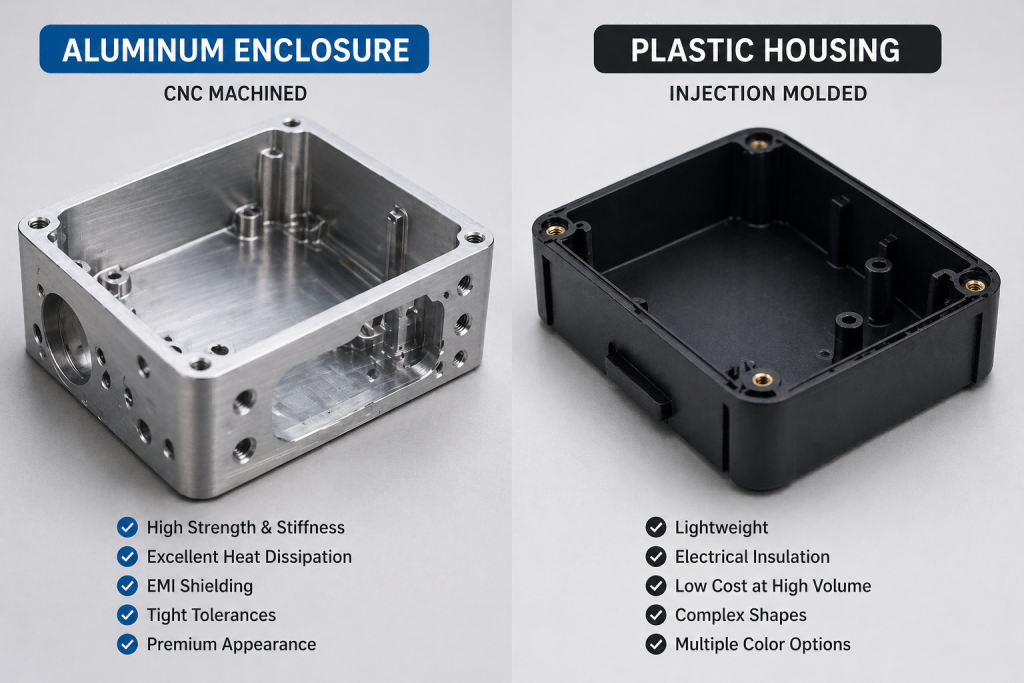
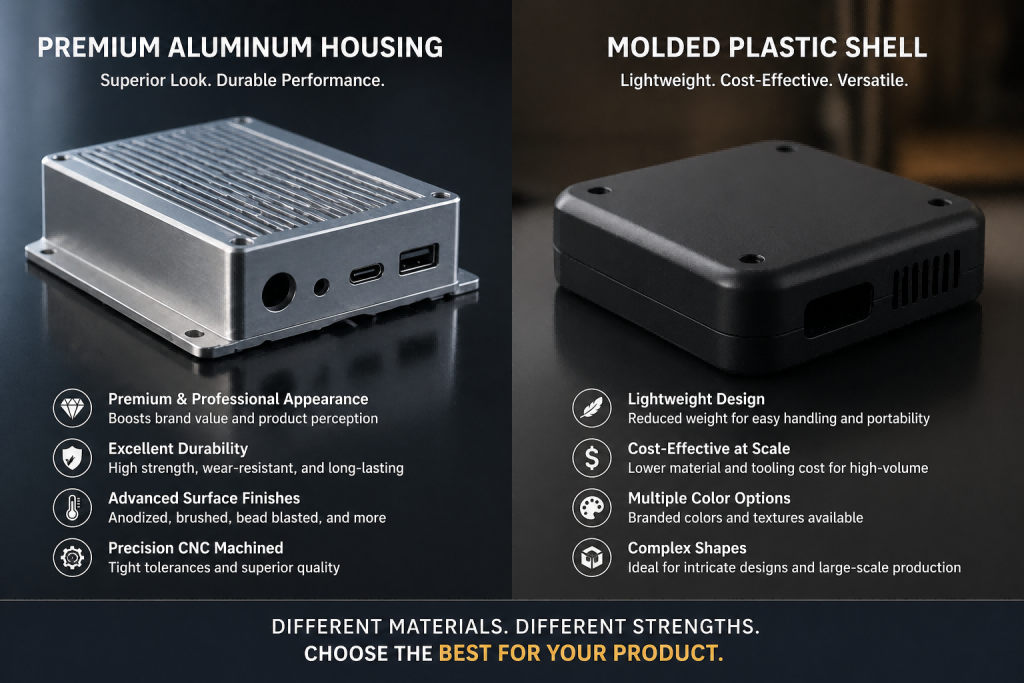
Wählen Aluminium wenn du Kraft brauchst, enge Toleranzen, Hitzebeständigkeit, Gewindefunktionen, EMI-Abschirmung, oder ein erstklassiges Produktgefühl.
Wählen Plastik wenn Sie niedrigere Kosten benötigen, elektrische Isolierung, leichte Gehäuse, oder großvolumig geformte Verbraucherteile.
Für viele Produkte, Die beste Entscheidung hängt von den Leistungsanforderungen ab, Umfeld, Aussehen, Menge, und schnelle Markteinführung.
Wenn Sie sich nicht sicher sind, RapidEfficient kann Ihren Entwurf überprüfen und die praktischste Materialwahl empfehlen.
Warum dieser Vergleich wichtig ist
Viele Käufer fragen sich, ob Aluminium oder Kunststoff besser ist.
Die eigentliche Frage ist:
- Benötigt das Teil strukturelle Festigkeit??
- Ist es Hitze ausgesetzt oder wird es im Freien verwendet??
- Benötigt es Gewinde oder Einsätze??
- Ist das kosmetische Erscheinungsbild wichtig??
- Was ist die Zielmenge und das Budget??
- Wie schnell benötigen Sie Produktionsteile??
Die Wahl des falschen Materials kann die Kosten erhöhen, Ausfallrate, oder Neugestaltungszeit.
Schnellentscheidungstabelle
| Brauchen | Bessere Wahl | Technischer Grund |
|---|---|---|
| Enge Toleranzen | Aluminium | Bessere Dimensionsstabilität |
| EMI-Abschirmung | Aluminium | Natürlich leitfähiges Gehäuse |
| Wärmeableitung | Aluminium | Hohe Wärmeleitfähigkeit |
| Niedrige Kosten, hohes Volumen | Plastik | Geformte Produktionseffizienz |
| Elektrische Isolierung | Plastik | Nicht leitendes Material |
| Leichte Handheld-Produkte | Plastik | Geringere Dichte |
| Starke Fäden | Aluminium | Bessere Fadenhaltbarkeit |
| Chemische Beständigkeit | Plastik | Materialien wie PEEK oder POM funktionieren gut |
Stärke und Präzision
Aluminium bietet eine höhere Steifigkeit und Formstabilität als die meisten Kunststoffe.
Dadurch ist es ideal für:
- Bearbeitete Gehäuse
- Klammern
- Montageplatten
- Robotikteile
- Präzisionsbefestigungen
Viele Kunststoffe können langfristig Schaden nehmen kriechen oder Kaltfluss unter Dauerlast, während Aluminium über Jahre hinweg seine Maßhaltigkeit behält.
Wenn Ihr Teil enge Toleranzen benötigt, siehe unsere [Vollständiger Leitfaden zur Aluminiumbearbeitung]
Hitzebeständigkeit, Elektronik, und EMI
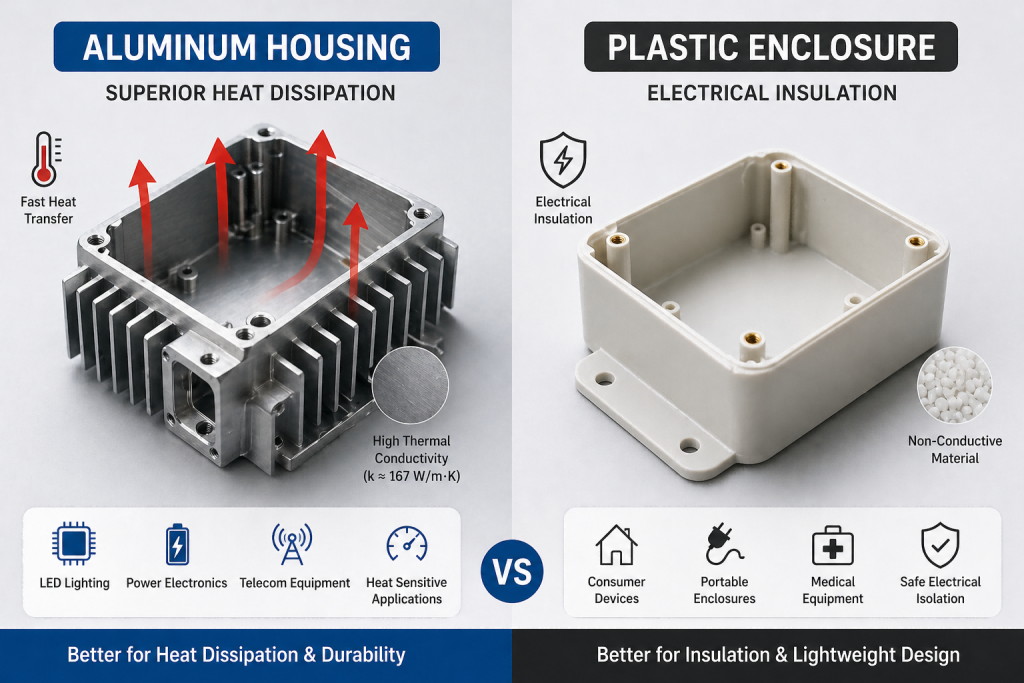
Aluminium überträgt Wärme effizient und verhält sich bei erhöhten Temperaturen gut.
Es wird häufig verwendet für:
- Kühlkörpergehäuse
- LED-Gehäuse
- Leistungselektronik
- Batteriegehäuse
- Telekommunikationsgehäuse
Im Gegensatz zu Kunststoffgehäusen, die möglicherweise leitfähige Beschichtungen erfordern, Aluminium sorgt natürlich dafür EMI-Abschirmung für empfindliche Elektronik.
Kunststoff ist oft besser geeignet:
- isolierte Abdeckungen
- tragbare Verbrauchergeräte
- Niederspannungsgranaten
Wenn es auf die Oberflächenqualität ankommt, Lesen Sie unsere [Oberflächenfinish-Leitfaden für CNC-gefrästes Aluminium]
Gewinde und Montage
Aluminium ist normalerweise die bessere Option, wenn das Teil wiederholt zusammengebaut werden muss, Maschinenschrauben, oder Gewindelöcher.
Kunststoffgewinde können mit der Zeit verschleißen, es sei denn, es werden Messingeinsätze oder Stahleinsätze verwendet.
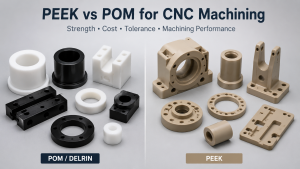
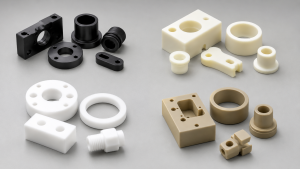
Hochleistungskunststoffe wie z SPÄHEN, POM (Delrin), Und PC kann einige Designherausforderungen lösen, Sie können jedoch hinsichtlich der Gewindefestigkeit und der Wärmeübertragung immer noch nicht mit Aluminium mithalten.
Für stärkere Gewindelöcher, Lesen Sie unsere [Anleitung zur Bearbeitung von Aluminiumgewinden]
Kosten und Produktionsvolumen
Für kleine bis mittlere Mengen, CNC-bearbeitetes Aluminium ist oft praktisch, da die Werkzeuginvestitionen gering sind.
Für sehr hohe Mengen, Geformter Kunststoff kann billiger werden, sobald die Formkosten übernommen sind.
Schnelle Markteinführung
Spritzguss erfordert üblicherweise 4–8 Wochen für Werkzeuge und Validierung.
CNC-gefräste Aluminium-Prototypen können häufig in hergestellt werden 3–5 Tage.
Für Startups, Pilotproduktion, und schnelle Entwicklung, Die Geschwindigkeit überwiegt häufig die geringeren Gusskosten pro Teil.
Erscheinungsbild und Markenwahrnehmung
Aluminium vermittelt normalerweise ein hochwertigeres Gefühl.
Zu den beliebten Ausführungen gehören:
- perlgestrahlt eloxiert
- gebürstetes Metall
- schwarz matt eloxiert
- klar eloxiertes Silber
Bei der Farbabstimmung ist Kunststoff ideal, transparente Teile, oder Soft-Touch-Texturen benötigt werden.
Welche Branchen wählen welche??
Medizinprodukte
- Aluminium für Rahmen und Präzisionsmodule
- Kunststoff für Einwegbezüge
Elektronik
- Aluminium zur Wärmekontrolle und EMI-Abschirmung
- Kunststoff zur Isolierung
Robotik
- Aluminium für Steifigkeit und Gewindestrukturen
Konsumgüter
- Kunststoff für Massenmarktschalen
- Aluminium für Premiumprodukte
Anmerkung des Ingenieurs
Viele Käufer vergleichen nur den Rohstoffpreis.
Die Gesamtkosten des Projekts hängen jedoch von der Bearbeitungszeit ab, Werkzeugvorlaufzeit, Lebensdauer der Montage, Gewährleistungsrisiko, und Markenwahrnehmung.
Ein billiges Material kann nach einer Neugestaltung teuer werden.
FAQ
Ist Aluminium stärker als Kunststoff??
Ja. Aluminium ist deutlich fester und steifer als die meisten technischen Kunststoffe.
Ist Kunststoff günstiger als Aluminium??
Normalerweise ja, bei hoher Lautstärke. Nicht immer in Prototypenstückzahl.
Was sich hochwertiger anfühlt?
Aluminium vermittelt in der Regel ein hochwertigeres und langlebigeres Gefühl.
Kann Kunststoff Aluminium ersetzen??
Manchmal ja, je nach Belastung, Hitze, EMI, und Toleranzanforderungen.
Benötigen Sie Hilfe bei der Materialauswahl?
RapidEfficient hilft Kunden beim Vergleich von Aluminium, Plastik, und andere Produktionsmaterialien basierend auf der Funktion, kosten, und Herstellbarkeit.
Laden Sie Ihre CAD-Datei für eine kostenlose DFM-Überprüfung hoch 24 Std..