
Schnelle Antwort: Die größten Probleme in der CNC-Werkzeugmaschinen- und CNC-Bearbeitungsindustrie sind die hohen Ausrüstungskosten, skilled labor shortages, machine downtime, material waste, unstable quality, and difficulty meeting tight tolerance requirements. For buyers, these issues often appear as delayed delivery, inconsistent part quality, higher machining costs, and repeated rework. A reliable CNC machining supplier should help reduce these risks through DFM review, optimierte Werkzeugwege, stable process control, and strict inspection before shipment.
Einführung
Der CNC machine tool industry is a cornerstone of modern manufacturing, enabling precise and efficient production across various sectors. Jedoch, like any industry, it faces several pain points that can hinder productivity, Qualität, und Rentabilität. This article will explore the major challenges in the CNC machine tool industry, discuss their impact, and highlight how Rapidefficient addresses these issues to provide superior solutions.
Schneller Vergleich: Key Pain Points and Practical Solutions
| Pain Point | Impact on Buyers | Practical CNC Machining Solution |
|---|---|---|
| High equipment and setup costs | Higher project cost, especially for small batches or prototypes | Use an outsourced CNC machining supplier with flexible prototyping and production capacity |
| Skilled labor shortage | Longer lead time, programming errors, unstable machining quality | Work with experienced CNC engineers who can review drawings, Toleranzen, and toolpath strategy |
| Machine downtime | Delayed delivery and unstable production schedules | Use suppliers with multiple machining centers and backup production capacity |
| Material waste | Higher material cost and lower production efficiency | Improve DFM, nesting, stock allowance, and roughing/finishing strategy |
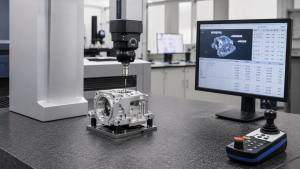
| Quality inconsistency | Nacharbeiten, rejected parts, assembly problems, and delayed product launches | Use CMM inspection, first article inspection, Prozesskontrolle, and documented QC reports |
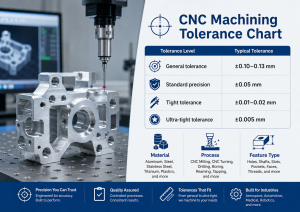
| Tight tolerance requirements | Höheres Ausschussrisiko, especially for thin-wall or complex parts | Control clamping, Verformung, Werkzeugverschleiß, Temperatur, and tolerance stack-up |
Key Pain Points in the CNC Machine Tool Industry
1. High Initial Investment Costs
One of the most significant barriers for companies looking to adopt CNC machining technology is the high initial investment required.
- Equipment Costs: Advanced CNC machines are expensive, often requiring substantial capital outlays.
- Training and Setup: Operators need specialized training to use these machines effectively, was zu den Gesamtkosten beiträgt.
Impact: High costs can deter small and medium-sized enterprises (SMEs) from investing in CNC technology, limiting their ability to compete with larger firms.
If machining cost is your main concern, Sehen Sie sich unseren Leitfaden an how much CNC machining costs in China and what factors affect the final quotation.
2. Skilled Labor Shortage
Finding and retaining skilled labor is a persistent challenge in the CNC machine tool industry.
- Specialized Skills: Operating CNC machines requires knowledge of CAD/CAM software, Programmierung, and mechanical engineering principles.
- Workforce Aging: Many experienced operators are nearing retirement, leading to a shortage of skilled workers.
Impact: A lack of skilled labor can result in lower productivity, increased errors, and longer lead times.
3. Maintenance and Downtime
CNC machines require regular maintenance to ensure optimal performance, but downtime can be costly and disruptive.
- Preventive Maintenance: Regular checks and part replacements are necessary to prevent breakdowns.
- Unplanned Downtime: Unexpected failures can halt production, causing delays and additional expenses.
Impact: Frequent maintenance and unexpected downtime can significantly reduce operational efficiency and increase costs.
4. Material Waste and Inefficiency
Material waste is a common issue in CNC machining, particularly when dealing with complex geometries and tight tolerances.
- Subtractive Manufacturing: Traditional CNC processes involve removing material, which can lead to significant waste.
- Inefficient Toolpaths: Poorly optimized toolpaths can result in unnecessary material removal and extended machining times.
Impact: High levels of material waste and inefficiency can increase production costs and environmental impact.
5. Quality Control and Consistency
Ensuring consistent quality across all produced parts is critical but challenging.
- Präzisionsanforderungen: Meeting tight tolerances and surface finish requirements demands meticulous attention to detail.
- Quality Assurance Systems: Implementing robust quality control systems is essential but can be resource-intensive.
Impact: Variability in quality can lead to rework, Unzufriedenheit der Kunden, and potential recalls.
For complex assemblies, tolerance issues can accumulate quickly. Unser CNC machining tolerance stack-up guide explains how small errors become scrap and how to prevent them early.
For projects with tight tolerances, inspection planning is just as important as machining. You can also read our CMM inspection guide for CNC machined parts to understand what buyers should check before approving precision parts.
6. Integration with Modern Technologies
Integrating CNC machining with emerging technologies like IoT, KI, and additive manufacturing presents both opportunities and challenges.
- Data Management: Collecting and analyzing data from multiple sources can be complex.
- Technological Adoption: Adopting new technologies requires significant investment and training.
Impact: Companies that fail to integrate modern technologies risk falling behind competitors who leverage these advancements.
How RapidEfficient Helps Reduce CNC Machining Risks
Many pain points in the CNC machine tool industry eventually appear in real projects as delayed delivery, unstable part quality, repeated rework, and higher machining costs. For buyers, the key is not only having advanced machines, but also working with a CNC machining supplier that understands process control, tolerance risks, Materialverhalten, und Inspektionsanforderungen.
1. DFM Review Before Machining
Before production starts, RapidEfficient reviews drawings, Toleranzen, Materialauswahl, Wandstärke, Anforderungen an die Oberflächenbeschaffenheit, and critical assembly features. This helps identify possible machining risks early, such as difficult-to-hold tolerances, weak structures, thin-wall deformation, or unnecessary cost caused by over-tight specifications.
2. Material and Process Selection
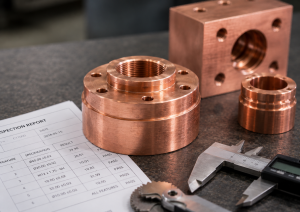
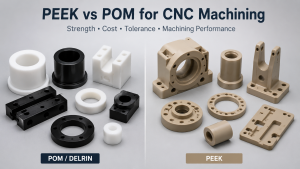
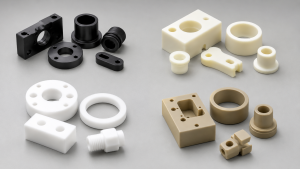
Different materials create different machining challenges. Aluminum is easier to cut but may deform in thin-wall structures. Stainless steel can cause tool wear and heat buildup. Copper and brass require careful control of burrs and surface oxidation. Engineering plastics such as PEEK, POM, Nylon, and PTFE may require special strategies to control thermal expansion and dimensional stability.
3. Toolpath and Fixture Optimization
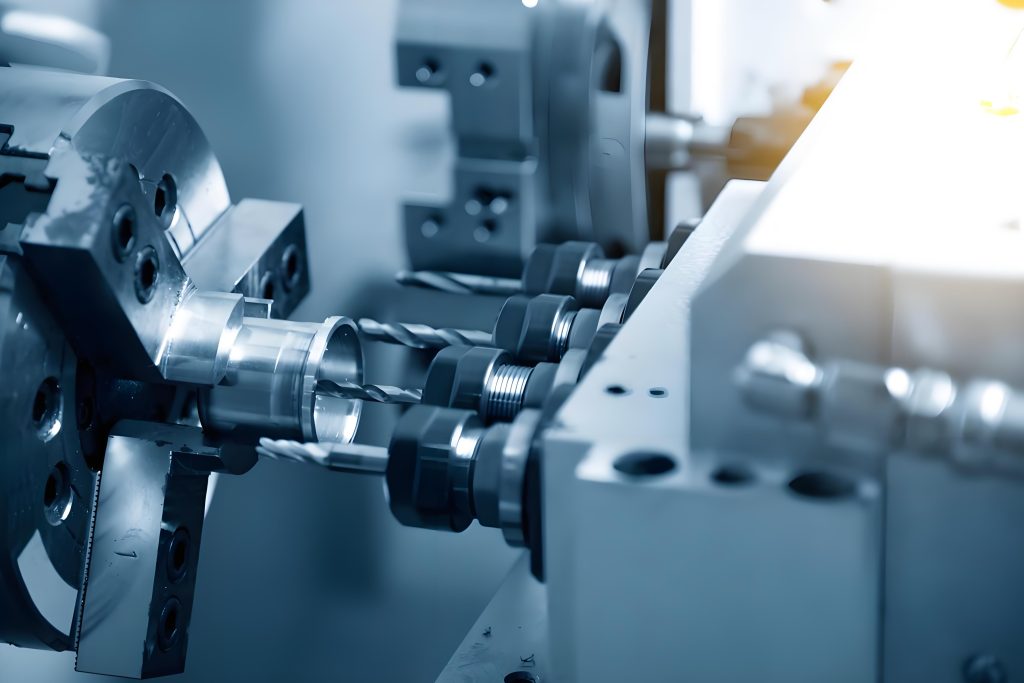
Stable CNC machining depends heavily on toolpath strategy and workholding design. RapidEfficient uses suitable roughing and finishing sequences, controlled cutting parameters, balanced material removal, and proper fixtures to reduce vibration, Verformung, Werkzeugverschleiß, and inconsistent surface quality.
4. Tolerance and Deformation Control
For precision CNC parts, small dimensional errors can lead to assembly failure, leakage, Lagerfehlausrichtung, or rejected batches. Our engineering team focuses on tolerance stack-up, Spannkraft, Bearbeitungsreihenfolge, Stressabbau, and inspection planning to help maintain stable dimensions from prototype to production.
5. Quality Inspection Before Shipment
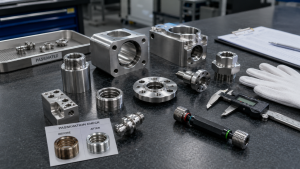
Quality control is not only a final check. It should be part of the entire machining process. RapidEfficient can provide dimensional inspection, KMG-Inspektion, surface finish checks, thread inspection, material verification, and first article inspection when required. This helps buyers reduce rework, avoid assembly problems, and receive parts that meet drawing requirements.
6. Flexible Capacity for Prototypes and Production
One common challenge in CNC machining is balancing fast lead time with stable quality. RapidEfficient combines in-house manufacturing capacity with a vetted supplier network, allowing us to support rapid prototypes, small batches, and on-demand production while maintaining consistent engineering communication and inspection standards.
FAQ:CNC Machining Industry Pain Points
What is the biggest pain point in the CNC machining industry?
The biggest pain point is usually the combination of skilled labor shortage, machine downtime, and unstable quality control. These problems directly affect delivery time, Teilgenauigkeit, and production cost.
How can buyers reduce CNC machining risks?
Buyers can reduce risk by choosing a supplier with strong DFM review, erfahrene Ingenieure, stable machining capacity, and documented inspection processes such as CMM inspection and first article inspection.
Why does CNC machining quality vary between suppliers?
Quality varies because suppliers differ in machine capability, operator experience, toolpath strategy, fixture design, Inspektionsausrüstung, und Prozesskontrolle. For tight tolerance parts, these details can decide whether a part passes or becomes scrap.
Abschluss
The CNC machining industry faces common challenges, including high setup costs, skilled labor shortages, machine downtime, material waste, Qualitätskontrolle, and tight tolerance requirements. For buyers, these issues often result in delayed delivery, unstable part quality, and higher project costs. By working with an experienced CNC machining supplier, companies can reduce these risks through DFM review, optimized machining strategies, stable inspection processes, and flexible production capacity. Ob Sie in der Luft- und Raumfahrt tätig sind, Automobil, medizinisch, oder jede andere Branche, Rapidefficient can help you overcome these challenges and achieve your manufacturing goals.
Kontaktieren Sie uns
Need help with precision CNC machined parts? Contact RapidEfficient to discuss your drawings, Materialien, Toleranzen, and production requirements. Our engineering team can help review your project and provide a practical machining solution.
- Telefon: +86 13684917827
- E-Mail: [email protected]
- Webseite: www.rapidefficient.com