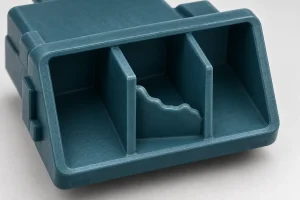

CNC machining cost in China can vary widely because every custom part has different material, geometry, tolerance, surface finish, quantity, inspection, and delivery requirements. A simple aluminum bracket may cost only a few dollars per piece in larger batches, while a complex stainless steel, titanium, copper, or 5-axis precision part can cost much more.
This guide gives practical price ranges and cost drivers for custom CNC machined parts in China. The numbers below are reference ranges, not fixed quotations. A final price still depends on the drawing, STEP file, material grade, tolerance, finish, inspection scope, quantity, and lead time.
Quick Answer: CNC machining cost in China usually depends on material, part complexity, tolerance, quantity, machine type, surface finishing, inspection, and lead time. Simple aluminum parts may be low-cost in larger batches, while stainless steel, titanium, copper, tight-tolerance, or 5-axis parts usually cost more. To get a more accurate China CNC machining quote, provide complete 2D drawings, 3D files, material grade, quantity, surface finish, and inspection requirements.
| Cost Driver | Why It Changes Price | Buyer Tip |
|---|---|---|
| Material | Aluminum, steel, brass, copper, titanium, and plastics have different material and machining costs | Choose the lowest-cost material that still meets functional requirements |
| Part complexity | Deep pockets, thin walls, undercuts, and multi-side features increase programming and machining time | Simplify geometry where possible before quoting |
| Tolerance | Tight tolerances require slower machining, better fixtures, and more inspection | Avoid ±0.005 mm unless the function truly requires it |
| Quantity | Small batches have higher unit costs because setup time is spread across fewer parts | Increase batch size when design is stable |
| Machine type | 3-axis machining is often lower-cost for simple parts, while 4-axis, 5-axis, Swiss turning, or mill-turn machining may cost more due to setup, programming, and machine time. | Match machine type to part complexity |
| Surface finish | Anodizing, plating, polishing, sandblasting, and marking add extra processing cost | Define only the finishes needed for function or appearance |
| Inspection | CMM reports, first article inspection, and full dimensional reports add cost but reduce risk | Request detailed inspection only for critical features |
| Lead time | Rush orders may require overtime, rescheduling, or expedited shipping | Plan ahead when cost matters more than speed |
Key Factors Affecting CNC Machining Costs in China
1. Material Type
The material you choose has a significant impact on cost—not only because of its price per kilogram, but also because of its ease of machining.
• Aluminum – Lightweight, affordable, and fast to machine. A great all-around choice.
• Stainless steel / carbon steel – Usually costs more than aluminum because machining is slower, tool wear is higher, and tighter process control may be needed. Stainless steel also offers better corrosion resistance than carbon steel.
• Brass / copper – Often selected for electrical or thermal performance. Brass is usually easier to machine, while copper may require more careful tool selection and chip control.
• Plastics (ABS, POM, PC) – Lower cost and easy to machine; ideal for prototypes and non-load-bearing parts.
• Titanium, Inconel, and other difficult-to-machine alloys – These materials can offer high strength or heat resistance, but they usually require slower cutting, suitable tooling, and stricter process control, which increases cost.
Tip: Don’t overspecify materials unless necessary—it’s one of the easiest ways to reduce costs.
2. Part Complexity
The more complex the part, the more time, tooling, and precision are required.
• Simple parts with basic holes, slots, or flat surfaces are relatively inexpensive.
• Parts with complex contours, tight tolerances, undercuts, or multi-faceted features take longer to program and machine, especially on 4- or 5-axis machines.
3. Quantity (Production Volume)
• Prototype or small-batch production (1-10 pieces): Higher unit costs due to lower setup time and economies of scale.
• Small-batch production (10-100 pieces): Slightly lower unit costs due to setup time spread over more parts.
• High volume production (100+ pieces): Unit cost is usually lower because setup, programming, and inspection preparation are spread across more parts. The actual cost reduction depends on part design, material, fixture strategy, inspection scope, and repeat order stability.
4. Equipment Type
Different CNC machine types have different setup time, programming time, cutting efficiency, and hourly cost::
• 3-axis CNC machining – Usually suitable for simple milled parts, plates, brackets, and basic features.
• 4-axis and 5-axis CNC machining – May reduce setups for complex geometries, but programming time and machine-hour cost are usually higher.
• CNC turning, Swiss-type turning, or mill-turn machining – Useful for cylindrical parts or parts requiring multiple turning and milling operations. Cost depends on tolerance, part length, tooling, and production quantity.
5. Surface Finishing and Post-Processing
CNC parts are not always ready for final use immediately after machining. If your part requires deburring, polishing, anodizing, plating, painting, sandblasting, passivation, or laser marking, these steps can add cost and lead time.
Surface finishing cost may range from a small add-on for simple blasting or marking to a much higher cost for anodizing, plating, polishing, masking, or cosmetic requirements. The final cost depends on material, size, finish type, masking area, cosmetic standard, and batch quantity.
6. Lead Time/Rush Orders
Need fast delivery? Faster turnaround times often increase costs, especially if overtime, expedited shipping, or production line rescheduling are required. It always pays to plan ahead.
Typical CNC Machining Cost Ranges in China
The following ranges are rough references for early budget planning. Actual CNC machining prices may be higher or lower depending on drawing complexity, material condition, tolerance, surface finish, inspection requirements, supplier capacity, and order quantity.
| Part Type | Typical Price Range | Notes |
|---|---|---|
| Simple aluminum prototype | $5–$50 per part | Basic holes, slots, flat surfaces, loose tolerance |
| Small precision aluminum part | $20–$150 per part | More setups, tighter tolerance, better surface finish |
| Stainless steel or carbon steel part | $50–$200+ per part | Higher tool wear and slower cutting speed |
| Copper or brass component | $30–$180+ per part | Conductivity and surface protection may affect cost |
| 5-axis complex housing | $150–$800+ per part | Fewer setups but higher machine rate and programming cost |
| Titanium or high-temperature alloy part | $300–$1,000+ per part | Specialized tooling, slower cutting, and strict process control |
Now that you understand the various factors, here’s what you can expect:
Reference Machine-Hour Cost:
• Standard 3-axis CNC machining: often lower cost for simple parts and common materials.
• Precision machining, 5-axis machining, difficult materials, or urgent work: usually higher cost because programming, tooling, inspection, and machine time increase.
Hourly rate alone does not determine the final part price. Setup time, programming, material, tooling, tolerance, inspection, surface finish, scrap risk, and quantity usually matter more for custom CNC parts.
Piece Pricing:
• Simple aluminum parts (low volume): $5 to $50 per piece
• Complex parts or stainless steel: $50 to $200+ per piece
• Complex titanium or high-temperature alloy parts: $300 to $1,000+ per piece
Example: A simple aluminum bracket around 10 cm x 10 cm x 2 cm may fall into a low-cost range in small-batch production, but the final price still depends on material grade, tolerance, hole features, surface finish, inspection, and quantity.
Engineer’s Note:
The cheapest CNC quote is not always the lowest real cost. If a supplier ignores tolerance stack-up, fixture stability, surface finishing, or inspection requirements, the part may become expensive later through rework, scrap, or assembly failure.
For precision CNC parts, we always recommend reviewing the drawing before quoting. Small design changes—such as relaxing non-critical tolerances, increasing internal radii, simplifying deep pockets, or choosing a more machinable material—can reduce machining cost without sacrificing function.
Tight tolerance is one of the most common hidden cost drivers. For precision parts, see our guide on CNC machining tolerance stack-up to understand how small errors increase manufacturing risk.
For critical CNC parts, inspection cost should be evaluated together with part risk. Learn what buyers should check in a CMM inspection report before approving production.
How to Get a More Accurate CNC Machining Quote from China
A CNC machining quote is more accurate when the supplier has enough technical information before pricing. If the RFQ only includes a general part description, the supplier may need to make assumptions about tolerance, material, finishing, inspection, and packaging. These assumptions can lead to price differences later.
To reduce quote uncertainty, buyers should provide:
| RFQ Information | Why It Affects Cost |
|---|---|
| 3D CAD file | Helps estimate machining time, setup count, and tool access |
| 2D drawing | Confirms tolerances, threads, datums, surface finish, and inspection points |
| Material grade | Affects raw material price, tool wear, and machining speed |
| Quantity | Changes setup cost per part and production efficiency |
| Surface finish | Anodizing, plating, polishing, blasting, or marking may add cost |
| Critical tolerances | Tight features may require slower machining and more inspection |
| Inspection requirement | CMM report, material certificate, or first article report may add time and cost |
| Lead time | Rush orders may require schedule changes or faster shipping |
Rapid Efficient can review complete RFQ files, material requirements, tolerance risks, surface finish needs, inspection scope, packaging, and delivery requirements before quotation.