
结论第一
6061-T6/T651 是需要强度的 CNC 加工散热器底座和冷却外壳的实用选择, 线程, 和安装特点. 最终选择还应考虑导热性, 几何学, 以及制造路线.
如果最大导热系数是唯一优先考虑的因素, 1050 / 1070 纯铝牌号 可以超越更强的合金.
如果您需要挤压型材和装饰性冷却部件, 6063 铝 通常是明智的选择.
最好的合金取决于零件的制造方式,而不仅仅是电导率数值.
为什么要用铝来散热
铝仍然是最好的冷却材料之一,因为它结合了:
- 高导热率
- 低密度
- 良好的耐腐蚀性
- 易于机械加工或挤压
- 有竞争力的成本
与铜相比, 铝的重量更轻,材料成本更低.
这就是铝占主导地位的原因:
- LED 散热器
- 电机外壳
- 电动汽车电子设备冷却板
- 电源
- CNC 隔热罩
快速比较表
| 合金 | 导热系数 | 力量 | 机械加工性 | 最佳用例 |
|---|---|---|---|---|
| 1050 | 出色的 | 低的 | 公平的 | 最大传热 |
| 1070 | 出色的 | 低的 | 公平的 | 电气 / 冷却片 |
| 5052 | 好的 | 中等的 | 公平的 | 耐腐蚀冷却部件 |
| 6061 | 好的 | 高的 | 出色的 | 数控散热器 |
| 6063 | 非常好 | 中等的 | 好的 | 挤压散热器型材 |
典型热导率值
- 1050 / 1070: 大约 230 带/(m·K), 取决于等级和脾气.
- 6063-T6: 大约 201 带/(m·K) 20°C 时.
- 6061-T6 / T651: 大约 167 带/(m·K) 20°C 时.
- 5052-氧: 大约 138 带/(m·K) 20°C 时.
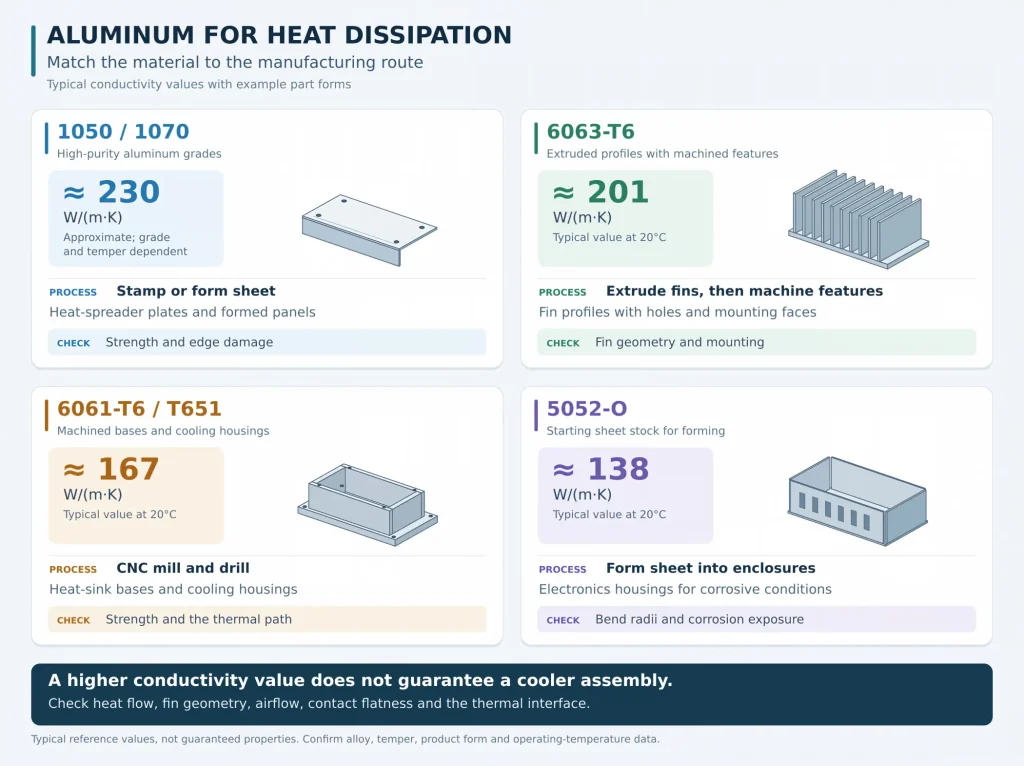
这些是典型的参考值, 不保证每种产品形式或材料条件的性能. 用于热设计, 确认供应的合金, 脾气, 产品形态, 和预期工作温度下的导热率.
为什么 6061 适用于 CNC 冷却零件
6061-当冷却组件还需要强度和机加工安装功能时,T6/T651 是一个实用的选择.
为什么?
因为散热部件还需要:
- 线程
- 安装孔
- 平底座
- 结构刚性
- 阳极氧化兼容性
6061 提供强大的热性能,同时仍能干净地加工并保持公差.
工程师注意事项
许多买家追求最大电导率数字,但忽视了制造现实.
较软且会变形的合金, 毛刺, 或容易弯曲,在生产中可能比具有稳定几何形状的导电性稍低的合金表现更差.
当纯铝获胜时
等级如 1050 和 1070 提供优异的导电性.
它们在以下情况下很有用::
- 力量不太重要
- 该零件是冲压或成型的
- 散热是唯一的使命
- 需要轻质电气冷却板
但纯铝较软,不太适合精密 CNC 加工.
6063 用于挤压散热器
许多商用散热器都是由 6063 铝.
为什么?
因为 6063 美丽地挤压到:
- 薄翅片型材
- 长散热导轨
- LED 冷却体
- 建筑冷却形状
它的阳极氧化效果也很好.
6063 非常适合挤压散热器型材,也可以加工以添加孔, 线程, 和安装面. 6061-T6/T651 是具有较高强度要求的机加工底座和外壳的有用选择.
5052 适用于恶劣环境
5052 不是人们想到的第一个用于冷却的合金, 但当耐腐蚀性很重要时它会很有用.
例子:
- 船用电子箱
- 户外控制柜
- 潮湿的工业外壳
与许多替代品相比,它具有可靠的热性能和更好的环境耐久性.
导热系数与实际冷却性能
这是很多买家常犯的错误.
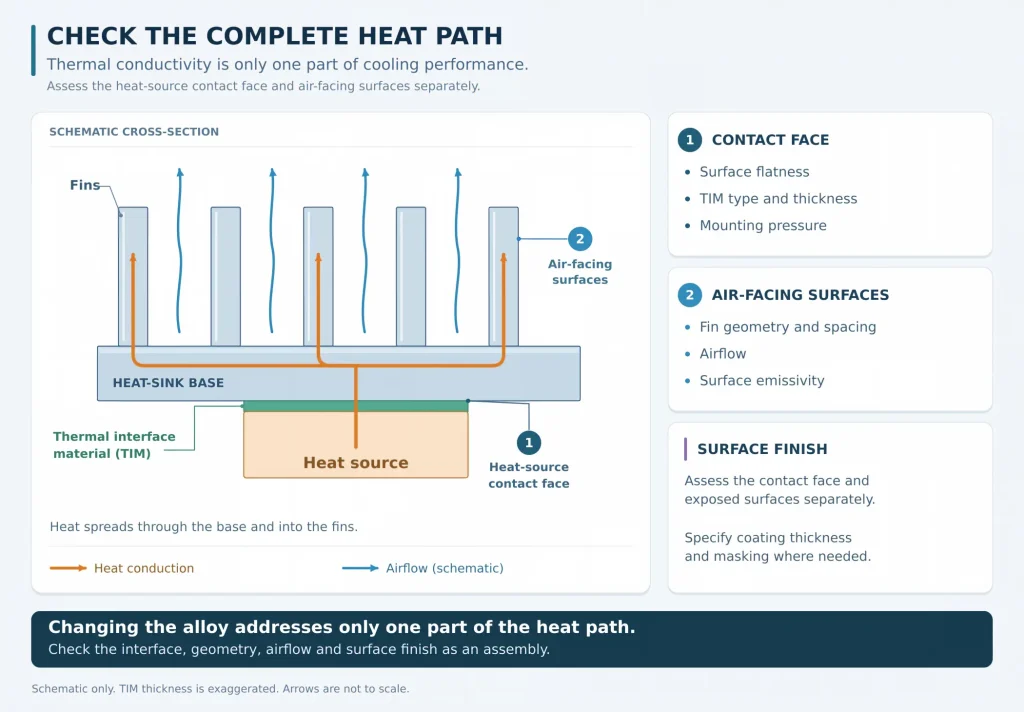
更高导电率的合金可以 并不总是 意味着更凉爽的最终产品.
因为总冷却性能还取决于:
- 翅片设计
- 气流路径
- 表面平坦
- 涂层选择
- 安装压力
- 热界面材料 (TIM)
在许多实际装配中, 界面处的接触热阻是比合金电导率更大的瓶颈.
更平坦的安装底座通常比追求最高导电率的合金更重要.
设计不良的纯铝散热器可能会输给加工精良的散热器 6061 设计.
铝散热器与铜散热器
铜通常提供更高的导热率, 而铝的重量要轻得多,并且通常更容易制造成大型外壳, 基地, 鳍, 和集成冷却结构.
正确的选择不仅仅取决于电导率:
| 设计优先 | 更实用的起点 |
|---|---|
| 紧凑区域内的最大热扩散 | 铜或铜嵌件 |
| 重量轻 | 铝 |
| 大型 CNC 加工冷却外壳 | 6061 铝 |
| 挤压翅片型材 | 6063 铝 |
| 局部热通量高,总重量轻 | 铜底座或带铝翅片的嵌件 |
| 对成本敏感的重复生产 | 铝 |
| 导电性和导热性同时存在 | 铜, 取决于设计 |
铜散热器不会自动产生较低的工作温度. 最终的表现还取决于:
- 接触平面度
- 热界面材料
- 翅片几何形状
- 气流或液体流
- 安装压力
- 热源尺寸
- 表面处理
- 零件总质量和可用空间
使用特定等级的材料数据,而不是将通用“铝”与通用“铜”进行比较。报价时还应考虑材料等级, 零件尺寸, 数量, 加工时间, 工具访问, 精加工, 及检验要求.
混合结构可以仅在热源附近使用铜,而在较大的主体或翅片上使用铝. 这可以提供更好的局部散热平衡, 总重量, 可制造性, 和成本.
表面光洁度也很重要
阳极氧化可以增加表面发射率并改善辐射冷却, 尤其是在自然对流或低气流设计中. 单独使用黑色染料并不能证明更好的热性能; 透明阳极氧化可以具有相似的发射率.
将热源接触面与暴露于空气的表面分开评估. 在接触面处, 涂层厚度和电导率会影响热阻. 在暴露的表面上, 发射率和气流也很重要.
比较阳极氧化和粉末涂层的实际涂层厚度, 接触条件, 和气流. 指定热源接触面所需的任何遮蔽, 并将涂层和热界面材料纳入热阻评估中.
👉 相关指南
使用 6061 适用于 CNC 散热器项目
6061-T6/T651 是具有结构和安装要求的 CNC 加工冷却部件的实用选择.
它平衡:
- 冷却性能
- 加工速度
- 外貌
- 尺寸稳定性
- 总成本
👉 案例研究示例
隐藏的工程错误
有些团队选择超软纯铝以获得更好的导电性, 然后以后需要:
- 螺纹孔
- 精密平面度
- 化妆品阳极氧化
- 结构安装
这常常会造成制造难题.
常问问题
什么铝材导热性能最好?
纯铝牌号如 1050 或者 1070 通常优于结构合金.
是 6061 有利于散热器?
是的. 6061-T6/T651 适用于多种机加工散热器, 尤其是当力量, 线程, 和安装功能很重要.
是 6063 比 6061 用于冷却?
6063-T6 通常比 6061-T6 具有更高的导热率. 然而, 最终工作温度还取决于散热器的几何形状, 空气流动, 和热界面.
是 6061 比 6063 用于 CNC 散热器?
并不总是. 6061-T6通常提供更高的强度, 而6063-T6一般导热系数较高. 两者均可机加工. 根据负载选择合金, 几何学, 可用库存, 和热要求.
铜比铝好吗?
适用于需要强度和安装功能的 CNC 加工散热器和外壳, 考虑 6061-T6/T651.
最后的想法
如果您需要最佳实用选择, 选择 6061.
如果您需要最大电导率, 考虑 1050 / 1070.
如果您需要挤压翅片型材, 考虑 6063.
散热效果最好的铝取决于设计, 过程, 和总体制造现实.
需要帮助选择合适的冷却合金?
将您的图纸或项目详细信息发送给我们.
快速高效可以审核您的图纸, 材料要求, 表面饰面, 宽容, 和应用需求,帮助选择适合 CNC 散热器的铝牌号, 冷却外壳, 和热管理部件.