
Quick Answer: 5052 vs 6061 Aluminum
Choose 6061-T6 or 6061-T651 when the part requires extensive CNC milling, drilled or tapped holes, load-bearing features, or machined mounting surfaces.
Choose 5052-H32 or 5052-H34 when the part is mainly cut, bent, welded, or formed from sheet and corrosion resistance is more important than machining efficiency.
For most fully machined parts, 6061 is the more practical choice. For formed sheet-metal parts, 5052 is often the better fit. The drawing should specify the alloy, temper, and stock form rather than only “5052” or “6061.”
What Is 5052-H32 or 5052-H34 Aluminum?
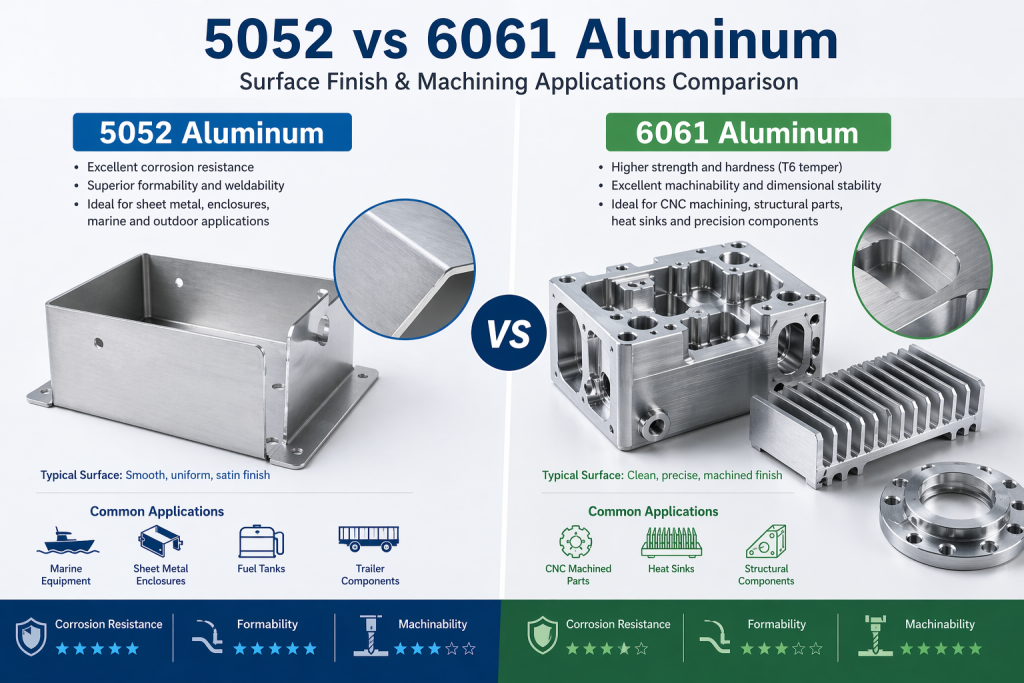
5052 is a non-heat-treatable aluminum-magnesium alloy known for good corrosion resistance, weldability, and sheet-metal forming performance.
Common tempers include:
- 5052-H32: A widely used sheet temper that balances strength and formability.
- 5052-H34: Stronger and harder than H32, but generally less suitable for demanding bends.
- 5052-O: A softer annealed condition used when maximum forming ability is required.
5052 is commonly supplied as sheet or plate and is frequently used for bent covers, enclosures, tanks, welded assemblies, and parts exposed to humid or marine environments.
It can be machined, but its softer and more ductile cutting behavior may produce burrs, built-up edge, and less predictable surface finishes than 6061-T6.
What Is 6061-T6 or 6061-T651 Aluminum?
6061 is a heat-treatable aluminum-magnesium-silicon alloy widely used for structural and CNC-machined components.
Common tempers include:
- 6061-T6: A heat-treated condition commonly available as bar, extrusion, sheet, and plate.
- 6061-T651: A stress-relieved condition commonly used for plate and machined components where material stability is important.
- 6061-T4: A softer condition with better forming performance than T6, but lower strength.
Compared with common 5052 sheet tempers, 6061-T6 and T651 generally provide higher strength, better rigidity, and more suitable cutting behavior for milled pockets, drilled holes, threads, and precision machined features.
For a broader comparison of aluminum grades used in machining, see our guide to the best aluminum for CNC machining.
Quick Comparison Table
| Feature | 5052 Aluminum | 6061 Aluminum | Better Fit |
|---|---|---|---|
| Common tempers | H32, H34, O | T6, T651, T6511 | Specify the temper on the drawing |
| Strength | Moderate to high, depending on temper | Higher yield strength and hardness in T6/T651 | 6061 for load-bearing machined features |
| Corrosion resistance | Excellent, especially in many marine environments | Good general corrosion resistance | 5052 for saltwater-exposed sheet parts |
| CNC machinability | Fair; more prone to burrs and built-up edge | Generally better for milling, drilling, and tapping | 6061 for extensive machining |
| Formability | Excellent in common sheet tempers | Limited in T6; better in softer tempers | 5052 for bending and forming |
| Weldability | Very good | Good, but strength can decrease near T6 welds | Review the joint and post-weld load |
| Threaded holes | Possible; longer engagement or inserts may be needed | Generally better for repeated assembly | 6061 for compact threaded features |
| Anodizing | Can be anodized; mill and forming marks may remain visible | Commonly used for anodized machined parts | Approve samples when color is critical |
| Typical manufacturing route | Cutting, bending, forming, and welding sheet | Milling plate, bar, or extrusion | Choose by production method |
Alloy price alone does not determine the finished-part cost. Stock form, machining time, tool wear, bending, welding, deburring, tolerances, and surface finishing can have a larger effect. See our guide to CNC machining cost in China for a broader breakdown.
Strength vs Formability
This is the real trade-off.
The comparison should be made between specific tempers, such as 5052-H32 and 6061-T6. Strength and bendability can change with temper, thickness, grain direction, and forming tooling.
5052 bends better and resists cracking during forming.
6061-T6 generally provides higher yield strength and hardness, making it more suitable for load-bearing machined features. Final part rigidity still depends heavily on wall thickness, ribs, unsupported span, and overall geometry.
If your part starts as sheet and needs bending, 5052 is often the smarter path.
If the part starts as plate, bar, or extrusion and requires extensive CNC machining, 6061 usually wins.
Engineer’s Note
Many buyers choose stronger material when they actually need better formability.
That often increases cost without solving the real design problem.
CNC Machining Performance
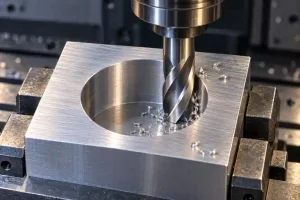
For milled, drilled, and tapped parts, 6061 usually wins.
Why?
Because 6061-T6 generally produces cleaner chips and is more convenient for milling, drilling, and tapping. This can make process control more predictable, but final tolerance still depends on stock condition, part geometry, clamping, machining sequence, tool condition, and inspection.
5052 is softer and more “gummy” than 6061-T6. It tends to smear instead of shear cleanly, which can lead to:
- Burrs
- Built-up edge (BUE) on tools
- Surface inconsistency
- Tool loading
- Slower cycle times
That often increases total machining cost even when the raw material price looks attractive.
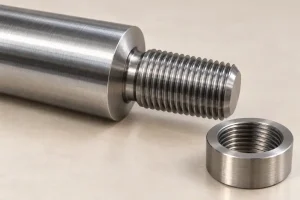
Threaded features also deserve attention. 6061-T6 is generally the safer choice for short thread engagement, smaller tapped holes, or fasteners that will be removed repeatedly.
5052 can still be tapped, but the design may require longer thread engagement, lower tightening torque, through-bolts, or threaded inserts. The drawing or RFQ should state the thread size, engagement depth, assembly torque, and expected service cycles.
Chemical Composition Impact
5052 gains its reputation mainly from magnesium-rich chemistry, which supports corrosion resistance and forming performance.
6061 uses magnesium-silicon chemistry and can be heat treated to conditions such as T6 and T651. These conditions provide higher yield strength and hardness than common 5052-H32 sheet, which supports load-bearing features, tapped holes, and heavily machined components.
The alloy chemistry does not determine the result by itself. Temper, stock form, thickness, material direction, machining sequence, and part geometry must also be considered.
This is why 6061 is often preferred for machined housings, mounts, and load-bearing components.
Corrosion Resistance
5052 generally offers stronger corrosion resistance than 6061 in many marine, humid, and salt-exposed applications.
That is why it is common in:
- Marine hardware
- Outdoor enclosures
- Fuel tanks
- Trailer panels
6061 still performs well, but 5052 usually has the edge in aggressive environments.
Surface Finish & Anodizing
6061 is generally preferred for cosmetic anodizing.
It usually gives:
- More uniform appearance
- Cleaner machined texture
- Better color consistency
5052 can be anodized, but finish appearance may vary depending on sheet condition and fabrication history.
For machined parts requiring a controlled black or clear anodized appearance, 6061 is often the more predictable starting point. Final color and texture still depend on the material lot, stock form, fabrication history, surface preparation, and anodizing process.
Best Use Cases for 5052
Choose 5052 for:
- Bent sheet metal covers
- Marine brackets
- Outdoor electrical enclosures
- Fuel or fluid tanks
- Corrosion-critical housings
Best Use Cases for 6061
Choose 6061 for:
- CNC housings
- Heat sinks
- Mounting plates
- Precision brackets
- Structural machined parts
Cost Considerations
Material pricing changes by market conditions.
But in many projects:
- 5052 can be economical when the part is cut, bent, and welded from sheet.
- 6061 can be economical when the part requires extensive milling, drilling, tapping, and deburring.
- Total cost depends on stock form, material utilization, geometry, quantity, tolerances, surface finish, and inspection requirements.
Cheap material does not always mean cheaper finished parts.
Hidden Engineering Mistake
Some teams select 5052 because it resists corrosion better, then later require:
- tapped holes
- tight tolerances
- milled pockets
- cosmetic anodizing
At that point, 6061 often becomes the better total-value option.
Another common mistake is specifying only “5052” or “6061” on the drawing. The temper and stock form should also be defined because 5052-H32 sheet, 6061-T6 extrusion, and 6061-T651 plate do not behave the same during bending, machining, welding, or finishing.
For cosmetic parts, also define the anodizing type, target color, visible surfaces, bead-blast requirements, and masked areas. Review the available surface finishes for CNC machined parts before finalizing the drawing.
What to Include in Your RFQ
Before requesting a quotation, provide:
- The alloy and temper, such as 5052-H32, 5052-H34, 6061-T6, or 6061-T651
- The required stock form and material thickness
- STEP and 2D drawing files
- Functional tolerances, datums, threads, and inspection requirements
- Surface finish, visible surfaces, color requirements, and masking notes
- Prototype or production quantity
These details help the supplier evaluate material suitability, machining risks, forming requirements, finishing, and total part cost before production.
FAQ
Is 5052 stronger than 6061?
Not as a universal rule. Common 6061-T6 generally has higher yield strength and hardness than 5052-H32, but the exact comparison depends on temper, thickness, and stock form.
Is 5052 better for marine use?
5052 is often preferred for formed sheet parts exposed to saltwater or humid environments. Final corrosion performance still depends on coatings, fasteners, drainage, galvanic contact, and service conditions.
Which alloy is better for CNC machining?
6061-T6 or T651 is usually the more practical option for extensive milling, drilling, tapping, and precision machined features. 5052 can still be machined when corrosion resistance or sheet fabrication is the main priority.
Which alloy is easier to bend?
5052-H32 is generally easier to form and bend than 6061-T6. The required bend radius still depends on temper, material thickness, grain direction, and tooling.
Can 5052 and 6061 both be anodized?
Yes. Both alloys can be anodized. Material lot, stock form, machining marks, forming, welding, surface preparation, and anodizing conditions can affect the final appearance.
Can you weld 6061 to 5052?
Yes, the two alloys can be welded using an appropriate process and filler material. The design should account for weld distortion, corrosion, and strength reduction near the 6061-T6 heat-affected zone.
Should the drawing specify the temper?
Yes. Calling out only 5052 or 6061 leaves important properties undefined. Include the temper and stock form whenever they affect strength, machining, forming, welding, or dimensional stability.
Final Thoughts
Choose 5052-H32 or H34 when the part is mainly formed or welded from sheet and corrosion resistance is a priority.
Choose 6061-T6 or T651 when the part requires extensive CNC machining, tapped features, higher yield strength, or machined mounting surfaces.
The final decision should consider temper, stock form, geometry, manufacturing route, surface finish, and inspection requirements—not only the alloy number.
Need Help Choosing 5052 or 6061 Aluminum?
Send the STEP file, 2D drawing, quantity, material temper, tolerances, surface finish, and inspection requirements.
Rapid Efficient can review whether 5052 or 6061 is the more practical choice before quotation and help identify risks related to machining, bending, threaded holes, anodizing, and dimensional control.
Learn more about our CNC aluminum machining services.