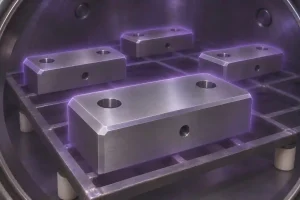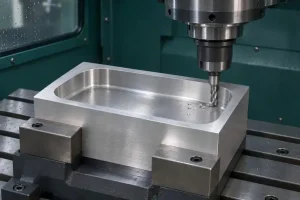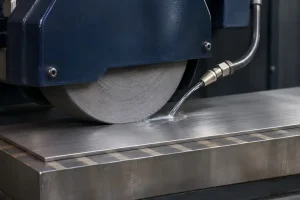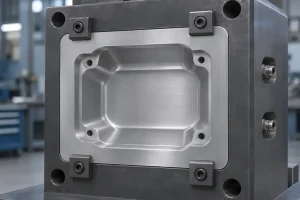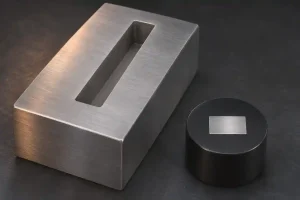

可以订购带有氮化耐磨面和最终磨削操作的钢制导向块. Those instructions can conflict: the grinding needed to reach the finished height may remove a surface layer that the design expects to retain. A hardness value on the order does not resolve that conflict.
For CNC steel parts, planning the nitriding process starts with the required condition of each finished surface. Decide what layer the wear face must retain, which features need protection from nitriding, and how the proposed thermal cycle fits the steel’s existing condition. Then agree the machining and inspection stages around those decisions.
Choose What the Wear Face Must Retain
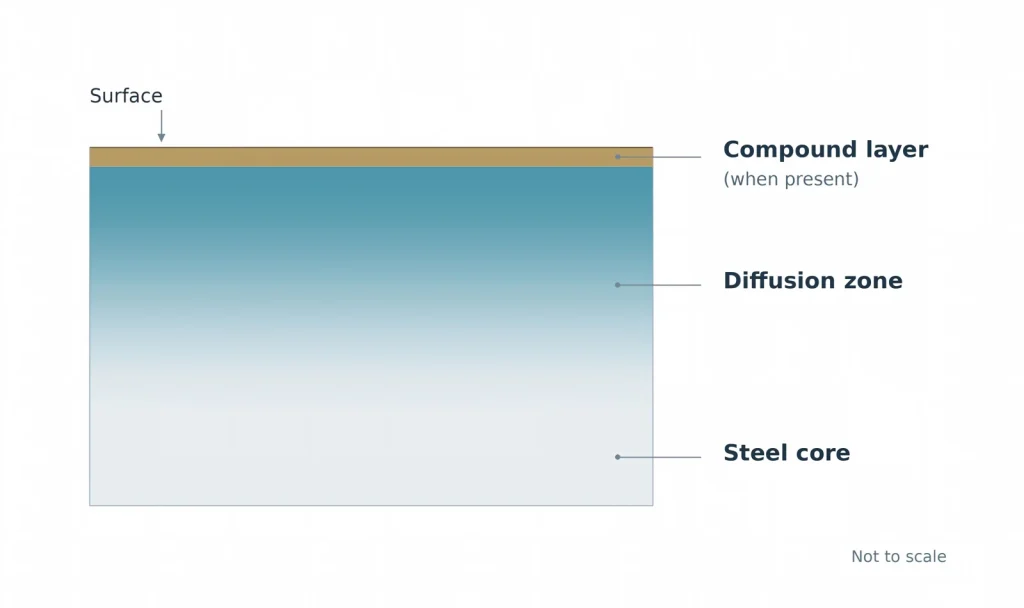
Nitriding introduces nitrogen into the steel surface. In suitable steels, this produces a hardened diffusion zone and can also form an outer compound layer containing iron nitrides. The compound layer is often called the white layer. Its thickness and the depth of hardening beneath it describe different features of the treated surface.
The compound layer is not automatically a defect. A design may require it, limit its thickness, or require a surface without it under an agreed examination method. That choice depends on the working contact and subsequent treatments. Calling for “nitriding” alone leaves the choice open.
Nitrex’s controlled gas-nitriding description explains how compound-layer growth can be controlled separately from development of the diffusion zone. This supports specifying both requirements; it does not establish that every furnace cycle can produce any requested combination on any steel.
For the guide block, make the required condition of the sliding face explicit before choosing the finishing route.
| Requirement on the finished wear face | Consequence for the proposed route | Point to resolve before ordering |
|---|---|---|
| A compound layer must remain within a specified thickness range | Later polishing or grinding must preserve the required layer as well as the underlying hardness condition. | What removal is permitted, and how will the remaining layer be checked? |
| Only a maximum compound-layer thickness is specified | Meeting that maximum does not, 就其本身而言, establish a minimum retained thickness or the required hardness depth. | Does the application also need a minimum layer thickness, or is its absence acceptable? |
| The compound layer must be absent under the agreed examination method | The route may control its formation or remove it later, provided the remaining surface meets the other requirements. | Which process and examination will establish that condition after finishing? |
Keep nitriding and nitrocarburizing distinct in the purchase specification. Nitrocarburizing introduces carbon as well as nitrogen. A supplier proposing that route needs to identify it explicitly so its resulting surface condition can be assessed against the design.
A Masked Feature Still Experiences the Heat Cycle
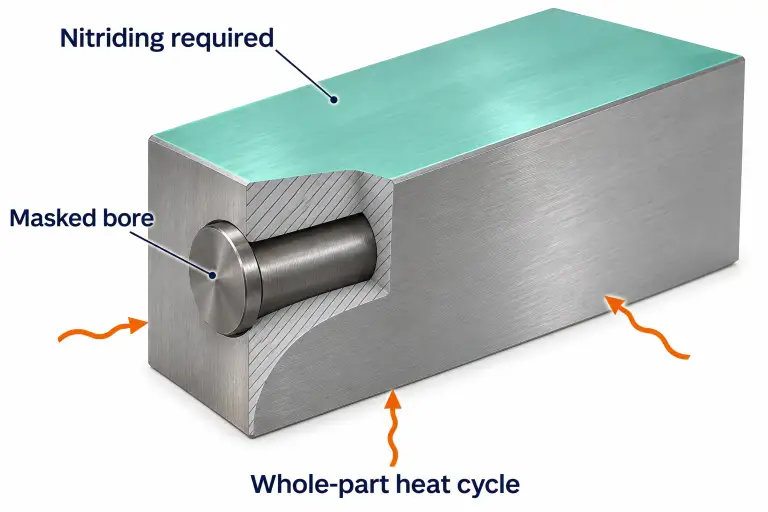
The same guide block may have a sliding face that needs nitriding, a locating bore that should remain unnitrided, and mounting threads that need protection. Mark those regions on the drawing, including where treatment may end. An unspecified transition at a bore mouth or face edge can put the treatment boundary inside a working contact.
The masking method must suit the process. Bodycote’s plasma-nitriding guidance describes shielding selected areas with metal covers. A proposed gas-nitriding route needs its own suitable masking method; a cover arrangement should not be assumed to work identically in both processes. Ask how the actual bore, thread and boundary will be protected, including access for cleaning and mask removal.
Masking controls nitrogen exposure; it does not keep the protected feature at room temperature. The bore and the rest of the block still experience the thermal cycle. “Unnitrided” therefore does not mean that the original hardness, stress state and dimensions are automatically unchanged.
Supply the exact steel grade and prior heat-treatment condition. Substituting another steel with the same starting hardness does not establish the same nitriding response. For hardened and tempered steel, review the previous tempering treatment against the proposed nitriding temperature and duration. Uddeholm’s tool-steel heat-treatment guide explains the need for a stable core and prior tempering above the nitriding temperature to avoid unwanted core softening. The actual cycle must still suit the specified grade and required core properties.
Nitriding can also change dimensions through growth and stress-related movement. Do not treat the compound-layer thickness as a uniform coating allowance that can simply be added to every dimension. For a close locating fit, agree how the bore will reach its final size and when that size will be verified.
Fit Final Grinding Inside the Layer Requirement
Finishing before nitriding can reduce the amount of material that must be removed afterward. It also means that the final treatment must leave the part within its specified size, form and surface requirements. Finishing afterward offers a way to correct selected surfaces, but consumes some of the treated material.
On the guide block, grinding the wear face reduces its height relative to an unchanged mounting face. It also removes material from the nitrided surface zone, so the remaining compound-layer thickness and hardness depth must be assessed from the new working surface. A removal amount that appears small beside the block thickness may still be significant beside the compound-layer thickness or hardness depth.
If the compound layer is required to remain, the heat-treatment and grinding proposals must leave a feasible window for both its final thickness and the finished block height. If the layer must be removed, the process must still preserve the specified hardness depth and surface condition. Grinding to size alone does not establish either result.
The proposed removal must include local correction for shape, not just an average allowance. A face that needs more correction at one end can lose more of its treated region there. Agree what happens if the required correction exceeds the approved removal limit before the part reaches the grinder.
Also identify surfaces the finishing tool cannot reach. Grinding the open wear face says nothing about a recessed land or an internal shoulder that must meet a similar layer requirement. Those features may need a different treatment or finishing plan. The supplier should identify the reachable surfaces and the condition expected on the remaining ones.
Measure Layer Thickness and Hardness Depth Separately
Compound-layer thickness and nitriding hardness depth need different evidence. A prepared cross-section can show the compound layer at the selected location. A hardness profile measures how hardness changes below the surface; the specified limiting-hardness criterion determines the reported nitriding hardness depth. For final acceptance, reference the depth to the finished surface. A single surface-hardness reading cannot supply that profile.
ISO 18203:2026 includes the measurement of nitriding hardness depth within its scope. Where this standard is specified, identify the edition and apply its procedure. The order must also define the required depth and test locations; the standard’s scope is not a part-specific acceptance limit.
For the guide block, choose sections that address the actual requirements: the sliding face, a treatment boundary, or a difficult internal feature where applicable. A convenient flat coupon can support process control, but it does not automatically establish the condition inside a masked bore or beside a transition. Agree what the specimen represents and whether an additional production part is needed for sectioning.
这 hardness-testing plan should identify the method, test force, permitted locations and specimen preparation. Keep core-hardness results separate from surface results. Record whether each examination was made before or after final material removal, and ensure the evidence supports the delivered condition.
When requesting 数控加工服务, include the steel condition, marked treatment regions, required layer properties and permitted finishing removal. Ask for a proposal that connects machining, specialist nitriding and final verification for that part. 掩蔽, limited grinding allowance and destructive specimens can each change the quoted scope, even when two offers both say “nitrided.”