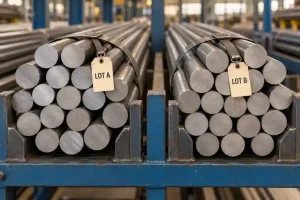

Titanium can be worth considering when a stainless steel CNC part misses a weight target or faces a corrosion problem that a suitable titanium grade can address. The material change also changes the surfaces touching the rest of the assembly. A titanium body that withstands the liquid around it may still need a different sliding sleeve, thread pairing, or wet-joint arrangement.
The useful comparison is therefore between complete, specified part options. Keep stainless steel in the comparison when it meets the service requirements. Evaluate titanium against the constraint it is meant to solve, then check which existing mating parts and test results still apply.
Follow the Material Change Through the Cartridge
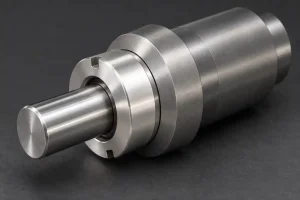
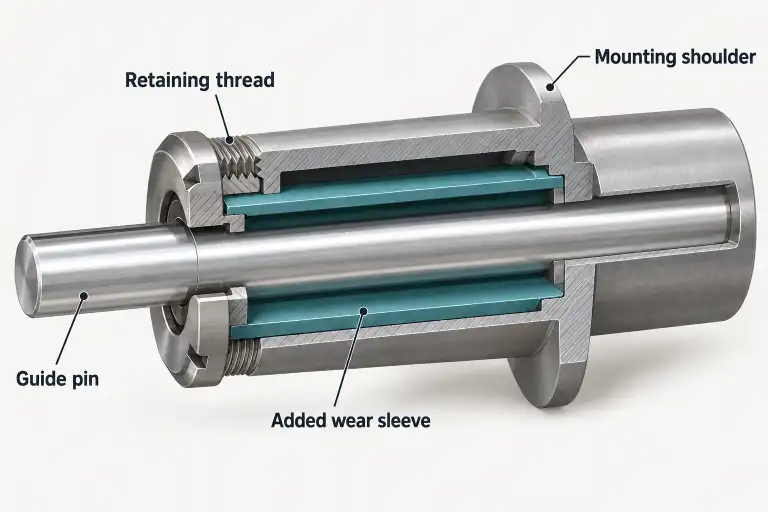
Consider an illustrative guide cartridge with a 316L stainless steel body, a bore carrying a sliding pin, a threaded retaining ring, and a mounting shoulder that can get wet. Suppose the current arrangement has been tested for its intended duty. A supplier proposes making the body from titanium while keeping its dimensions and the other components unchanged. This is a comparison scenario, not a customer test record.
First make the proposed titanium grade explicit. Commercially pure titanium (Grade 2) and Ti-6Al-4V (Grade 5) are different candidates; the greater strength available from Grade 5 does not establish better sliding performance. Likewise, 304, 316L, and heat-treated 17-4 PH should not be treated as one stainless steel option. The grade, product specification, and supply or final heat-treatment condition belong in each proposal. Our stainless steel machining guide explains the manufacturing differences within that family.
Then follow the changed material through the cartridge:
| Existing evidence for the stainless cartridge | What changes when the body becomes titanium | What needs review before approval |
|---|---|---|
| Exposure testing of the outer 316L body in the specified liquid | The wetted body material changes, even if its outline stays the same | Compatibility of the proposed titanium grade with the actual liquid, temperature, cleaning cycle, and any trapped-fluid locations |
| Performance of the mounting shoulder against its mating metal | The electrically connected metal pair changes wherever liquid reaches both surfaces | The mating grade, conductive paths, exposed areas, and whether the proposed isolation or drainage arrangement is effective |
| Wear results for the sliding pin against the original bore surface | A direct-running pin now contacts titanium; adding a sleeve creates another interface | Pin-to-bore or pin-to-sleeve performance, plus sleeve retention and the sleeve-to-body fit when a sleeve is used |
| Repeated assembly of the retaining ring on the original body thread | One member of the thread pair changes | Both thread materials and surface conditions, permitted lubricant, assembly method, and repeated removal requirements |
The old results remain useful because they describe the baseline. They do not, by themselves, approve a new contact pair. Separate evidence about unchanged dimensions from evidence about friction, wear, corrosion, and assembly behavior.
A Sound Titanium Body Can Leave a Problem at the Wet Joint
Start with the actual exposure. “Outdoor,” “washdown,” or “corrosion resistant” does not identify a chemical concentration, temperature, cleaning agent, or period of wet contact. An exposed surface that drains freely also differs from liquid trapped under a shoulder or inside a thread.
Both stainless steel and titanium depend on protective surface films, but their suitability varies with grade and environment. A successful open-surface exposure test does not establish that a tight crevice is acceptable. Titanium should not be specified as immune to every liquid or crevice condition.
The mounting shoulder adds another question: what happens to the other metal? Galvanic corrosion requires an electrically connected pair and an electrolyte linking the exposed surfaces. In a suitable wet environment, passive titanium can accelerate attack on a less noble mating metal even while the titanium remains sound. TIMET’s corrosion-resistance handbook explains this coupling and the importance of relative exposed areas. A large cathodic area connected to a small anodic area can be an unfavorable arrangement.
That is a reason to assess the actual joint, not to reject every titanium-and-stainless assembly. The materials’ behavior in the specific environment matters. Record the mating grade and condition instead of describing everything around the cartridge as “steel.”
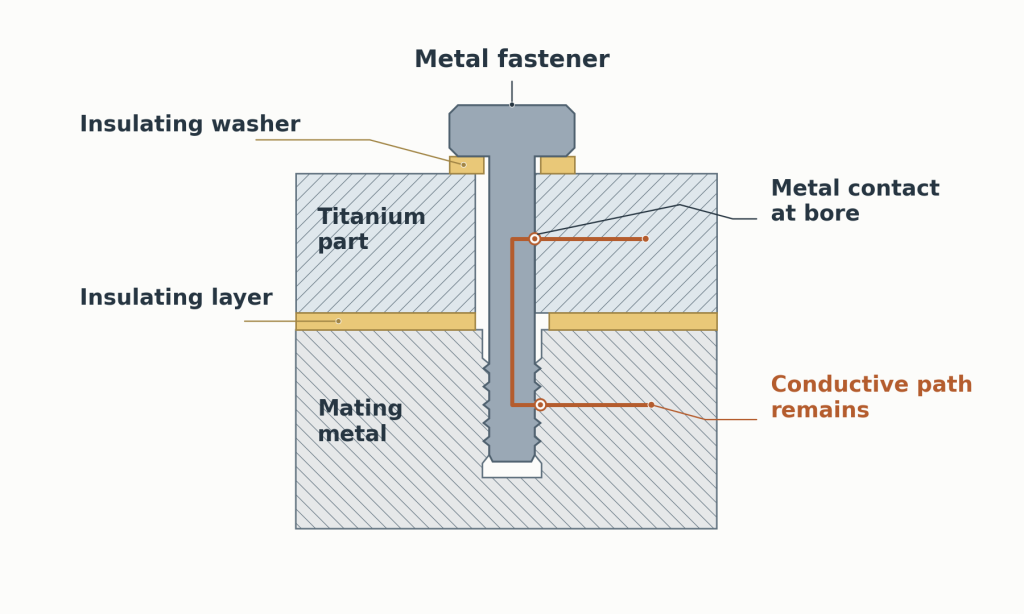
If electrical isolation is proposed, review the complete conductive path. An insulating washer under a fastener head does not isolate a joint if metal contact remains through the fastener shank or another connection. The isolation components must also suit the load, temperature, and required fit. Include them in the proposed assembly rather than leaving isolation as a note for the buyer to resolve later.
Keep Wear and Thread Approval Tied to the Actual Pair
The sliding bore and retaining thread cannot be approved from corrosion resistance or tensile strength alone. Titanium and stainless steel can both suffer galling: adhesive damage in which material transfers between contacting surfaces during relative movement. Calling the proposed material “stronger” does not resolve that mechanism.
For the guide pin, identify both contacting surfaces. The review needs their materials, hardness or treatment where specified, surface texture, running clearance, load, motion, and permitted lubrication. A lubricated trial does not establish performance when the application must run dry. A test with a different pin material does not directly qualify the proposed pair either.
A separate wear sleeve may allow the titanium design to retain the original pin and the original bore-contact material. That can reduce the extent of the change, but it does not automatically preserve the previous approval. Check that sleeve installation, support, alignment, and the resulting bore clearance keep the sliding contact within the original test conditions.
Keeping the inner sliding pair also creates a sleeve-to-titanium interface that needs its own review. The sleeve must stay in place under service loads and temperatures. The installed sleeve must meet the required bore geometry and running clearance, and any wet contact between sleeve and body belongs in the corrosion assessment. The sleeve material should be selected for that combined duty, rather than assumed to be suitable because it worked in a different housing.
For the retaining ring, specify the body thread and the ring thread together. If the titanium option needs a different ring, surface treatment, insert, or lubricant, show that change before ordering. Check the tightening procedure when lubrication changes. If the application prohibits the proposed anti-seize compound, the supplier must identify an acceptable assembly approach before that proposal can be approved.
Agree on the relevant evidence before making trial parts. For this cartridge, that may mean checking operating clearance and wear at the sliding pair, and tightening and removal behavior over the intended assembly cycles. A dimensional report verifies the listed dimensions; it does not establish those service results. Reuse earlier evidence only where the actual materials, surfaces, loads, lubrication, temperature, and other relevant conditions remain within its scope.
Quote the Approved Contact Arrangement
Compare the stainless cartridge with the titanium option that has emerged from the interface review. One titanium proposal may be a bare body using existing mating parts. Another may require a sleeve, a different retaining ring, isolation components, or a specified surface treatment. Those are different supply scopes, even when the main body has the same external dimensions.
Check the original reason for changing material again. Titanium’s lower density can reduce body mass, but its lower elastic modulus means an unchanged geometry can be less stiff than the stainless version. Any added sleeve or hardware also affects the mass of the complete cartridge. Do not claim the full body-weight saving for the assembly without counting what the alternative design adds.
Ask suppliers to identify the proposed stock grade and condition, included contact components, required treatments, and inspection stage. Where a treatment changes a mating surface, define the finished fit after that treatment. The titanium machining guide covers the cutting and workholding issues behind the manufacturing review; a universal machining-cost multiplier is not a substitute for a quotation on this design.
Retain the stainless option if it satisfies the requirements and the titanium proposal does not deliver a needed benefit after these changes. If titanium remains justified, approve the revised contact arrangement along with the material.
For a CNC machining review, provide the cartridge drawing and an assembly section showing the pin, sleeve if present, retaining ring, and wet mounting contact. Identify the current and proposed grades, which mating parts must stay, prohibited lubricants or treatments, the reason for changing material, and the existing test conditions. This lets RapidEfficient review the manufacturing scope and identify unresolved interfaces before the replacement is quoted.