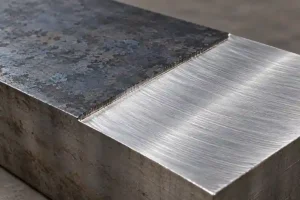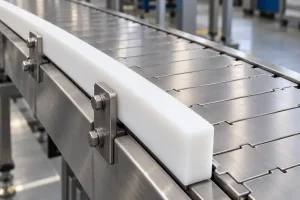

Powder coating can suit a machined metal part that can be prepared, coated, and cured before heat-sensitive components are installed. A compatible liquid paint may be more practical when the part must be coated after assembly or repaired locally. The decision depends on the actual coating system: liquid paint can also require baking, and powder products do not all share one cure schedule.
For a CNC order, choose the finish together with its place in the manufacturing sequence. A quote for a coated bare housing and a quote for a coated, assembled housing may require different preparation, masking, cure conditions, and repair provisions even when both specify the same color.
Compare the Coating Systems, Not Just the Color
In this comparison, “paint” means a liquid-applied coating. Powder coating is also an organic coating, so “powder versus paint” does not separate a protective material from a purely decorative one.
Conventional thermoset powder coating uses dry powder that melts, flows, and chemically cures under heat. Liquid systems may use one or more coats, with drying and curing requirements that depend on their chemistry. Neither process name establishes outdoor durability, chemical resistance, or acceptable impact damage.
Start by asking each supplier to identify the proposed system: substrate preparation, pretreatment where required, primer if used, topcoat, specified film thickness, and cure requirements. A color reference establishes a color target; it does not identify these other requirements.
Compare those proposals against the same exposure and appearance requirements. An interior powder is not an automatic substitute for an exterior liquid system. Likewise, a convenient air-drying paint is not acceptable simply because it avoids an oven. The selected system still needs to suit the substrate, sunlight, moisture, chemicals, and handling involved.
For buyers, this prevents an incomplete price comparison. One offer may include a primer and topcoat while another includes only a single finish coat. Different systems can both be suitable, but their suitability needs evidence rather than a shared color name.
Check Part Temperature Before Choosing the Route
For a thermally cured powder, the important temperature is the substrate temperature specified by the coating manufacturer. The oven’s air setting and the time spent inside it do not, by themselves, establish the part’s cure history. A thick machined section takes time to heat, and different locations may reach the required temperature at different times.
PPG’s explanation of powder-coating cure curves distinguishes substrate temperature from air temperature. It also explains why the cure requirement belongs to the particular powder product.
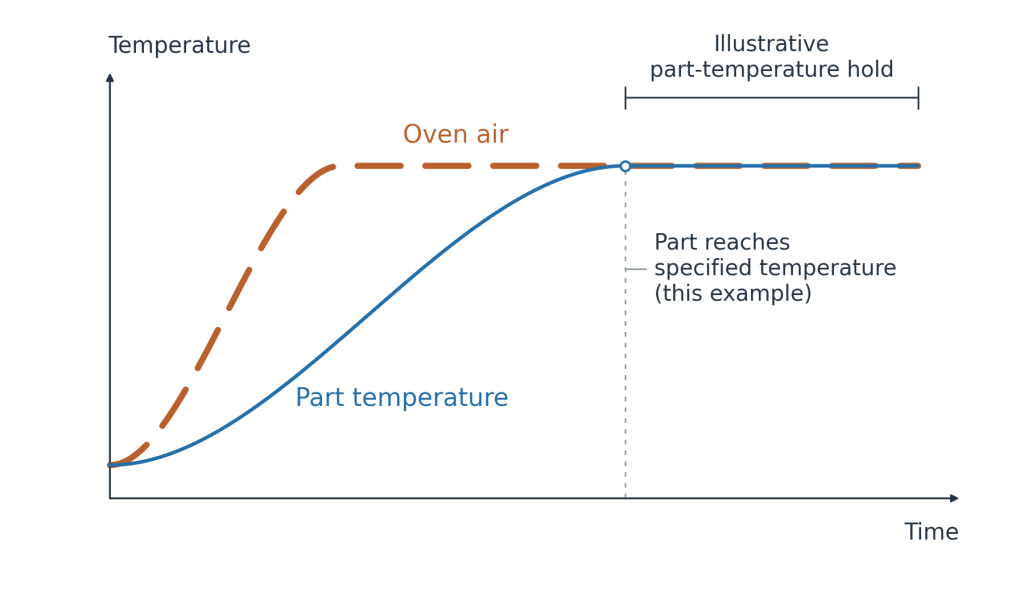
Ask how the supplier will establish that the actual part reaches the required conditions without exceeding the allowed exposure of the part or anything attached to it. Review the complete route, including any heated preparation, drying, primer cure, and later bake. Checking only the final topcoat oven can miss an earlier incompatible step.
A low-cure powder may be worth reviewing, but “low cure” is not a temperature limit for the assembly. Compare its actual schedule with the permitted temperature and exposure time of each installed component. Do not shorten a specified cure cycle simply to protect a seal or adhesive.
Apply the same review to liquid paint. Confirm whether the proposed product cures at ambient conditions or needs heat, and distinguish readiness for handling from readiness for assembly or service. A surface that feels dry does not, by itself, authorize installing a loaded fitting or packing the part tightly for shipment.
Put Coating at the Right Assembly Stage
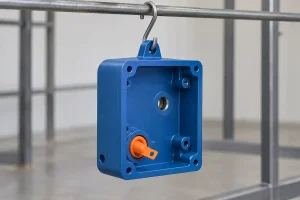
Consider a proposed machined housing that will receive a polymer bushing and a bonded identification plate. The housing is an illustrative planning example, not a record of a tested customer assembly. The question is when those components enter the route.
Coating the bare housing first can keep the bushing and adhesive out of preparation baths and the coating cure. It also leaves assembly work to be done on a finished surface. The supplier must identify how the coating will be protected during pressing, bonding, and handling, and which installation surfaces must remain suitable for their function.
Coating after installation changes that review. The installed parts may be exposed to cleaners, preparation chemicals, coating materials, and the cure environment. Masking a component against spray does not establish that it is protected from oven heat. A liquid route must address chemical compatibility as well as temperature.
Use a route comparison such as this before accepting the finishing scope:
| Proposed route for the housing | What is present during preparation and cure? | What must be resolved before approval? |
|---|---|---|
| Powder coat the bare housing, then install the bushing and plate | The metal housing and approved masks or fixtures | A suitable cure profile for the housing; defined installation and bonding areas; protection of the cured finish during assembly |
| Liquid-coat the bare housing, then install the bushing and plate | The metal housing and approved masks or fixtures | The complete coating system and cure conditions; the earliest acceptable assembly stage; compatible installation and bonding surfaces |
| Apply liquid paint after the bushing or plate is installed | The housing plus every component already installed | Compatibility with preparation, paint, and cure; access to the required surfaces; protection of functional interfaces |
| Strip and powder-recoat a previously assembled housing | Whatever remains after the approved disassembly | Whether components can be removed; compatibility with stripping and another thermal cycle; restoration of coating and assembly requirements |
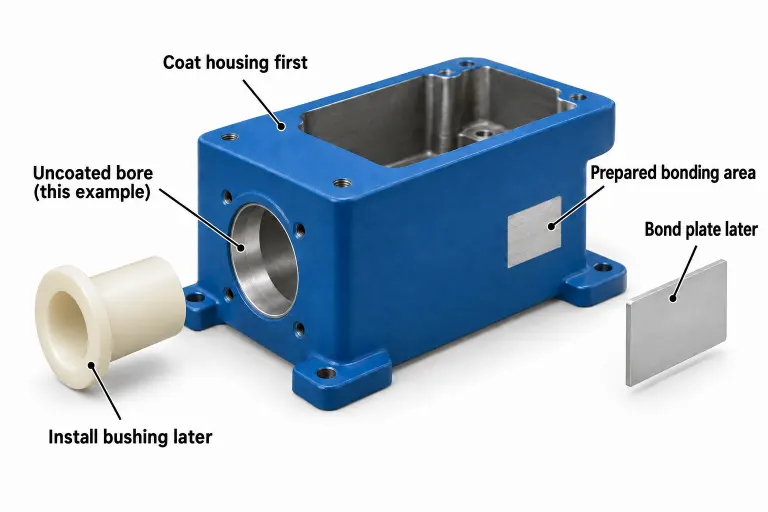
The third route is not automatically acceptable because it uses liquid paint. The fourth is not an ordinary repeat of the first: stripping, component removal, and reassembly add work and may change whether the route remains feasible.
Mark the surfaces that must receive coating separately from those that must remain suitable for a fit, electrical contact, sealing, or bonding. Include the masking boundary, not just the name of the feature. A future adhesive joint may require bare prepared metal or an approved coated surface; the adhesive and coating system determine which is acceptable.
Where several coats are specified, account for the total cured film. A thinner topcoat does not establish that the full liquid system takes less clearance than the powder option. The surface-finishing guide covers the broader treatment and dimensional requirements.
Keep this review tied to the assembly sequence. If a fitted bore is masked during coating, verify that it remains acceptable after mask removal. If a later operation removes coating, identify the exposed area and its protection requirement. Do not leave post-coating drilling or thread recovery as an unapproved way to make the assembly fit.
Define What a Touch-Up Is Allowed to Restore
Damage after assembly tests the original choice again. A local repair might avoid stripping the housing, but matching its color does not demonstrate equivalent adhesion, chemical resistance, or corrosion protection.
TIGER’s powder-coating touch-up recommendations give a useful example: the named touch-up products have application limits, and their properties are not equivalent to the original powder coating. Those limits apply to the products described; they are not a blanket rejection of all powder-coating repairs.
Before ordering, agree whether repairs are allowed, on which surfaces, and by which approved method. Separate a small cosmetic blemish from damage that exposes the substrate in a protected area. The repair proposal should address the exposed substrate, the existing coating, local preparation, repair material, cure, and the requirements that must be checked afterward.
Liquid paint also needs an approved repair method. A repair can differ in color, gloss, texture, or thickness, and the preparation and recoat conditions still matter. Approve the acceptable appearance and functional requirements rather than leaving “touch up as needed” as an open instruction.
This changes the cost comparison. For the housing, a powder route may require finishing before assembly and protection during installation. A liquid route may require additional coats and a longer wait before assembly. A later full recoat may require component removal, stripping, renewed inspection, and reassembly. None of these costs can be settled by a universal price ratio between powder and paint.
Ask for the finishing sequence and repair allowance alongside the finished-part price. Identify who supplies and installs the bushing or bonded plate, when the coating is released for assembly, and who approves any repair. Compare routes that deliver the same agreed part condition.
For a CNC machining and finishing review, provide the housing drawing, proposed coating systems, assembly sequence, and the temperature and chemical limits of installed components. Mark coating boundaries, later press-fit or bonding operations, and any surfaces where repairs are prohibited. RapidEfficient can review the machining and finishing scope and identify unresolved process or assembly requirements before quotation.