

Blog List
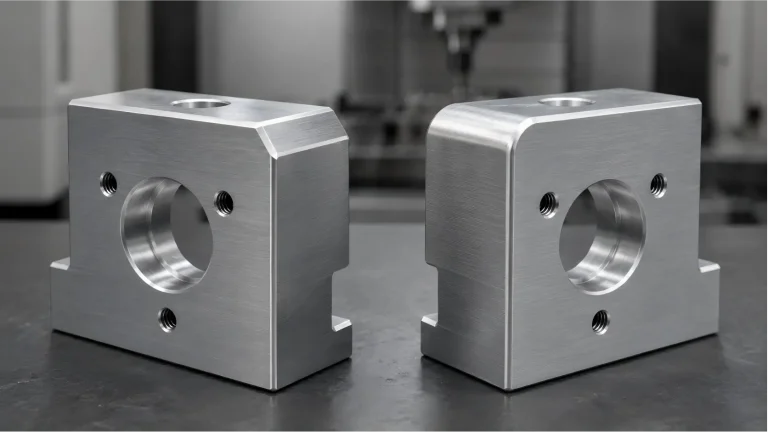
Chamfer vs Fillet: Choosing the Right Edge for CNC Machined Parts
Choosing between a chamfer and a fillet is not mainly a styling decision. On a CNC machined part, edge geometry…
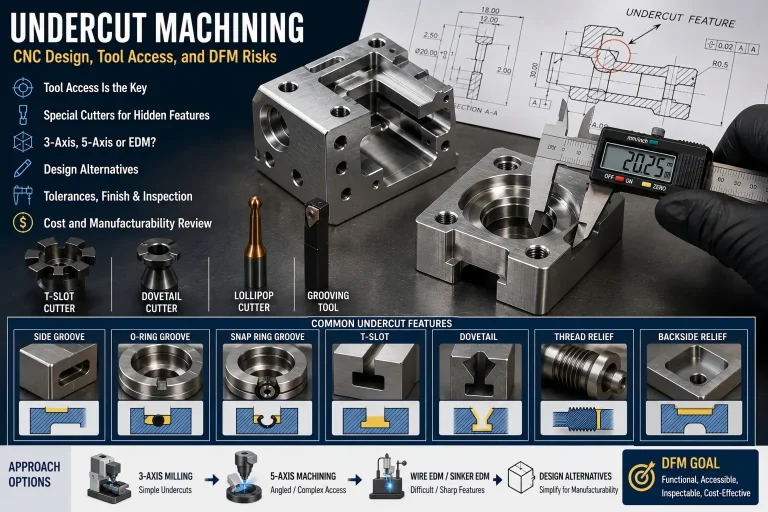
Undercut Machining: CNC Design, Tool Access, and DFM Risks
Undercut machining is not only a tooling problem. It is a tool access problem. A CNC part may look simple…
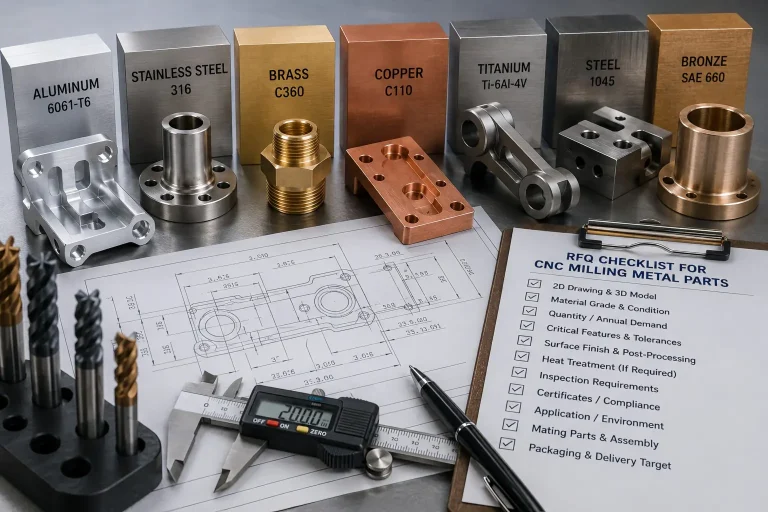
CNC Milling Metals: How to Choose the Right Material for Custom Parts
CNC milling metals is not only a machining decision. It is also a material decision. Two parts may look similar…
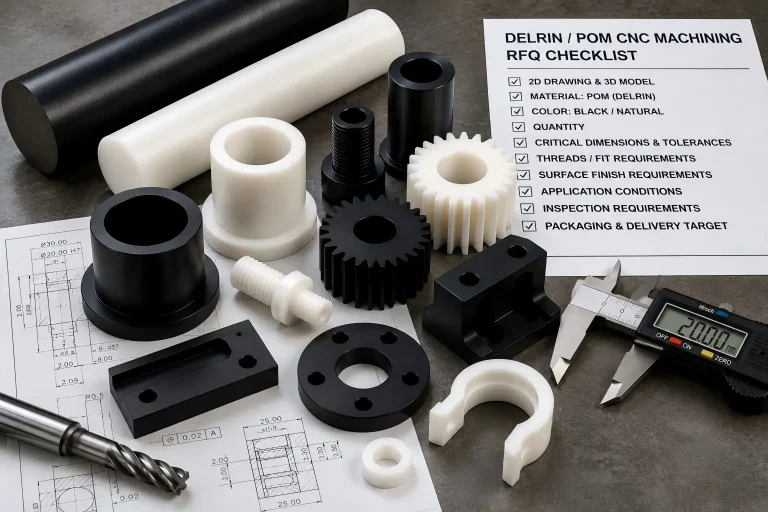
Delrin CNC Machining: Design, Tolerance, and RFQ Risks for POM Parts
Delrin CNC machining is often easier to control than PTFE, nylon, or many soft plastics. But that does not mean…
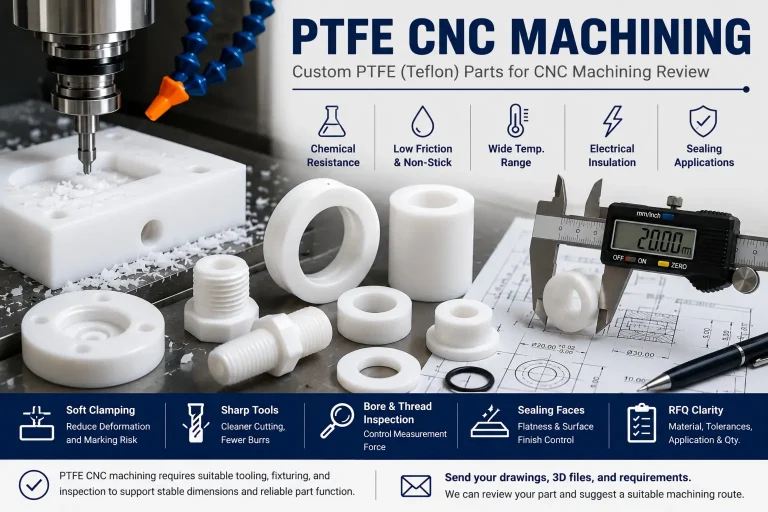
PTFE CNC Machining: Design, Tolerance, and RFQ Risks
PTFE CNC machining is not difficult because the material is hard. It is difficult because PTFE is soft, slippery, flexible,…
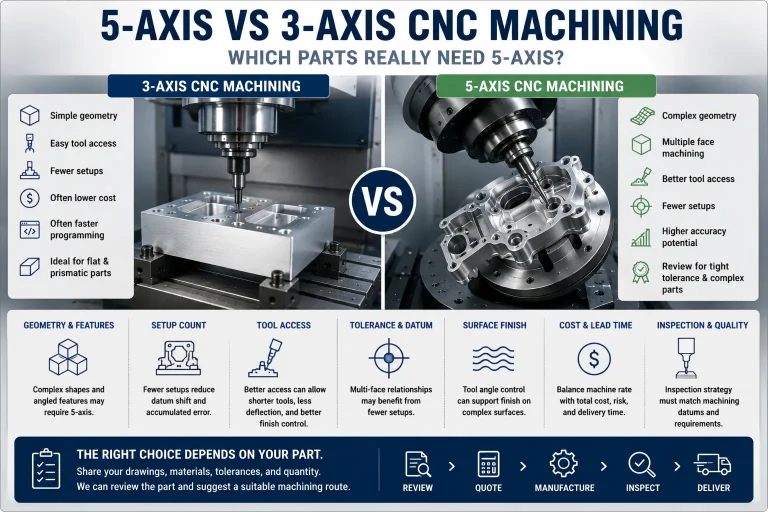
5-Axis vs 3-Axis CNC Machining: Which Parts Really Need 5-Axis?
5-axis CNC machining is not automatically better for every part. 3-axis CNC machining is still the right choice for many…
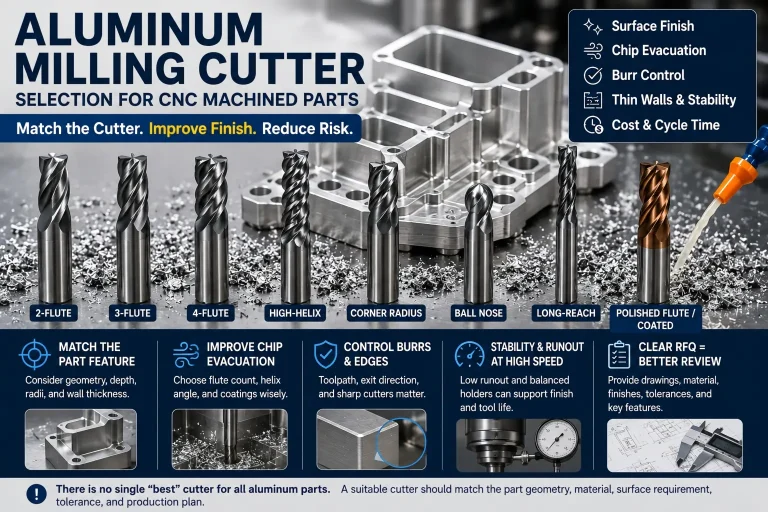
Aluminum Milling Cutter Selection for CNC Machined Parts
Choosing an aluminum milling cutter is not only a toolroom decision. For CNC machined aluminum parts, the cutter can affect…
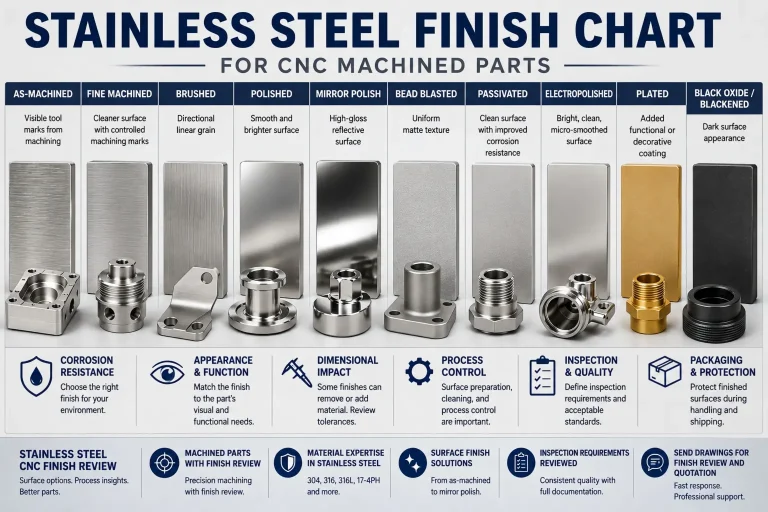
Stainless Steel Finish Chart for CNC Machined Parts
Choosing a stainless steel finish is not only about appearance. For CNC machined stainless steel parts, the finish can affect…
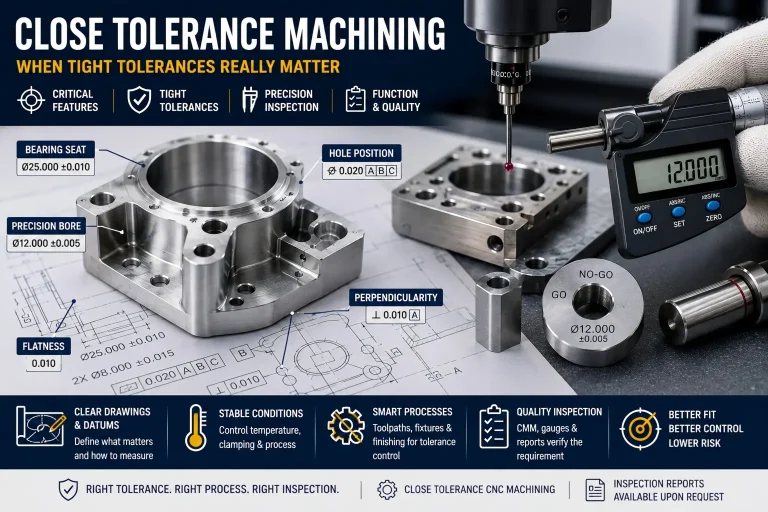
Close Tolerance Machining: When Tight Tolerances Really Matter
Close tolerance machining means producing selected part features within a narrow dimensional or geometric range. But close tolerance does not…