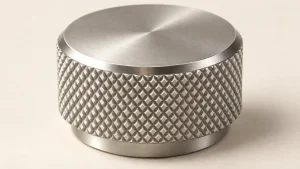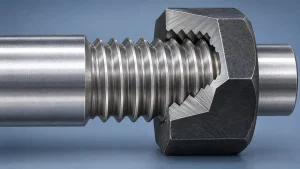

不锈钢零件可以通过机械加工检验,但在交货后仍然成为问题.
尺寸正确.
The threads fit.
表面看起来很抛光.
零件已包装并发货.
然后客户海运完后打开箱子,发现有小锈点, 染色, or surface discoloration. In another case, 买方执行 PMI 验证,发现该批次供应为 304 不锈钢与预期的镍和锰分布不符.
That is where the real 304 与 201 不锈钢 problem begins.
Not at the CNC machine.
Not at the caliper.
即使在第一次目视检查时也没有.
当报价前没有明确控制材料牌号时就开始了, 购买, 加工, 精加工, and shipment.
201 当该部件在室内使用时,不锈钢可以是合法的材料, cost control matters, 并且客户认可等级.
304 耐腐蚀时,不锈钢通常是更安全的基准, 打扫, appearance stability, 钝化, 文档, 或长期暴露很重要.
错误在于治疗 201 as a quiet replacement for 304 只是因为这两种材料在加工后看起来都像不锈钢.
对于数控买家, the key question is not only:
Can this part be made from stainless steel?
更好的问题是:
哪种不锈钢牌号获得批准, 已验证, machined, 完成的, 并发货?
Rapid Efficient 支持原型的定制不锈钢 CNC 加工项目, 小批量零件, 及生产要求. 报价前, 我们一起审查图纸和不锈钢牌号, 材料证明要求, service environment, 表面饰面, 钝化需求, 公差注释, 检查方法, 包装需求, 和交货时间表.
更广泛的不锈钢加工规划, 回顾我们的 不锈钢CNC加工指南.
问题通常在加工之前就开始出现
最多 304 与 201 纠纷并非因切割不良引起.
它们是由于材料控制不明确造成的.
A supplier may quote 201 因为它降低了材料成本.
买家可能会要求“不锈钢”而不定义等级.
A drawing may say 304, 但采购单可能不会明确阻止替代材料.
样品看起来可能可以接受, 但最终的生产批次可能会面临不同的环境, 结束, packaging condition, 或客户验货规则.
这在三种不同含义之间造成了危险的差距:
| What the Buyer Says | 供应商可能会听到什么 | What Should Be Confirmed |
|---|---|---|
| 不锈钢件 | 任何可用的不锈钢等级都可以使用 | 需要准确的等级 |
| 304 不锈钢 | 304 首选, alternate may be assumed | 无论 201 is prohibited |
| 成本敏感的不锈钢零件 | 201 可能可以接受 | 无论 201 已获得书面批准 |
| 抛光不锈钢表面 | 装运时的外观问题 | 储存和使用后的外观 |
| 不锈钢钝化件 | 需要表面处理 | 等级仍必须符合规格 |
| 需要材料证明 | 交货时需要的文件 | 炉号和等级可追溯 |
| 发货后无生锈现象 | 包装和环境问题 | 打扫, 烘干, 和湿度控制 |
这就是为什么 304 与 201 应作为等级验证和替代控制问题来处理, not only as a material comparison.
批次可能尺寸正确,但如果等级与采购要求不符,仍会被拒绝.
201 不是假不锈钢——但必须经过批准
201 stainless steel is not a fake material.
It can be useful for indoor decorative covers, low-risk brackets, cost-sensitive panels, display components, and early fit-check prototypes.
The issue is not whether 201 存在.
问题是买方是否批准该零件.
如果应用干燥, 室内的, 非关键的, and price-sensitive, 201 可能是一个合理的选择.
如果应用涉及湿度, 户外暴露, chloride risk, 钝化, food-related cleaning, laboratory use, 医疗设备, 或客户控制的文档, 304 通常是更安全的起点.
The clean way to handle this is simple:
引用 304 作为所需材料.
或者:
引用 304 as the primary option and 201 作为批准的替代者.
What should never happen is this:
图纸上说 304, the quote is silently based on 201, and the problem appears after delivery.
这不是选材.
That is a substitution risk.
The Chemistry Fingerprint That Separates 304 从 201
304 和 201 都是奥氏体不锈钢, but their alloy design is different.
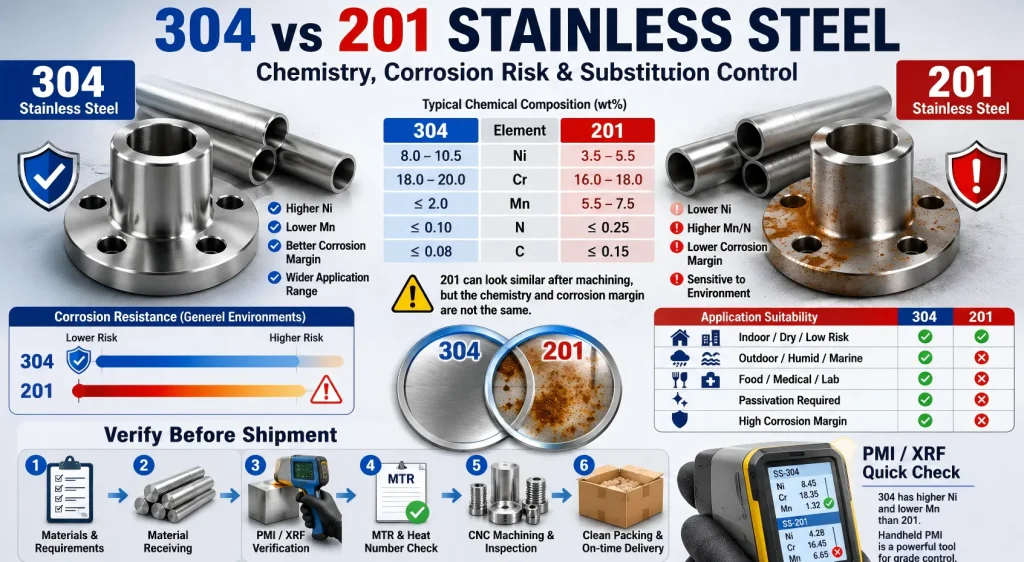
304 不锈钢通常具有较高的镍含量和较低的锰含量. 取决于标准和产品形式, 304 通常包含约 8% 到 10.5% 镍 不超过大约 2% 锰.
201 不锈钢采用不同的合金策略. 它降低镍含量并更多地依赖锰和氮来帮助维持奥氏体结构. 一个常见的 201 化学范围可能包括约 3.5% 到 5.5% 镍, 5.5% 到 7.5% 锰, 直到大约 0.25% 氮.
这种化学差异解释了原因 201 可以降低原材料成本.
这也解释了为什么 201 不应被视为安静的替代品 304.
低镍, 高锰设计可能会影响:
- 腐蚀裕度
- 材料成本
- 力量
- 加工硬化行为
- 表面稳定性
- 抛光一致性
- 买家验收
- 材料验证
- 包装敏感性
当存在硫化物夹杂物或表面污染时, 局部腐蚀可能更容易在薄弱的表面点发生.
这并不意味着每个 201 零件会很快生锈.
是指服务环境, 表面饰面, 清洁方法, 和包装条件需要检查之前 201 用作替代品 304.
用于更广泛的不锈钢材料规划, 铝, 铜, 黄铜, 和工程塑料, 回顾我们的 CNC加工材料指南.
投诉常出现在海运或仓储后
一个 201 不锈钢零件在供应商的工作台上看起来很干净.
然后发货后出现投诉.
这是一个原因 304 与 201 争端令出口制造业沮丧.
The supplier may say:
交货前零件看起来不错.
The customer may say:
零件到达时有锈斑, 污渍, or surface discoloration.
两种说法都可能为真.
缺失的部分是环境.
机加工的不锈钢零件可能会受到以下因素的影响:
- 包装内残留水分
- 运输过程中的盐空气
- 包装前采集指纹
- 清洗后干燥不良
- 工具或固定装置的碳钢污染
- Abrasive residue
- 劣质保护膜
- 温度变化时凝结
- Long warehouse storage
- 客户清洁化学品
304 为许多通用环境提供更强的腐蚀裕度.
201 仍可在受控室内条件下工作, 但当湿度较大时,误差空间较小, 氯化物, 清洁化学品, 或包装受潮进入图片.
For export orders, 包装方案应符合不锈钢等级和表面期望.
不要将包装视为事后的想法.
在哪里 201 是一个合法的选择
201 当零件没有暴露在侵蚀性环境中并且客户明确允许等级时可能是合适的.
常见的例子包括:
- 室内装饰罩
- 对成本敏感的支架
- 非关键硬件
- 适合检查原型
- 干燥环境面板
- 低腐蚀显示组件
- 内部支撑件
- 对价格敏感的组件 201 已获批准
在这些情况下, RFQ 应该说清楚:
201 不锈钢是可以接受的.
或者:
201 可以作为替代材料引用.
这样可以保护双方.
买家可以获得更低成本的选择.
供应商避免出现偷换材料的风险.
关键是生产前的审批.
在哪里 201 不应悄悄更换 304
201 不应该悄然取代 304 当零件取决于腐蚀裕度时, cleaning confidence, 文档, 或客户控制的材料要求.
| Part or Requirement | 为什么 201 替代是有风险的 | Safer Action |
| Drawing specifies 304 | Customer expects a defined grade | 引用 304 or request written approval |
| Outdoor hardware | 湿度, 雨, 污染, 和盐暴露会增加腐蚀风险 | 使用 304 或根据需要查看 316/316L |
| Fluid-contact part | 水化学或清洁化学品可能会导致染色或腐蚀 | 确认等级及服务环境 |
| 不锈钢钝化件 | Passivation does not turn 201 进入 304 | 完成前匹配材料等级 |
| 医疗或实验室组件 | 清洁性和文档可能很重要 | 使用客户指定的等级和证书 |
| 化妆品抛光件 | 锈斑或污渍成为可见的拒收点 | Define grade, 结束, 和包装 |
| 食品相关硬件 | 清洁和腐蚀期望更高 | 确认客户规格 |
| Customer-controlled assembly | 证书不匹配可能会拒绝整个批次 | Maintain heat traceability |
| 出口生产订单 | Material verification may happen after delivery | 尽早确认 MTR 和 PMI 要求 |
| Humid storage or sea freight | Moisture can expose grade-selection weakness | 控制级, 打扫, 烘干, 和包装 |
This table is not a rule that 201 永远不能使用.
It is a substitution-control filter.
如果零件需要 304, 引用 304.
如果该部分可以使用 201, 在加工开始前使批准可见.
数控加工: 201 Is Not the Easy Discount Option
一些买家认为 201 更便宜, so it must be easier to machine.
That is not a safe assumption.
304 和 201 都是奥氏体不锈钢. 两者都可以努力工作. 两者都能产生热量, 毛刺, 表面撕裂, 切屑控制不良, 如果刀具摩擦而不是剪切,则刀具磨损.
201 根据硬度,在某些操作中可能会感觉不太宽容, 物质条件, 特征几何, 和工具状态.
这在一定程度上与以下情况中常见的较高基线强度有关: 201 不锈钢.
因为锰和氮有助于固溶强化, 201 可能表现出比标准退火更高的屈服强度 304, 取决于产品形式和材料状况. 更高的强度可以增加铣削过程中的切削阻力, 转动, 钻孔, 线程, and deburring.
在实际数控加工中, this may show up as:
- Higher tool load
- 不稳定切削时加工硬化倾向更强
- 精加工时边缘压力更大
- 如果切削速度太快,后刀面磨损会更快
- 当刀刃较弱时,微崩刃的风险更高
- 薄边缘的毛刺控制更加困难, 孔, 和线程
This does not mean 201 is impossible to machine.
这意味着该过程不应假设 201 会表现得像一个更便宜的版本 304 具有相同的切削响应.
为了 201 不锈钢, 应审查加工计划:
- Tool rigidity
- 工具涂层
- Cutting edge strength
- 切割速度
- 切屑负载
- 冷却剂输送
- 精加工余量
- Deburring method
- Thread inspection
- 整个批次的刀具磨损监控
适用于紧密特征或装饰表面, 在全面生产之前进行试切或首件检验特别有用.
为了更深入地分解加工硬化 304 不锈钢, review our article on 加工 304 不锈钢.
线程数, 洞, 和边缘可以将材料风险转化为装配风险
这 304 与 201 当零件具有较小或功能性特征时,决策变得更加严肃.
高风险功能包括:
- 内螺纹
- 外螺纹
- 盲孔
- 交叉孔
- Press-fit bores
- Thin slot edges
- 密封面
- Sharp datum edges
- Cosmetic chamfers
- Thin-wall pockets
材料替代可能不仅会影响腐蚀.
也会影响加工稳定性, burr behavior, and inspection risk.
Common failures include:
- Burrs at thread starts
- Poor gauge fit
- 攻丝时的加工硬化
- 盲孔丝锥损坏
- 密封面上的表面撕裂
- 去毛刺时的划痕
- 圆形定位边缘
- Poor edge consistency after polishing
- Contamination before passivation
If the material is difficult to rework, 或者如果盲螺纹孔是高价值特征, 与攻丝相比,螺纹铣削有时可以降低刀具破损的风险.
用于工艺比较, 查看我们的指南 螺纹铣削与攻丝对比.
表面光洁度无法永远隐藏错误的牌号
Surface finishing can make 201 和 304 乍一看很相似.
抛光, 刷牙, 喷砂, 打扫, and passivation can all improve appearance.
But finishing cannot change the alloy.
钝化可以去除游离铁污染物并支持钝化表面状况, 但它无法转动 201 进入 304.
如果客户需要 304 和钝化, 使用 201 钝化仍然不是等价替代.
Surface-related risks include:
- 存放后出现锈斑
- 指纹染色
- 抛光不均匀
- Brushing direction mismatch
- Surface contamination from carbon steel tools
- 去毛刺划痕
- 清洗后残留物
- 包装内残留水分
- 目视检查后客户拒绝
用于装饰不锈钢零件, 绘图应标识可见表面.
适用于腐蚀敏感的不锈钢零件, RFQ 应定义清洁, 钝化, 烘干, 和包装期望.
用于完成选择, 抛光, 钝化, 喷砂, 和检验风险, 回顾我们的 CNC 表面处理指南.
对于钝化边界, 审查 什么是不锈钢钝化以及数控零件什么时候需要它?.
磁铁测试不是最终验收
磁铁测试不够可靠,无法接受或拒绝 304 与 201.
两个都 304 和 201 是奥氏体不锈钢.
取决于冷加工, 成型, 加工, 物质条件, 或处理历史记录, 磁响应可能会改变.
弱磁响应并不能自动证明该材料是 201.
低磁响应并不能自动证明该材料是 304.
消除歧义, 等级验证应依赖于适当的材料文件和检查方法.
有用的控件包括:
- 材料证明审核
- 需要时可追溯炉号
- 供应商物料确认
- Segregated storage to avoid material mix-up
- 需要时进行 PMI 或光谱仪验证
For shop-floor grade screening, 手持式 XRF / PMI testing can be useful because 201 和 304 具有非常不同的锰和镍特征.
201 通常显示出比 304.
304 通常显示出较高的镍含量和较低的锰含量 201.
这种差异使得手持式 PMI 成为分离可疑物质的实用非破坏性方法 201 和 304 material before machining or shipment.
然而, PMI should still be used correctly. 表面状况, 涂料, 污染, 校准, 测试地点, and instrument limitations should be controlled.
For customer-controlled orders, PMI 结果应与工厂测试报告一起审查, 热数, 采购规格, and drawing requirement.
手持式 XRF 可用于镍和锰的比较, 但它不应该被视为每个元素的唯一工具. 当需要精确的碳或氮确认时, 可能需要实验室方法,例如光学发射光谱法或其他合适的材料分析.
The safest workflow is:
先有材料证明, 需要时进行 PMI 验证, 未经书面批准不得更换年级.
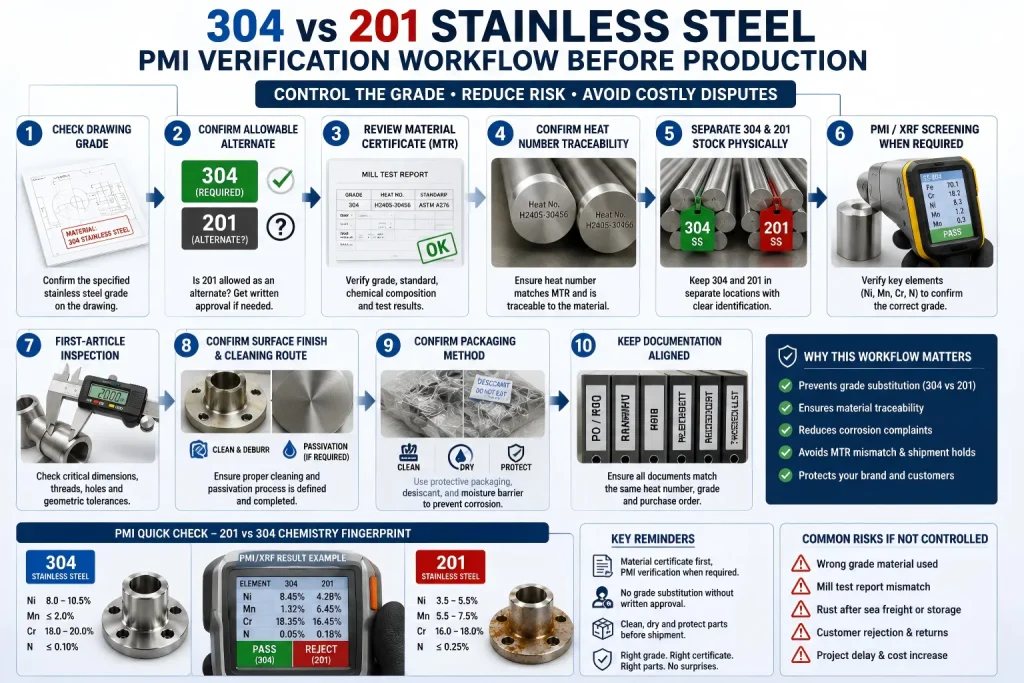
生产前的等级验证工作流程
为了 304 与 201 不锈钢, 只要等级由客户控制,验证工作流程就应在加工前进行.
A practical workflow is:
- Check the drawing grade.
- Confirm whether 201 允许作为替补.
- 审核材料证明.
- 需要时确认炉号的可追溯性.
- 分离 201 和 304 stock physically.
- 需要时使用 PMI/XRF 筛查.
- 对关键功能进行首件检查.
- 确认表面光洁度和清洁路线.
- Confirm packaging method before shipment.
- 保持文档与采购订单一致.
这个工作流程很简单, 但它可以避免昂贵的纠纷.
批次可能尺寸正确,但如果材料等级错误,仍会被拒绝.
For tolerance planning and inspection boundaries, 看看我们的 CNC加工公差指南.
阻止不锈钢替代的买方条款
最好的预防方法 304 与 201 争议是报价前把要求写清楚.
Use clear RFQ or purchase-order language.
| 预防风险 | 更好的询价或采购订单条款 |
| 供应商报价 201 当买家期望 304 | “304 stainless steel required. 201 除非得到书面批准,否则不允许使用不锈钢。” |
| 买方可能允许 201 为了降低成本 | “请引用 304 作为主要材料和 201 单独作为替代材料。” |
| 材料证明不符 | “需要材料证书,并且必须符合订购的不锈钢等级。” |
| 错误批次混入生产 | “客户控制的材料需要炉号可追溯性。” |
| 磁铁测试混乱 | “磁铁测试不被接受作为最终成绩验证。” |
| 需要车间等级检查 | “对于标记批次,发货前需要进行 PMI/XRF 验证。” |
| 海运后表面生锈 | “零件必须清洁, 干的, 并进行包装以减少潮湿和磨损风险。” |
| 化妆品表面排斥 | “必须保护可见表面免受划痕, 指纹, 以及零件与零件之间的接触。” |
| 钝化混乱 | “机械加工后需要钝化; 钝化不允许牌号替代。” |
| 完成后螺纹或配合问题 | “最终精加工后需要进行螺纹量规检查。” |
这些条款不仅仅是法律语言.
它们是制造说明.
他们帮助供应商报价正确的材料, 购买合适的股票, inspect the right batch, 并正确包装零件.
Final Decision Matrix: 304 或者 201?
| 情况 | 更好的选择 |
| Drawing specifies 304 | 使用 304 除非客户批准更改 |
| 对成本敏感的室内覆盖物 | 201 如果获得批准,可以接受 |
| 室外或潮湿环境 | 304 is safer |
| 氯化物或海洋暴露 | 审查 316 或 316L 代替 |
| 抛光装饰件 | 304 更安全,除非 201 获得批准并控制包装 |
| Early visual prototype | 201 如果最终材料得到澄清,则可以接受 |
| 钝化生产件 | 使用指定的不锈钢等级; 不依赖钝化来升级 201 |
| 客户要求港铁 | Use material with matching certificate |
| 客户可以执行 PMI | 发货前验证等级 |
| Fluid-contact part | 304 或更高等级应根据环境进行审查 |
| 低风险干式支架 | 201 如果图纸允许的话可以接受 |
| 医疗, 食物, 或实验室组件 | 遵循客户指定的等级和文件 |
最终规则很简单:
201 是一个材料的选择.
It should not become a hidden substitution.
上传您的 304 或者 201 不锈钢图纸审查
发送您的 2D 绘图, 3D CAD文件, 不锈钢等级, 数量, service environment, 表面饰面, 公差注释, 螺纹要求, 钝化需求, 检验要求, 材料证明需要, 包装要求, 及交付目标.
我们的团队将审查是否 304 不锈钢, 201 不锈钢, 或其他适合您的 CNC 加工部件的不锈钢等级.
我们还可以审查PMI是否验证, 材料证书控制, 钝化, 螺纹检查, 表面保护, 或特殊包装应在报价前包含.
号召性用语按钮: 上传您的绘图
关于快速高效
Rapid Efficient 支持原型的定制 CNC 加工项目, 小批量零件, 及生产要求.
和 18 多年高精度CNC加工经验, 我们的团队审查物质行为, 加工策略, 耐受风险, 后处理要求, 检查方法, 包装条件, 和报价前的交货时间表.
我们的可用功能包括 4 轴, 5-轴, 和多轴数控加工, 连同CMM等检测设备, 投影仪, 和光谱仪.
根据实际零件和项目要求, 加工精度低至 0.01 毫米 和检查精度低至 0.001 毫米 可用.
快速高效已获得 ISO 9001 和 ISO 14001 认证.