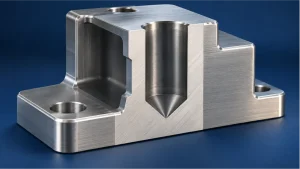

CNC machining outsourcing means assigning machining work to an external supplier. The order may cover one operation on buyer-supplied blanks or complete parts with material, finishing, inspection, and packaging.
Those arrangements leave different work with the buyer. Before comparing quotations, define what condition the parts must be in when they arrive, which files govern production, and who can approve changes.
A first order should establish a repeatable handoff. The supplier needs clear manufacturing requirements, while the buyer needs evidence tied to the delivered parts and a defined point at which further production may proceed.
Decide Where the Supplier’s Work Ends
Outsourcing can make sense when internal capacity is constrained, a part needs equipment or skills that are unavailable in-house, or demand does not justify a dedicated internal process.
It can also leave significant work inside the buyer’s organization. A machining-only purchase may still require incoming inspection, outside finishing, transport between processors, and final verification.
Compare the proposed external route with the internal route that would actually be used. Include the work that remains with your team. A lower machining price does not establish a lower total cost when the two options end at different manufacturing stages.
For buyer-supplied castings or partly machined blanks, define the incoming condition as well. Stock allowance, locating surfaces, material identification, and any required incoming checks affect whether the supplier can perform the next operation. Agree how questionable blanks will be handled before cutting begins.
For a complete-part purchase, identify who coordinates any outside heat treatment, coating, or other processing. The order should say what records and final checks return with the parts.
The starting question is specific: are you buying machining time, a completed operation, or a finished component ready for the agreed receiving checks?
Release One Consistent Set of Manufacturing Files
A quotation may be prepared from a preliminary model. Production should use the documents approved for that order.
Identify the part number, drawing revision, CAD model version, referenced specifications, and any approved exceptions. The drawing and model do not need identical version labels, but their relationship must be clear.
If the model and drawing disagree, resolve the conflict before the affected work starts. State which document controls each requirement where necessary. A shop should not have to infer whether a different hole diameter represents a design change or an outdated file.
The same principle applies to design-for-manufacturing feedback. A proposed larger corner radius or relaxed tolerance remains a proposal until the authorized person accepts it. Record an approved change in the released documents or in a controlled exception linked to the order.
Useful information can also exist outside the drawing. An internal setup may use a particular support condition to prevent a thin flange from bending, or an assembly test may reveal sensitivity that a basic diameter check misses. Transfer that relevant knowledge without turning every historical shop habit into a mandatory requirement.
Accepting the price does not resolve an open technical question. If material purchasing, fixture preparation, or machining may begin before the full review is complete, explicitly identify the work being authorized.
Compare Two Quotes at the Same Finished Condition
Consider a hypothetical aluminum locating sleeve with a flange. Its exterior requires anodizing, while the precision bore and flange contact face must remain uncoated. The bore’s specified size and form must be verified after the finishing route is complete.
This is a manufacturing example, not a customer project.
One supplier quotes machined sleeves. Another quotes anodized sleeves with masking, final inspection, and protective packaging. Both quotations may be reasonable, but they cover different deliverables.
| Sleeve requirement | Machining-only purchase | Complete-part purchase |
|---|---|---|
| Precision bore before anodizing | Machining supplier verifies the agreed intermediate condition | Supplier plans and verifies the intermediate condition within the complete route |
| Uncoated bore and flange contact face | Buyer carries the masking requirements into the finishing order | Supplier coordinates the defined masking requirements with the finishing provider |
| Bore acceptance after finishing | Buyer arranges final verification and resolves any discrepancy between stages | Supplier supplies the agreed final results linked to the delivered parts |
| Finish records | Buyer obtains and connects the finisher’s records to the machining lot | Supplier returns the required records with the identified finished lot |
| Protection of bore and contact face | Buyer defines protection for each remaining transfer | Supplier packages the finished parts to the agreed protection requirements |
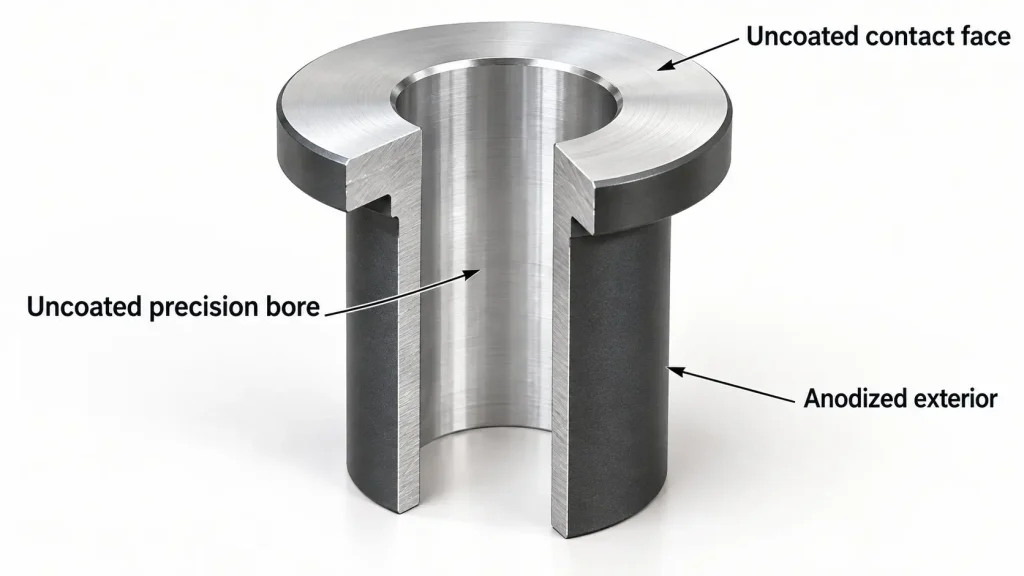
Masking a bore does not remove the need for a specified final check. The buyer still needs evidence for the condition in which the part will be accepted.
Where work crosses between suppliers, identify the inspection record at each transfer. A conforming intermediate part and a conforming finished part are different acceptance points.
The CNC machining cost guide explains the main pricing factors. For an outsourcing decision, first make the quoted scope comparable: material supply, manufacturing stages, required evidence, packaging, and delivery endpoint.
Apply the same discipline to the schedule. Confirm whether the quoted lead time ends at machining completion, completion of finishing, shipment, or arrival. Include any customer review that must occur before work continues.
Use the Trial Lot to Test the Transfer
The first order should test whether the supplier can manufacture and document the part through the intended route.
Choose the trial quantity and inspection scope around the part’s risks. A simple spacer and a thin-wall sleeve with a critical bore do not need identical approval plans.
Where practical, the trial should represent the planned material condition, workholding, finishing route, and inspection method. Record significant differences between the trial and the intended repeat process. A manually adjusted sample may demonstrate fit without demonstrating how the repeat batch will be made.
Connect the submitted results to the part revision and the parts actually supplied. Separate dimensional results, material records, finishing records, and functional checks where those requirements apply.
Our first article inspection guide explains how to connect design requirements to inspection evidence. Here, the purchasing decision is what happens after that evidence is reviewed.
Acceptance of the trial parts and authorization to manufacture the remaining quantity should be explicit decisions.
A satisfactory first article does not establish long-term process capability. The NIST process capability guidance evaluates variation from a stable process against specification limits. One conforming part cannot provide that evidence.
For low-volume work where a meaningful capability study is impractical, agree on inspection and process controls suited to the quantity and risk. Do not request a capability number that the available data cannot support.
Define What Happens When the Job Changes
A repeat order may use the same part number while the drawing, material condition, finishing source, or manufacturing arrangement has changed.
Agree which changes require notification and which require approval before implementation. The requirements should reflect their possible effect on the part and any applicable customer obligations. Routine tool replacement does not automatically need the same review as a material substitution.
For the locating sleeve, moving the anodizing operation to another source could affect the agreed masking, handling, or documentation arrangements. Whether that change requires customer approval should be established before the supplier makes it.
Drawing changes also need a clear boundary in the work already under way.
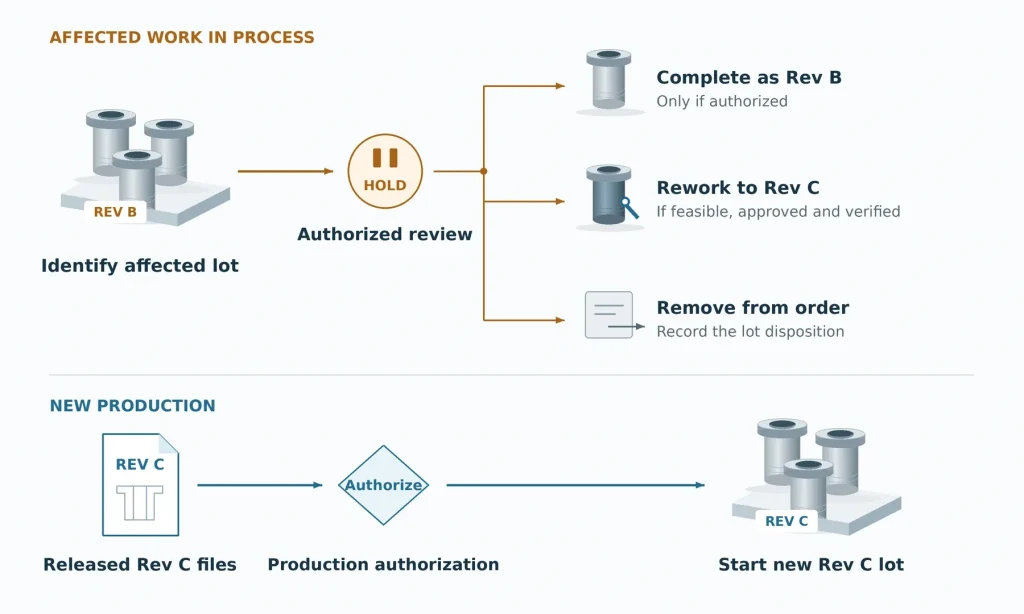
Suppose Revision C changes the sleeve’s flange thickness while a Revision B lot is partly machined. Sending the new drawing does not decide what happens to the existing parts.
Identify the affected quantity and its manufacturing stage. The authorized people then need to decide whether those parts can be completed to the old revision, reworked to the new requirements, or removed from the order. Keep the decision connected to the lot.
A new revision should not silently turn an old lot into a new-revision shipment.
Likewise, acceptance of a specific nonconforming lot does not automatically change the requirement for future orders. Record the scope of any concession and whether later production still follows the original requirement.
Close the first order with a usable record: the released configuration, accepted exceptions, inspection evidence, disposition of affected parts, and authorization for the next quantity. That gives the next order a clear starting point.
For a CNC transfer review, share the current drawing and model, identify the operations your team will retain, and explain who will review the trial parts and authorize further production. Through our CNC machining services, Rapid Efficient can review the proposed manufacturing scope, finishing coordination, and inspection handoff before quotation.