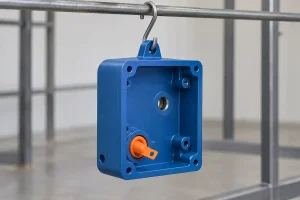

A plastic cover can withstand a cleaner and still be an unsuitable replacement if its internal pad will no longer stay attached. That is a practical concern when considering polypropylene (PP) in place of ABS for a machined equipment cover. The material change must leave a workable pad attachment and enough clearance to the parts moving inside.
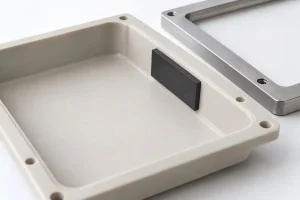
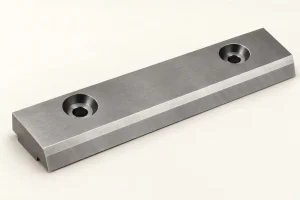
The example here is a non-pressure-bearing cover machined from plastic plate. Its flange screws to a metal frame, and a pad is bonded to the inside wall near a moving component. ABS remains an option when its grade and bonding system suit the cleaning cycle. PP becomes a candidate when it offers needed chemical compatibility; its attachment and installed clearance must also meet the cover’s requirements.
The Cleaner and the Pad Need Compatible Materials
PP is often considered for chemical-contact parts. That makes it a candidate when an ABS cover is exposed to a cleaner it cannot tolerate. It does not make PP resistant to every cleaner, or establish that ABS is unsuitable for the actual cleaning cycle.
Start with the complete cleaner formulation, its working concentration, temperature, contact time and rinse procedure. A resistance rating for one ingredient does not establish compatibility with the finished mixture. Check the proposed stock grade under conditions that represent the application, including stress from assembly. If the existing ABS grade is compatible, chemical resistance alone provides no reason to replace it.
The bonded pad introduces a different comparison. ABS generally offers a more straightforward adhesive-selection route. PP has low surface energy: many ordinary adhesives do not wet its surface well enough to form a reliable bond. A pad that stays attached to ABS may therefore detach from an otherwise chemically suitable PP cover.
PP can be bonded with suitable systems. The proposal must identify the adhesive or tape, any required surface treatment, preparation procedure and cure conditions. An adhesive approved for ABS is not automatically approved for PP. Conversely, an adhesive intended for PP still needs to suit the pad material and the joint’s service conditions.
Ensinger’s engineering plastics manual provides material-selection background and discusses chemical exposure and bonding limitations. Use the current stock and adhesive suppliers’ guidance for the specific combination being purchased.
For this cover, two questions must remain separate: Will the cleaner damage the plastic, and will the attachment remain secure after cleaning? A favorable chemical-resistance result for the cover material does not answer the second question.
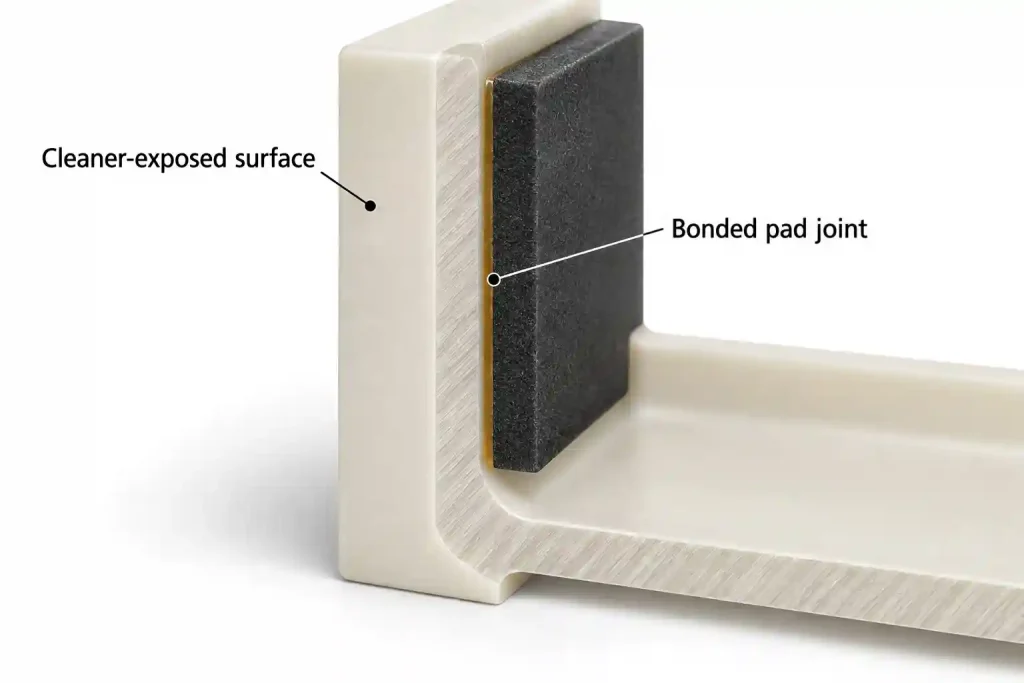
The cover and its pad attachment can be proposed together:
| Proposed route | Cover requirement | Internal pad requirement | What the quotation must distinguish |
|---|---|---|---|
| Retain the specified ABS | Confirm that its grade suits the actual cleaning cycle and installed clearance | Retain the approved bonding system only within its validated conditions | Existing design versus any newly required exposure testing |
| Use PP with a bonded pad | Approve the proposed stock grade and any wall or support changes | Qualify the PP-compatible adhesive or tape and any surface treatment | Machined cover, bonding preparation, assembly and qualification responsibilities |
| Use PP with a mechanically retained pad | Approve the stock grade and revised attachment geometry | Confirm retention, removal access and clearance around the new hardware | Revised drawing, added features, hardware and assembly work |
Mechanical retention removes reliance on that particular adhesive joint, but it is not a free substitution. A screw, clip or retaining pocket occupies space and introduces a new load path. A through-fastener may also create an opening that the original cover did not have. Approve those changes against the cover’s function before comparing prices.
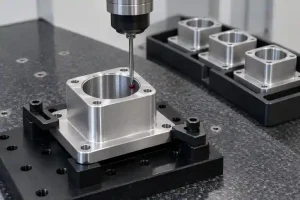
For a CNC order, specify a machinable stock product, not only a generic resin name. Record the manufacturer, grade, plate or rod form, and permitted modifications. A data sheet for an injection-molding resin does not by itself establish the properties of a different stock shape.
If the cover will later be molded, review that change separately. The CNC machining versus injection molding comparison explains why a machined sample does not settle every molded-part requirement.
Available blank sizes, required wall thickness and the pad attachment can change the finished cost. Compare the proposed cover assemblies at the same order quantity. Mark the cleaner-exposed surfaces, pad location and minimum internal clearance on the drawing submitted for a CNC machining review.
Clearance Around the Wall and Pad
The cover wall can meet its drawing dimensions on the inspection bench yet move toward the internal component after installation. The bonded pad moves with the wall, so its protrusion must also be included in the clearance check.
Compare the stiffness of the proposed ABS and PP stock grades under comparable test conditions. ABS is commonly chosen for rigid housings, but the material names alone do not establish a universal stiffness ranking. PP grades, fillers and modifications differ, as do ABS grades. A filled material is a separate proposal when the drawing specifies an unfilled grade.
Strength and stiffness answer different questions. Strength data help assess damage or yielding under the stated test conditions; stiffness describes resistance to elastic deformation. Neither a high tensile strength nor a successful short hand-load test establishes the cover’s clearance during prolonged service.
If the proposed PP grade is less stiff, the same wall may need a shorter unsupported span, greater thickness or another support. Each option changes the design. Thickening the wall inward can consume the clearance that the change was intended to protect. Moving the wall outward can violate the external envelope. Identify the available space before accepting “make it thicker” as the solution.
Define the minimum working clearance with the cover installed and under its expected load and temperature. Keep that functional limit separate from the dimensions used to inspect the loose part.
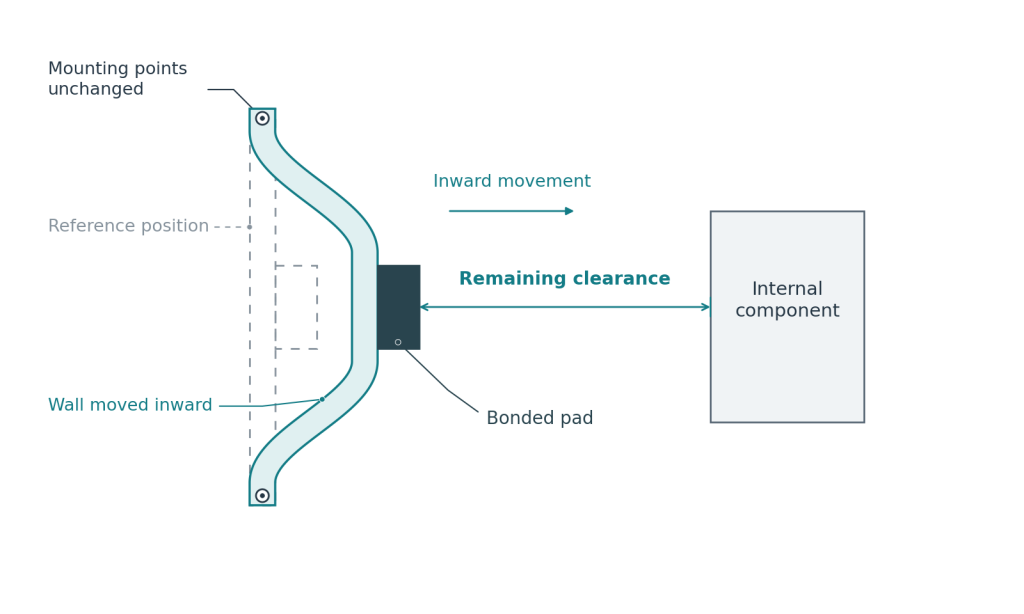
Both materials also require attention to time-dependent deformation under sustained load. At the screw flange, local compression and changes in clamping force can affect how the cover sits on the frame. This is an assembly question, not a reason to assign a universal tightening torque to ABS or PP. Review the actual joint, support and service duration.
A melting point, glass-transition temperature or heat-deflection test result is not, by itself, an allowable continuous operating temperature for this assembly. The relevant limit includes the load and permitted movement, as well as the exposure time.
Check the Assembly During Cleaning and Service
Use a sample made from the proposed stock grade and by the proposed machining and joining route. Fit it to the intended frame with the specified attachment hardware. Check the minimum clearance to the moving component, including at the pad, before exposure and under the agreed service load and temperature. Repeat the functional checks after the specified cleaning cycles.
Set acceptance limits before running the comparison. For this example, check whether the installed assembly maintains the required clearance, the flange remains properly seated, the pad remains within its permitted positional limits, and its attachment meets the specified retention requirement. A photograph of an undamaged surface cannot establish that all these requirements are met. Check the joint after cleaning as well as the bare plastic.
Keep the comparison within the tested conditions. A successful room-temperature wipe test does not approve hot immersion, and a short trial does not establish long-term clamp retention.
If ABS meets the required cleaning cycle and the existing joint remains suitable, it remains a valid choice. If PP is needed, approve its stock grade together with the pad attachment and cover geometry that were evaluated. A change to the adhesive, retention hardware or wall thickness changes the assembly being accepted.