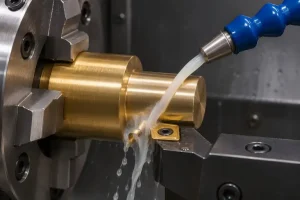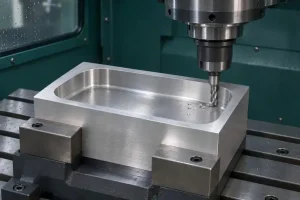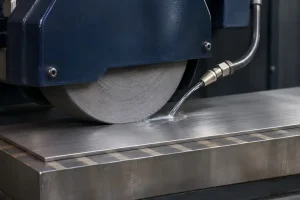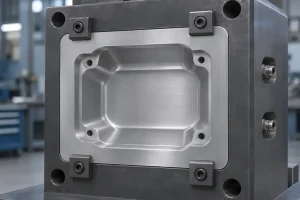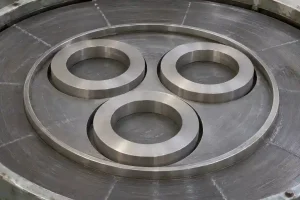

A supplier changes machining coolant while the drawing, material grade and CNC program stay the same. Must the part be tested again? That depends on what the change can affect: cutting performance, contact with the alloy, residue removal and the next manufacturing operation.
For a metal housing that will be anodized, a clean-looking pocket at the machine is only one checkpoint. The fluid may remain in blind holes, dry on a visible face or reach the finishing line with the part. Use a new trial when a changed condition could affect a part requirement and the previous evidence does not cover it. Match the checks to that risk. A different product name alone neither proves a problem nor establishes an equivalent process.
Identify What the Previous Trial Actually Covered
Start with the approved combination of alloy, fluid, working concentration, operation and delivery method. Then identify which part of that combination has changed.
Descriptions such as “synthetic” or “suitable for aluminum” help screen products, but they do not define the complete formulation or its performance on a particular alloy. Two fluids in the same family may differ in lubricity, corrosion protection, foaming and cleaning behavior.
Even a broad compatibility list needs conditions. The ValCOOL VP805P technical data sheet, for example, calls for compatibility and machining tests because concentration, alloy and operation vary. Its listed materials are not a substitute for a trial on the proposed part.
Use the change itself to set the scope of that trial:
| Change since the approved run | Why the previous result may not transfer | What the new trial should include |
|---|---|---|
| Steel parts replaced by an aluminum or copper-alloy part | Cutting performance on steel does not establish staining behavior on the new alloy | The specified alloy, machined surface and expected fluid-contact time before cleaning |
| Open milling replaced by a deep pocket or blind-hole operation | Fluid access and chip escape change with the feature | The restricted feature, actual tool, delivery arrangement and chip-removal result |
| A different water-miscible coolant product | The working range, refractometer factor and residue behavior may change | Product identity, its control method and checks through cleaning and finishing |
| A new machine, water supply or coolant delivery system | Water chemistry, circulation and foaming conditions may differ | The production system and working fluid, rather than only a fresh laboratory mixture |
| Longer waiting time before washing or a new finishing supplier | Fluid may dry on the part or meet a different cleaning sequence | The expected delay, cleaning route and subsequent surface treatment |
This is a trial-planning table, not a universal requirement to repeat every test after every change. The part’s functional and cosmetic requirements determine which differences matter.
A trial should include places where fluid can remain after cutting, not only an exposed face that drains easily.
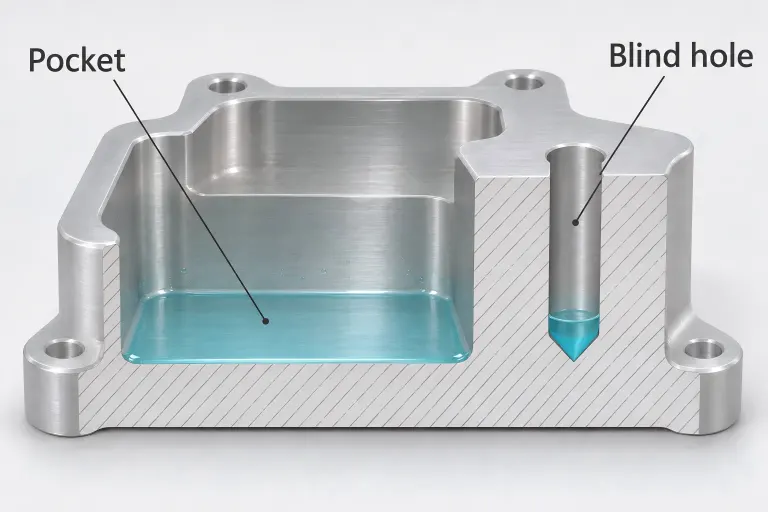
Also separate fluid chemistry from delivery. A different coolant cannot compensate for a blocked passage or a nozzle that misses the cut. Where tapping is part of the route, include thread quality and chip removal in the assessment; a successful milling pass does not establish tapping performance. The machine and tool requirements must also permit the proposed fluid and delivery method. A straight cutting oil is not automatically an interchangeable fill for a water-miscible coolant system.
A Refractometer Reading Needs the Product Factor
For a water-miscible product, record the concentration of the working mixture. The number seen through a refractometer may need conversion using the fluid manufacturer’s factor or chart.
Blaser Swisslube’s concentration-measurement guidance explains this product-specific conversion and the need to calibrate the instrument. Follow the applicable product and instrument instructions, including the water used for zeroing.
Where the supplier specifies a multiplier:
Coolant concentration (%) = refractometer reading × product factor
Consider two hypothetical products, measured with the correct instrument scale:
| Item | Product A | Product B |
|---|---|---|
| Refractometer reading | 4.0 | 4.0 |
| Supplier’s specified factor | 1.0 | 1.5 |
| Calculated concentration | 4.0% | 6.0% |
The same reading represents different concentrations. These numbers demonstrate the conversion only; neither concentration is a recommendation for a particular material or operation.
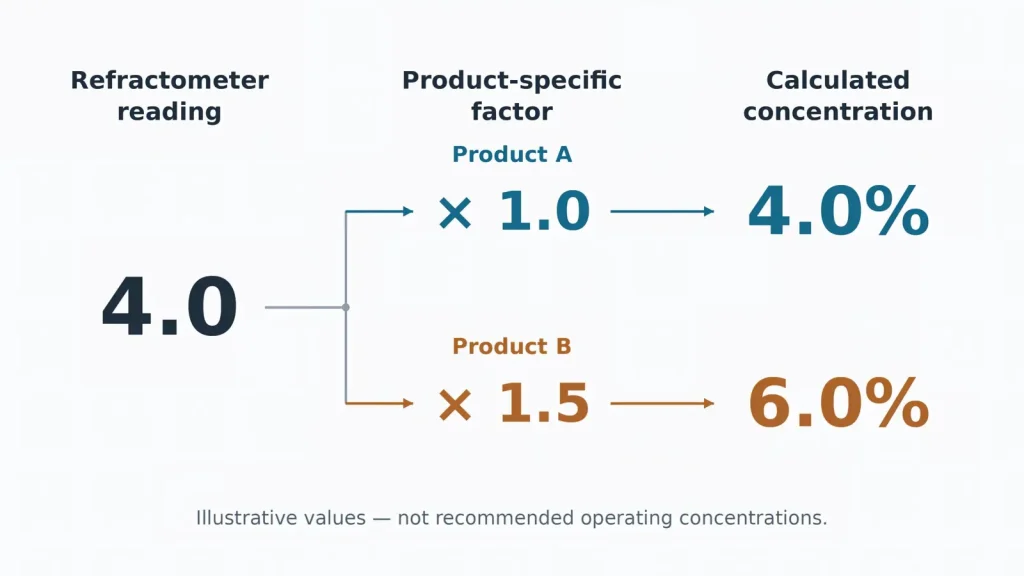
The resulting percentage describes the diluted product concentration, not necessarily its oil content. It also does not prove that the used fluid remains in suitable condition. Tramp oil and other contamination can affect the reading. Master Fluid Solutions’ concentration-control bulletin distinguishes routine concentration checks from analysis of individual components in a used fluid.
When results are inconsistent, review the working fluid with its supplier rather than treating a nominal percentage as proof of compatibility. Water quality, pH where applicable, contamination and fluid age provide different information. A concentration reading does not measure all of them.
For a comparable trial, retain the product identity, recommended working range, reading, factor or conversion chart, calculated concentration, sample location and sampling time. Otherwise, two records labelled “4% coolant” may not describe the same condition.
Follow the Part Beyond the Cutting Cycle
Coolant evaluation should follow the surfaces that matter to the finished component. For the aluminum housing, that may include a visible outer wall, the floor of a pocket and blind holes where fluid can collect.
The time between machining and cleaning belongs in the trial. A sample washed immediately after cutting does not represent a production batch left wet in a tray before washing. Include the expected holding condition and a realistic delay agreed for the process; do not assume one universal safe waiting time.
Hubbard-Hall’s discussion of staining after removal of metalworking lubricants identifies dilution and delayed cleaning as relevant factors for aluminum and copper alloys. It also distinguishes removing lubricant from removing a stain. Washing away a film does not necessarily reverse a chemical change already made to the surface.
Inspect at useful stages: after machining, after the planned hold, after cleaning and drying, and after the specified finish. Record when a mark first becomes visible. This helps narrow an investigation, although timing alone does not prove which chemical or operation caused it.
Use the intended cleaner, rinse and drying route. A laboratory solvent wipe may show that a residue can be removed, but it does not validate the production washer. Likewise, a flat coupon can screen alloy compatibility without demonstrating removal of fluid from the housing’s blind features. The broader choice of metal parts cleaning methods remains a separate process decision.
If anodizing, plating, painting or bonding follows, take representative trial parts through that operation. Apply the relevant appearance, coating or bond acceptance requirements. A visually clean surface and an acceptable machined dimension do not establish every downstream requirement.
Keep Approval Tied to the Tested Conditions
The useful output is an approved process condition, supported by results. Record which alloy and part revision were tested, the fluid and working condition, the difficult operations, the delay before washing, the cleaning route and the final checks. Include exceptions, such as a surface or feature that was not represented.
Separate short-term evidence from longer-term claims. A small trial can establish that the sampled parts met the agreed requirements under the recorded conditions. It does not establish months of sump life, a stable tool-replacement interval or equivalent results on every alloy using that machine.
Agree which later changes require review. Depending on the application, these may include a fluid substitution, a different alloy, a significant change in working concentration or water supply, a new local tapping lubricant, or a different cleaner. The review should decide whether existing evidence remains adequate or whether a targeted repeat trial is needed.
When comparing CNC proposals, include any necessary trial parts, system preparation, cleaning work, finishing samples and inspection in the quotation scope. Comparing concentrate prices alone leaves those costs unresolved.
For a coolant-sensitive CNC machining project, give RapidEfficient the exact alloy, affected features, planned finish and any fluid or residue restrictions. If a previous batch stained or became difficult to clean, include the stage at which the problem appeared and the known fluid and cleaning history. This allows the proposed machining, cleaning and verification scope to be reviewed before quotation.