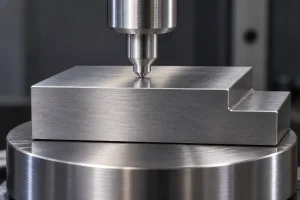

A straight pin and a shouldered shaft may need the same finished journal diameter, yet require different grinding routes. The shoulder can block axial passage through the grinding zone. A keyway can interrupt the surfaces that support and drive the part.
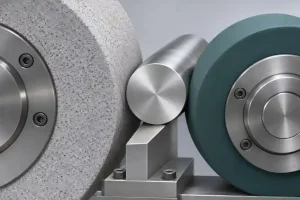
The centerless grinding process removes material from an outside diameter while the workpiece rests between a grinding wheel, a regulating wheel and a support blade. A continuous cylindrical profile can suit through-feed grinding. A localized journal beside a shoulder may need infeed grinding, also called plunge grinding, or another finishing route.
Before specifying the process on a CNC shaft order, check the complete profile and the journal’s relationship to the other functional features. A diameter and surface-finish requirement alone cannot establish whether the proposed route suits the part.
The Outside Surface Supports and Drives the Part
In a conventional centerless setup, the workpiece is supported on a blade rather than located between center holes. The grinding wheel removes material. The regulating wheel controls workpiece rotation; in through-feed grinding, its inclination and speed also help determine axial movement.
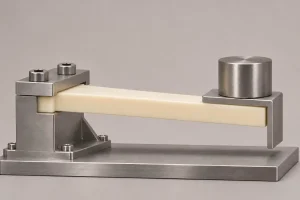
The contact geometry matters. The supplier must establish where the blade supports the part and where the regulating wheel maintains contact throughout the operation. Those regions need review alongside the surface being ground.
Norton’s through-feed setup guidance explains the roles of blade geometry, workpiece height and entry and exit guides. Misaligned guides can affect the form produced along the part. The absence of center holes does not remove the need for controlled support.
For a long bar, review support before and after the grinding zone. For a thin-walled sleeve, review deformation under the proposed contact forces. Neither case should be accepted from an outside-diameter range alone.
The starting condition matters too. Identify material, hardness, incoming form and available grinding stock. A proposed finishing allowance needs enough material to clean up the required surface while retaining the final size; an average blank diameter does not establish that allowance everywhere.
A Shoulder Changes the Feed Route
Through-feed grinding moves the workpiece axially through the grinding zone. A plain pin with a continuous outside diameter is a straightforward candidate for review.
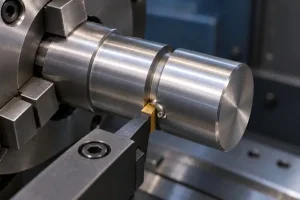
Now add an integral collar larger than the journal. The journal may still fit the grinding gap, but the collar cannot simply travel through that same gap. This rules out assuming an ordinary uninterrupted through-feed cycle for the finished profile.
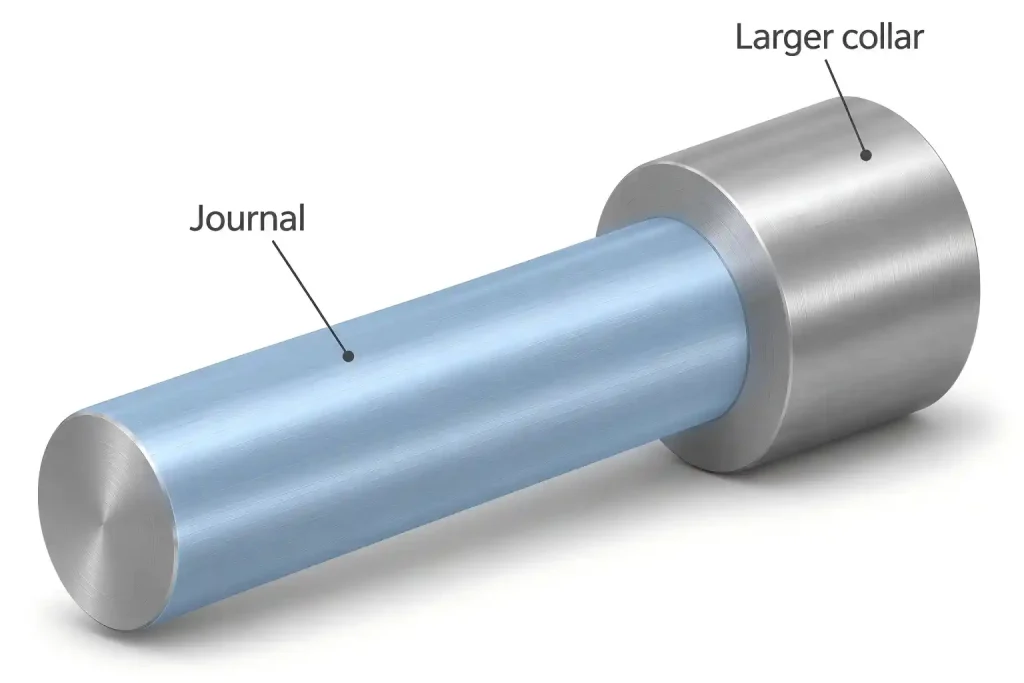
Infeed grinding offers a different motion. The part remains axially located while stock is removed by a radial infeed. A dressed wheel profile can produce suitable stepped or formed diameters. The supplier still needs to confirm the loading path, support, wheel clearance and finished transitions.
JUNKER’s grinding-process descriptions distinguish through-feed grinding from plunge-cut grinding for profiled parts. They also describe a special inclined arrangement for shoulders and end faces. That distinction matters: grinding the journal beside a shoulder does not automatically include grinding the shoulder face.
Use the complete part profile to screen the route:
| Part feature | Effect on the proposed operation | Route decision |
|---|---|---|
| Continuous cylindrical pin | Can pass axially through a suitable grinding zone | Review through-feed grinding, including entry and exit support |
| Journal beside a larger integral collar | Collar obstructs passage through the journal’s grinding gap | Review infeed grinding or a different setup; confirm access to the journal ends |
| Two journals separated by a relief | Contact and support depend on the widths and positions of the lands | Confirm which lands support and drive the part and which diameters are ground together |
| Shoulder face with its own finish or geometric requirement | Finishing the adjacent OD does not establish the face result | Identify a suitable face-grinding arrangement or a separate operation |
This is a geometry screen, not machine-capability approval.
Preground stock does not resolve every shoulder problem. If bar is ground at the collar diameter and the smaller journal is then turned, the journal’s final surface is turned. If bar is ground at the journal diameter, it cannot retain a larger integral collar. Trace which operation creates the actual working surface before accepting “made from ground bar” as evidence of a ground journal.
The cost comparison should include wheel profiling, setup, loading and the required operations at the shoulder. A fast grinding cycle alone does not establish the lower delivered cost for a small batch.
A Keyway Can Interrupt More Than the Cut
A keyway crossing the contact region presents a different problem from a larger shoulder. As the part rotates, the recess can pass through the grinding-wheel, regulating-wheel and blade contact regions. Its edges can change the contact conditions repeatedly.
A flat, cross-hole or wide relief can also affect the setup, depending on its size and location. An interruption outside the relevant contact regions may have little effect on that operation. An interruption within them needs a specific support and drive review. It is not enough to state that the overall part is cylindrical.
The sequence may offer an alternative. Grinding while the outside surface is continuous, then machining a keyway or flat, can avoid that interruption during grinding. However, the later operation may introduce burrs, handling damage or movement of the part. It must preserve the finished journal and be followed by the checks needed for the final condition.
Conversely, machining the keyway first preserves the opportunity to finish the journal afterward, but leaves the interrupted surface for the grinding supplier to assess. Neither order is a universal rule.
For a proposed sequence change, identify the reason: preserving continuous contact, protecting a finished surface, or allowing correction after another operation. The broader shaft machining sequence guide covers how turning, feature machining, heat treatment and grinding fit together. Here, the specific question is whether the part still has suitable contact regions when it reaches the centerless operation.
The Finished OD Still Needs the Right Reference
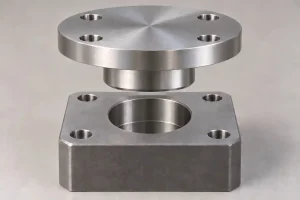
Consider a sleeve whose outside diameter must run true to its bore. A conventional centerless operation supports and drives the outside surface. It does not automatically locate the workpiece from the bore.
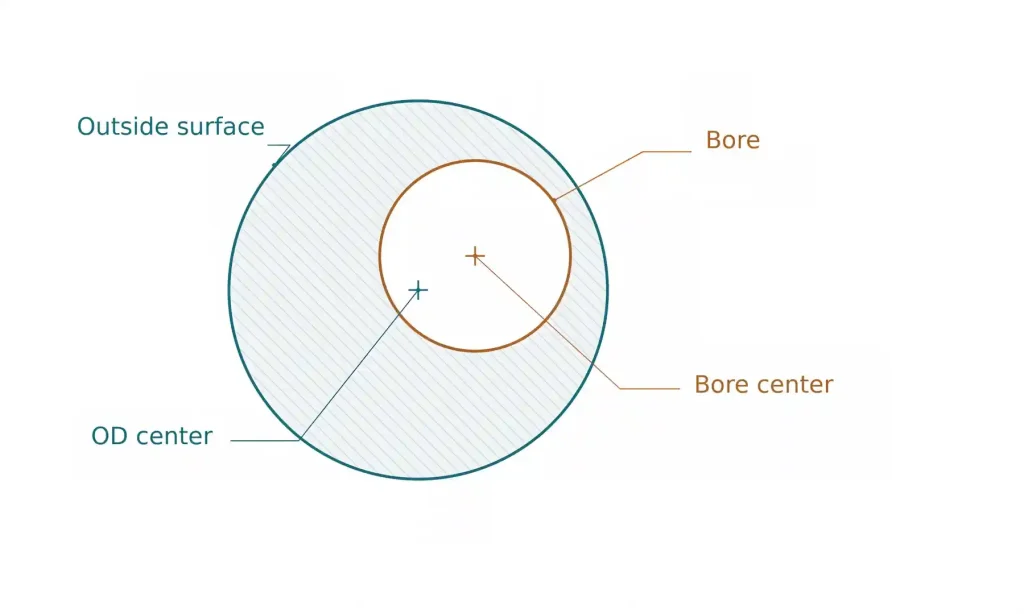
The outside diameter can therefore meet its size requirement without proving the required OD-to-bore relationship. Ask how the complete process establishes that relationship. Depending on the part, the route may require a datum-based grinding setup, a different machining sequence, or verified control of the relationship carried into centerless finishing.
The same question applies to separated shaft journals. Finishing both diameters does not, by itself, demonstrate compliance with every required datum relationship. Keep the drawing’s axis-related controls distinct from the form of each surface; the concentricity and runout guide explains those differences.
Acceptance also needs more than repeated micrometer readings. Certain lobed profiles can show little variation in two-point width while still having roundness error. METAS researchers demonstrate this limitation for centerless-ground pin gauges in Which diameter matters?.
When roundness or datum-related runout is specified, include an inspection method that evaluates that characteristic. Agree the relevant sections, controlled length, datum setup and final part condition. Diameter, surface texture, form and datum relationships should be reported according to the drawing rather than collapsed into one claim of “precision ground.”
For a CNC machining review, mark the journal that must be ground and keep nearby collars, reliefs, keyways and bores visible in the model. Identify its functional datum and whether any features will be machined after grinding. RapidEfficient can coordinate a supplier review of the proposed finishing route and inspection scope before quotation. A useful proposal should explain how this specific part will be supported, processed and accepted.