
Quick Summary: How to Reduce CNC Machining Deformation
CNC machining deformation is usually caused by clamping pressure, residual material stress, cutting heat, tool pressure, and unstable machining sequence. To reduce deformation, the process should control how the part is held, how material is removed, how heat is managed, and how the part is inspected after unclamping.
For thin-wall parts, aluminum housings, plates, brackets, and precision components, deformation control often requires balanced roughing, soft jaws or vacuum fixtures, staged machining, proper coolant, sharp tooling, and a rough-rest-finish strategy.
1. Introduction
In the realm of CNC machining, achieving precision and accuracy is of paramount importance. However, one of the most common and challenging issues that manufacturers face is deformation during the machining process. Deformation can lead to a host of problems, including dimensional inaccuracies, poor surface finish, and even part rejection. It not only affects the quality of the final product but also increases production costs and time. This article explains practical ways to reduce deformation during CNC machining, especially for thin-wall parts, aluminum components, plates, housings, brackets, and precision machined parts where clamping, heat, residual stress, tool pressure, and inspection can affect final dimensions.
2. Understanding Deformation in CNC Machining
Deformation in CNC machining can manifest in several ways. The most common ones include dimensional inaccuracies, where the final machined part does not conform to the specified design dimensions. This could result in parts that are too large or too small, leading to assembly issues downstream. Another visible sign is a poor surface finish. Deformation can cause uneven surfaces, with tool marks, scratches, or waviness that are not acceptable for high-quality products. In severe cases, the part may even warp or twist, making it completely unusable.
There are multiple factors contributing to deformation. Firstly, the material properties of the workpiece play a crucial role. Materials with low rigidity or high thermal expansion coefficients are more prone to deformation. For example, aluminum alloys, while popular for their lightweight and good machinability, have a relatively high coefficient of thermal expansion. During machining, the heat generated can cause the material to expand and deform.
Secondly, machining process parameters are significant. High cutting speeds, large feed rates, and excessive depths of cut can generate more heat and cutting forces, both of which can lead to deformation. Incorrect spindle speed selection can also result in vibrations, further exacerbating the problem.
The condition of the cutting tool is another factor. A dull or worn tool can increase cutting forces as it struggles to remove material efficiently. This not only affects the surface finish but also induces more stress on the workpiece, leading to deformation. Additionally, improper tool geometry, such as incorrect rake angles or relief angles, can contribute to the issue.
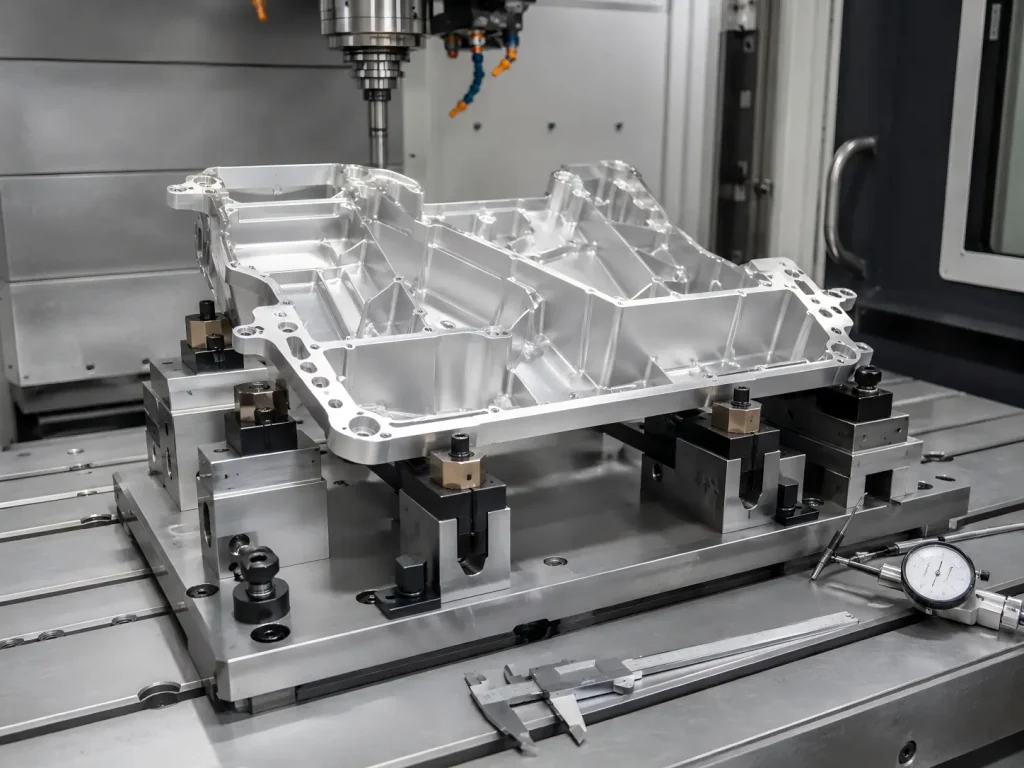
Workpiece clamping is equally important. Inadequate clamping force may allow the part to move during machining, while excessive force can cause the workpiece to deform, especially in the case of thin-walled or fragile parts. The clamping method and the location of clamping points need to be carefully considered to ensure stability without inducing unnecessary stress.
| Deformation Factor | Root Cause | Practical Control Method |
|---|---|---|
| Thin-wall bending | Excessive clamping force or weak support | Use soft jaws, vacuum fixtures, balanced support, and lower pressure during finishing |
| Post-machining warping | Residual internal stress released after roughing | Use stress relief, staged roughing, rest time, and rough-rest-finish machining |
| Dimensional drift | Cutting heat and thermal expansion | Use stable coolant, sharp tools, controlled cutting parameters, and temperature-aware inspection |
| Surface bowing | Uneven material removal or poor toolpath balance | Use symmetrical machining, balanced stock removal, and suitable finishing allowance |
| Hole or bore misalignment | Datum shift, fixture movement, or part deformation after unclamping | Use functional datums, stable fixtures, probing, and inspection after unclamping |
Deformation control is often connected with tolerance stack-up. When clamping force, thermal drift, datum shift, and residual stress happen together, small errors can become assembly-level problems.
3. Strategies to Minimize Deformation
3.1 Optimizing Machining Parameters
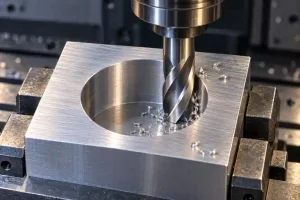
One of the first steps in reducing deformation is to optimize the machining parameters. This involves carefully selecting the cutting speed, feed rate, and depth of cut. For different workpiece materials, there are recommended ranges of these parameters. For instance, when machining a high-strength steel alloy, a lower cutting speed might be preferred to reduce heat generation, while a relatively moderate feed rate and depth of cut can balance material removal efficiency and the stress induced on the workpiece.
Modern CNC machines often come with advanced software that can simulate the machining process based on the input parameters. By running these simulations, manufacturers can predict the potential deformation and make adjustments accordingly. Additionally, optimizing the machining path can also play a significant role. A well-planned path ensures that the cutting forces are distributed more evenly, reducing the likelihood of localized deformation. For complex geometries, using techniques like trochoidal milling can minimize sudden changes in cutting direction and force, leading to smoother material removal and less deformation.
3.2 Selecting Appropriate Tools
The choice of cutting tool is another critical factor. Different workpiece materials require specific tool materials and geometries. For soft materials like aluminum, high-speed steel or carbide tools with sharp cutting edges can be effective. The geometry of the tool, such as the rake angle and relief angle, needs to be optimized for the material being machined. A positive rake angle can reduce cutting forces and, in turn, minimize deformation, especially for materials that are more ductile.
Tool coatings also contribute to reducing deformation. Coatings like titanium nitride (TiN), titanium carbonitride (TiCN), or diamond-like carbon (DLC) can enhance the tool’s wear resistance, reduce friction between the tool and the workpiece, and lower the cutting temperature. This not only prolongs the tool life but also helps in minimizing the heat-induced deformation of the workpiece. For example, in the machining of stainless steel, a TiN-coated carbide tool can significantly improve the surface finish and dimensional accuracy by reducing the adhesion of the material to the tool and the associated cutting forces.
3.3 Improving Workpiece Fixturing
Proper workpiece fixturing is essential to prevent movement and deformation during machining. The clamping force needs to be carefully calibrated. For thin-walled parts, using soft jaws or special fixtures that distribute the clamping force evenly can avoid excessive stress concentration that could lead to deformation. For example, in the aerospace industry, where many components have thin walls and complex shapes, custom-designed fixtures with adjustable clamping mechanisms are often used to ensure precise positioning and minimal distortion.
The location of clamping points is equally important. They should be strategically placed to counteract the cutting forces. In some cases, multiple clamping points may be required to provide stable support. Additionally, using vacuum chucks or magnetic chucks for certain ferromagnetic materials can offer a more uniform and gentle clamping solution, reducing the risk of deformation compared to traditional mechanical clamping methods.
Deformation is often only one part of a larger tolerance stack-up problem. When clamping force, thermal drift, and datum shift happen together, small errors can quickly become assembly-level failure. Learn more in our tolerance stack-up analysis.
3.4 Implementing Pre-machining Treatments
Pre-machining treatments can significantly reduce the likelihood of deformation. One common method is stress relieving or annealing, especially for materials that have undergone processes like casting, forging, or welding. These processes can introduce internal stresses in the material, and annealing at an appropriate temperature can help to homogenize the microstructure and relieve these stresses, making the material more stable during machining.
Another technique is aging treatment, which is particularly relevant for aluminum alloys. By subjecting the material to a controlled heating and cooling cycle, the alloy’s mechanical properties can be optimized, reducing its susceptibility to deformation. Additionally, with the advancements in simulation technology, manufacturers can now virtually model the entire machining process before actual production. This allows them to identify potential deformation hotspots and make necessary adjustments to the machining parameters, tool selection, or fixturing, ensuring a smoother and more accurate machining operation.
4. Practical Process Controls for Reducing CNC Machining Deformation
Reducing deformation during CNC machining is not about one single method. It usually requires a combination of material review, fixture planning, cutting parameter control, toolpath strategy, heat management, and inspection after unclamping.
4.1 Control Clamping Force
Excessive clamping force is one of the most common reasons thin-wall parts bend during machining. Soft jaws, larger contact areas, vacuum fixtures, and balanced support can help reduce local pressure. For critical features, final dimensions should be checked after the part is released from the fixture.
4.2 Use Rough-Rest-Finish Machining
Some materials move after roughing because internal stress is released. A rough-rest-finish strategy removes most material first, allows the part to stabilize, and then finishes critical surfaces later. This is especially useful for aluminum housings, thin plates, deep pockets, and large flat surfaces.
4.3 Balance Material Removal
Uneven stock removal can cause plates, covers, frames, and thin-wall parts to bow or twist. Symmetrical machining, staged cutting, and balanced toolpaths can reduce stress imbalance and improve dimensional stability.
4.4 Manage Cutting Heat
Cutting heat can cause temporary thermal expansion during machining and dimensional changes after cooling. Sharp tools, suitable feed and speed, stable coolant, and controlled finishing passes help reduce heat-related deformation.
4.5 Inspect After Unclamping
A part may look accurate while it is still clamped, but change shape after release. For deformation-sensitive parts, inspection should include critical features after unclamping, especially flatness, bore alignment, wall thickness, mating surfaces, and hole position.
For broader drawing and tolerance planning, see our CNC machining design guide before finalizing thin-wall features, pockets, and tight tolerances.
5. Practical Examples of CNC Machining Deformation Control
Real deformation control depends on part geometry, material, tolerance, fixture method, and machining sequence. The examples below are practical situations that often appear in custom CNC machining projects.
| Part Type | Common Deformation Risk | Practical Control Method |
|---|---|---|
| Thin-wall aluminum housing | Walls bend under clamping pressure or after roughing | Use soft jaws, balanced support, staged roughing, and final inspection after release |
| Large aluminum plate | Flatness changes after one-side machining | Use symmetrical material removal, stress relief when needed, and controlled finishing allowance |
| Deep pocket component | Uneven wall thickness creates local distortion | Use step-down roughing, rest machining, and avoid aggressive finishing passes |
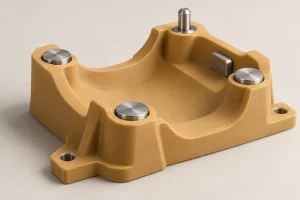
| Motor housing | Bore and mounting face alignment shift after unclamping | Use functional datums, custom fixture support, probing, and CMM verification |
| Precision bracket | Hole position changes between setups | Use common datums, controlled re-clamping, and inspection of critical hole patterns |
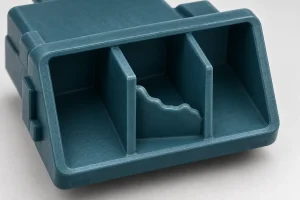
| Plastic or soft material part | Material deflects under cutting force or clamp pressure | Use sharp tools, low cutting force, stable support, and conservative finishing passes |
These examples are more useful than generic success stories because they show how deformation risk appears in real machining decisions.
FAQ: Reducing Deformation During CNC Machining
What causes deformation during CNC machining?
CNC machining deformation is commonly caused by clamping force, residual material stress, cutting heat, tool pressure, weak fixture support, uneven material removal, and inspection before the part has stabilized.
How can thin-wall part deformation be reduced?
Thin-wall deformation can be reduced by using soft jaws, vacuum fixtures, balanced support, lower clamping pressure, staged roughing, suitable cutting parameters, and final inspection after unclamping.
Why do aluminum parts deform during machining?
Aluminum parts may deform because aluminum has lower stiffness than steel and can respond strongly to cutting heat, clamping force, wall thickness changes, and internal stress release. Thin-wall aluminum housings and plates are especially sensitive.
Does rough-rest-finish machining help reduce deformation?
Yes. Rough-rest-finish machining can help reduce deformation by removing most material first, allowing the part to release stress or stabilize, and then finishing critical features later.
Is clamping force always the main cause?
No. Clamping force is important, but deformation can also come from residual stress, cutting heat, tool wear, poor datum selection, uneven material removal, and inspection mismatch.
What should buyers provide before quoting deformation-sensitive CNC parts?
Buyers should provide 2D drawings, 3D CAD files, material grade, wall thickness, flatness requirements, critical tolerances, surface finish, quantity, and application notes. This helps the supplier review deformation risk before quotation.
6. Conclusion
Reducing deformation during CNC machining requires more than simply lowering cutting speed or clamping the part harder. Deformation control depends on material condition, fixture support, clamping force, machining sequence, toolpath balance, cutting heat, and inspection after unclamping.
For thin-wall parts, aluminum housings, plates, brackets, motor housings, and precision components, the machining plan should be reviewed before production. Rough-rest-finish machining, balanced material removal, soft jaws, vacuum fixtures, stable coolant, and functional datum planning can all help reduce deformation risk.
Rapid Efficient can review drawings, material requirements, wall thickness, datum selection, tolerance risks, surface finish needs, and inspection requirements before quotation to help identify possible deformation issues in custom CNC machined parts.