铜镀铝: CNC 买家在生产前应检查什么

铜镀铝听起来像是简单的表面处理.

买家可能需要铜色表面, 电接触区域, an EMI shielding surface, a soldering area, or a decorative metal finish. So the drawing says:

Copper plate aluminum part

That note is not always enough.

Aluminum is not plated like copper, 黄铜, or steel. The copper layer does not automatically bond well to aluminum. If the surface is not prepared correctly, the plated layer may blister, peel, stain, or fail during assembly.

用于 CNC 加工零件, copper plating aluminum should be reviewed before production. The buyer should define where copper is needed, what the copper layer must do, which areas must be protected, and how the final part should be inspected.


The Simple Answer: Can Aluminum Be Copper Plated?

是的, aluminum can be copper plated.

But it usually needs special surface preparation before copper plating. The main problem is the natural oxide layer on aluminum. This oxide layer forms very quickly and can make it hard for copper to bond directly to the aluminum base material.

That is why aluminum plating often uses a pretreatment step before copper plating. One common word buyers may see is zincate.

Zincate is a pretreatment layer used to help plating bond to aluminum. It is not the final copper layer. It is part of the preparation process that helps create a better base for plating.

对于买家, the key point is simple:

Do not specify copper plating aluminum only by color.

The drawing or RFQ should explain the function of the copper layer, not just the appearance.


Why Copper Plating Aluminum Is Not Simple

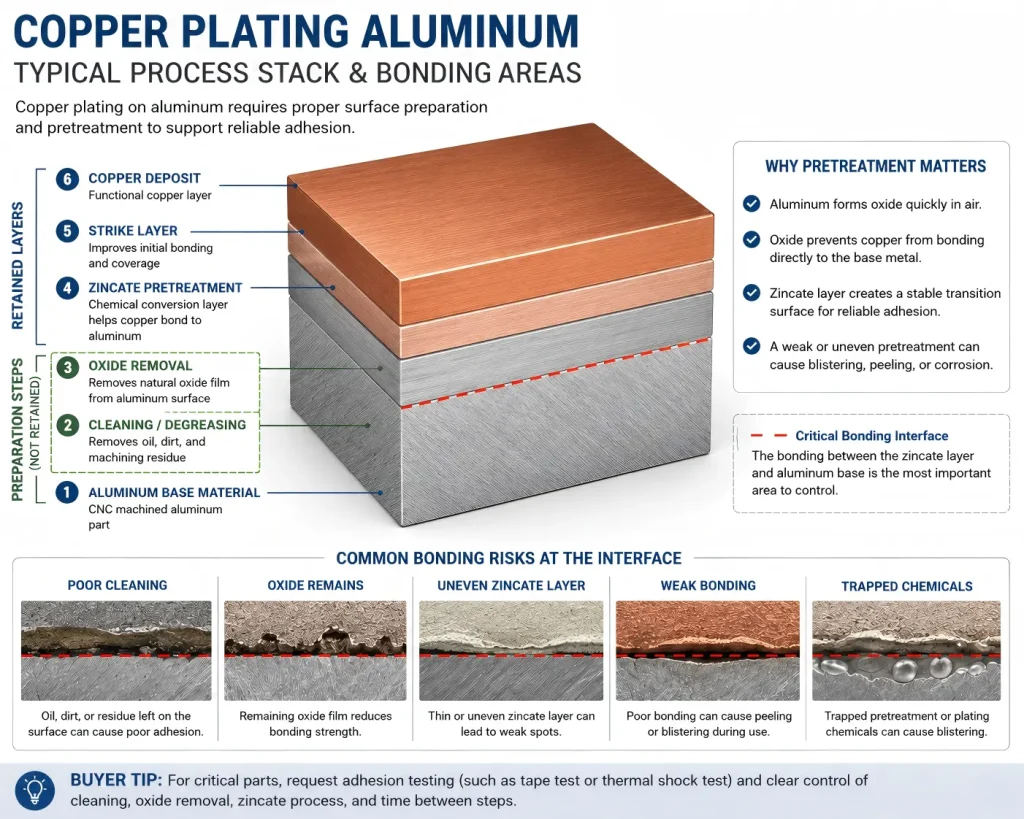
Copper plating aluminum depends on several steps working together.

The problem usually starts where the copper layer bonds to the aluminum base. If that bond is weak, the part may look good after plating, but fail later during handling, 加热, 集会, or testing.

可能会出现什么问题
Aluminum base material合金, 脾气, 加工痕迹, 毛刺, and holes can affect plating quality
Surface cleaningOil, polishing residue, 指纹, or chips may remain
Oxide removalAluminum oxide may reduce bonding if not removed correctly
Zincate or pretreatmentUneven pretreatment may lead to weak bonding
Copper platingThickness may vary on edges, 孔, 口袋, and contact areas
Final cleaningTrapped chemicals may remain in blind holes, 线程, or deep pockets
Final handlingCopper surfaces may scratch, stain, or oxidize during packing and shipping

If this bonding area is weak, the copper layer may look fine at first but blister, peel, or fail later.

Copper and aluminum also need careful protection because they are different metals. If moisture reaches a weak spot, pinhole, or poorly bonded area in the plated layer, galvanic corrosion may start between the copper layer and the aluminum base. This can lead to local blistering, 染色, or peeling over time.

This is one reason why the zincate or pretreatment step matters so much. It helps prepare the aluminum surface before the copper layer is applied. For important parts, buyers may request a simple adhesion check, such as a tape test or thermal shock test, if the finish must survive handling, 热, 集会, or service conditions.

Copper plating aluminum process stack diagram showing aluminum base material, cleaning and oxide removal steps, zincate pretreatment, strike layer, copper deposit, critical bonding interface, adhesion risks, trapped chemicals, and blistering risk areas.

First Decide Why the Part Needs Copper

Before asking for copper plating on aluminum, define the reason.

Copper plating can be used for different purposes. Each purpose needs different controls.

Reason for Copper Plating买家应该检查什么
电接触Which area must conduct electricity, and how it will touch the mating part
电磁干扰屏蔽Whether the copper surface is continuous enough for the shielding path
Soldering or bondingWhether the plated surface must stay clean and solderable
Decorative copper colorWhat appearance is acceptable, and how the part will be packed
Underlayer for another finishWhether the next finish is compatible with the copper layer
Thermal contact surfaceWhether surface flatness and contact area matter more than color
Local repair or build-upWhether thickness and machining after plating are required

If the buyer only wants a copper color, another finish may be easier. If the buyer needs conductivity, soldering, or shielding, then copper plating must be treated as a functional coating.

For more finishing options, 看看我们的 CNC 表面处理指南.


Where Copper Plating on Aluminum Usually Fails

Copper plating on aluminum usually fails in predictable areas.

The failure may not appear immediately. It may show up after assembly, heat exposure, 船运, 测试, or customer inspection.

FailureWhat It Looks LikeWhat to Review
BlisteringRaised bubbles under the copper layer打扫, oxide removal, zincate, 滞留气体, or weak bonding
剥皮Copper lifts from the aluminumPoor surface preparation or weak plating bond
Edge buildupCorners look heavy or unevenSharp edges and high current density during plating
Thin coverage in pocketsRecessed areas do not plate evenlyPart geometry and plating access
StainingDark spots or uneven color打扫, 处理, 水分, or chemical residue
Thread tightnessScrews feel tight after platingCopper thickness or residue inside threads
Poor electrical contactContact area does not work consistently掩蔽, 氧化, 污染, or poor contact design
Cosmetic mismatchParts do not look the same合金, 表面处理, plating thickness, or handling
Trapped chemicalsResidue stays inside blind holes or pocketsPoor drainage or difficult cleaning
Failure after testingPart passes visual inspection but fails laterWeak bonding, 热, 弯曲, assembly load, or poor pretreatment

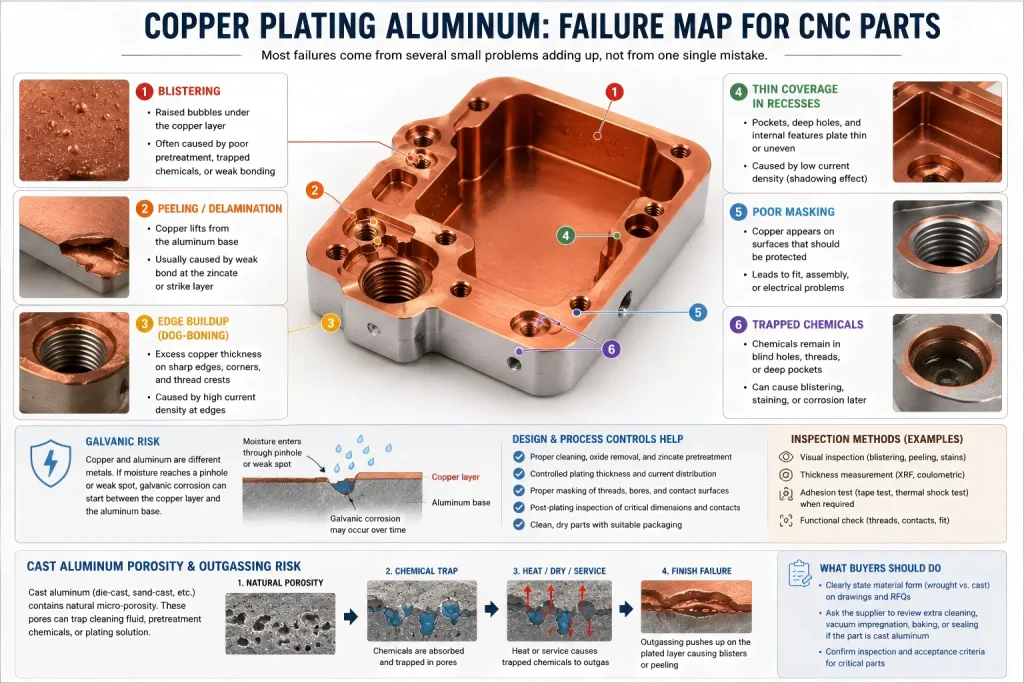
Most failures come from several small problems adding up, not from one single mistake.

The aluminum form also matters. Wrought aluminum materials such as 6061-T6 plate or bar are often more predictable than cast aluminum for plating review. Cast aluminum may contain small pores inside the metal. These pores can trap cleaning fluid, pretreatment chemicals, or plating solution.

之后, during drying, 加热, 集会, or service, trapped residue may bleed out or outgas. This can push against the plated layer and cause small blisters, 染色, 脱皮, or local finish defects.

If the part is cast aluminum, such as die-cast or sand-cast aluminum, the RFQ should clearly state the material form. The supplier may need to review extra cleaning, baking, vacuum impregnation, 密封, or another pretreatment step before copper plating.

Copper plating aluminum failure map for CNC machined parts showing blistering, 脱皮, edge buildup, thin coverage in recesses, poor masking, trapped chemicals, galvanic risk, cast aluminum porosity, outgassing, and inspection methods.

CNC Machining Quality Matters Before Plating

Plating does not fix poor machining.

If a CNC part has deep tool marks, 毛刺, 锋利的边缘, 油, or trapped chips, copper plating may make the problem worse or more visible.

CNC FeaturePlating Risk
Deep tool marksMarks may still show under the copper layer
毛刺Burrs may plate over, break off, or trap chemicals
锋利的边缘Copper may build up more heavily on corners
盲孔Chemicals may remain inside the hole
财力雄厚Plating may be thin or uneven
线程数Copper buildup may make screws tight
轴承孔Plating may change the final fit
Press-fit holesAssembly force may change after plating
密封面Surface condition may affect contact or leakage risk
基准面Inspection reference surfaces may change after plating

Part geometry also affects plating thickness. Electroplating depends on electrical current reaching the part surface. 尖角, outside threads, thin flanges, and raised edges may receive more copper buildup because current is stronger in those areas. In plating work, this edge-heavy buildup is sometimes called a dog-boning effect.

The opposite can happen inside deep holes, 内螺纹, 口袋, and blind features. These areas may receive less copper because current does not reach them as easily. They may also trap plating chemicals if the part is difficult to rinse.

For functional threads, tight bores, 接触区域, and precision fits, it is usually safer to define masking, final gauge inspection, or post-plating size checks instead of assuming copper thickness will be even everywhere.

If the part has tight bores, 线程, contact pads, 密封面, or datum surfaces, the drawing should say whether those areas are plated, masked, or inspected after plating.

For coated features and fit control, 看看我们的 CNC加工公差指南.


Drawing Notes That Help Avoid Plating Disputes

A copper plating note should be more specific than a color note.

A weak note says:

Copper plate all surfaces

A better drawing explains where copper is needed and which areas should be protected.

要求Better Drawing Note Example
Plated areaCopper plate only marked external surfaces
掩蔽Mask threads, 轴承孔, 密封面, and datum surface A
厚度Copper plating thickness 5–10 μm on marked surfaces, unless otherwise agreed
Final sizeCritical dimensions apply after plating
Contact surfaceKeep marked contact pad clean and conductive after finishing
Cosmetic surfaceCopper appearance on visible faces to match approved sample or photo
线程数Threads must remain functional after plating; gauge check if required
盲孔No visible trapped residue in blind holes after finishing
包装Protect copper surface from scratches, 指纹, and moisture during shipment

The drawing does not need to explain every chemical step, but it should clearly explain what the copper layer must do.


When Copper Plating Aluminum Makes Sense

Copper plating on aluminum may make sense when the part needs a copper surface but still benefits from the low weight and machinability of aluminum.

It may be considered for:

需要Why Copper Plating May Be Used
Lightweight conductive partAluminum keeps weight lower, copper supports selected contact areas
电磁干扰屏蔽Copper may support conductive contact when designed correctly
Soldering areaCopper may help when the full plating stack supports soldering
Decorative copper appearanceCopper color may be needed on visible surfaces
Contact padsSelected areas may need better surface conductivity
Prototype testingCopper plated aluminum may be tested before changing material
Multi-layer finishingCopper may be used as part of a larger plating system

Copper plating should not be chosen just because it sounds easy. If the part must carry current, resist corrosion, survive assembly, or look consistent, the finishing route should be reviewed before quotation.

For base material selection, 看看我们的 CNC加工材料指南.

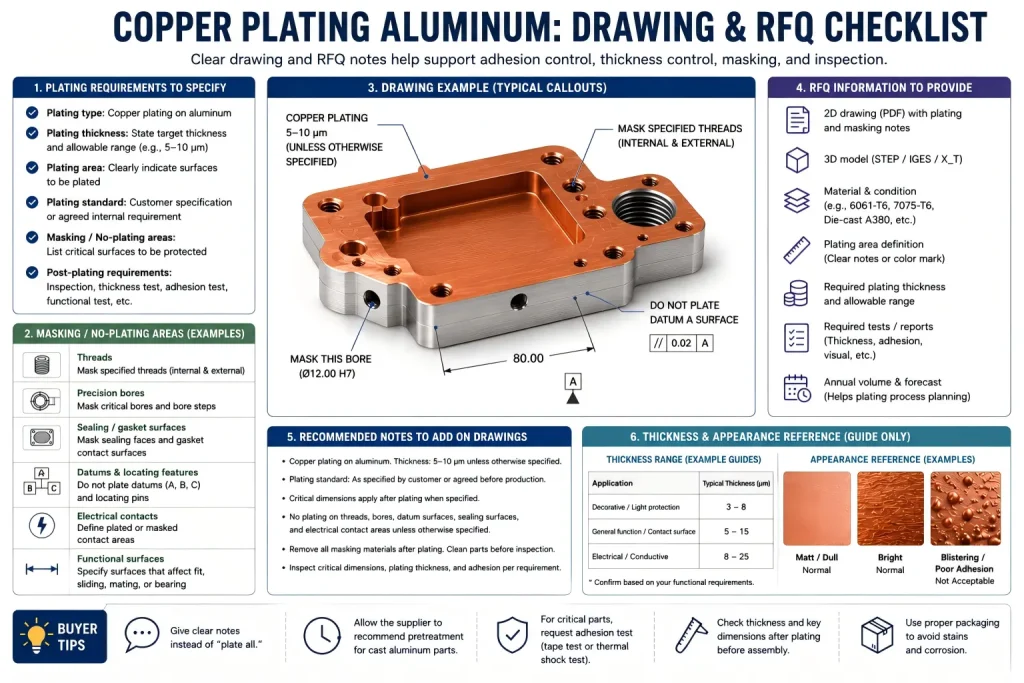
Drawing and RFQ checklist for copper plated aluminum CNC parts showing plating area, masking notes, copper thickness range, protected threads and bores, datum surfaces, 接触区域, 检验要求, cosmetic acceptance, and packaging notes.

When Another Finish May Be Better

Copper plating is not always the best answer for aluminum.

The safer choice depends on what the part must do.

需要Alternative to Review
General corrosion protection阳极氧化, conversion coating, 粉末涂料, or painting
Cosmetic aluminum finish珠光喷砂 + 阳极氧化, brushed finish, or clear anodizing
耐磨性硬质阳极氧化, nickel plating, or other engineered coating
电接触Selective plating, conductive insert, masked bare contact area, or material change
Soldering surfaceFull plating stack review or alternate material
Copper appearance onlyDecorative finish or copper alloy part
High conductivityMachined copper or copper alloy may be better
Tight threads or boresMasking or no plating on those areas may be safer

If the main goal is anodized aluminum appearance, 审查 铝阳极氧化缺陷 第一. If the part needs a controlled machined aluminum appearance before finishing, 看看我们的 CNC 铝材表面光洁度指南.

If the part truly needs copper performance through the full material, machining copper or a copper alloy may be better than plating aluminum. For that option, 看看我们的 铜数控加工 指导.


Copper Thickness Can Affect Fit

Copper plating adds material to the surface.

Even a thin layer can matter on small or tight features.

特征What Can Happen
内螺纹Screws may feel tight
轴承孔Final bore size may change
Press-fit holesAssembly force may increase
小孔Openings may become smaller
滑动面Friction may change
密封面Contact surface may change
尖角Copper may build up more at edges
财力雄厚Copper may be thinner or uneven
基准面Inspection reference may change

If a plated surface has a tight tolerance, the drawing should say whether the tolerance applies before or after plating.

For threads, 钻孔, 压配合孔, and datum surfaces, masking or post-plating inspection may be needed.


Edge, Burr, and Cleaning Control

Copper plating will not remove burrs.

毛刺, folded edges, sharp corners, and dirty holes can create bigger problems after plating. A burr may plate over, break off later, trap chemicals, or create uneven copper buildup.

Before PlatingPossible Problem After Plating
Burr at hole edgeRough plated edge or assembly interference
Sharp cornerHeavy copper buildup or weak coating point
Rolled burrHidden defect under the plated layer
Oil in blind holeBlistering, 染色, or trapped residue
Polishing compoundPoor bonding or color problem
Poor rinsingChemical residue and staining
指纹Visible stain or poor bonding
Deep scratchScratch may still show under copper

Deburring should be reviewed before plating, especially around holes, 线程, 凹槽, 密封面, and visible surfaces. 更多毛刺控制指导, 看看我们的 什么是去毛刺 文章.


Inspection Questions Before Shipment

Copper plated aluminum parts should be checked based on the purpose of the copper layer.

A decorative copper surface and an electrical contact surface do not need the same inspection plan.

Inspection Question为什么它很重要
Are the correct areas plated?Prevents missing or over-plated areas
Are protected areas clean?Confirms masking worked
Are threads and holes functional?Prevents assembly problems
Is the copper appearance acceptable?Reduces cosmetic disputes
Is there blistering or peeling?Checks bonding risk
Does thickness meet the agreed range?Prevents fit and performance issues
Are critical dimensions checked after plating?Confirms final part condition
Are contact areas clean and protected?Supports electrical or bonding function
Are blind holes free of visible residue?Reduces trapped chemical and assembly risk
Is packaging suitable for copper surfaces?Reduces scratches, 指纹, and oxidation

For inspection and documentation planning, 看看我们的 质量保证 页.


What to Send for a Copper-Plated Aluminum Quote

A clear RFQ helps the supplier review the plating risk before quoting.

Send the following information when possible:

询价项目提供什么
3D fileSTEP file or other usable CAD file
2D图Plating notes, 公差, 遮蔽区域, 检查记录
铝牌号例子: 6061-T6, 7075, 5052, die-cast aluminum, sand-cast aluminum
Material formPlate, 酒吧, 挤压, 锻造, 压铸, sand casting, or other form
Purpose of copper外貌, 接触, soldering, shielding, underlayer, or other use
Plated surfacesMark exactly where copper is required
Protected surfaces线程数, 钻孔, 密封面, 日期, 接触区域, or holes
Thickness expectationRequired range if thickness matters
化妆品标准样本, photo, or acceptable appearance range
检验要求Thickness check, visual check, adhesion check, gauge check, or report
数量原型, 低容量, 或重复生产
包装要求Scratch protection, 湿度控制, individual wrapping, or labeling

This information helps the supplier decide whether copper plating is suitable, whether masking is needed, and whether another finish or material may be safer.


Rapid Efficient Support for Copper-Plated Aluminum Parts

Rapid Efficient can review CNC machined aluminum parts that need copper plating or other surface finishing before quotation.

The review usually focuses on material grade, 物质形式, plated areas, 保护区, thread and bore risk, copper thickness, cosmetic requirement, 检查时间, and packaging needs.

适用于铝制外壳, 电子外壳, conductive brackets, 接触面, and precision machined parts, we can help check whether copper plating is suitable or whether another finishing route may reduce risk.

Send us your STEP file, 2D图, aluminum grade, 物质形式, required plated areas, 保护区, thickness expectation, 化妆品标准, 数量, 及检验需求. Our team can review the machining and finishing requirements before quotation.


常问问题

Can aluminum be copper plated?

是的. Aluminum can be copper plated, but it usually needs controlled surface preparation because aluminum forms an oxide layer that can reduce plating adhesion.

Why is copper plating aluminum difficult?

The main challenge is bonding the copper layer to the aluminum base. If cleaning, oxide removal, or pretreatment is not controlled well, the copper layer may blister or peel.

What is zincate in aluminum plating?

Zincate is a pretreatment layer used to help plating bond to aluminum. It is often part of the preparation before copper plating.

Why does copper plating peel from aluminum?

Peeling can happen when the aluminum surface is not cleaned or prepared correctly, when the oxide layer is not removed properly, or when the plating stack does not bond well.

Can copper plating cause corrosion problems on aluminum?

It can if the copper layer has pinholes, weak areas, or poor bonding and moisture reaches the aluminum underneath. This is why pretreatment, 覆盖范围, 掩蔽, and inspection should be reviewed carefully.

Why do threads become tight after copper plating?

Copper plating adds material. External thread crests and sharp edges may receive heavier buildup, while internal threads may have uneven coverage or trapped residue. Functional threads may need masking or post-plating gauge inspection.

Is cast aluminum harder to copper plate than 6061 铝?

Cast aluminum can be more difficult because pores inside the metal may trap chemicals and later cause staining, blistering, or peeling. If the part is die-cast or sand-cast aluminum, the RFQ should state the material form clearly.

Can copper plating hide machining marks?

福田街道. Copper plating may change appearance, but deep tool marks, 划痕, 凹痕, and chatter can still show through or cause coating defects.

Should threads be copper plated or masked?

It depends on the function. If thread fit is important, threads may need masking or post-plating gauge inspection. If the thread must conduct electricity, the fit and plating requirement should be reviewed together.

Does copper plating change part dimensions?

是的, copper plating adds material to the surface. Even a thin layer can affect tight threads, 钻孔, 压配合孔, and datum surfaces.

Is copper plating better than anodizing for aluminum?

Not necessarily. Anodizing is commonly used for aluminum appearance and corrosion resistance. Copper plating is used for different functions such as contact, soldering, shielding, or copper appearance.

What should I include in a copper plating aluminum RFQ?

Include aluminum grade, 物质形式, plated surfaces, 保护区, copper plating purpose, thickness expectation, 化妆品标准, 关键尺寸, thread and bore requirements, 检查方法, packaging requirement, 和数量.

发表评论

滚动至顶部

获取报价

点击或拖拽文件到该区域即可上传. 您最多可以上传 10 文件.
文件格式:TXT PDF DOC DOCX XLS XLSX PPT PPTX JPG PNG ZIP RAR DWG DXF DXF DWT DWS DWS

3D文件格式: 步, STP, sldprt, IPT, prt, 坐着, IGES, IGS, catpart, X_T, OBJ, STL