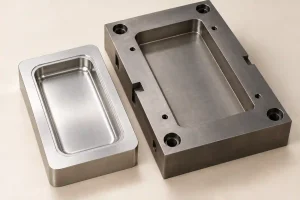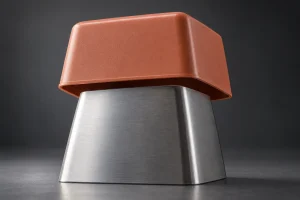
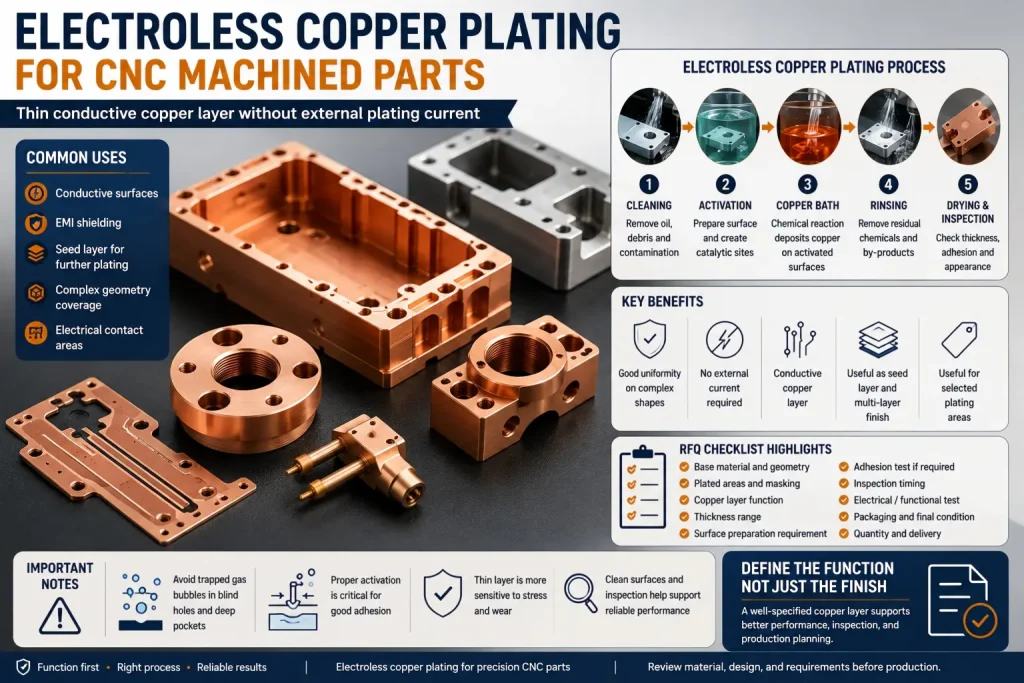
CNC 加工零件的化学镀铜

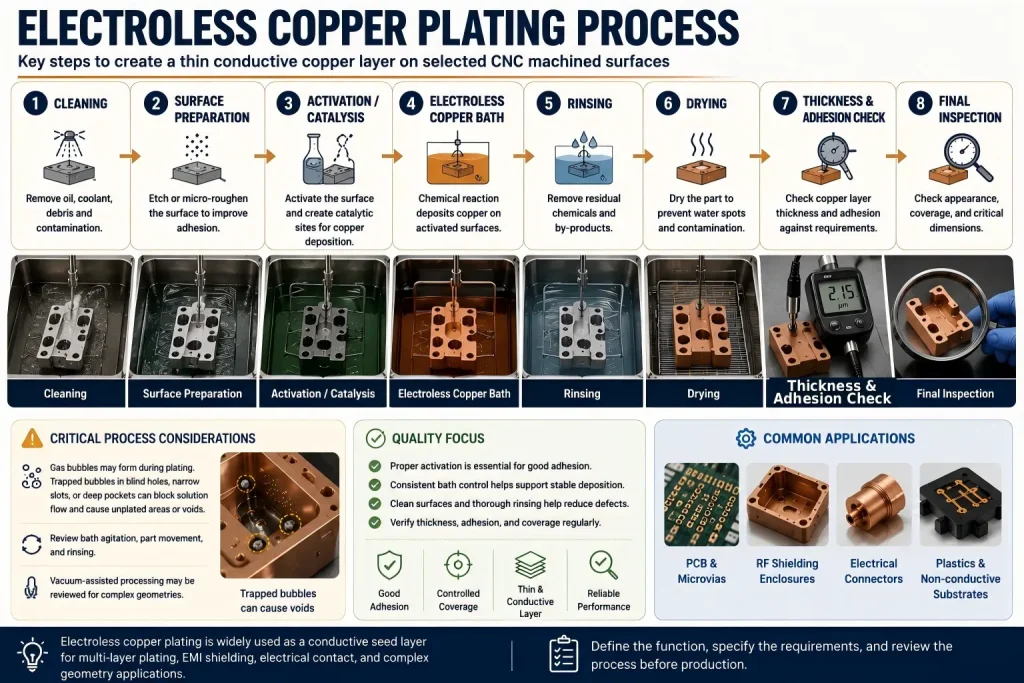
CNC 加工零件的化学镀铜显示出薄的导电铜涂层, 打扫, 激活, 铜浴沉积, 漂洗, 烘干, 附着力检查, 遮蔽区域, 气泡滞留风险, 种子层使用, 电磁干扰屏蔽, 电接触区域, 和询价清单注释.

Electroless copper plating is used when a part needs a thin copper layer without relying on electrical current during the plating step.

对于数控买家, this can matter when the part needs:

  • a conductive surface
  • copper coverage on complex geometry
  • a seed layer before another plating step
  • 电磁干扰屏蔽
  • selected copper-coated areas
  • improved electrical contact
  • a copper base for later finishing

But electroless copper plating is not the same as simply making a part look copper-colored.

更好的问题不仅是:

Can this part receive copper plating?

更好的问题是:

What must the copper layer do, and can the base material, 表面处理, 厚度, adhesion, 掩蔽, and inspection method support that function?


The Simple Answer: What Is Electroless Copper Plating?

Electroless copper plating is a chemical copper deposition process. It deposits copper onto a prepared and activated surface without using external electrical current during the deposition step.

This is different from copper electroplating, where electrical current drives copper deposition onto the part.

对于买家, the practical difference is simple:

Plating TypeHow Copper Is DepositedBuyer Meaning
Electroless copper platingChemical reaction on an activated surfaceUseful for uniform coverage, conductive seed layers, and selected complex surfaces
Copper electroplatingElectrical current deposits copperOften used when thicker copper build-up or current-driven plating control is needed
Copper plating on aluminumUsually requires special aluminum pretreatmentAdhesion and galvanic risk must be reviewed carefully
Solid copper machiningPart is machined directly from copper alloyBetter when the whole part needs copper properties, not only a surface layer

Electroless copper plating can be useful, but it should be specified by function, not just by appearance.


When Electroless Copper Plating Makes Sense

Electroless copper plating is useful when the copper layer needs to reach areas where normal electroplating may be harder to control, or when a thin conductive copper layer is needed before another process.

Common use cases include:

应用Why Electroless Copper May Help
Conductive seed layerCreates a copper base for later electroplating or finishing
复杂的几何形状Chemical deposition may cover selected recessed areas more evenly
Non-current plating stepDoes not require the part to carry plating current during deposition
EMI shielding surfaceCopper can support electrical continuity when properly designed
Selected contact areaLocal copper layer may support electrical contact if protected correctly
Molded or non-metallic substrateSurface may need activation before copper deposition
Small holes or internal featuresCoverage depends on preparation, 激活, bath access, and cleaning
Multi-layer finishCopper may act as an intermediate layer before another coating

Use electroless copper plating when the copper layer has a clear job. If the goal is only copper color, another decorative finish may be easier and more stable.


When Electroless Copper Plating May Not Be the Best Choice

Electroless copper plating is not the best option for every part.

It may be unnecessary, costly, or risky when the part needs thick copper, heavy wear resistance, high load capacity, simple color matching, or a full copper material property through the entire section.

情况Better Question to Ask
The part needs high thermal conductivity through the full bodyShould the part be machined from copper instead?
The part only needs decorative copper colorIs a simpler decorative finish enough?
The copper layer must be thickWould copper electroplating or another build-up process be better?
Threads or tight bores are functionalShould these areas be masked or inspected after plating?
The base material is aluminumIs special pretreatment required before copper deposition?
The surface will see rubbing or wearIs copper soft layer wear acceptable?
The part will be used in a humid environmentIs corrosion, tarnish, or galvanic risk controlled?
The part has blind holes or trapped pocketsCan cleaning and rinsing remove chemical residue?

If the part needs the properties of copper through the entire part, 审查 铜数控加工 instead of using a surface copper layer.


How the Electroless Copper Plating Process Works

The exact process depends on the base material, 供应商, bath chemistry, thickness target, 和最终申请.

一般来说, electroless copper plating may include:

为什么它很重要
打扫Removes oil, 冷却液, 指纹, and machining residue
表面处理Helps the surface accept activation and copper deposition
Etching or micro-rougheningMay improve bonding on selected materials
Activation / catalystCreates active sites where copper can start depositing
Electroless copper bathDeposits copper by chemical reaction
RinsingRemoves chemical residue from holes, 口袋, and edges
DryingReduces stains, 水痕, or trapped moisture
Thickness checkConfirms whether the copper layer meets the functional need
Adhesion checkHelps confirm the copper layer is bonded well enough
最终检查Confirms visible areas, masked areas, 方面, and surface condition

During the chemical bath step, small gas bubbles can form as part of the plating reaction. On simple open surfaces, 这可能不会造成问题. But on parts with blind micro-holes, 窄槽, 财力雄厚, internal corners, or low fluid movement, trapped bubbles can block the plating solution from reaching the surface.

当这种情况发生时, the copper layer may have tiny unplated areas, weak coverage, or microscopic voids. For complex CNC housings, shielded cavities, 小孔, or internal conductive paths, buyers can ask the supplier whether bath agitation, part orientation, 漂洗, or vacuum-assisted review is needed before production.

This does not mean every part needs special bath control. It means complex geometry should be reviewed before assuming the copper layer will be continuous in every hidden area.

The copper layer is only as reliable as the cleaning, 激活, bath control, and final inspection behind it.

Electroless copper plating process map showing cleaning, 表面处理, 激活, catalytic surface preparation, electroless copper bath deposition, 漂洗, 烘干, thickness check, 附着力检查, 气泡滞留风险, void prevention, bath agitation, controlled coverage, and common applications for CNC machined parts.

Base Material Changes the Plating Risk

The same electroless copper note can mean very different things on different base materials.

Base MaterialBuyer Check
铜合金Surface cleaning and oxide control still matter
黄铜Dezincification, tarnish, and surface condition may need review
Pretreatment is critical; copper does not bond directly like it does to copper alloys
不锈钢Surface activation and adhesion route must be reviewed
锈, 打扫, and underlayer requirements may matter
工程塑料Surface activation, adhesion, and dimensional stability need review
Composite or special materialSupplier review is required before quoting
Previously finished partOld coating, oxide, or contamination can block adhesion

If the base part is aluminum, do not assume the same process as copper, 黄铜, or steel. Aluminum forms a natural oxide layer quickly, so copper plating on aluminum usually needs special pretreatment. For aluminum-specific risks, 看看我们的 copper plating aluminum guide.


厚度, Coverage, and Masking Need Clear Notes

Electroless copper plating can support more uniform coverage than some current-driven plating situations, but that does not mean every surface automatically receives the same useful copper layer.

Thickness and coverage still depend on surface condition, bath access, 化学, 时间, 零件几何形状, 孔, 口袋, 漂洗, 及检验方法.

Buyers should define:

Drawing Item为什么它很重要
Plated areasPrevents coating on surfaces that should stay clean
Masked areasProtects threads, 钻孔, 日期, 密封面, or press-fit areas
Thickness rangeAvoids vague notes like “copper plate”
功能面Explains whether copper is for contact, shielding, soldering, 或外观
检查时机Confirms whether dimensions are checked before or after plating
Visual standardControls stains, color variation, 划痕, or exposed base material
Adhesion requirementHelps prevent peeling, blistering, or handling failure
包装Protects copper surfaces from scratches, 指纹, and tarnish

Electroless copper is often used as a thin conductive layer or seed layer before another plating step. It is usually not the best choice when the part needs a thick, highly ductile, or heavy load-bearing copper surface by itself.

This matters for press-fit areas, bending features, 滑动接触, 螺纹零件, and surfaces that may see mechanical stress. A thin chemical copper layer may crack, 穿, or lose adhesion if the part function depends on mechanical strength rather than electrical continuity.

If the part needs only conductivity, shielding, 可焊性, or a seed layer, electroless copper may be useful. If the part needs thicker copper build-up, better ductility, or stronger mechanical performance, the drawing should say whether electroless copper is only the base layer before secondary copper electroplating or another finishing step.

A drawing note that says electroless copper plating is not enough if the copper layer affects fit, electrical function, 表面外观, 或最终检验.


Adhesion Is Usually the Main Risk

Many copper-plated parts fail because the copper layer does not bond well enough to the prepared surface.

This may happen because of:

  • oil or coolant residue
  • oxide film
  • polishing compound
  • poor cleaning
  • weak activation
  • wrong pretreatment
  • 截留的化学残留物
  • unsuitable base material
  • surface damage before plating
  • handling contamination

On non-metallic surfaces such as engineering plastics or composite parts, adhesion needs special review. These materials do not naturally behave like copper, 黄铜, or steel, so the supplier may need surface roughening, chemical etching, 等离子处理, special activation, or a catalytic layer before copper can deposit.

The balance is important. If the surface preparation is too weak, the copper layer may peel, flake, or fail during handling, 集会, or temperature change. If the preparation is too aggressive, it may damage fine machined details, 表面饰面, or tight dimensions.

Not every plastic is suitable for the same electroless copper process. If the part is made from PEEK, 尼龙, 聚乙烯亚胺, PSU, or another engineering plastic, the RFQ should include the exact material grade, surface function, assembly load, 温度暴露, and cosmetic requirement. The supplier can then review whether electroless copper plating is practical or whether another coating route is safer.

对于关键部位, adhesion should be reviewed before production. The buyer may request an agreed adhesion check, cross-hatch test, tape test, thermal cycling review, or supplier-specific inspection method depending on the application.

Do not treat electroless copper plating as a final cosmetic step only. It is a surface system, and the surface system starts before the copper layer is deposited.


Electrical Function Needs More Than Copper Color

A copper-looking surface is not always a reliable electrical surface.

If the part needs electrical contact, 电磁干扰屏蔽, grounding, soldering, or conductivity, the RFQ should define the function clearly.

Electrical RequirementBuyer Should Define
Contact surfaceWhich area touches the mating part
Grounding pathWhether the copper layer must be continuous
电磁干扰屏蔽Whether gaps, masked zones, or coating breaks are acceptable
Soldering areaSurface cleanliness and post-plating protection
Conductive holesHole coverage, 打扫, 及检验方法
Mating materialRisk of wear, galvanic behavior, or contact pressure
Current pathWhether copper thickness and continuity are enough
Final storageTarnish, 指纹, 和包装要求

If electrical performance matters, ask for more than a copper finish. Define the contact zone, continuity requirement, 保护区, 及检验需求.


Surface Finish and Dimensions Can Change After Plating

Electroless copper plating may change surface texture, visible appearance, 和功能尺寸.

For tight CNC parts, this matters around:

特征可能的问题
线程数Coating may affect gauge fit or assembly feel
博雷斯Plating may reduce hole size
Plating may increase outside diameter
DatumsCoating may affect measurement setup
密封面Copper layer may change contact behavior
Sliding areasCopper may wear or smear if not reviewed
化妆品面孔污渍, 划痕, or color variation may be visible
盲孔Chemical residue may be trapped if rinsing is poor

If the copper layer affects fit, the drawing should state whether the tolerance applies before or after plating.

For broader tolerance planning, 看看我们的 CNC加工公差指南.


Electroless Copper vs Copper Electroplating

Electroless copper plating and copper electroplating are often used for different reasons.

问题Electroless CopperCopper Electroplating
Uses external current?No external plating current during deposition是的
Useful for seed layer?经常是的Usually after a conductive surface exists
Uniformity on complex surfacesCan be useful when surface is properly activatedDepends on current density and part geometry
Thickness build-upUsually reviewed carefully by applicationOften more suitable for thicker build-up
Process sensitivityStrongly depends on cleaning, 激活, bath controlStrongly depends on current density, 掩蔽, 接触, and bath control
Common issue附着力, 激活, bath stability, 残留物Edge build-up, dog-boning, burning, current distribution
Buyer actionDefine function, activation risk, 厚度, 检查Define thickness, masked areas, 接触点, current-sensitive features

The best process depends on why the part needs copper. If the buyer needs a thin conductive layer or seed layer, electroless copper may be useful. If the buyer needs thicker copper build-up, electroplating may need review.

For broader finishing choices, 看看我们的 CNC 表面处理指南.


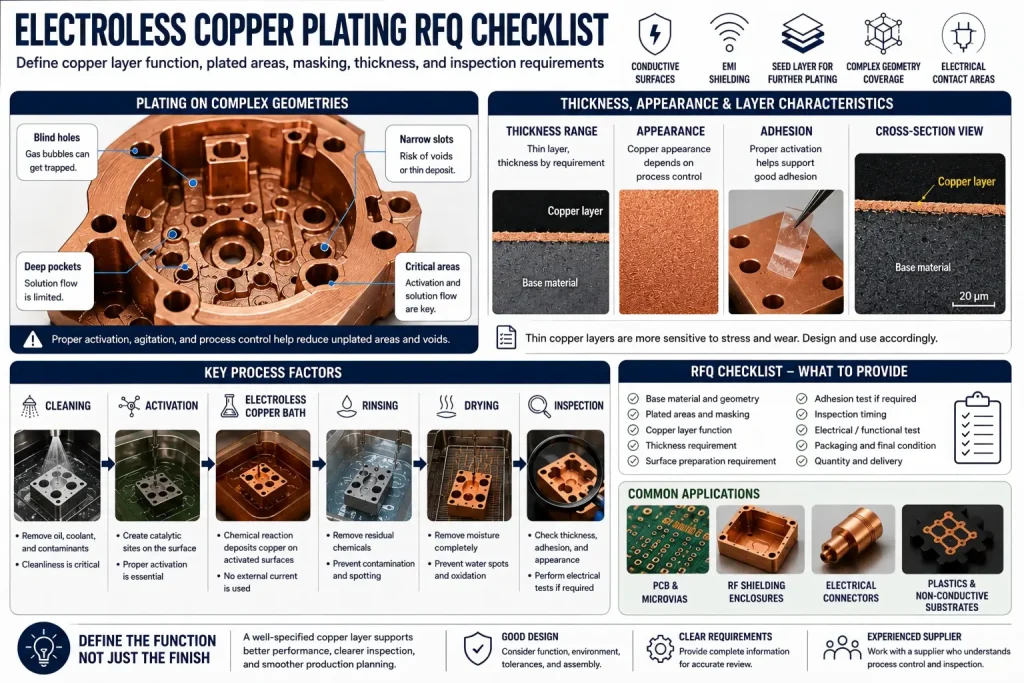
Buyer RFQ Checks for Electroless Copper Plating

发送询价之前, define what the copper layer must do.

RFQ Check提供什么
Base material铝, 铜合金, 黄铜, 钢, 不锈钢, 塑料, or special substrate
零件几何形状洞, 线程, 口袋, blind areas, deep features, or small details
Copper layer function电导率, shielding, soldering, seed layer, 外貌, or underlayer
Plated areasMark surfaces that must receive copper
Masked areas线程数, 钻孔, 日期, press-fit zones, 密封面, or cosmetic no-plate areas
Thickness targetRange or project-specific requirement
表面光洁度As-plated, 抛光的, post-treated, or customer visual standard
Adhesion requirementTest method if required
检查时机Before plating, 电镀后, 或两者兼而有之
Electrical checkContinuity, contact area, or customer test if needed
清洁要求盲孔, 线程, and small features that must be free from residue
包装Scratch protection, tarnish prevention, clean handling, or special bags

The goal is to define what the copper layer must do, not just ask for a copper-colored finish.

RFQ checklist for electroless copper plating on CNC parts showing base material, plated areas, 掩蔽, copper layer function, thickness requirement, 表面处理, 激活, adhesion check, 检查时间, electrical test, 气泡滞留风险, void prevention, 包装, and final condition.

实用绘图笔记示例

例子 1: Conductive Contact Surface

Electroless copper plate marked contact surface only. Mask threads and datum faces. Final contact area must be clean and free from visible peeling or blistering.

This note tells the supplier where copper matters and which areas should not be coated.

例子 2: Seed Layer Before Further Plating

Electroless copper seed layer required before secondary plating. Thickness and adhesion to be confirmed before production.

This makes clear that the copper layer is part of a process stack, not just a final color.

例子 3: Aluminum CNC Part

Copper layer on aluminum part requires supplier review for pretreatment, adhesion, 掩蔽, 和最终检验. Do not plate threaded holes unless approved.

This avoids assuming aluminum behaves like copper or steel.

例子 4: 复杂的几何形状

Electroless copper plating required on internal surfaces shown in green. Supplier to review bath access, 漂洗, 及检验方法.

This helps prevent missed coverage or trapped chemical residue.

例子 5: Electrical Shielding Part

Copper layer must support electrical continuity across marked shielding path. Masked breaks and contact points to be reviewed before production.

This links the finish to the electrical function.


买家常见错误

错误 1: Asking Only for “Copper Plating”

Copper plating is not one single process. Electroless copper plating, copper electroplating, and copper plating on aluminum can involve different preparation, 厚度, adhesion, 及检验要求.

错误 2: Not Explaining the Copper Function

A copper layer for appearance is different from a copper layer for contact, shielding, soldering, or a seed layer. The function should be clear before quotation.

错误 3: Forgetting Masked Areas

线程数, 钻孔, 密封面, datum surfaces, and press-fit areas may need masking. If masking is not defined, the supplier may not know which areas are functional.

错误 4: Ignoring Cleaning and Residue

盲孔, small pockets, deep grooves, and internal threads may trap chemical residue if rinsing and drying are not reviewed.

错误 5: Checking Dimensions Only Before Plating

If copper thickness changes fit, the final part should be checked after plating. This is especially important for threads, 钻孔, 轴, 和配合面.


Rapid Efficient Support for Electroless Copper Plating Review

Rapid Efficient can review CNC machined parts that need electroless copper plating, copper electroplating, copper-plated aluminum, conductive surfaces, shielding areas, seed layers, 掩蔽, and post-plating inspection.

We can help check the drawing before quotation and identify risks involving material grade, 表面处理, plated areas, protected features, 厚度, adhesion, 检查时间, 和包装.

将您的 STEP 文件发送给我们, 2D图, 基材, plating function, plated surfaces, masked surfaces, thickness requirement, cosmetic expectation, 数量, 及检验需求.

For manufacturability and inspection planning, 看看我们的 CNC加工设计指南质量保证 pages.


Buyer Questions Before Choosing Electroless Copper Plating

Is electroless copper plating the same as copper electroplating?

福田街道. Electroless copper plating deposits copper by chemical reaction on a prepared surface. Copper electroplating uses electrical current to deposit copper.

Can electroless copper plating be used on CNC machined parts?

是的, depending on the base material, 表面处理, plated area, 厚度, adhesion requirement, and final inspection needs. The supplier should review the process before production.

Is electroless copper plating good for aluminum?

Aluminum needs special review because its oxide layer makes direct copper bonding difficult. Pretreatment, adhesion, 掩蔽, and galvanic risk should be reviewed before production.

Does electroless copper plating add thickness?

是的. It creates a copper layer, so dimensions can change. 线程数, 钻孔, 轴, 密封面, and contact areas should be reviewed if fit matters.

Can electroless copper plating improve conductivity?

It can create a conductive copper surface when the layer is continuous and properly bonded. For electrical function, define the contact path, copper area, 厚度, 及检验方法.

What should I send for an electroless copper plating RFQ?

发送 2D 图纸, 3D型, 基材, plating function, plated areas, masked areas, target thickness, 表面光洁度要求, electrical requirement if any, 数量, 及检验需求.

发表评论

滚动至顶部

获取报价

点击或拖拽文件到该区域即可上传. 您最多可以上传 10 文件.
文件格式:TXT PDF DOC DOCX XLS XLSX PPT PPTX JPG PNG ZIP RAR DWG DXF DXF DWT DWS DWS

3D文件格式: 步, STP, sldprt, IPT, prt, 坐着, IGES, IGS, catpart, X_T, OBJ, STL