快速解答
A typical CNC machining process includes seven main stages:
- Drawing and RFQ review
- DFM and process planning
- 材料, 工装, and fixture preparation
- CAM programming and toolpath simulation
- Machine setup and first-piece verification
- 粗加工, 精加工, and in-process control
- 最终检查, 表面处理, 和包装
确切的顺序可能会随着零件几何形状的变化而变化, 材料, 数量, 公差, 表面饰面, 及检验要求.
对于买家, the process begins before the machine starts. Drawing conflicts, 物质条件, 基准选择, 工具访问, 设置计数, and inspection requirements should be reviewed before production.
CNC Machining Process Overview
| 步 | Main Work | Key Output |
|---|---|---|
| 1. 图纸审查 | Check geometry, 材料, 公差, 线程, 结束, 和数量 | Clear manufacturing requirements |
| 2. DFM and process planning | Review tool access, 设置, 日期, 库存形式, 和检验风险 | Manufacturing and inspection plan |
| 3. Production preparation | Prepare material, 固定装置, 切削工具, 仪表, and setup documents | Ready-to-machine production package |
| 4. CAM programming | Create toolpaths, simulate machining, and generate machine-specific code | Verified CNC program |
| 5. Machine setup | Install the fixture, set work and tool offsets, and verify the first setup | Stable and repeatable setup |
| 6. 机械加工 | Complete roughing, 半精加工, 精加工, and in-process checks | Machined component |
| 7. Final verification | Deburr, 干净的, 结束, 检查, document, and package the part | Approved and protected finished part |
This is a practical manufacturing workflow rather than a machine-specific operating procedure. Individual suppliers may combine or separate certain stages depending on the part and production quantity.
1. Drawing and RFQ Review
The CNC machining process should begin with a review of the 3D model, 2D图, and quotation requirements.
供应商应确认:
- Material grade and condition
- 原型或生产数量
- Functional datums
- 临界公差
- 孔和螺纹要求
- 表面粗糙度
- 阳极氧化, 电镀, 钝化, or other finishes
- 化妆品表面
- Inspection reports
- Packaging and delivery requirements
The 3D model defines the part geometry, while the 2D drawing normally defines tolerances, 日期, 线程, 完成笔记, 及检验要求.
Any conflict between the model, 绘画, and RFQ should be resolved before programming begins. Starting production with unclear requirements can lead to incorrect material purchasing, unnecessary tight tolerances, 额外的设置, 或检验纠纷.
For design features that may affect machining cost and process stability, 回顾我们的 CNC加工设计指南.
2. DFM Review and Process Planning
机加工前, the supplier should determine whether the part can be produced consistently, 检查可靠, and delivered at a practical cost.
The process review should consider:
- 铣削, 转动, turn-mill, or five-axis machining
- 设置数量
- 工具访问
- Fixture and clamping surfaces
- Datum transfer between setups
- Thin walls and flexible features
- Deep pockets and long tool reach
- Internal corner radii
- Hole depth and chip evacuation
- Thread engagement
- Surface-finishing allowances
- 检查通道
The process plan should also identify which features are completed during roughing, 半精加工, and final finishing.
Setup and Datum Planning
The supplier should choose stable reference surfaces that can support both machining and inspection.
Additional setups may be necessary when features cannot be reached from one direction. 然而, every repositioning operation can add:
- Fixture preparation
- Realignment time
- Datum-transfer error
- Additional handling
- First-piece verification
- Intermediate inspection
The goal is not always to machine the entire part in one setup. The goal is to use the fewest setups that still provide stable clamping, safe tool access, 可预测的尺寸, 和可靠的检验.
公差审查
Tight tolerances should be applied to functional features rather than every dimension.
报价前, the supplier should identify:
- Fits and mating surfaces
- Bearing or sealing features
- Hole position requirements
- Flatness and parallelism
- 跳动
- 基准关系
- Dimensions affected by surface finishing
This review helps prevent unnecessary machining and inspection cost.
Correct workholding is important for both safety and machining results, while setup planning and datum selection determine how reliably features can be produced across multiple operations.

3. 材料, 工装, and Fixture Preparation
Once the manufacturing plan is confirmed, the supplier can prepare the material, 切削工具, 工件夹持, and inspection equipment.
材料准备
The material specification should include more than a general family such as aluminum or stainless steel.
Important information may include:
- Exact alloy or grade
- Temper or heat-treatment condition
- 硬度
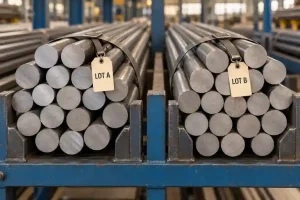
- 盘子, 酒吧, 挤压, 铸件, 或锻造
- Material thickness and stock size
- Grain or rolling direction when relevant
- Material certificate requirements
Incoming stock should be checked for the correct grade, 尺寸, visible damage, and condition before machining.
The selected stock should provide enough machining allowance without creating unnecessary material waste or excessive roughing time.
Cutting-Tool Preparation
Cutting tools should be selected according to:
- 材料
- Feature geometry
- Hole and thread sizes
- 工具范围
- 表面光洁度要求
- 机器能力
- 预计数量
- Tool-life requirement
Special tools may be required for deep bores, 底切, internal grooves, 小螺纹, or difficult-to-reach surfaces.
Fixture Preparation
The fixture must locate the workpiece consistently and resist machining forces without damaging or distorting the part.
Fixture preparation may include:
- Standard vises and chucks
- 软爪
- 定制夹具
- Support blocks
- Vacuum or magnetic workholding
- Sacrificial tabs
- Additional support for thin walls
The chosen fixture should also provide sufficient access for cutting tools, probes, and inspection equipment.
4. CAM Programming and Toolpath Simulation
The programmer converts the approved design and process plan into machining operations.
A CAM setup normally defines:
- Machine and coordinate orientation
- Stock size and position
- 工件夹持
- Cutting tools
- Tool lengths and holders
- Roughing operations
- Semi-finishing operations
- Finishing operations
- 钻孔, 无聊的, 旋转, and threading
- Safe approach and retract movements
工具路计划
A practical toolpath should reduce unnecessary air cutting, repeated entries, abrupt load changes, and excessive tool changes.
The program should also account for:
- 工具范围
- Collision clearance
- 排屑
- Remaining stock
- Thin-wall support
- 精加工余量
- 刀具偏转
- Surface-finish direction
模拟和验证
The toolpaths should be simulated before production to check:
- Tool and holder collisions
- Fixture interference
- Incorrect stock orientation
- Excessive tool travel
- Unmachined areas
- Unexpected overcutting
- Unsafe entry or retract movements
After simulation, a suitable post processor converts the CAM operations into machine-specific CNC code.
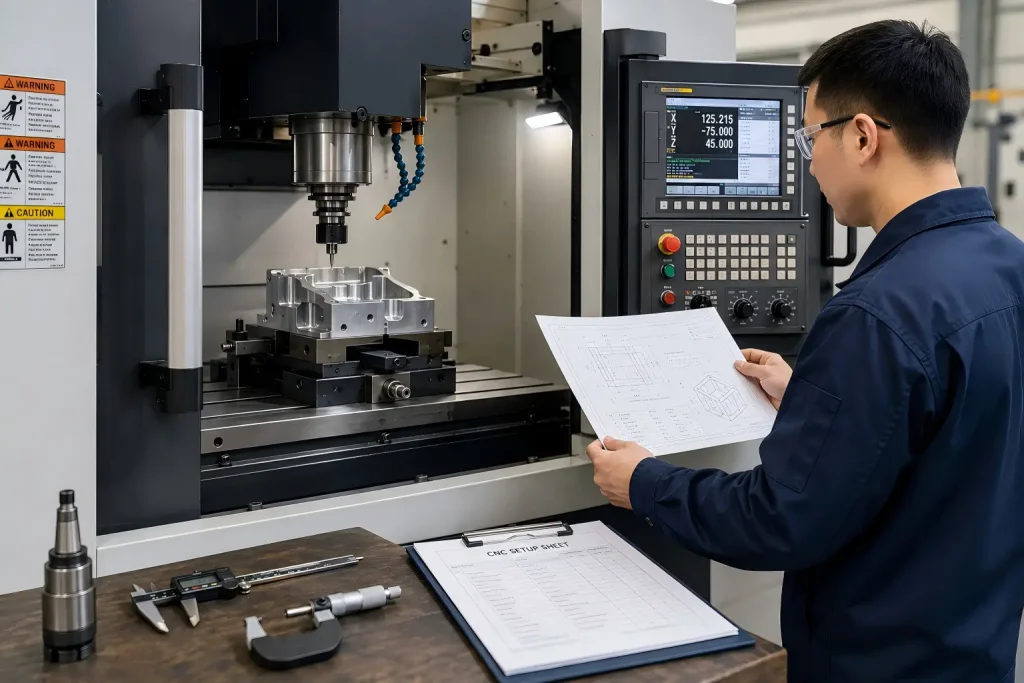
The programmer may also prepare a setup sheet containing tool numbers, offsets, fixture information, stock orientation, and operation notes.
Autodesk’s documented manufacturing workflow follows the same general sequence: create the setup, program the toolpaths, simulate them, generate machine-specific G-code, and then make the part.
5. Machine Setup and First-Piece Verification
Before cutting begins, the operator should confirm that the actual machine setup matches the approved process plan.
The setup normally includes:
- Cleaning the fixture and locating surfaces
- Installing and checking the workholding
- Loading the correct tools
- Confirming tool numbers and holders
- Setting tool-length and diameter offsets
- Setting the work coordinate system
- Confirming stock orientation
- Loading the correct CNC program
- Checking coolant and chip evacuation
- Reviewing the setup sheet
Work offsets may be established using probes, edge finders, indicators, or other suitable measurement methods. Tool offsets may be measured manually or with a tool-setting system.
The correct method depends on the machine, controller, 夹具, 部分, and available measurement equipment.
Program and Setup Verification
Before full cutting, the operator should verify:
- Program name and revision
- Tool list
- Work offset
- Tool offsets
- Fixture clearance
- Safe approach positions
- Spindle direction
- 冷却剂输送
- Stock dimensions
Simulation does not replace verification on the actual machine.
Depending on the machine and process, verification may include a controlled dry run, air cut, reduced rapid movement, single-block execution, or other approved shop procedure.
First-Piece Inspection
The first part should be checked before the full batch continues.
First-piece verification may include:
- Overall dimensions
- Datum location
- 孔位
- 孔径
- 线程数
- 平整度
- 跳动
- Critical wall thickness
- 表面光洁度
Any offset, tool-wear, 夹具, or program adjustment should be made before repeat production.
Workpiece probes can automate setup and part verification, while tool-setting systems establish tool reference values and check wear or breakage.
6. 粗加工, 精加工, and In-Process Control
Machining is usually divided into stages rather than completing every feature in one aggressive operation.
粗加工
Roughing removes most of the unwanted material while leaving controlled stock for later operations.
The roughing strategy should balance:
- Material-removal rate
- 工具寿命
- 切削力
- Machine power
- 夹具稳定性
- 排屑
- Heat generation
- 零件变形
适用于薄壁, 大口袋, long shafts, or stress-sensitive materials, balanced material removal may be more important than maximum cutting speed.
半精加工
Semi-finishing creates a more even machining allowance before the final pass.
It may help:
- Reduce variable cutting loads
- Correct distortion after roughing
- Prepare consistent stock for finishing
- Protect critical surfaces
- Improve final dimensional control
Some parts may require unclamping, 缓解压力, turning over, or an intermediate inspection before final finishing.
精加工
Finishing produces the final dimensions, 几何学, and machined surface.
The finishing strategy may use:
- Dedicated finishing tools
- Reduced and stable cutting loads
- 刀具磨损补偿
- 受控冷却剂输送
- Shorter tool overhang
- Additional dimensional checks
- Separate passes for sealing, 轴承, 或装饰表面
切割参数
切割速度, 主轴速度, 喂养, and depth of cut should be selected for the specific operation.
The correct values depend on:
- 铣削, 转动, 钻孔, 无聊的, 旋转, or threading
- 工件材质及硬度
- Tool diameter or workpiece diameter
- Tool material and coating
- 机械刚性
- 夹具稳定性
- 刀具悬伸
- 所需完成度
- Coolant conditions
There is no single spindle speed, 喂养, drilling allowance, or reaming speed suitable for every CNC machining project.
过程中监控
加工时, the supplier may monitor:
- 刀具磨损
- Chip shape and evacuation
- Cutting noise and vibration
- Coolant flow
- Dimensional movement
- 表面状况
- 夹具稳定性
- Broken or damaged tools
Critical dimensions may be checked between operations so that tool wear or process drift can be corrected before the part is completed.
Sandvik publishes separate formula definitions for milling and turning because cutting speed, 每齿进给量, feed per revolution, cutter diameter, and workpiece diameter are not interchangeable across operations.
7. 最终检验, 表面处理, and Packaging
Machining is not complete when the cutting tool stops.
The finished part may still require deburring, 打扫, 表面处理, 最终检验, 文档, and protective packaging.
Deburring and Cleaning
Machined parts should be checked for:
- 锋利的边缘
- Hole burrs
- Thread burrs
- Chips in blind holes
- Coolant residue
- Oil and contamination
- Loose abrasive particles
- Damage from handling
Deburring must not change critical edges, 密封面, hole positions, or controlled dimensions.
Dimensional Inspection
Inspection should follow the drawing and agreed inspection plan.
Depending on the part, 检查可能包括:
- Calipers and micrometers
- 高度尺
- 孔径计
- Pin and thread gauges
- Indicators
- Surface-roughness measurement
- Optical inspection
- 三坐标测量
Critical requirements may include:
- 直径
- 孔位
- 平整度
- 并行性
- 垂直度
- 跳动
- 螺纹尺寸
- 轮廓
- 基准关系
For guidance on realistic requirements and inspection planning, 回顾我们的 CNC加工公差 资源.
表面处理
If the drawing requires anodizing, 钝化, 电镀, 绘画, 抛光, 喷砂, or another finish, the part may need inspection both before and after finishing.
供应商应确认:
- Finish type
- 涂层厚度
- Cosmetic requirements
- Masked areas
- Threads and bores
- Electrical contact surfaces
- 尺寸余量
- Color and gloss expectations
Final Verification and Reports
After all required operations, the supplier should confirm that the part meets the agreed drawing and finish requirements.
Reports may include:
- Dimensional inspection report
- 三坐标报告
- 材质证书
- Surface-finish record
- Coating certificate
- First-article report
- 螺纹或量规结果
For parts requiring coordinate measurement, 请参阅我们的指南 CNC 加工零件的 CMM 检测.
包装
Packaging should protect:
- 化妆品表面
- 线程数
- Sharp or delicate features
- 密封面
- 精密孔
- 涂料
- Parts vulnerable to corrosion
Parts may require individual wrapping, separators, protective plugs, 腐蚀保护, or custom trays depending on their geometry and delivery conditions.
Machine-tool probing can support setup, in-process control, and part verification, but final inspection requirements should still be defined by the drawing and agreed inspection plan.
Information to Provide Before CNC Machining
| 询价项目 | 提供什么 | 为什么它很重要 |
|---|---|---|
| 3D型 | 步, STP, or another usable solid model | Supports geometry review and CAM programming |
| 2D图 | 公差, 日期, 线程, 完成, and notes | Defines requirements not fully shown in the model |
| 材料 | 准确等级, 状况, 硬度, and certificate needs | Affects sourcing, 工具, 切削参数, 和检查 |
| 数量 | Prototype quantity and expected repeat volume | 影响设置, 固定装置, 工装, 和单位成本 |
| 关键尺寸 | 适合, hole positions, 平整度, 跳动, 和基准关系 | Helps plan finishing and inspection |
| 表面光洁度 | Roughness, 阳极氧化, 电镀, 抛光, 或涂层 | Affects machining allowance, 掩蔽, 和交货时间 |
| 检查 | 标准检验, 三坐标报告, full report, or first-article requirements | Defines inspection work before quotation |
| Delivery requirement | Target date, 包装, and shipping conditions | Helps plan production and protection |
Complete RFQ information allows the supplier to review process risk before material purchasing and programming begin.
常问问题: CNC加工过程
How Many Steps Are in the CNC Machining Process?
A practical CNC machining process can be summarized in seven main stages: drawing review, DFM planning, production preparation, CAM programming, machine setup, 加工, and final verification.
Some projects may combine or divide these stages depending on geometry, 数量, 精加工, 及检验要求.
Does Every CNC Part Follow the Same Process?
福田街道. A simple turned spacer, a five-axis housing, a thin aluminum plate, and a hardened-steel component may require different machines, 设置, 工装, 检查, and finishing sequences.
When Should Tolerances Be Reviewed?
Tolerances should be reviewed before quotation and programming. Tight requirements can affect material selection, 夹具设计, 加工顺序, 检查方法, 成本, 和交货时间.
Why Is First-Piece Inspection Important?
First-piece inspection confirms that the program, offsets, 工具, 夹具, and process can produce the required dimensions before the full batch continues.
Is Surface Finishing Done Before or After Inspection?
两者可能都需要. Critical dimensions are often checked before finishing, while final dimensions, 外貌, 掩蔽, and coating results may need verification after finishing.
What Files Are Needed for a CNC Machining Quote?
A STEP file and a 2D drawing are usually the best starting point. Also provide the material, 数量, 表面饰面, 检验要求, 和目标交货日期.
Does CAM Simulation Guarantee That the Part Will Be Correct?
福田街道. Simulation can identify many toolpath, stock, 持有者, and collision risks, but the actual machine setup, offsets, 工具, 夹具, 材料, and first-piece result must still be verified.
结论
The CNC machining process begins with clear requirements and ends with verified, protected finished parts.
图纸审查, 直接制造, 材料准备, CAM programming, 设置, 加工, 检查, 表面处理, and packaging must work together. Problems found before programming are usually easier and less expensive to correct than problems discovered after machining begins.
对于买家, the most useful preparation is to provide a complete 3D model, 2D图, 材料规格, 数量, 公差要求, 表面饰面, 以及报价前的检验需求.
检查您的 CNC 加工项目
快速高效可以审核您的图纸, 材料, 几何学, 公差, 表面饰面, 检验要求, 以及报价前的订单数量.
Send the STEP file, 2D图, 数量, 材料规格, 结束, and delivery requirement for a project-specific manufacturing review.
了解更多关于我们的 数控加工服务 for custom prototypes, 小批量零件, 并重复生产.