

Blog List
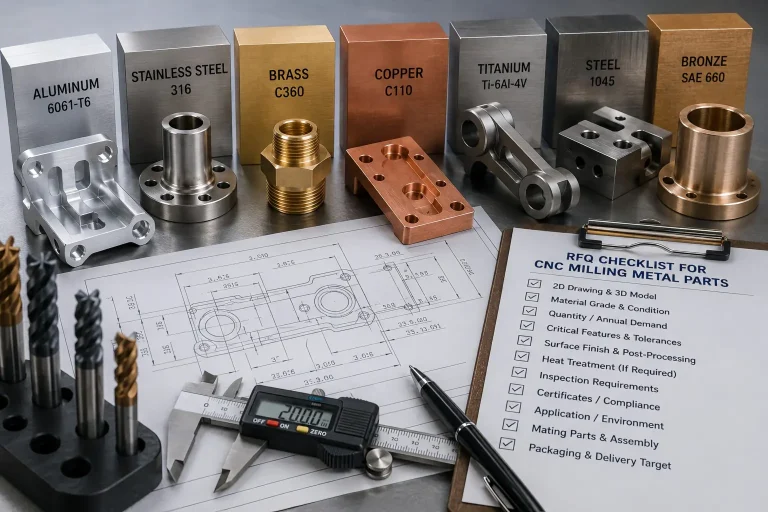
CNC Milling Metals: How to Choose the Right Material for Custom Parts
CNC milling metals is not only a machining decision. It is also a material decision. Two parts may look similar…
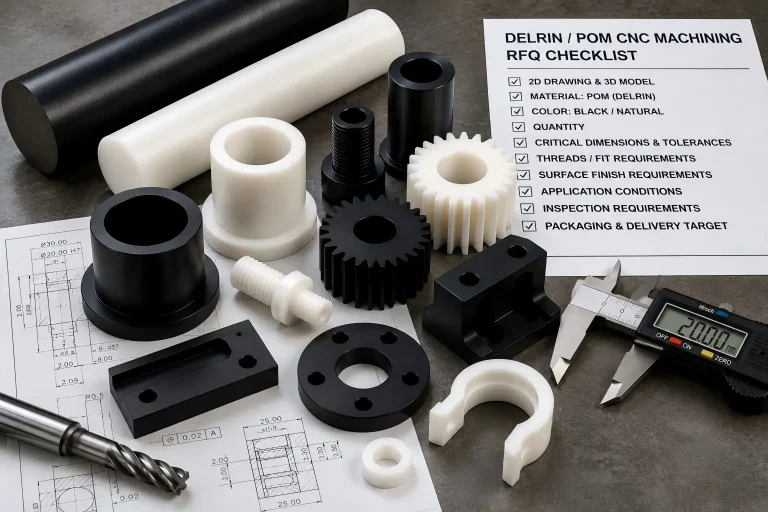
Delrin CNC Machining: Design, Tolerance, and RFQ Risks for POM Parts
Delrin CNC machining is often easier to control than PTFE, nylon, or many soft plastics. But that does not mean…
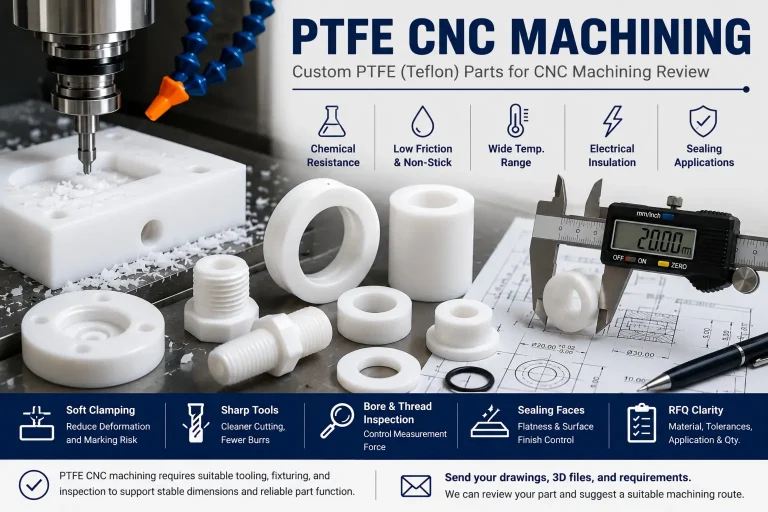
PTFE CNC Machining: Design, Tolerance, and RFQ Risks
PTFE CNC machining is not difficult because the material is hard. It is difficult because PTFE is soft, slippery, flexible,…
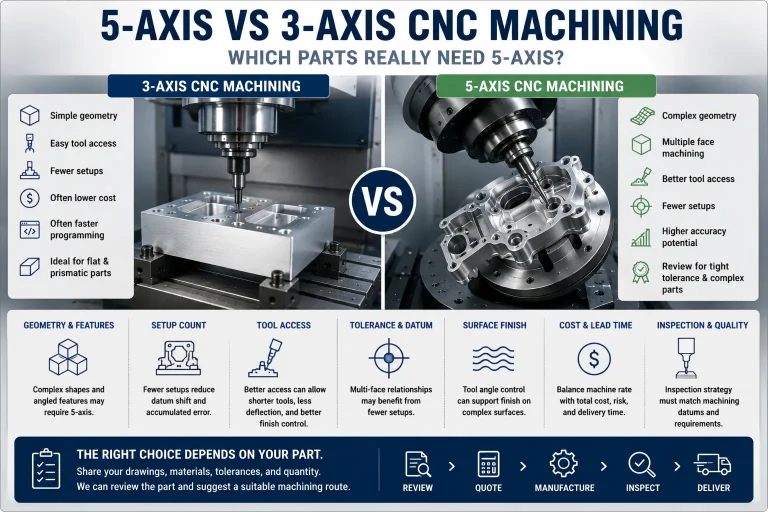
5-Axis vs 3-Axis CNC Machining: Which Parts Really Need 5-Axis?
5-axis CNC machining is not automatically better for every part. 3-axis CNC machining is still the right choice for many…
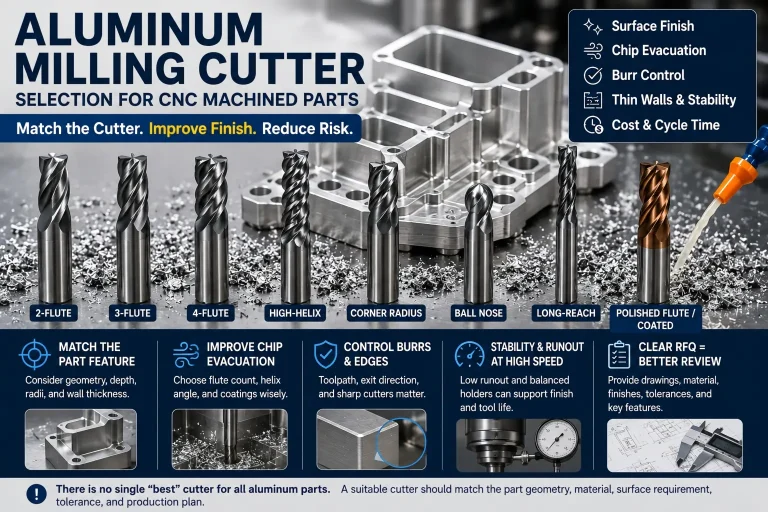
Aluminum Milling Cutter Selection for CNC Machined Parts
Choosing an aluminum milling cutter is not only a toolroom decision. For CNC machined aluminum parts, the cutter can affect…
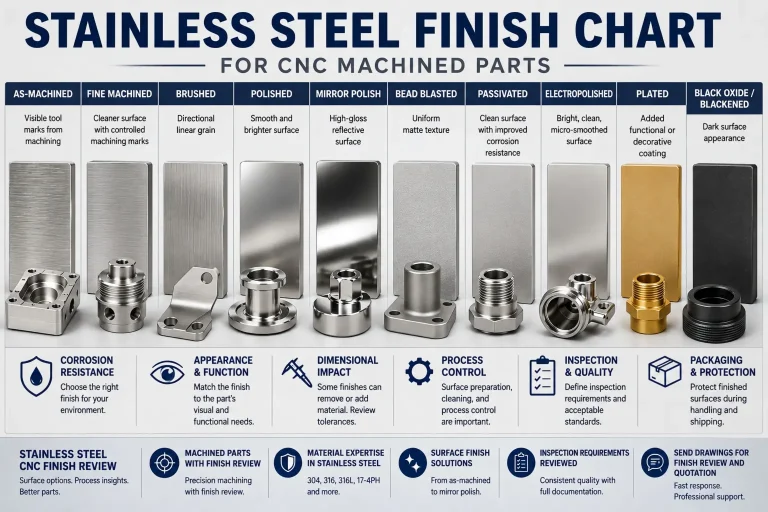
Stainless Steel Finish Chart for CNC Machined Parts
Choosing a stainless steel finish is not only about appearance. For CNC machined stainless steel parts, the finish can affect…
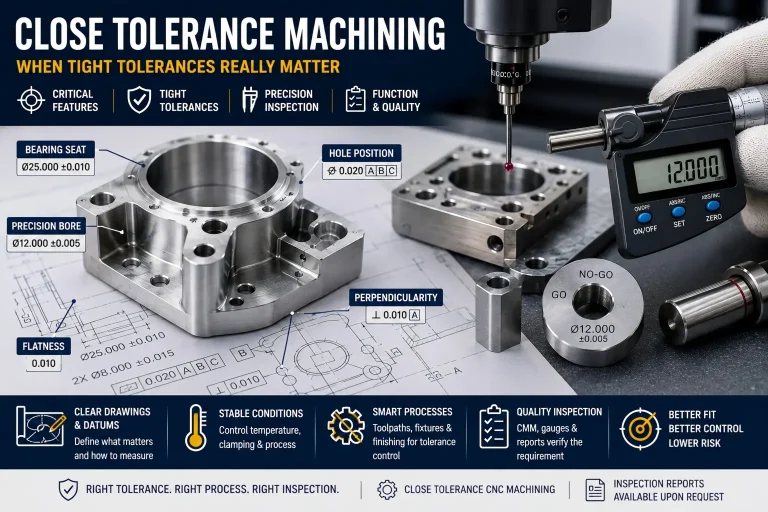
Close Tolerance Machining: When Tight Tolerances Really Matter
Close tolerance machining means producing selected part features within a narrow dimensional or geometric range. But close tolerance does not…
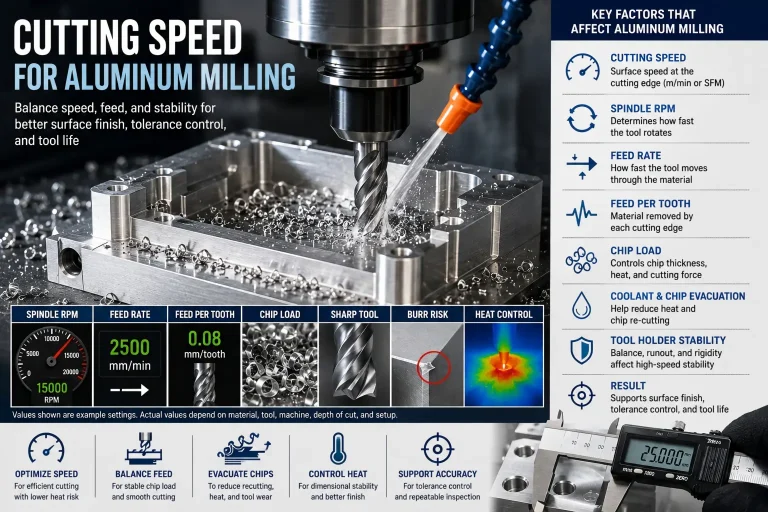
Cutting Speed for Aluminum Milling: Practical CNC Guide
Cutting speed is one of the first numbers people ask about when milling aluminum. But in real CNC work, cutting…
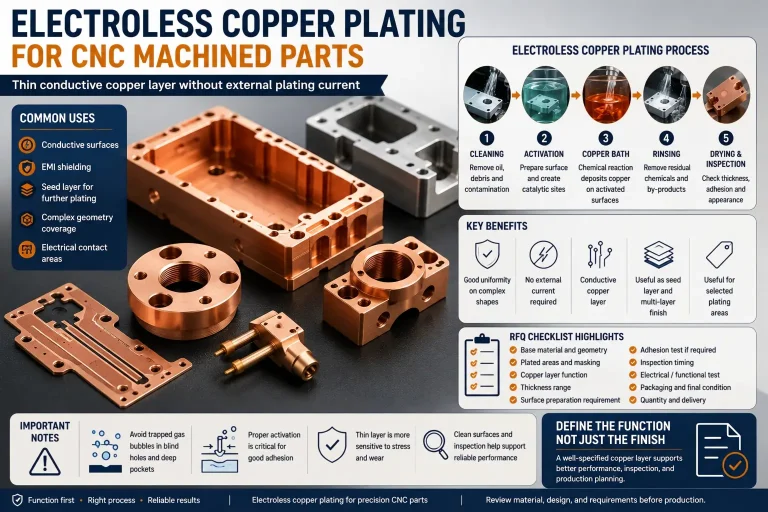
Electroless Copper Plating for CNC Machined Parts
Electroless copper plating is used when a part needs a thin copper layer without relying on electrical current during the…